Chocolate's Record Prices Reveal the Fragility of Global Commodity Markets
Cocoa's extraordinary price run exposes how thin a supply chain can be when it depends on two adjoining countries
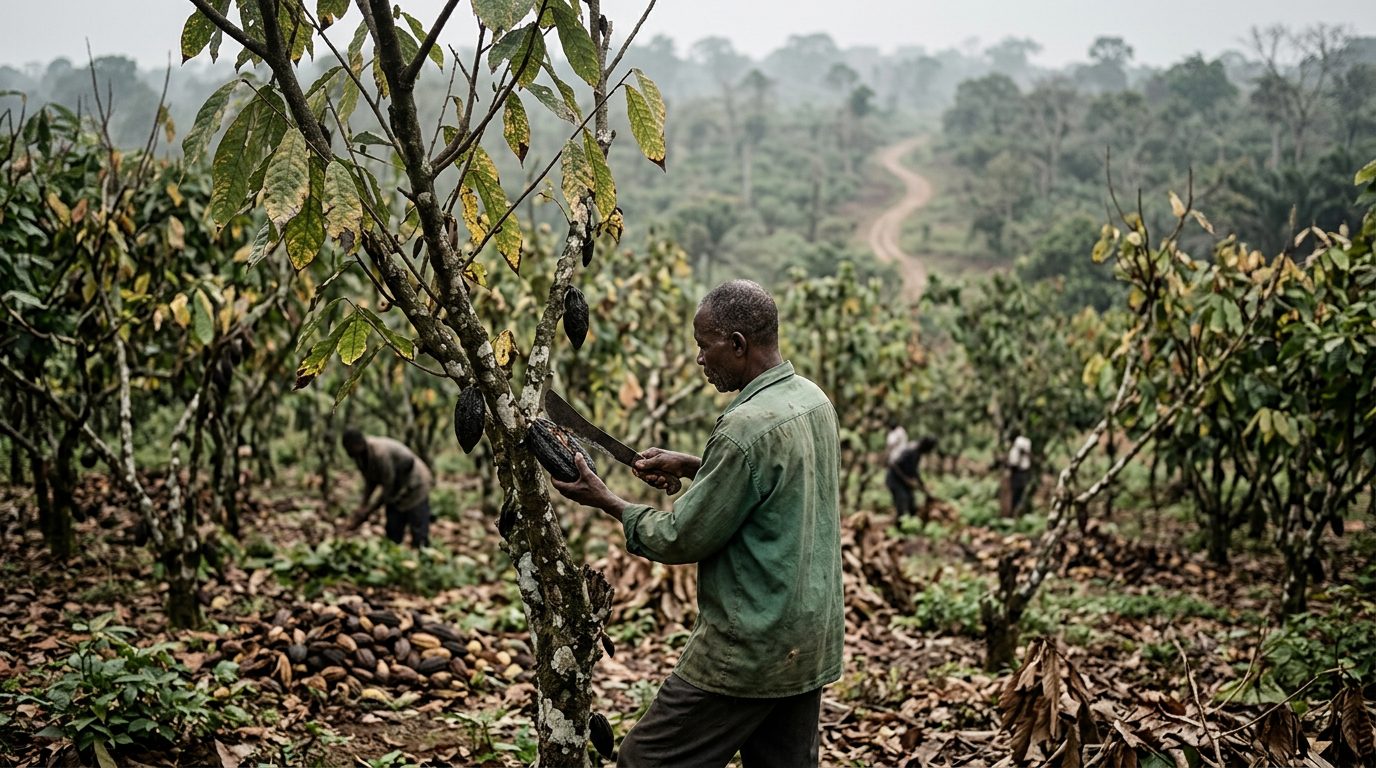
A commodity that comes almost entirely from two adjoining countries, grown mostly on aging trees vulnerable to a disease with no cure, is not a commodity in any stable sense. It is a bet. That is the real lesson of cocoa's extraordinary run over the past three years, one that took futures prices past $12,000 a tonne in December 2024, roughly four times their level at the start of 2023, before they retreated to around $6,000 through 2026. The swing was not primarily a story about chocolate demand or clever trading. It was a story about what happens when a global food supply chain depends on a single, climate-exposed, disease-ridden strip of West African land for roughly 60 percent of its raw material, and about how thin that arrangement really is once anything goes wrong.
Two Countries, One Crop, No Backup Plan
Cocoa's concentration problem is not subtle. Ivory Coast and Ghana together grow around three-fifths of the world's cocoa beans, according to the International Cocoa Organization, a share that has barely moved in decades despite repeated warnings about the risks of relying on so narrow a production base. No other major agricultural commodity is this geographically cornered. Wheat, soy, and corn are grown across dozens of countries on several continents; even coffee, often cited alongside cocoa as a fragile tropical crop, is spread across Brazil, Vietnam, and Colombia, a comparison worth returning to. Cocoa has essentially one growing region that matters, and that region has spent the past several years absorbing shocks that would strain any agricultural system: erratic rainfall linked to El Niño, aging trees that yield far less than they once did, and swollen shoot virus, a mealybug-borne disease with no cure that can eventually kill an infected tree outright.
A Disease With No Cure Meets a Generation of Aging Trees
The disease numbers alone explain much of the supply collapse that sent prices vertical in 2024. In Ivory Coast, more than 41 percent of surveyed farms were infected with swollen shoot virus in the 2024/25 season, up from 33 percent two seasons earlier, according to research cited by CNBC Africa; infected trees see yields fall by roughly 35 percent, and after five to ten years many simply die. Ghana's infection rate on cocoa-growing land nearly doubled between 2017 and 2023, from 17 percent to 31 percent. Ghana lived through a version of this before: swollen shoot devastated its crop in the 1960s and 1970s, cutting national production by half when the country was still the world's leading producer. That history offers a warning the industry has been slow to act on, because replacing infected trees means years of lost income for farmers who are already among the poorest in global agriculture.
Why the Farmers Growing the World's Cocoa Can't Afford to Fix It
That farmer poverty is not incidental to the fragility story; it is a cause of it. Fairtrade's living income research puts most Ivorian and Ghanaian cocoa farmers well below what they need to sustain a household, even after recent price increases, because farmgate prices are set administratively by state marketing boards rather than by the world market that ultimately pays for the beans. Low, fixed farmgate prices have discouraged the replanting and disease management that would make the supply base more resilient, while creating a structural incentive for smuggling whenever prices diverge between the two countries. In early 2026, when Ghana's Cocoa Board cut its producer price by nearly 29 percent while Ivory Coast's mid-crop rate stayed comparatively higher, cocoa began flowing across the border again; Ghana's own regulator says that once the price gap exceeds roughly $400 a tonne, smuggling intensifies sharply, and the previous season saw an estimated 160,000 tonnes of Ghanaian cocoa illegally exported to Ivory Coast and Togo.
That same poverty is why the European Union's deforestation regulation has become a flashpoint in cocoa country. The rule, requiring proof that cocoa sold into the EU was not grown on land deforested after 2020, was due to take effect at the end of 2024; Brussels has pushed the deadline back twice since, most recently to December 2026 for large companies and June 2027 for small ones, after producer governments warned that millions of smallholders farming plots with no formal land title or GPS coordinates could not comply in time. The delay bought breathing room, not a resolution: the traceability systems needed to keep smallholders deforestation-compliant and clear of child labor cost money that has to come from growers who are already the chain's least compensated link.
When Wall Street's Cocoa Trade Started Feeding on Itself
Layered on top of a genuinely tight physical market was a financial one that amplified every signal coming out of West Africa. Cocoa trades as a futures contract in New York and London, and the market is thin enough that a relatively small number of participants can move it sharply. During the 2024 run-up, Bloomberg's Javier Blas noted that "the last few weeks of daily record highs have more to do with financial factors than fundamentals": West African exporters that had sold cocoa forward found themselves holding short positions they could not cover as prices spiked, and lacking cash to meet margin calls, were forced to buy back contracts at ever-higher prices, pushing prices higher still and triggering the next round of calls elsewhere. It was less a single trader cornering the market, as the London fund manager nicknamed "Chocfinger" once did, than a mechanical feedback loop built into a market too small to absorb its own hedging. The pattern recurred in early 2026, when cocoa futures joined the Bloomberg Commodity Index and index funds' technical buying collided with a fresh wave of exporter hedging ahead of harvest, leaving Ivory Coast sitting on more than 200,000 tonnes of unsold cocoa amid a price standoff. A market that small, serving trading flows that large, is prone to moves driven by portfolio mechanics rather than harvests.
Coffee's Parallel Crisis Shows the Pattern Isn't Unique to Cocoa
Coffee offers an instructive, if imperfect, parallel. Global coffee prices rose 38.8 percent in 2024 from the year before, according to the Food and Agriculture Organization, with arabica up 58 percent and robusta up 70 percent in real terms, driven by drought in Brazil, where forecasts swung from an expected 5.5 percent production gain to a 1.6 percent decline within a season, and by a dry spell that cut Vietnam's output roughly 20 percent. American consumers paid 6.6 percent more for coffee by December 2024. Coffee is grown across far more countries than cocoa, which is why the comparison matters: even with Colombia, Ethiopia, and Indonesia in the mix, Brazil and Vietnam alone supply roughly half the world's beans, enough to spike prices the moment both had a bad year at once. Cocoa's dependence on two adjacent countries makes it more exposed still, but coffee shows that the same climate stress on a handful of dominant suppliers is structural to tropical commodities generally, not a cocoa-specific accident.
The Confectionery Industry's Margin Math
The consequences for the chocolate industry have been direct and, in places, brutal. Mondelēz International's chief executive, Dirk Van de Put, described "unprecedented cocoa cost inflation," and the company projected the surge would cut adjusted earnings per share by roughly 10 percent in 2025. Hershey's chief executive, Michele Buck, warned of "significant pressure" on 2025 earnings, while noting that "fundamentals and market price aren't exactly aligned," a pointed acknowledgment that futures had detached from the crop they were meant to price; Hershey now keeps roughly 75 percent of its items at or below $4, a threshold it is fighting to hold. Barry Callebaut, the world's largest chocolate manufacturer, repeatedly cut its outlook as bean costs squeezed margins, while Morgan Stanley shifted ratings between it and Lindt & Sprüngli as the two absorbed the shock differently. Even as futures fell by roughly half from their peak, grinding volumes kept falling too, with European processing dropping more than 7 percent and Asian grinding collapsing 16 percent year-on-year in one quarter, per J.P. Morgan research, because manufacturers had already reset recipes, portion sizes, and prices to a new, permanently higher baseline.
Smaller Bars, Steeper Receipts
That reset is visible on store shelves in ways unrelated to the futures market's day-to-day moves. The Consumer Price Index for candy and gum rose 8 percent in the twelve months through fall 2025, even as futures were already well off their record, because retail prices lag the raw-material cycle. Wells Fargo's David Branch put it plainly: "Candy on shelves now was made from cocoa bought at record prices earlier this year." Shoppers noticed the other side of the adjustment too, as some Halloween multipacks shrank in piece count without a matching price cut, and manufacturers leaned more on sugar, oil, and cocoa-butter substitutes to stretch scarce beans. By Valentine's Day 2026, chocolate prices were still climbing, up 14.4 percent year over year, following increases of 7.8 and 10.5 percent in the same stretch of the two prior years, per CNN Business; Dallas-Fort Worth and Denver saw local increases near 18 or 19 percent, even as Americans still spent roughly $2.6 billion on Valentine's candy, proof that demand stays stubborn even as price climbs.
The Lesson Extends Beyond the Candy Aisle
None of this is unique to cocoa; it is what concentration plus climate exposure plus thin, financialized futures markets look like whenever they occur together, and versions of the same structure sit underneath vanilla, palm oil, and a handful of other tropical commodities the global food system treats as interchangeable inputs rather than as products of a few vulnerable places. Cocoa simply made the mechanism visible, because chocolate is consumed widely enough and priced legibly enough that a doubling of a raw-material cost shows up at the checkout counter within a year. The deeper point is that geographic concentration is a form of leverage: it magnifies whatever happens to the producing region, good or bad, faster and harder than a diversified supply chain ever would. Until cocoa production spreads more evenly across producing countries, and until farmers in Ivory Coast and Ghana are paid enough to replant and defend against disease rather than simply extract from aging trees, the next shock to hit this corner of West Africa will not stay local. It will show up, again, at the register.
Sources: Reuters/CNBC, "Cocoa prices climb to new record high, prompting fresh warnings about extreme volatility"; CNBC Africa, "Cocoa swollen shoot disease puts 15% of Ivory Coast's supplies at risk, study finds"; CNBC Africa, "How did Ivory Coast and Ghana's cocoa sales crisis come about?"; News Ghana, "Ivory Coast Price Cut Reshapes Cocoa Smuggling Risk on Both Borders"; International Cocoa Organization, "November 2025 Quarterly Bulletin of Cocoa Statistics"; Supply Chain Dive, "Mondelēz, Hershey pressured by a prolonged spike in cocoa prices"; J.P. Morgan Global Research, "Why are Cocoa Prices Falling?"; Trading Economics, "Cocoa Futures Hover Around $6,000"; Fairtrade International, "Fairtrade Living Income Reference Prices for Cocoa" (2024/2025 update); Investing.com, "Morgan Stanley ups Barry Callebaut, cuts Lindt on cocoa price shift"; Axios, "Why cocoa futures prices are exploding toward $10,000" (March 28, 2024); Trellis, "Europe's anti-deforestation law is delayed again. What's to come"; Food and Agriculture Organization, "Adverse climatic conditions drive coffee prices to highest level in years"; Axios, "Halloween scare: Candy costs are soaring" (October 9, 2025); CNN Business, "Valentine's Day sticker shock: Chocolate prices are spiking" (February 13, 2026); Bloomberg News, "Cocoa Prices Volatile After Index Rebalancing Spurs Exporter Hedging" (January 9, 2026); Bloomberg News, "Ivory Coast, Ghana Cocoa Supply Chains Strained by Weak Demand and Excess Stock" (February 2, 2026)
The Food Observatory Brief
Weekly briefing on food systems, climate, agriculture and policy — straight to your inbox.
More on Markets
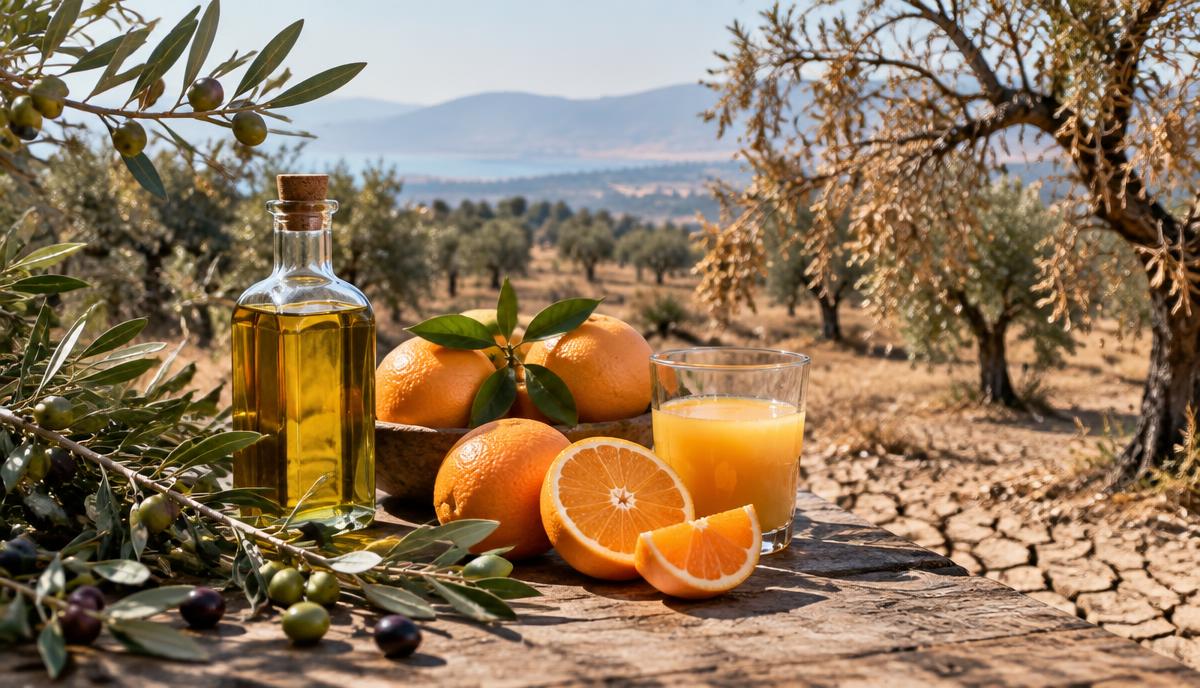
Olive Oil, Orange Juice and the New Climate Price Shock
Crops concentrated in one or two climate-exposed regions now follow a boom and bust pattern, with heat, drought and disease compounding the swings. This piece looks at olive oil, orange juice and vanilla, explains why prices fall back but not to old levels, and asks who carries the risk when hedging is thin.
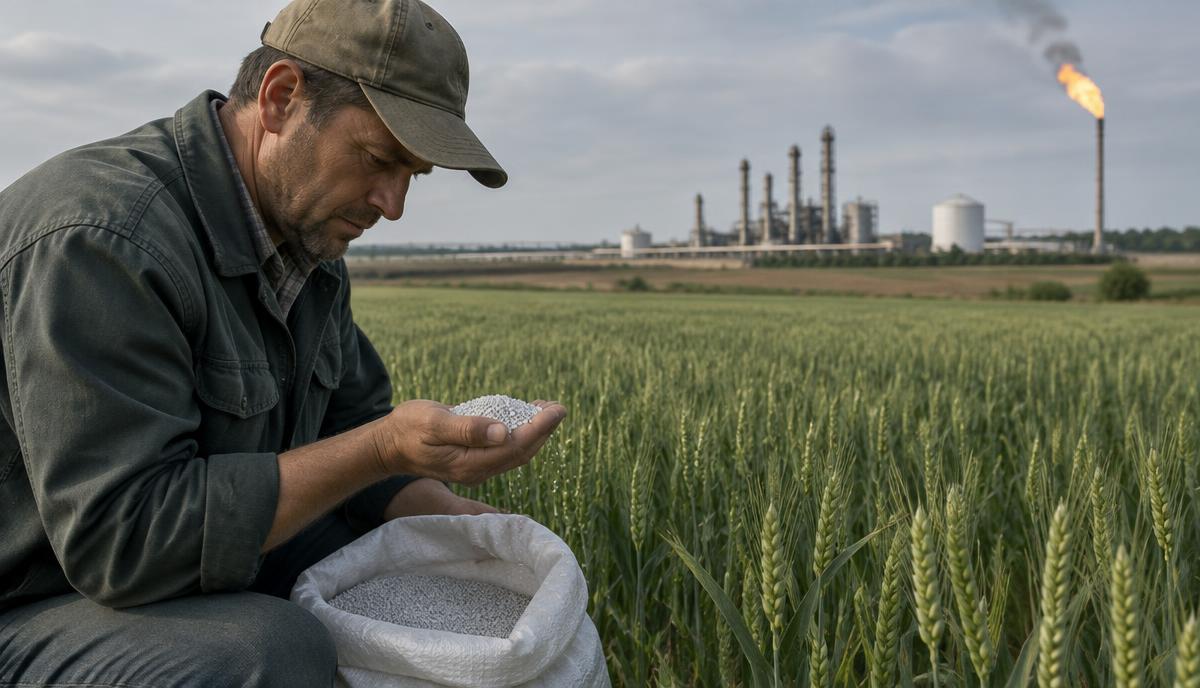
Fertilizer Prices Are the Hidden Driver of Food Inflation
Fertilizer is made from natural gas and from potash and phosphate controlled by a handful of exporters, so its price follows energy and trade policy more than crop demand. This piece argues that fertilizer affordability, not only grain prices, sets farmers' planting decisions and next season's food prices, and looks at what India, Africa and efficiency measures change.

GLP-1 Drugs Are Starting to Change What the Food Industry Sells
Semaglutide and tirzepatide are changing grocery baskets, restaurant portions and product launches in the United States. This piece argues that the food industry is facing its first pharmacological shift in appetite, traces the consequences for protein, fibre, portion size and the commodities behind them, and sets out why it will not become a universal change.