The Economics of Food Waste
A third of all food produced globally is lost or wasted, at a cost researchers put near a trillion dollars a year
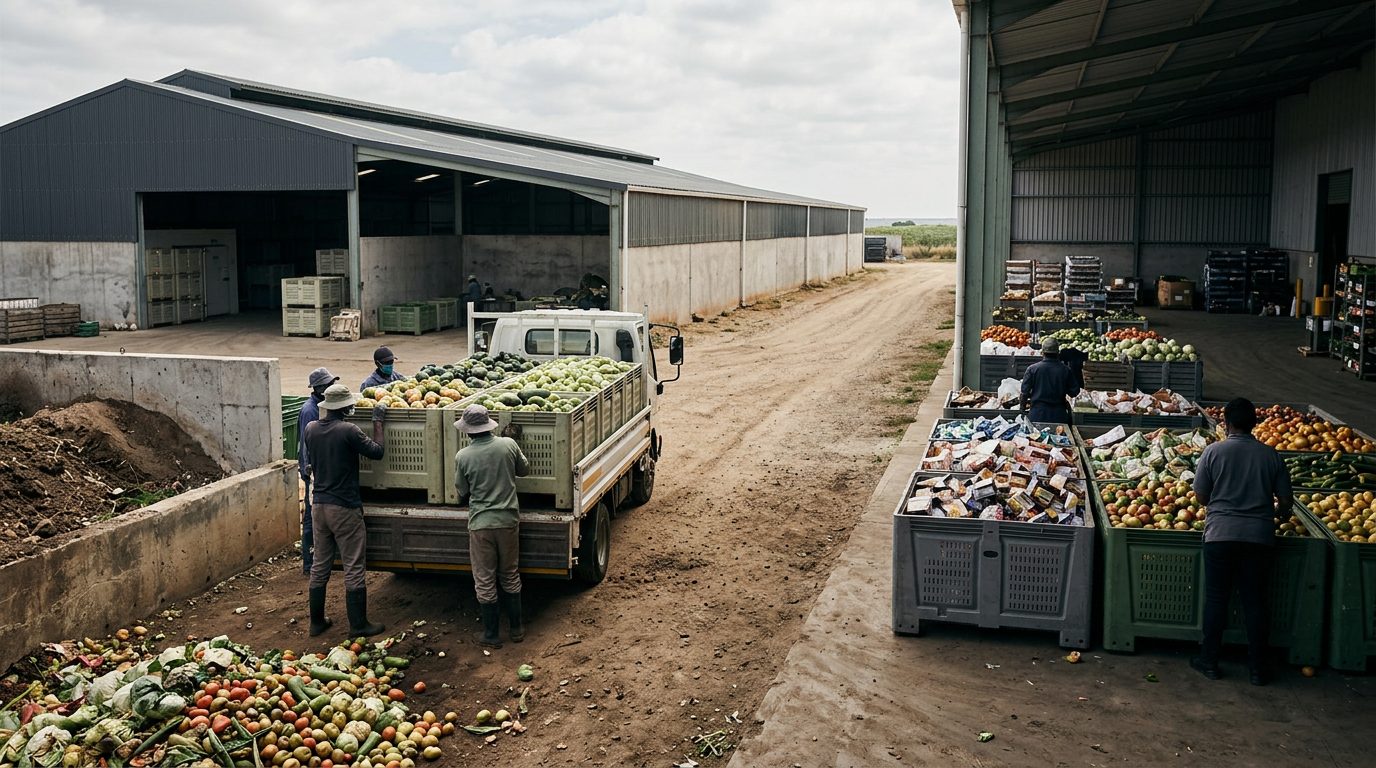
A Kenyan Tomato Farm and an American Supermarket Bin Tell the Same Story, Backward
In western Kenya, a smallholder farmer harvests a crop of tomatoes just as the rains intensify. There is no cold room within reach, no reliable road to the nearest market before the fruit softens, and no buyer willing to pay for produce that will not survive the trip. Roughly half of what she grows will never be eaten. Six thousand miles away, a supermarket in suburban Chicago marks down a tray of the same fruit, then pulls it from the shelf two days later regardless, because a "best by" date and a merchandising policy, not the tomato itself, decided its fate. Both losses count in the same grim global tally: about a third of all food produced for human consumption, roughly 1.05 billion metric tons a year by the UN Environment Programme's most recent count, is lost or wasted before it nourishes anyone. Researchers at the FAO and UNEP put the direct economic cost near a trillion dollars annually, and when environmental and social costs are folded in, a 2024 FAO accounting placed the hidden toll of the global food system closer to $12 trillion. But the tomato in Kenya and the tomato in Chicago fail for almost opposite reasons, and understanding that split is the key to fixing either one.
Where the Trillion Dollars Actually Leaks
Food economists have long organized the problem around a simple distinction: loss happens upstream, on the farm and in transit, while waste happens downstream, at the register and on the kitchen counter. In lower and middle-income countries, the overwhelming share of the damage occurs before food ever reaches a consumer, in the fields, in poorly ventilated storehouses, and on unpaved roads. In wealthy countries, production and distribution are comparatively efficient and loss rates there are low, but the food that does arrive intact is routinely discarded once it is in reach of a shopper. This is not a minor academic distinction. It means the fix in Lagos looks nothing like the fix in London, even though both cities are contributing to the same trillion-dollar figure.
Africa's Missing Cold Chain
The starkest illustration of upstream loss is the near-total absence of refrigeration across much of the developing world. Fewer than one in ten perishable food items grown in low-income countries is ever refrigerated, according to research compiled by cold-chain analysts and cited by the Brookings Institution. The consequences compound quickly. In Kenya, food loss across the supply chain runs 40 to 50 percent, roughly double the global average, costing the country an estimated $1.5 billion in a single recent year. In Nigeria, about 45 percent of postharvest output spoils for lack of cold storage, a failure researchers link to a 25 percent income loss for the country's 93 million smallholder farmers. India, despite far more developed logistics than most of sub-Saharan Africa, still loses an estimated 23 million tons of grain and tens of millions of tons of fruit and vegetables each year, a bill of roughly $4.4 billion. None of this food waste is really a household failing. It is an infrastructure gap: no chilled trucks, no functioning storehouse, no market information to tell a farmer when to sell before spoilage sets in.
The Convenience Economy's Waste Problem
Flip the picture to wealthy economies and the waste moves downstream. The United States is the clearest outlier in the 2024 UNEP Food Waste Index: whereas households account for roughly 60 percent of food waste globally, in the US that ratio inverts, with food service and retail responsible for about 60 percent of what gets thrown away. Restaurants over-portion and over-prep to avoid ever appearing to run short. Grocery chains stock deep and wide because empty shelf space reads as failure to a shopper, and because contracts with suppliers are built around guaranteed volume, not around what will actually sell. Consumers, meanwhile, are trained by abundance and confusing labeling to treat a "sell by" date as a safety deadline rather than an inventory instruction, and to buy more than they will cook. The UNEP data does carry a genuine surprise, though: per-capita household food waste differs by only about seven kilograms a year between high-income and lower-middle-income countries, a reminder that waste at the kitchen table is a near-universal human habit, even if the stages before the kitchen look completely different by income level.
Land, Water and Carbon Spent on Nothing
Every wasted tomato, whether it rotted in a Kenyan field or was tossed in a Chicago bin, carried an embedded cost that was paid in full regardless of whether anyone ate it. The FAO's food wastage footprint accounting found that food loss and waste occupies land roughly the size of China, and consumes a volume of water each year equivalent to three times the flow of Lake Geneva. Because that food was grown, fertilized, harvested, and often shipped and refrigerated, the greenhouse gases released in producing it were emitted whether or not it was consumed. The UNFCCC and FAO estimate that food loss and waste is responsible for 8 to 10 percent of global greenhouse gas emissions, more than the aviation industry, and if food waste were a country it would rank third in emissions behind only the United States and China. This is what makes food waste unusual among climate problems: the damage is not caused by consumption, but by the opposite of it, by resources spent on food that generated no value at all.
Why Throwing Food Away Is Still the Rational Choice
The uncomfortable truth behind most of this waste is that it is economically rational for the individual actor, even though it is collectively disastrous. A supermarket loses more revenue from an empty shelf, which sends a shopper to a competitor, than it loses from a bruised apple thrown in the compost bin, so chains deliberately overstock perishables. A restaurant loses more from a customer complaint about a stingy portion than it loses from scraped plates. A farmer without storage or a guaranteed buyer has no financial tool to hold a harvest for a better price, so gluts get dumped. Labor to sort, repackage, or donate imperfect food costs money right now, while the loss from simply discarding it is diffuse and delayed. Waste, in other words, persists because for decades it has been cheaper to throw food away than to build the systems, storage, standardized labeling, and redistribution logistics, that would prevent it. Prevention has an upfront cost with a payoff that shows up on someone else's balance sheet, often an environmental one, which is exactly the kind of cost businesses have historically been allowed to ignore.
Rewriting the Label to Change the Incentive
Some of the most effective interventions attack that incentive problem directly rather than asking anyone to behave more virtuously. Date-label reform is the clearest example. WRAP, the UK's Waste and Resources Action Programme, has pushed retailers to strip "best before" dates entirely from produce that does not need them and to standardize confusing dual labeling that led shoppers to discard perfectly edible food. Waitrose and other UK chains removed date labels from dozens of fruit and vegetable lines after WRAP's guidance, letting customers judge freshness the way people did for most of history, by looking and smelling. The intervention costs retailers almost nothing to implement and has measurably reduced household waste in the products it touches, though it depends on consumer trust that took government-backed guidance to build.
Turning Surplus Into a Marketplace
A second class of fix accepts that some surplus is inevitable and instead builds a market for it before it becomes garbage. Platforms like Too Good To Go let restaurants and grocers sell unsold food at a discount in the final hours before closing, converting what was a pure cost into marginal revenue, which is precisely the kind of incentive realignment economists say the sector has lacked. The model has scaled to millions of users across Europe and North America and works because it costs the retailer almost nothing beyond a bag and a listing, while giving shoppers a price low enough to change their purchasing habits. Its limits are real: it depends on smartphone penetration and dense urban demand, does little for rural surplus, and captures only a sliver of total retail waste, since most discarded food never makes it to a pickup window in the first place.
Financing the Missing Storage
Upstream, the fix that consistently shows the highest return is unglamorous: storage. Solar-powered cold rooms deployed by companies like Solar Freeze in Kenya have worked with roughly 3,000 smallholder women farmers and are credited with lifting agricultural yields by more than 150 percent since 2016, not because farmers grew more, but because far less of what they grew was lost before sale. Hermetic storage bags and small metal silos have shown similar results for grain in East Africa and South Asia, often cutting losses from double digits to single digits at a cost of a few dollars per farmer. The obstacle is not that these technologies fail. It is financing: smallholders rarely have the collateral or credit access to buy storage equipment upfront, even when the payback period is under a year, which is why development banks and NGOs, rather than markets alone, have had to underwrite most of the deployment so far. Scaling that financing, not inventing new technology, is now the binding constraint on cutting the developing world's share of the trillion-dollar loss.
Sources: UN Environment Programme, "Food Waste Index Report 2024"; UNFCCC, "Food Loss and Waste Account for 8-10% of Annual Global Greenhouse Gas Emissions; Cost USD 1 Trillion Annually"; Food and Agriculture Organization, "The State of Food and Agriculture (SOFA) 2024"; Food and Agriculture Organization, "Food Wastage Footprint: Impacts on Natural Resources"; Brookings Institution, "How Off-Grid Cold Storage Systems Can Help Farmers Reduce Post-Harvest Losses"; WRAP (Waste and Resources Action Programme), "Label Better, Less Waste: Food Date Labelling Guidance"; World Economic Forum, "UK Supermarkets Scrap 'Best Before' Dates to Cut Food Waste"; World Food Programme, "5 Facts About Food Waste and Hunger"; ScienceDirect (Journal of Cleaner Production research), "Saving Food Surplus and Developing New Business Models: Exploring the Potential of 'Too Good To Go'"
The Food Observatory Brief
Weekly briefing on food systems, climate, agriculture and policy — straight to your inbox.
More on Markets

Olive Oil, Orange Juice and the New Climate Price Shock
Crops concentrated in one or two climate-exposed regions now follow a boom and bust pattern, with heat, drought and disease compounding the swings. This piece looks at olive oil, orange juice and vanilla, explains why prices fall back but not to old levels, and asks who carries the risk when hedging is thin.
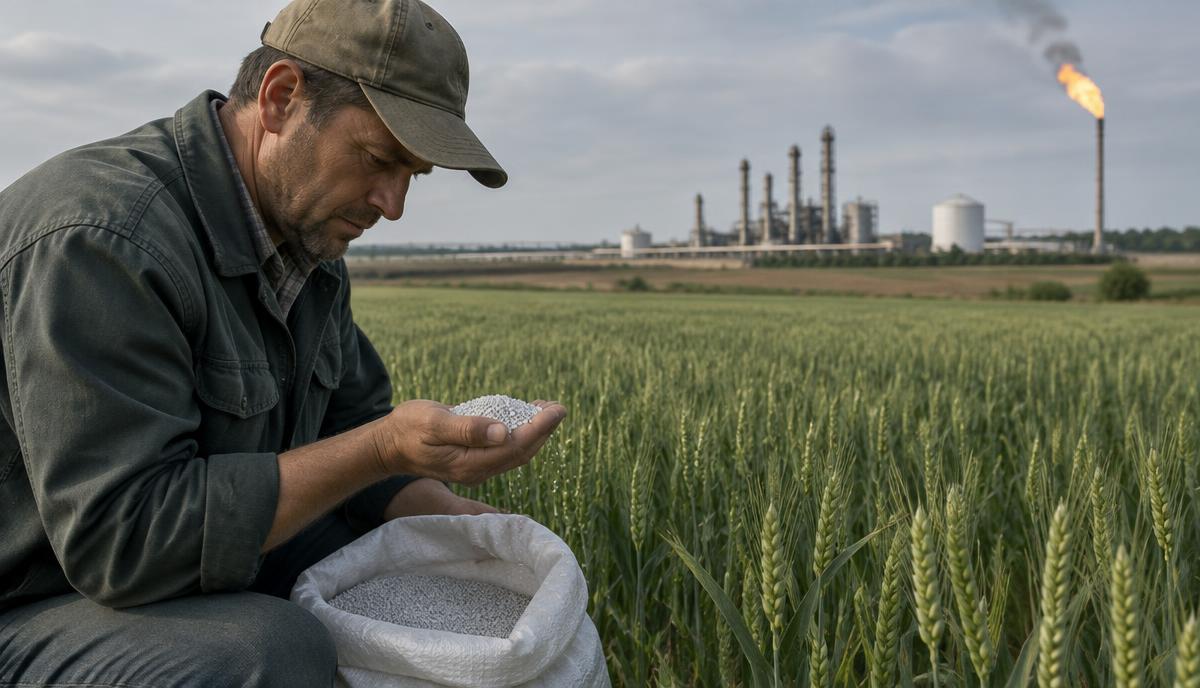
Fertilizer Prices Are the Hidden Driver of Food Inflation
Fertilizer is made from natural gas and from potash and phosphate controlled by a handful of exporters, so its price follows energy and trade policy more than crop demand. This piece argues that fertilizer affordability, not only grain prices, sets farmers' planting decisions and next season's food prices, and looks at what India, Africa and efficiency measures change.
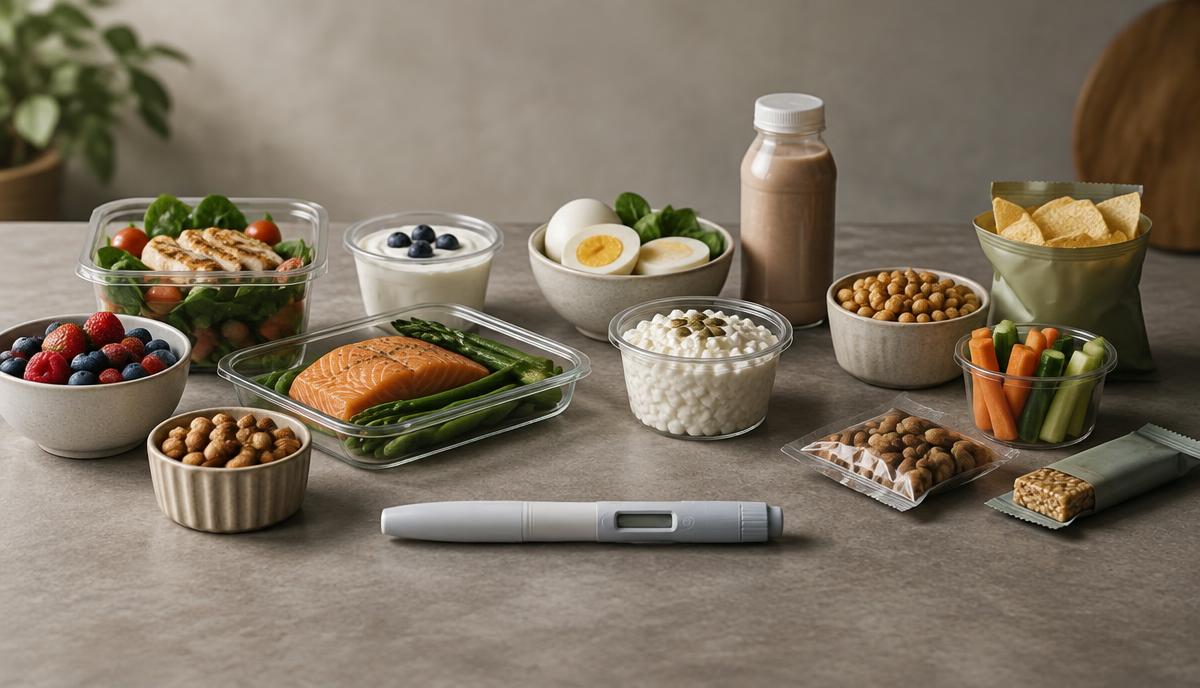
GLP-1 Drugs Are Starting to Change What the Food Industry Sells
Semaglutide and tirzepatide are changing grocery baskets, restaurant portions and product launches in the United States. This piece argues that the food industry is facing its first pharmacological shift in appetite, traces the consequences for protein, fibre, portion size and the commodities behind them, and sets out why it will not become a universal change.