The Missing Middle of Food Systems
A third of a Kenyan tomato harvest spoils before reaching market, lost not to pests or drought but to a missing cold room
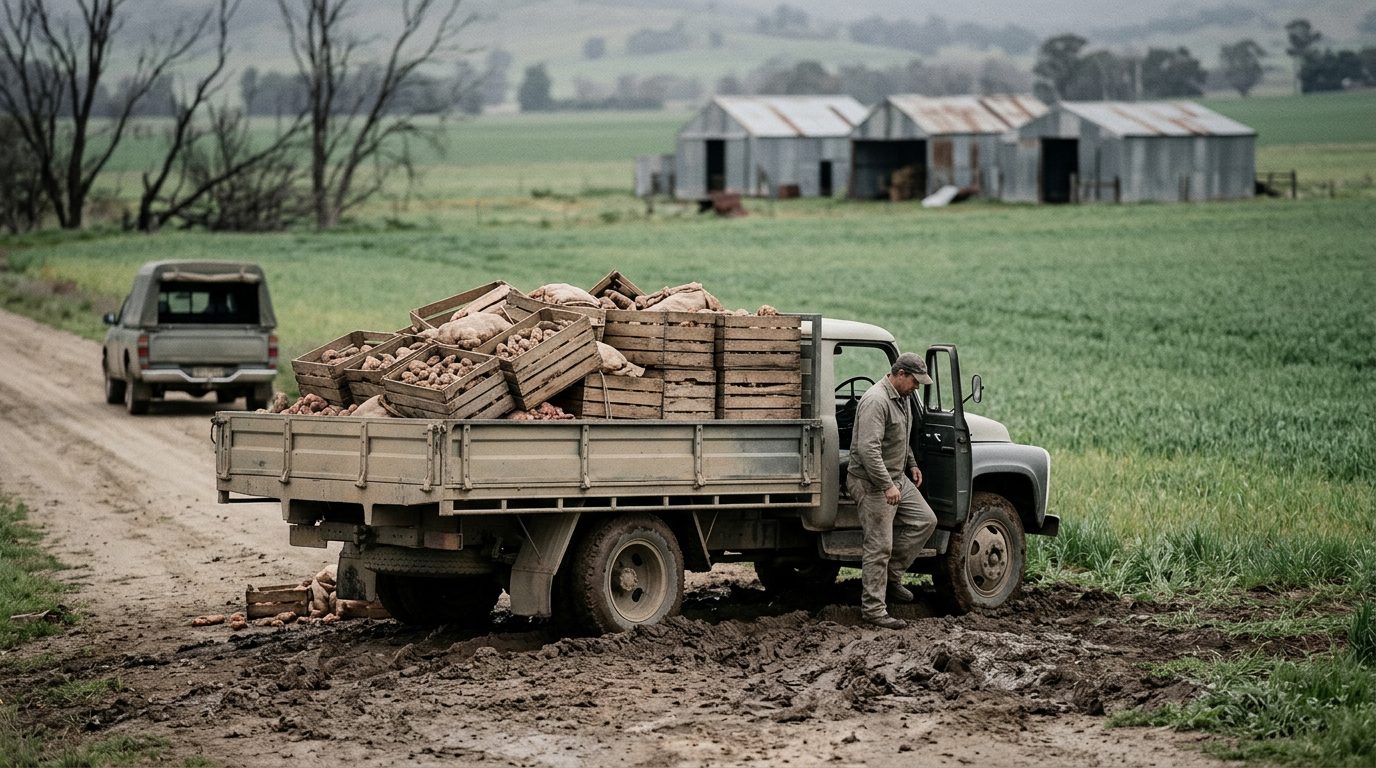
A truckload of tomatoes leaves a farm outside Kiambu, Kenya, packed loose in wooden crates, and by the time it reaches a market forty kilometers away, a third of it has been crushed, bruised, or gone soft in the heat. No pest touched those tomatoes. No drought or flood ruined the harvest. They were lost in the gap between the field and the buyer, in the part of the food system nobody photographs for a campaign or pitches to a venture fund: the truck, the crate, the warehouse, the cold room that didn't exist.
This gap has a name among agricultural economists, though it rarely makes headlines: the missing middle. It refers to everything that happens to food after it leaves the farm and before it reaches a retailer or consumer, the transport, storage, processing, aggregation, and cold chain infrastructure that moves a harvest from a smallholder's field into a functioning market. It is the least glamorous, least funded, and arguably most consequential stretch of the entire food system, and understanding why it stays starved of capital explains a great deal about why global food insecurity persists even in years of strong harvests.
Two Ends of the Chain Get the Money, the Center Gets Ignored
Investment in food systems has always clustered at the poles. On one end sits production: improved seeds, fertilizer, irrigation, farm equipment, the inputs that raise yields, backed by research institutions from CGIAR centers to national agricultural programs that have spent seven decades refining them. On the other end sits consumption: supermarkets, e-commerce grocery platforms, delivery apps, and the consumer food tech that investors find easy to understand because they can see themselves using it.
The AgFunder Global AgriFoodTech Investment Report for 2024 makes the imbalance concrete. Of the roughly sixteen billion dollars that flowed into agrifoodtech startups that year, fifty-one percent went to upstream, farm-facing technology and thirty-eight percent went to downstream, consumer-facing ventures like eGrocery and retail infrastructure, which grew disproportionately fast that year. Midstream technology, the category that covers supply chain logistics, storage, and processing, took just eleven percent. That is not a rounding error. It is a structural signal about where capital believes the returns and the excitement live, and it is not in a warehouse in a district market town.
The reasons are not mysterious once you look at how capital actually behaves. A seed company can point to a yield increase in a single growing season. A grocery app can show downloads and repeat orders within weeks. A cold storage facility or a rural aggregation center produces returns that are diffuse and slow, dependent on dozens of smallholders using it reliably, on functioning roads, and on a buyer at the other end willing to pay a fair price. Infrastructure investors who fund toll roads and power plants tend to see agricultural logistics as too fragmented and small-ticket to bother with, while agriculture-focused funds see it as unglamorous engineering rather than the kind of frontier technology that makes a compelling pitch deck.
What Post-Harvest Loss Actually Costs
The Food and Agriculture Organization estimates that globally, 13.2 percent of all food produced is lost in the supply chain after harvest and before it ever reaches retail shelves, a figure separate from the additional food wasted at the retail and household level. That pre-retail loss alone is estimated to cost the global economy roughly 400 billion dollars a year, and food loss and waste overall is responsible for an estimated eight to ten percent of global greenhouse gas emissions, more than the entire aviation sector.
These are not evenly distributed numbers. In wealthy countries, most loss happens at the consumer end, in refrigerators and on plates. In low- and middle-income countries, the losses cluster earlier, in the missing middle itself: grain that molds in a leaking store, tomatoes that bruise on a rutted road, milk that sours because there was nowhere cold to put it. The World Resources Institute has documented that in parts of West and Central Africa, up to fifteen percent of rice is contaminated by aflatoxins caused by poor storage conditions, a toxin linked to liver cancer and stunted child growth, turning a logistics failure into a public health one. Nearly 55 million people across the same region face hunger even as harvests come in, a gap between what is grown and what is actually eaten that the missing middle is directly responsible for.
The World Bank has separately estimated that storage capacity across much of Sub-Saharan Africa covers well under a third of annual grain production, meaning most of a harvest has nowhere adequate to sit between field and market, exposed to moisture, pests, and heat for weeks at a time. A smallholder farmer growing maize or tomatoes has no choice but to sell immediately after harvest, when prices are lowest and every other farmer in the region is selling too, because holding the crop for a better price is simply not physically possible.
Why Farmers Keep Losing the Bargaining Fight
The missing middle is not only about spoiled food. It is about power. A farmer who cannot store a harvest cannot wait for prices to improve. A farmer who cannot aggregate produce with neighbors has no volume to negotiate with a trader, who then sets whatever price the farmer is forced to accept. This is the mechanism by which smallholders, who grow a substantial share of the food consumed in the developing world, capture a shrinking share of its value. The trader who owns the truck, or the middleman who controls the only functioning cold room for fifty kilometers, holds the leverage, not because they add proportionate value but because they control the bottleneck.
Research published in the journal Food Security describes how small and medium enterprises operating in this midstream segment, wholesalers, small processors, transport operators, have quietly become the dominant actors reshaping value chains in developing regions even as formal investment ignores them. These operators fill the gap left by absent public infrastructure, but they do so at a scale and with a level of informality that keeps financing costs high and leaves individual farmers with little recourse when a truck breaks down or a buyer reneges on a price.
Financing Instruments That Almost Nobody Uses at Scale
One of the oldest solutions to this problem is also one of the least deployed relative to its potential: the warehouse receipt system. Under this model, a farmer deposits grain in a certified, professionally managed warehouse and receives a receipt documenting the quantity and quality stored. That receipt can then be used as collateral for a bank loan, letting the farmer access cash immediately without being forced into a harvest-time distress sale. The World Bank and IFAD have both piloted and documented these systems across Africa and South Asia, from Tanzania's coffee and cashew sectors to Senegal River Valley rice, with genuine success in raising farmer incomes and reducing forced early selling.
Yet warehouse receipt financing has remained a pilot-scale phenomenon rather than a default feature of agricultural markets in most developing countries. It requires trustworthy warehouse operators, reliable grading standards, functioning courts to enforce contracts when something goes wrong, and banks willing to lend against a commodity rather than a title deed, a set of institutional prerequisites that took wealthy economies generations to build. Where those pieces are missing, farmers default back to selling immediately, and the warehouses, when they exist at all, sit underused.
The Beginnings of a Correction
There are signs, still modest, that the imbalance is starting to shift, driven less by traditional development finance than by a new generation of hybrid enterprises that treat logistics itself as the product. ColdHubs, a Nigerian company operating solar-powered walk-in cold rooms in outdoor markets and farm clusters, now serves more than eleven thousand farmers, retailers, and traders, and reports having prevented nearly fourteen million kilograms of food from spoiling while lifting average user incomes from roughly sixty to a hundred and twenty dollars a month. Its model, charging a small daily fee for crate space rather than requiring farmers to buy or lease an entire cold room, mirrors a broader pattern among cold chain startups across East and West Africa and South Asia: pay-as-you-go access to shared infrastructure that no individual smallholder could otherwise afford.
Aggregation platforms are moving in a parallel direction, using mobile technology to solve the coordination problem that has always made investment in rural logistics look unbankable. By pooling orders from many small farms into volumes large enough to justify a truck route or a cold storage contract, these platforms are, in effect, manufacturing the scale that traditional infrastructure investors said didn't exist. The Rockefeller Foundation's YieldWise initiative, which worked across mango, maize, and tomato value chains in Africa, showed that targeted investment in exactly this kind of midstream capacity, drying facilities, crates, cold storage, transport coordination, can cut post-harvest losses by double-digit percentages within a few growing seasons, evidence that the missing middle is not a lost cause so much as a genuinely under-tried one.
Blended finance structures, which combine concessional public or philanthropic capital with commercial investment to absorb the early risk that has kept private lenders away, are also gaining ground, backed by institutions including IFAD and the World Bank's private-sector arm. None of this yet amounts to the scale of capital that seeds and supermarkets attract every year. But it suggests the sector's core problem was never a lack of viable models. It was a lack of anyone willing to fund the unglamorous middle long enough to prove they worked.
The Bottleneck Is Also the Opportunity
The missing middle persists not because the technology to fix it is unknown but because the incentives that drive capital toward farms and storefronts have never rewarded the space between them. Every dollar spent on a cold room, a graded warehouse, or a coordinated truck route pays back not in a single harvest cycle but across years of reduced spoilage, stronger farmer bargaining power, and food that actually reaches the people who need it instead of rotting in transit. Closing that thirteen-percent loss figure even partially would do more for food security in the next decade than most single new seed variety ever could, and the businesses now proving that a warehouse or a cold room can turn a profit are quietly building the case that the missing middle was never actually missing. It was simply waiting for someone to notice it was there.
Sources: Food and Agriculture Organization of the United Nations, "FAO Policy Series: Food Loss & Food Waste"; World Resources Institute, "Agriculture's 'Missing Middle' Is Key to Making Food Systems Climate Resilient"; World Bank, "Africa's storage capacity covers less than 30% of annual production" (reported via Milling Middle East & Africa); World Bank, "Implementing Effective Warehouse Receipt Financing Systems: Lessons from a Pilot WRS Project in the Senegal River Valley"; AgFunder, "Global AgriFoodTech Investment Report 2024" and AgFunderNews, "Global agrifoodtech breaks funding freefall with $16bn in 2024"; Springer Nature, Food Security journal, "Quiet Revolution by SMEs in the midstream of value chains in developing regions: wholesale markets, wholesalers, logistics, and processing"; The Rockefeller Foundation, "YieldWise" initiative overview and "Reducing food loss in the mango value chain in Kenya: A good investment opportunity"; ColdHubs, company impact data (farmers served, food saved, income increase); IFAD / rfilc.org, "The role of warehouse receipt systems in enhanced smallholder producers' access to credit facilities from financial institutions"; Frontiers in Horticulture, "Unraveling smallholder food loss and value for sustainable cold chain investments: a case of horticultural value chains in Kiambu County, Kenya"
The Food Observatory Brief
Weekly briefing on food systems, climate, agriculture and policy — straight to your inbox.
More on Markets
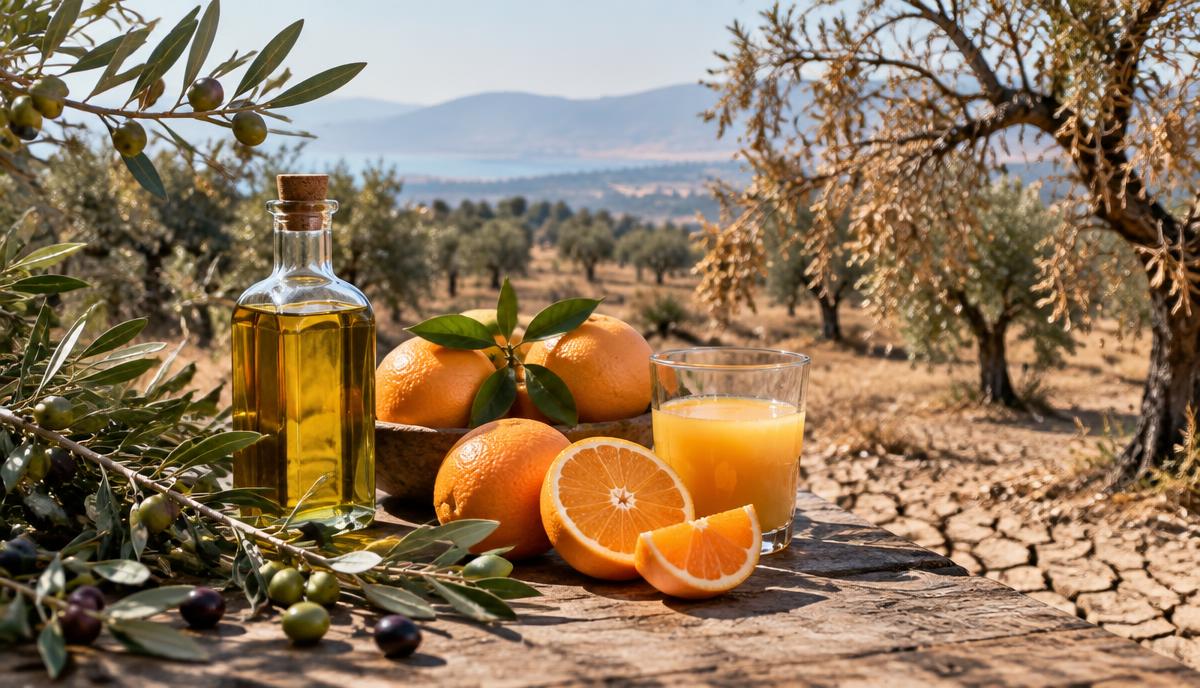
Olive Oil, Orange Juice and the New Climate Price Shock
Crops concentrated in one or two climate-exposed regions now follow a boom and bust pattern, with heat, drought and disease compounding the swings. This piece looks at olive oil, orange juice and vanilla, explains why prices fall back but not to old levels, and asks who carries the risk when hedging is thin.
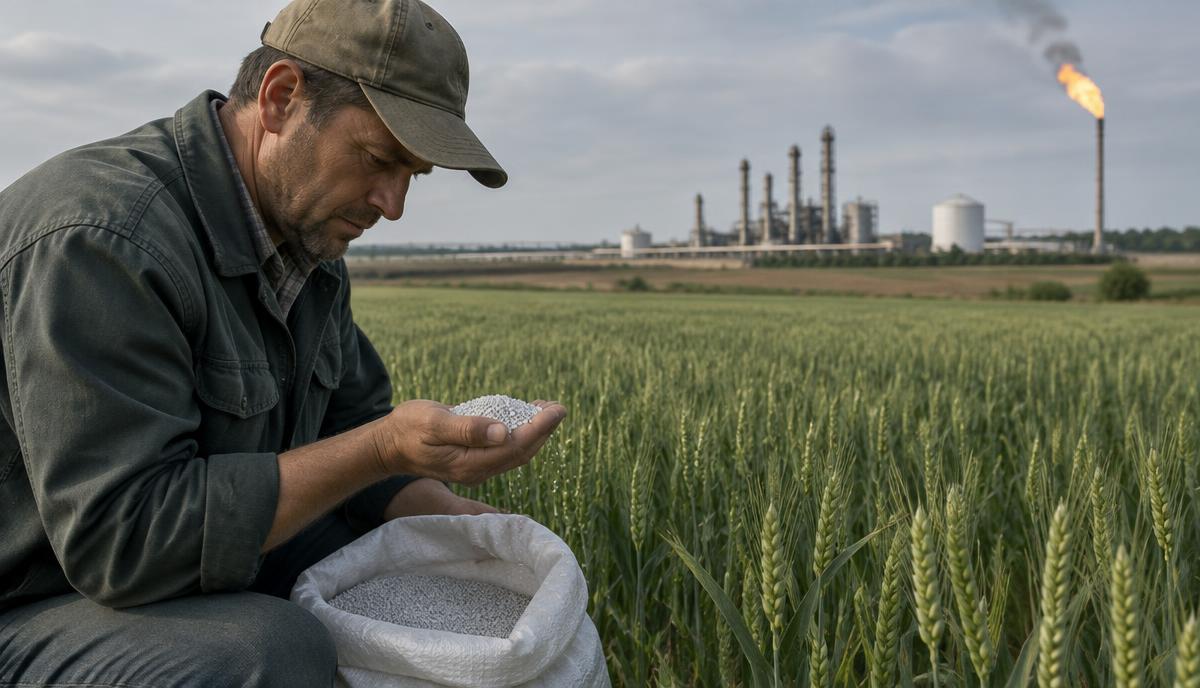
Fertilizer Prices Are the Hidden Driver of Food Inflation
Fertilizer is made from natural gas and from potash and phosphate controlled by a handful of exporters, so its price follows energy and trade policy more than crop demand. This piece argues that fertilizer affordability, not only grain prices, sets farmers' planting decisions and next season's food prices, and looks at what India, Africa and efficiency measures change.
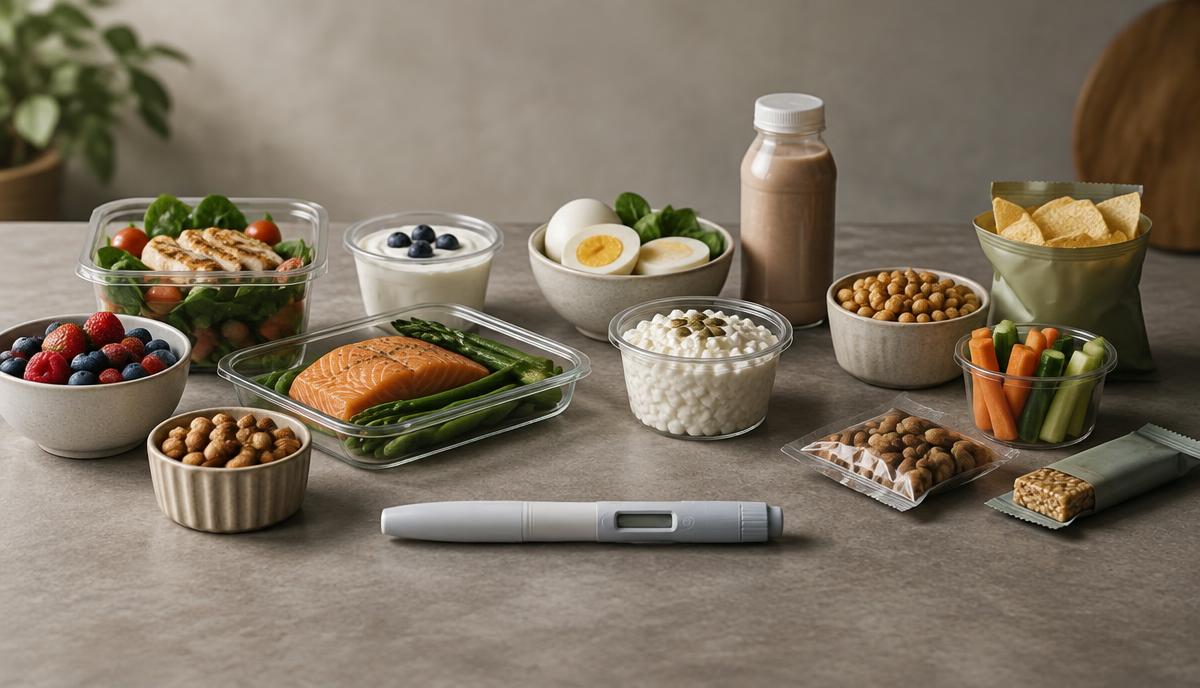
GLP-1 Drugs Are Starting to Change What the Food Industry Sells
Semaglutide and tirzepatide are changing grocery baskets, restaurant portions and product launches in the United States. This piece argues that the food industry is facing its first pharmacological shift in appetite, traces the consequences for protein, fibre, portion size and the commodities behind them, and sets out why it will not become a universal change.