Why Food Supply Chains Are Becoming Shorter
Distance and concentration, once prized as efficiency, are now treated as risk across global food supply chains
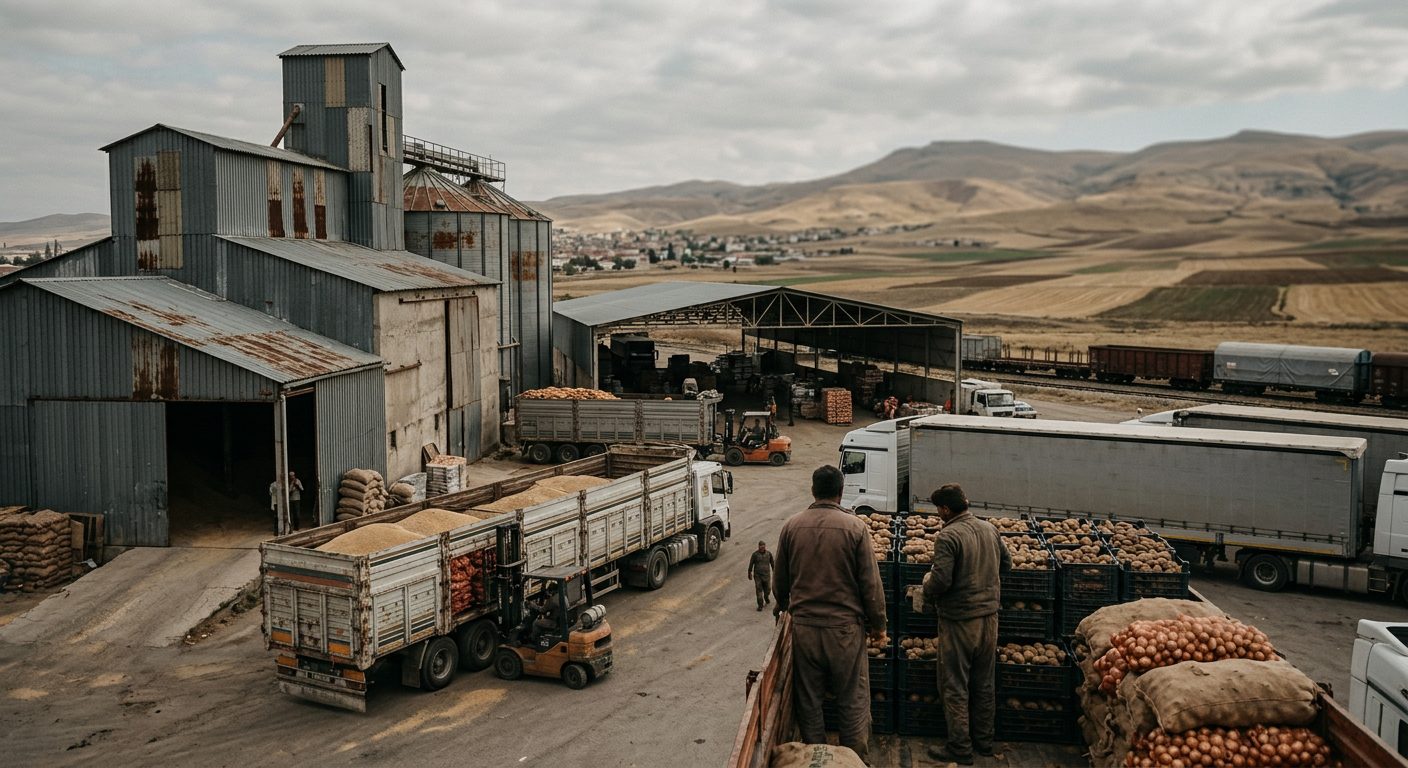
Cocoa hit $13,000 a ton in December 2024, a fourfold jump over its historical average, because more than half the world's supply comes from a strip of West African land the size of Poland. Egypt's strategic wheat reserve, which once ran as low as 2.3 months of national demand, is now managed as a matter of state survival, with officials briefing the president directly on stockpile capacity. These are not separate stories. They are symptoms of the same realization that has taken hold among food executives, agriculture ministers and supply chain economists since 2022: distance and concentration, once treated as sources of efficiency, are now treated as sources of risk.
The shift has a name in industry circles, borrowed from manufacturing but increasingly applied to agriculture: nearshoring, regionalization, friend-shoring. The impulse is older than the war in Ukraine, dating to pandemic-era shortages of everything from wheat flour to cooking oil, but the invasion in February 2022 turned a logistics headache into a geopolitical one, and the volatility has not let up since. What follows is not a story about supply chains becoming short everywhere. It is a story about which parts of the food system can be shortened, which cannot, and why the difference matters more than the slogan.
The Concentration Problem Governments Can No Longer Ignore
Before 2022, food security planning in most importing countries treated global markets as a reliable buffer: if a harvest failed somewhere, another supplier would fill the gap, and prices would adjust rather than supply disappearing. Russia and Ukraine together exported roughly a quarter of the world's wheat and a large share of its sunflower oil and fertilizer inputs before the invasion. When that flow was disrupted, importing nations discovered how much of their food security rested on the assumption that someone else's surplus would always be for sale. The World Bank now counts 343 million people across 74 countries as acutely food insecure as of 2024, a figure shaped as much by trade disruption and conflict as by production shortfalls. That statistic is the backdrop against which finance ministries have started asking a blunter question than "where is food cheapest," namely "where is food certain."
Strategic Reserves Are Back in Fashion
The most visible response has been the revival of state grain stockpiling, a tool many governments had let atrophy after the 2007-08 food price crisis eased. China, which already held an outsized share of global grain reserves, has continued building them, controlling by some estimates roughly 70 percent of global corn reserves, more than half of world wheat stockpiles and over half of rice reserves, according to World Grain's reporting on the trend. Egypt, the world's largest wheat importer, has repeatedly adjusted its own reserve targets since 2022, with the Supply Ministry telling President Abdel Fattah al-Sisi it wanted to expand strategic wheat storage capacity toward 5 million tons after reserves at points fell to just over two months of coverage; officials have since described reserves fluctuating between roughly four and seven months of demand depending on the season and import pace. India, for its part, banned most non-basmati rice exports in 2023 to protect domestic stocks and prices, a move IFPRI and other researchers warned would ripple through import-dependent countries in Africa and Southeast Asia even as it insulated India's own consumers. The pattern across all three is the same: reserves and export controls are being used less as market-stabilization tools, which the World Bank's own food security economists caution they are poor at, and more as insurance policies against the next geopolitical shock.
Retailers Are Rewriting Sourcing Contracts, Not Just Marketing Copy
The corporate side of this shift shows up less in dramatic announcements than in contract renegotiation. Kroger, seeking regulatory goodwill for its proposed merger with Albertsons, pledged in 2024 to expand local sourcing by 10 percent following the deal's close, translating to at least 30 additional locally sourced items per store, alongside existing programs like a digital farmers market pilot running in Knoxville and Columbus. Kroger CEO Rodney McMullen framed the commitment around supporting "the innovation that only a small business owner can create," but the underlying economics are just as important as the sentiment: local suppliers shorten lead times, reduce exposure to ocean freight volatility and give retailers a hedge against the kind of port congestion that crippled grocery restocking during the pandemic. Walmart has pursued a parallel but more technological version of the same instinct, investing in AI-based produce and crop monitoring partnerships to tighten visibility into its supply base rather than simply diversifying it geographically. Consumer demand has met corporate strategy partway: industry research cited in trade coverage shows shoppers under 35 buy locally branded products roughly twice as often as those over 55, giving retailers a commercial rationale that lines up neatly with a resilience rationale.
What the Consultants Are Telling Boardrooms
McKinsey's 2024 global supply chain survey of 88 supply chain leaders found that 73 percent of respondents report progress on dual-sourcing strategies and 60 percent have implemented some form of regional localization, though the firm notes that momentum on both fronts has plateaued over the past two years after an initial post-pandemic surge. That plateau is telling: the easy diversification moves, switching a second supplier onto an existing contract, adding regional buffer stock, have largely been made, while deeper structural change, actually relocating processing capacity or renegotiating multi-year agricultural contracts, is slower and costlier. Boston Consulting Group's 2025 work with Quantis on agrifood supply chains sharpens the diagnosis further, modeling production risk across 15 major crops and finding global output could decline by an average of 12 percent by 2050 under current climate trajectories, with some staples falling far more. BCG's authors, including managing director Shalini Unnikrishnan and senior partner Hamid Maher, argue that companies need what they call a three-step resilience approach: mapping climate and geopolitical risk with the same rigor once reserved for financial risk, building diversified sourcing portfolios across both crops and geographies, and standing up real-time monitoring, essentially digital control towers, so disruptions are caught before they cascade into shortages. Their framework identifies a specific danger they call the "single-variant trap," in which a crop's genetic uniformity, not just its geography, becomes the vulnerability, citing the Cavendish banana's roughly 95 percent share of global exports as a warning of what concentration risk looks like when it is biological rather than logistical.
The Fertilizer Lesson: Diversification Is Possible, But It Takes Years
Fertilizer markets offer the clearest evidence that regionalization works, but only on a multi-year timeline and only when alternative producers already exist. Russia and Belarus dominated global potash exports before the invasion; sanctions and Baltic port restrictions cut Belarus's global share roughly in half, according to IFPRI's trade analysis, while nitrogen exporters in Egypt, Nigeria and the United States collectively grew their urea exports by almost 50 percent between 2021 and 2023 to help fill the gap. Non-Russian and non-Belarusian potash producers grew their combined global market share from 20 percent in 2021 to 29 percent in 2023. That is a genuine, measurable shift toward supply diversification, achieved not through sentiment but through capital investment in alternative production and new trade corridors, including a notable rerouting of Belarusian potash through Chinese rail transshipment rather than Baltic ports. The lesson for food executives is that shortening or diversifying a supply chain is achievable when substitute sources of production exist somewhere on the planet. The harder question is what happens when they do not.
Coffee and Cocoa Show the Limits of the Strategy
Not every commodity can be nearshored, and this is where the regionalization narrative runs into agronomy. Cocoa grows commercially in a narrow band roughly 20 degrees north and south of the equator, and West Africa, primarily Ivory Coast and Ghana, supplies more than 60 percent of the global crop because the region's rainforest microclimate, which recycles an estimated 80 to 90 percent of local rainfall, is not easily replicated. S&P Global's sustainability research finds that climate change could drive production gaps of 10 to 30 percent for both cocoa and coffee across West Africa and Latin America under moderate emissions scenarios, and recent years have already delivered a preview: heavy rains cut West African cocoa yields by roughly half in the 2023-2024 season, while Colombia's extended 2019-2022 La Niña episode reduced its coffee output by nearly a quarter. Buyers cannot simply build a domestic cocoa industry in Europe or North America the way a retailer can source produce regionally, and the European Union's own deforestation regulation, which bars imports grown on land cleared after December 2020, closes off the option of expanding into new forest frontier as a workaround. For these crops, the realistic resilience strategy is not shortening the chain but diversifying within the narrow band where cultivation is viable, investing in disease-resistant varieties, agroforestry techniques that protect yields under heat stress, and direct trade relationships that give farmers the income to survive a bad season rather than abandon the crop entirely.
The Real Shift Is Toward Selective, Not Universal, Regionalization
The throughline across grain reserves, retailer sourcing pledges, fertilizer trade data and cocoa economics is that companies and governments are not attempting to shorten food supply chains indiscriminately. They are triaging. Where substitute production exists within reasonable distance, as with grains, fertilizer inputs and fresh produce, the money is moving toward shorter, more diversified, more monitored supply networks, and the McKinsey and BCG data both show that movement is real even as it slows. Where geography and climate impose hard limits, as with cocoa and coffee, the strategy is not regionalization but risk management within an irreducibly global and increasingly fragile production zone. The mistake would be treating "shorter supply chains" as a universal fix rather than what it actually is: a targeted correction for the specific kinds of concentration risk that 2022 exposed, paired with an acknowledgment that some of the food system's most vulnerable commodities will stay concentrated no matter how much boardrooms wish otherwise.
Sources: World Bank, "Leveraging strategic grain reserves to enhance food security"; World Grain, "From the editor: More countries stockpiling grain"; EgyptToday, "Egypt seeks to increase strategic wheat reserve capacity to 5 million tons: Supply min. tells Sisi"; Ahram Online, "Egypt's strategic reserves of wheat, commodities sufficient for 4-6 months: Supply minister"; IFPRI, "India's new ban on rice exports: Potential threats to global supply, prices, and food security"; Supply Chain Dive, "Kroger makes local sourcing pledge tied to Albertsons merger"; McKinsey & Company, "Global Supply Chain Leader Survey 2024"; BCG and Quantis, "Building Resilience in Agrifood Supply Chains" (2025); S&P Global Sustainable1, "Brewing risks: Cocoa and coffee supply chains face escalating climate pressures"; IFPRI, "Global fertilizer trade 2021-2023: What happened after war-related price spikes"
The Food Observatory Brief
Weekly briefing on food systems, climate, agriculture and policy — straight to your inbox.
More on Markets
Olive Oil, Orange Juice and the New Climate Price Shock
Crops concentrated in one or two climate-exposed regions now follow a boom and bust pattern, with heat, drought and disease compounding the swings. This piece looks at olive oil, orange juice and vanilla, explains why prices fall back but not to old levels, and asks who carries the risk when hedging is thin.
Fertilizer Prices Are the Hidden Driver of Food Inflation
Fertilizer is made from natural gas and from potash and phosphate controlled by a handful of exporters, so its price follows energy and trade policy more than crop demand. This piece argues that fertilizer affordability, not only grain prices, sets farmers' planting decisions and next season's food prices, and looks at what India, Africa and efficiency measures change.
GLP-1 Drugs Are Starting to Change What the Food Industry Sells
Semaglutide and tirzepatide are changing grocery baskets, restaurant portions and product launches in the United States. This piece argues that the food industry is facing its first pharmacological shift in appetite, traces the consequences for protein, fibre, portion size and the commodities behind them, and sets out why it will not become a universal change.