Antimicrobial Resistance Starts on the Farm
The EU suspended Brazilian meat imports over antimicrobial guarantees, showing how farm drug use has become a condition of market access
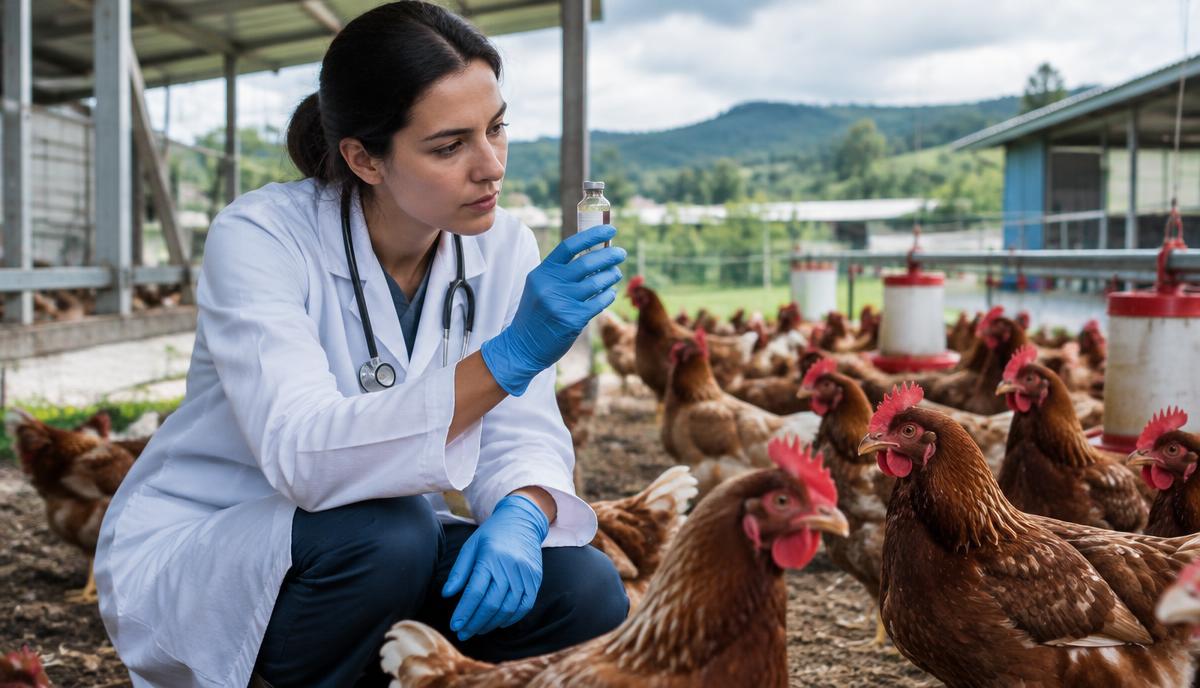
The Day Brussels Closed Its Border to Brazilian Chicken
On 3 September the European Union suspended imports of Brazilian beef, poultry, eggs and honey. The cause was neither disease nor tariffs. Brazil had not given Brussels the written guarantees that the EU now demands of every exporter: that animals were not given antimicrobials to make them grow faster, and that drugs reserved in Europe for treating certain human infections were not used on them. Talks between Brasília and the Commission were still running when the suspension took effect, and audits of poultry and honey were under way. Whatever the outcome, the episode shows how far the question has moved. Antibiotic use on farms is now a condition of market access, argued over in trade negotiations rather than left to veterinary journals.
The reason is a fact that hospital-centred strategies tend to underplay. Bacteria do not respect the wall between a barn and a ward. Resistance genes travel on mobile pieces of DNA that pass between species, and the routes from livestock and fish ponds to people are well mapped: meat and eggs, farm workers, manure spread on fields, runoff into water. A drug-resistance crisis that is fed from the farm cannot be closed off at the hospital door.
Where the Drugs Go
Animal agriculture is among the largest consumers of antibiotics, and the growth in demand is concentrated where production is expanding fastest. A 2025 study in Nature Communications by FAO economists and Thomas Van Boeckel of the University of Zurich put global livestock antibiotic use at about 110,777 tonnes in 2019 and projected 143,481 tonnes by 2040 if nothing changes, a rise of 29.5 percent. Asia and the Pacific would account for about 65 percent of the total, with growth of 41.1 percent over the period. Africa is projected to grow almost as fast, at 40.8 percent, while Europe stays flat and North America edges down. Pigs are the biggest single consumer, followed by cattle and farmed fish.
The World Organisation for Animal Health (WOAH) reports the other side of the ledger. Its ninth annual report, published in May 2025, drew on 157 reporting countries, 111 of which supplied quantitative data covering 71 percent of global animal biomass. Use fell 5 percent between 2020 and 2022, from 102 to 97 milligrams per kilogram of animal biomass. Europe cut 23 percent and Africa 20 percent, while the Americas managed 4 percent and Asia and the Pacific only 2 percent. The projections and the reports do not contradict each other. One measures two recent years among countries that report; the other describes where herds and flocks are heading. Use for growth promotion has also been fading, with 71 percent of countries having stopped it, but 22 percent of respondents still allow it.
A Gene That Left the Pig Pen
The strongest evidence that farm use reaches human patients comes from a natural experiment in China. Colistin is a last-resort drug for infections that nothing else will treat, and for years it was also a routine feed additive. In 2017 China banned it for that purpose. Production of colistin fell from 27,170 tonnes in 2015 to 2,497 tonnes in 2018. A study led by Yang Wang and Jianzhong Shen, published in The Lancet Infectious Diseases in 2020, tracked what followed. Colistin-resistant E. coli in pigs dropped from 34.0 percent of samples in 2015 and 2016 to 5.1 percent in 2017 and 2018. In chickens it fell from 18.1 to 5.0 percent. In hospital patients, carriage of E. coli with the mcr-1 resistance gene fell from 14.3 percent in 2016 to 6.3 percent in 2019.
The data are observational, and a ban cannot be proven to be the only cause of the decline in patients. But the direction and timing match, and they show what a hospital-only view cannot: when use on the farm falls, resistance in the clinic follows. India took a similar step in 2019, banning colistin in animal feed.
What a Hospital-Only Strategy Misses
The burden that resistance already carries is large. The Global Research on Antimicrobial Resistance (GRAM) analysis in The Lancet estimated 1.14 million deaths directly attributable to bacterial resistance in 2021 and 4.71 million in which it played a part. Without intervention, 39 million deaths are forecast to be directly attributable to resistance between 2025 and 2050, rising to 1.91 million a year by 2050, with South Asia carrying the heaviest load. Deaths among children under five fell by half between 1990 and 2021, thanks largely to vaccines and sanitation rather than any retreat of resistance, while deaths among people over 70 rose by more than 80 percent.
The political declaration adopted at the UN General Assembly in September 2024 sets the targets that govern the next four years: a 10 percent cut in the 4.95 million annual deaths associated with bacterial resistance by 2030, at least 70 percent of human antibiotic use drawn from the WHO Access group, and funded national plans in 60 percent of countries. It also commits governments to a "meaningful reduction" in antimicrobials used across the agrifood system. That phrase carries no number. The human targets are measured and dated, while the farm commitment is an intention. Governments are more precise about the part of the problem that sits in hospitals than the part that feeds them.
Europe's Experiment in Cutting Use
Europe has made the most ambitious legal reset of farm antibiotic use so far. Regulation (EU) 2019/6, in force since 28 January 2022, bans the preventive use of antimicrobials in groups of animals and restricts metaphylaxis, the treatment of a whole group once some animals are sick. Sales of veterinary antibiotics across 31 European countries had already fallen by more than half between 2011 and 2022. The Farm to Fork strategy aims for a 50 percent reduction by 2030 from a 2018 baseline of 118.3 milligrams per population correction unit, which means 59.2. By 2023 the EU stood at 88.5, about halfway to the target.
The European experience carries two cautions. First, banning routine prophylaxis only works if farmers have another way to keep animals healthy. Second, measurement lags behind policy. The European Medicines Agency declined to publish quantitative figures on actual use in its 2023 report because national data on cattle, pigs and poultry varied too much in completeness. Sales are a proxy for use, and a regulator that cannot see use cannot tell whether a farm is complying.
Vaccines and Husbandry Do the Work Prescriptions Used To Do
The durable way to cut antibiotic use is to remove the need for it. Norwegian salmon farming shows the scale of what is possible. In 2020 only 48 antibiotic prescriptions were issued across the industry, which grew 1.4 million tonnes of fish, and 99 percent of farmed salmon never received an antibiotic. The industry has said the reduction, under way since the mid-1990s, rests on effective vaccines and attention to fish welfare. The drugs were displaced because the infections that justified them became rarer.
The FAO-led modelling reaches the same conclusion from the other direction. A combined strategy of halving antibiotic use per unit of animal biomass and producing more food from fewer animals would cut 2040 use by 56.8 percent against the baseline. Healthier animals convert feed better, die less often and need less treatment, so the gain is shared between public health and the farmer's margin. That is what makes the policy practical: a farmer who vaccinates, cleans housing, manages stocking density and improves water quality is protecting income as well as the drug supply.
Where There Are No Vets
All of this assumes someone to diagnose, prescribe and vaccinate. In much of sub-Saharan Africa and South Asia that person is far away or unaffordable, and rules written for Europe's veterinary system fail on contact. A cross-sectional study of households in Ghana and Burkina Faso found that veterinarians supplied 31.4 and 28.9 percent of the antibiotics given to livestock respectively. The rest came from drugstores, street pharmacies, drug peddlers, traditional healers and neighbours. Only 41.8 percent of Ghanaian and 22.4 percent of Burkinabe households consulted a veterinarian to diagnose a sick animal, and antibiotics were given to healthy animals too. The researchers pointed to cost, distance and thin rural veterinary infrastructure as the drivers.
In this setting a prohibition without access simply pushes sales further underground. What works is closer to the human health model of community-based care: animal health workers and paraprofessionals trained to diagnose common conditions, affordable rapid diagnostics, vaccines that survive the cold chain, and drug supply routed through licensed outlets. Export markets are starting to force the issue from outside. India was added in June to the EU's list of authorised exporters for products including aquaculture, eggs and honey, after prohibiting 34 antimicrobials for animal use in 2025. Compliance there was driven by trade access, and smallholders without export links will need a different incentive.
The Missing Number
The 2030 deadline is now four years away, and the declaration's weakest clause is the one that matters most for where resistance begins. Countries that want to meet the human mortality target should set their own numeric reductions for farm use, report them through WOAH's ANIMUSE database, and attach public money for veterinary services and vaccines to those numbers. The alternative is the Brazilian pattern, in which the border does the regulating after the fact, bluntly and at great cost. The cheapest place to remove a resistance gene from circulation is the farm where a drug was given to an animal that was not sick.
**Sources:** World Organisation for Animal Health (WOAH), "Annual Report on Antimicrobial Agents Intended for Use in Animals, 9th Report"; World Organisation for Animal Health (WOAH), "Less antimicrobial use in animals: a win for everyone"; World Health Organization, "World leaders commit to decisive action on antimicrobial resistance"; University of Oxford, "Antibiotic resistance has claimed at least one million lives each year since 1990" (GRAM study in The Lancet); Nature Communications, "The future of antibiotic use in livestock"; The Lancet Infectious Diseases, "Changes in colistin resistance and mcr-1 abundance in Escherichia coli of animal and human origins following the ban of colistin-positive additives in China"; European Commission, "Questions and answers on veterinary medicines (Regulation (EU) 2019/6)"; European Medicines Agency, "European sales and use of antimicrobials for veterinary medicine: annual surveillance report 2023"; Euronews, "EU suspension of Brazilian meat comes into force, despite ongoing talks with Brasília"; Aquaculture Magazine, "99% of Norwegian salmon have never been treated with antibiotic"; ScienceDirect, "Exploring households' access and utilization of antibiotics for their livestock: A cross-sectional study in Ghana and Burkina Faso"; Down To Earth, "India's Antibiotic Use in Food Animals Under Scrutiny as EU Export Rules Tighten"
The Food Observatory Brief
Weekly briefing on food systems, climate, agriculture and policy — straight to your inbox.
More on Health

School Meals Are the Most Underrated Food Policy
School meals reach hundreds of millions of children and work at once as nutrition policy, education policy, social protection and a guaranteed market for local farmers. This piece explains why they are the rare food policy where health, farmer income and equity point the same way, and which contract terms decide whether the benefits materialise.
Ultra-Processed Foods and the Fight Over a Definition
Regulators, researchers and food companies are contesting what counts as ultra-processed food, because whatever the definition captures decides what gets labelled, taxed, restricted in school meals or marketed. This piece traces how the NOVA research category became a legal one, what the evidence on health outcomes does and does not show, and what a workable definition could look like.