Ultra-Processed Foods and the Fight Over a Definition
The first US definition of ultra-processed food is with the White House budget office, and the fight is already about where the line falls
Eighty percent of the shelf, in one sentence
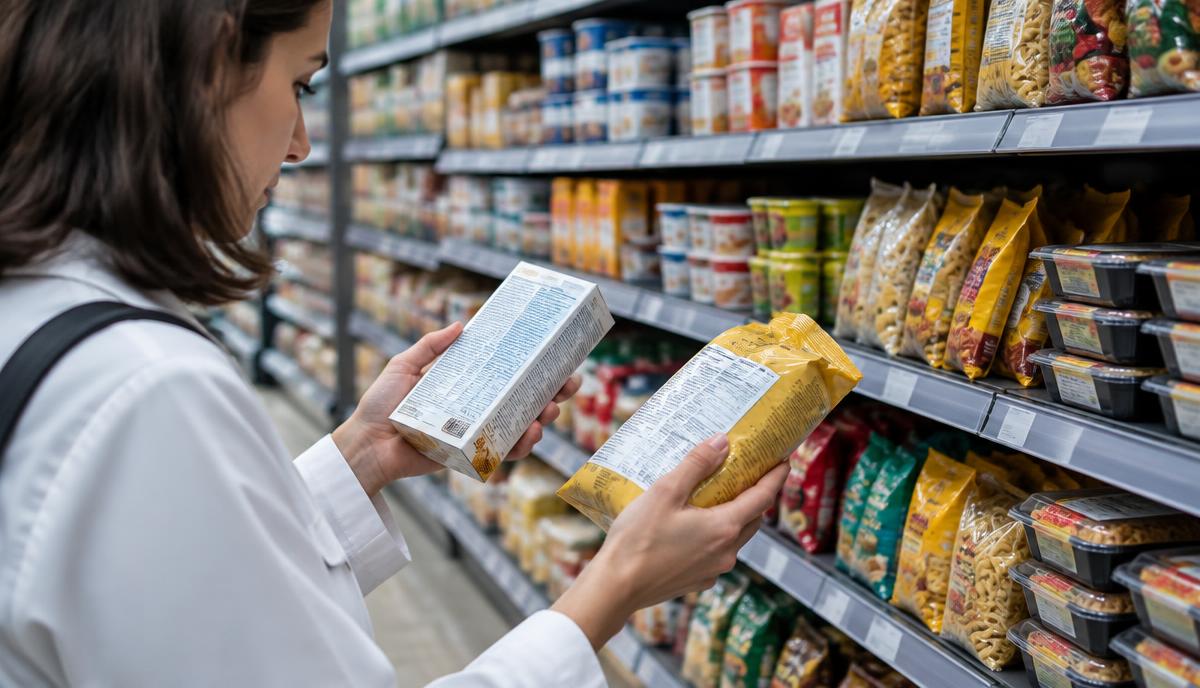
When the Consumer Brands Association responded to news that the US government had sent its first definition of ultra-processed food to the White House budget office for review, it did not argue about nutrition. It argued about arithmetic. "Any so-called definition that captures 80 percent of the nation's food supply while picking winners and losers is fundamentally flawed," the trade group said after the 10 August announcement by Health Secretary Robert F. Kennedy Jr. Nobody outside the agencies had seen the text, yet the industry was already fighting over where the line would fall.
That is the argument of this piece. The scientific dispute over ultra-processed food (UPF) is real and unfinished, but the political dispute has moved ahead of it. A definition is no longer a research convenience. It is the sorting rule that will determine which products carry a warning, which are barred from school canteens, which can be advertised to children and which attract a levy. Whoever writes the rule writes the policy.
How a research category became a legal one
The classification at the centre of the fight is NOVA, devised by Carlos Monteiro and colleagues at the University of São Paulo. It sorts foods into four groups by the extent and purpose of industrial processing, and its fourth group, ultra-processed, is defined less by nutrients than by formulations: products built from extracted substances and cosmetic additives that do not appear in a home kitchen, such as emulsifiers, flavour enhancers, colours and protein isolates. NOVA was designed to describe dietary patterns in epidemiology. It was never drafted as statute.
The trouble begins when a category made for describing populations is asked to judge individual products. An epidemiologist can tolerate a fuzzy edge because errors wash out across thousands of participants. A school procurement officer, a labelling inspector or a tax authority cannot, and NOVA was not built to give them the same answer for the same yogurt every time.
The Lancet series and the answer from industry
The push for legal use gathered force in November 2025, when The Lancet published a three-paper series with 43 authors, among them Monteiro, Marion Nestle, Barry Popkin and Phillip Baker, funded by Bloomberg Philanthropies. It reported that UPFs supply more than half of dietary energy in the United States and United Kingdom, that Spain's share rose from 11 to 32 percent of energy, and that of 104 long-term studies reviewed, 92 found increased risk of chronic disease. It then moved from diagnosis to prescription: front-of-pack labels, marketing limits, bans in schools and hospitals, and taxes on selected products. It pointed to Brazil's rule that 90 percent of food in schools should be fresh or minimally processed.
The reply came within days. FoodDrinkEurope called the series "big claims, weak science, wrong focus" and argued that a category sweeping in wholegrain bread, plant-based foods and fortified cereals would penalise affordable nutrition. Its consumer-information director, Sara Lamonaca, said that if a meaty pasta sauce or a vegetable preserve can be branded ultra-processed and therefore bad, "we've lost the plot." These are interested parties, but the objection about breadth is a fair one, and independent scientists made a version of it too.
What the evidence shows, and where it stops
The observational record is large and consistent in direction. Cohort studies repeatedly link high UPF intake to obesity, type 2 diabetes, cardiovascular disease and earlier death. The weakness is the one that besets all diet epidemiology: people who eat a lot of UPF differ from people who do not in income, time, education and much else. The Scientific Advisory Committee on Nutrition (SACN), which advises the UK government, called the association "concerning" in its April 2025 review but noted that the evidence is almost exclusively observational and cannot show causation.
Experiments are fewer and shorter. The best known, run by Kevin Hall at the US National Institutes of Health and published in 2019, put 20 people in a ward for a month, two weeks on each diet. On the ultra-processed menu they ate about 500 more calories a day and gained roughly 0.9 kilograms. It showed that those meals, under those conditions, drove overeating, but it was small and brief.
Statisticians reading the Lancet papers made the measurement point sharply. Kevin McConway of the Open University said UPFs "have not been defined clearly enough" for the strength of the claims, and Gunter Kuhnle of the University of Reading observed that existing dietary data often cannot tell an ultra-processed loaf or yogurt from a plainer version of the same food. Martin Warren of the Quadram Institute said the causal claims went further than the data could fully support, citing socioeconomic confounding. If the exposure cannot be measured reliably, the risk estimate attached to it cannot be relied on for a regulator's threshold.
Processing or nutrients?
The deepest scientific question is whether processing does harm independent of what the food contains. Most ultra-processed products are also high in sugar, salt, saturated fat and energy density, so the two explanations travel together. SACN said exactly this: it remains unclear whether these foods are harmful because of processing or because of their nutrient profile.
A 2025 trial from University College London tried to separate them. Fifty-five adults ate eight weeks of minimally processed food and eight weeks of ultra-processed food, both designed to follow the UK's Eatwell Guide, with no instruction to restrict intake. Weight fell 2.06 percent on the minimally processed diet and 1.05 percent on the ultra-processed one, about a one kilogram gap. Both diets lost weight. The result suggests processing matters even when nutrient targets are met, but modestly. David Ludwig, Walter Willett and Mary Putt questioned in Nature Medicine in January 2026 whether so small a difference justifies guidance targeting processing on top of existing nutrient advice. The senior author, Rachel Batterham, drew a practical conclusion in the other direction: stick to nutritional guidelines and moderate overall energy intake.
The fair summary is that the strongest harms cluster in products that fail on nutrients anyway, that a residual processing effect is plausible and perhaps small, and that nobody has yet shown which specific feature of processing carries it. That uncertainty is tolerable in a journal. It is expensive in a statute.
Three jurisdictions, three definitions
Governments have not waited for consensus, and they are not converging. California's Real Food, Healthy Kids Act, signed on 8 October 2025, defines UPF by ingredient and nutrient together: a food counts if it contains certain additive classes (colours, emulsifiers, flavour enhancers, stabilisers, thickeners) and is high in saturated fat, sodium or added sugar, or if it contains a non-nutritive sweetener. It leaves the "particularly harmful" subset to the state's environmental health office and phases restricted foods out of reimbursable school meals by July 2035. The Texas approach in SB 25 skips processing altogether and requires warnings for 44 named ingredients, a rule a federal court blocked in February 2026 as compelled speech.
The United Kingdom has so far avoided a UPF definition. Its advertising restrictions on less healthy food, in force from 5 January 2026 with a 9pm television watershed and a ban on paid online promotion, rest on a nutrient profiling model and make no mention of processing. The government has signalled a move to the tougher 2018 version of that model, which would reclassify thousands of products, and industry groups such as IGD have warned of delays to mandatory reporting. Washington sits between the two. Its July 2025 request for information conceded that "there is no single, universally accepted definition" and that the category could catch both soft drinks and yogurt or whole-grain products. What emerged on 10 August was a white paper, according to one law-firm summary, not a binding rule.
What a workable definition could look like
The design problem is that a definition has to be checkable on a label, resistant to gaming and aligned with the harm it targets. Pure NOVA fails the first test, because assigning a product to group four can depend on production details not visible on a pack. Pure nutrient profiling passes it but ignores the processing question that started the debate.
A hybrid is where most serious proposals have landed. In May 2026 an expert panel convened by Healthy Eating Research, funded by the Robert Wood Johnson Foundation, recommended Nova group four as the scientific basis and an operational test an inspector can run: a product is ultra-processed if its ingredient list contains at least one marker, either a cosmetic additive or an ingredient of non-culinary use such as high-fructose corn syrup or protein isolates. Its key concession to critics is an exemption for products that meet a modified FDA "healthy" standard, with limits on added sugar, sodium and saturated fat and no non-sugar sweeteners. Wholegrain breads and plain-adjacent yogurts that happen to contain a stabiliser would escape; sweetened, flavoured products would not. California's law reaches a similar outcome by a different route.
Two further features would make such a rule more durable. The first is tiered use: a broad definition may be fit for a school menu or a warning, where a false positive costs one swapped product, but not for a tax, where it reshapes a market. The HER panel ranked school procurement, front-of-pack labels and marketing limits as high-feasibility actions and taxes as harder. The second is periodic review, because any ingredient list becomes a reformulation target the day it is written. If a flavour enhancer triggers the rule, manufacturers will swap it for something that does not.
The choice that remains
The mistake would be to treat the dispute as one that science must close before policy can proceed. It will not close soon, because the central causal question needs trials longer and larger than any now funded. The better question is which definition limits the damage of being wrong. A rule that exempts nutritionally sound products and targets additive-heavy, sugar-heavy formulations will catch most of the harm the evidence points to, whichever way the processing debate resolves. A rule that sweeps in 80 percent of the supply will be litigated, lobbied down or ignored. The fight over the wording is the fight over the policy, and the version most likely to survive is the one narrow enough to defend line by line.
**Sources:** The Lancet, "Ultra-processed foods and human health" (series, November 2025); Science Media Centre, "Expert reaction to paper 1 in the Lancet series on ultra-processed foods"; FoodDrinkEurope, "The Lancet takes on ultra-processed foods: Big Claims, Weak Science, Wrong Focus"; UK Scientific Advisory Committee on Nutrition, "Processed foods and health: SACN's rapid evidence update"; NIH Clinical Center, "First randomized, controlled study finds ultra-processed diet leads to weight gain"; Nature Medicine, "Ultraprocessed or minimally processed diets following healthy dietary guidelines on weight and cardiometabolic health: a randomized, crossover trial"; Nature Medicine, "Concerns over conclusions in an ultra-processed food trial"; University College London, "Less processed diet may be more beneficial for weight loss"; Federal Register (FDA and USDA), "Ultra-Processed Foods; Request for Information"; Food Safety Magazine, "FDA, USDA Submit 'Ultra-Processed Foods' Definition for Final Review"; Healthy Eating Research, "Ultraprocessed Foods in the U.S.: Recommended Definitions and Policies"; Morrison Foerster, "Newly Passed California Bill Defines Ultra-Processed Foods"
The Food Observatory Brief
Weekly briefing on food systems, climate, agriculture and policy — straight to your inbox.
More on Health

School Meals Are the Most Underrated Food Policy
School meals reach hundreds of millions of children and work at once as nutrition policy, education policy, social protection and a guaranteed market for local farmers. This piece explains why they are the rare food policy where health, farmer income and equity point the same way, and which contract terms decide whether the benefits materialise.
Antimicrobial Resistance Starts on the Farm
A large share of the world's antibiotics goes to livestock and aquaculture, and resistance genes travel from farms to people through food, water and soil. This piece argues that drug resistance cannot be solved inside hospitals alone, and examines Europe's experience cutting farm use, the role of vaccines and husbandry, and the reality in places with almost no vets.