GLP-1 Drugs Are Starting to Change What the Food Industry Sells
Smaller plates, more protein and weaker snacking: what a mass-market drop in appetite means for the food business
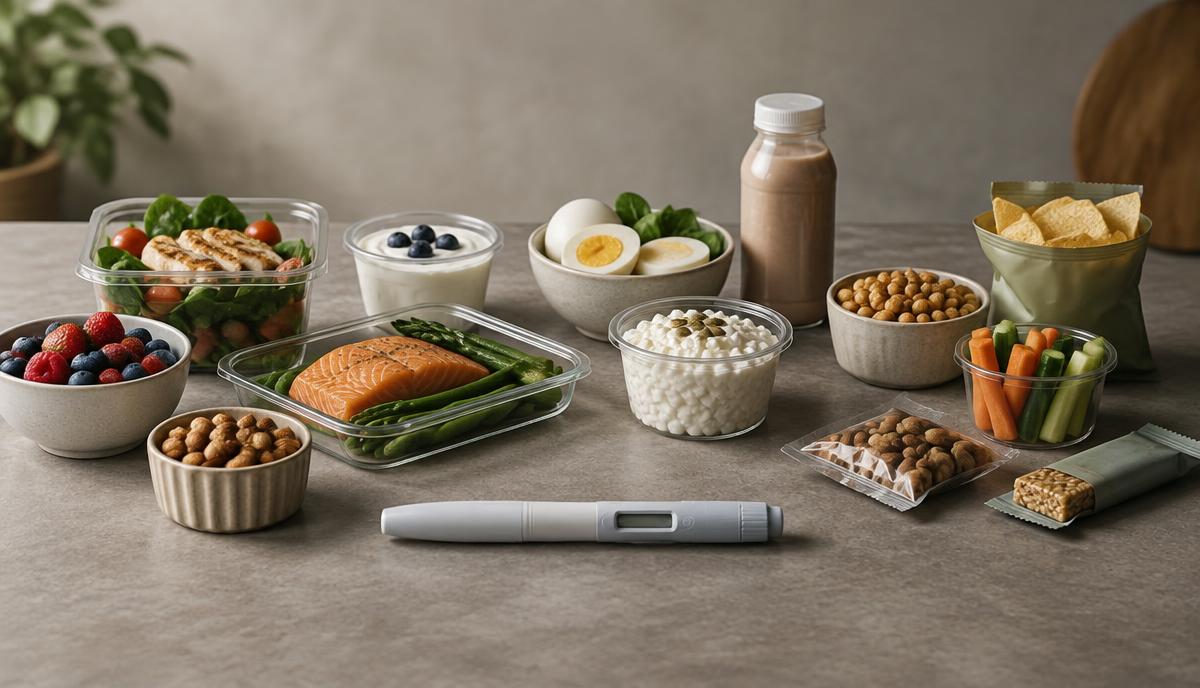
When Olive Garden added a "lighter portion" section to its menu in December 2025, the chicken parmigiana in it came in at 630 calories, down from 1,020 for the standard plate. Across the American restaurant trade the same arithmetic is being applied to burritos, sandwiches and pasta: less volume, more protein, a lower price for a smaller plate, in a market where semaglutide and tirzepatide are now common. For most of its modern history the food industry has treated appetite as a fixed quantity to be captured and shared out through price, flavour and marketing. A pharmacological reduction in appetite, at the scale now visible in the United States, breaks that assumption for the first time.
An appetite shift with a measurable base
The scale matters because every earlier dietary trend, from low-fat to low-carb to plant-based, changed what people chose to eat without changing how much they wanted. Gallup's July 2026 survey of 5,065 US adults found that 11 per cent were taking a GLP-1 drug for weight loss, up from 3 per cent in 2024 and 8 per cent in 2025, and that 15 per cent had used one at some point. Retail panels, which count households rather than adults, show higher figures. Numerator's August 2026 tracking put 22 per cent of US households as having a current user, double the October 2023 level, and Circana puts the share at 23 per cent. The gap between 11 and 22 per cent is mostly a matter of unit: one adult on a drug changes what a whole household's shopping trolley holds.
Europe is far behind, with adoption near 2 per cent according to dairy market analysts, so this is a story about one very large market first and global product planning second.
What the baskets show
The panel evidence agrees on direction and differs on size. A Cornell study published in the Journal of Marketing Research, using about 150,000 US households tracked by Numerator, found that grocery spending fell 5.3 per cent within six months of a household starting a GLP-1 drug, and by more than 8 per cent in higher-income households. Limited-service restaurant spending fell about 8 per cent. The cuts were concentrated in the foods that are eaten without being decided on: savoury snacks fell roughly 10 per cent, and sweets, baked goods and cookies fell steeply too. Yogurt, fresh fruit, nutrition bars and meat snacks rose.
Numerator's August 2026 update is more cautious about the long run. It found grocery spending 4 per cent lower than in comparable non-user households after a year, with users moving away from pasta and bakery towards protein, fibre, seafood and what it calls intentional snacks. Circana adds a counterpoint that matters for restaurants: its data show retail food spending down among users but restaurant spending up, and users still outspend non-users overall. Circana projects that GLP-1 users will account for 35 per cent of US food and beverage units sold by 2030.
These numbers describe a smaller basket with a different centre of gravity, not a collapse. A household spending 4 to 5 per cent less is a customer whose purchases must justify themselves gram for gram.
Design for a smaller stomach
If appetite is the constraint, the product has to deliver more of what the body needs in less food. That is the design logic behind the launches of the past two years, and it explains why protein and fibre dominate them. Nestlé introduced Vital Pursuit in 2024, described as its first major US brand in nearly three decades aimed at people managing weight on these drugs. Danone brought out an Oikos drink in 2025 formulated to help users keep muscle mass. Conagra added a "GLP-1 friendly" label to some Healthy Choice meals, and its demand science chief Bob Nolan told investors in February 2026, "We want to have products there for them when getting on GLP-1s." General Mills chief executive Jeff Harmening said at the same conference that anti-obesity drugs "will have a lasting influence on the food market," and the company is responding with smaller packs and protein-fortified versions of cereal and bars.
Kraft Heinz did not link its plans to the drugs, but its direction is the same. Chief executive Steve Cahillane told Bloomberg in March 2026 that a high-protein macaroni and cheese would carry 17 grams of protein and 6 grams of fibre per serving, and that a snack-sized Lunchables was coming. The brand is the same, the specification is not.
Not every executive agrees on the scale. Mondelez chief executive Dirk Van de Put said the effect on his company's volumes would be minimal and credited the protein and fibre shift to broader health trends. Both readings can hold, because the drugs concentrate a preference that already existed.
Portion size becomes a product decision
The most consequential change may be the least visible: the unit of sale. Packaged food and restaurant economics both depend on a standard portion that a consumer will finish. Where the standard portion is too large for a user to eat, the plate comes back half full, the consumer feels that value was lost, and the purchase is not repeated. Smaller packs and half-size entrees solve that problem, and they can protect revenue when a lower price is paired with a higher margin per gram, as protein-forward items allow.
Restaurants are moving first because they can change a menu in weeks. Chipotle launched a high-protein menu with a 32-gram chicken portion priced near a latte, Subway added "Protein Pockets" with more than 20 grams of protein, which it says are in 96 per cent of its US stores, and its president said GLP-1 use was "a key driver." Most brands signal the benefit through "high protein" and "supports muscle mass" rather than naming the drug, because explicit GLP-1 labelling can put some shoppers off.
Snacking loses its easiest sale
Impulse snacking is where appetite does the selling. A salty or sweet snack succeeds because it is eaten when not hungry, and a drug that quietens the signal for food takes away that opening. The Cornell finding of a roughly 10 per cent drop in savoury snack spending is the clearest measure of it. The surviving growth is in snacks that justify themselves nutritionally: bars, meat sticks and yogurt. The category is not disappearing, but its logic is turning from craving to function, and brands built entirely on the former have the most to rebuild.
From the shelf back to the commodity
Product changes travel upstream, and the most visible commodity effect so far is in dairy protein. Whey is a by-product of cheese, so its supply cannot be raised quickly without making more cheese. Prices for 80 per cent whey protein concentrate reached \$12.25 a pound in the United States on 31 August 2026, against \$5.25 a year earlier, and €25,995 a tonne in the European Union against €11,700, rises of about 134 and 122 per cent respectively. Sandro Schulz, a protein analyst at Expana, said supply growth is "lagging demand growth" because capacity takes time to come online. Appetite in one country has become a price signal for dairy processors in another.
The effect on carbohydrate crops is harder to measure, and the evidence does not yet support a figure. Panels show pasta, bakery, sweets and savoury snacks losing ground, and those categories are large users of wheat, sugar, corn and vegetable oil. If Circana's 2030 projection is anywhere near right, ingredient buyers will be planning around a category mix that favours protein, pulses, dairy and fibre sources, a mix that farmers and traders cannot reshape in a single season.
Why this will not become a universal appetite shift
The limits are large. Discontinuation is the first. A JAMA Network Open study of 125,474 US adults with overweight or obesity who started a GLP-1 drug between 2018 and 2023 found that 53.6 per cent had stopped within a year, rising to 64.8 per cent among those without diabetes and 84.4 per cent by year two. Circana's data show that behaviour partly reverts afterwards, though produce and some household habits persist, and about half of former users say they are likely to restart. Companies are designing for a user base that churns.
Nutrition is the second limit. A Frontiers in Nutrition cross-sectional study of 69 people on semaglutide or tirzepatide found average intake of 1,748 calories a day, only 43 per cent meeting minimum protein recommendations during weight loss, and shortfalls in vitamin D, potassium, magnesium, iron, calcium and fibre. The sample is small, but it shows why fortification is a design requirement rather than a marketing flourish.
Access is the third, and it limits the global picture more than any other. The World Health Organization's December 2025 guideline conditionally recommended GLP-1 drugs for obesity and warned that current production capacity could serve less than 10 per cent of the people who might benefit, even in the best case. Its director-general said that without concerted action the drugs could widen the gap between rich and poor. Supply is widening: the WHO counted 40 potential products entering the market by 2030, some in cheaper oral forms, and the Indian semaglutide patent expired on 20 March 2026, with nine domestic drugmakers including Sun Pharma, Dr. Reddy's and Zydus cleared to sell generics. Cheaper pills and generics will widen use in India and other large markets, but the pace depends on health systems and incomes, and the countries with the largest food import bills will not follow the American pattern at the American speed.
The food industry's real exposure is therefore not a sudden fall in demand but a permanent need to run two product strategies at once: one for a growing minority whose appetite is chemically reduced, and one for a majority whose appetite is not. The firms that treat the minority as a design brief rather than a threat, with portions, protein and fibre specified from the start and ingredient supply contracted ahead of it, will meet a cost problem the others face late: whey at twice last year's price is a bill that arrives before the shopper's basket has finished changing.
**Sources:** Gallup, "In U.S., GLP-1 Usage Reaches New High"; Grocery Dive, "GLP-1 users' grocery spending is dropping" (Numerator data, August 2026); ScienceDaily (Cornell University), "How Ozempic and Wegovy are quietly cutting America's food bills"; Circana, "GLP-1 Users Will Represent 35% of U.S. Food and Beverage Sales by 2030"; Food Dive, "Food makers warn GLP-1s will have 'lasting influence' on sector"; Sahm Capital (Bloomberg News interview), "Kraft Heinz to launch high-protein Mac & Cheese as CEO shifts focus from breakup"; NBC News, "Smaller portions, more protein: How GLP-1s are quietly changing chain restaurant menus"; Frontiers in Nutrition (via News-Medical), "GLP-1 weight loss drugs leave users low on key nutrients, study finds"; Nirvana Clinics, "Generic Semaglutide India 2026: Every Brand & Price After Patent Expiry"; JAMA Network Open, "Discontinuation and Reinitiation of Dual-Labeled GLP-1 Receptor Agonists Among US Adults With Overweight or Obesity"; Healio, "WHO conditionally recommends using GLP-1s to treat obesity worldwide"; DairyReporter, "GLP-1 nutrition trend fuels premium whey demand"
The Food Observatory Brief
Weekly briefing on food systems, climate, agriculture and policy — straight to your inbox.
More on Markets

Olive Oil, Orange Juice and the New Climate Price Shock
Crops concentrated in one or two climate-exposed regions now follow a boom and bust pattern, with heat, drought and disease compounding the swings. This piece looks at olive oil, orange juice and vanilla, explains why prices fall back but not to old levels, and asks who carries the risk when hedging is thin.

Fertilizer Prices Are the Hidden Driver of Food Inflation
Fertilizer is made from natural gas and from potash and phosphate controlled by a handful of exporters, so its price follows energy and trade policy more than crop demand. This piece argues that fertilizer affordability, not only grain prices, sets farmers' planting decisions and next season's food prices, and looks at what India, Africa and efficiency measures change.