The Coming Era of Climate Migration: for Crops
As heat and erratic seasons reshape what land can grow, crops themselves are being forced to migrate
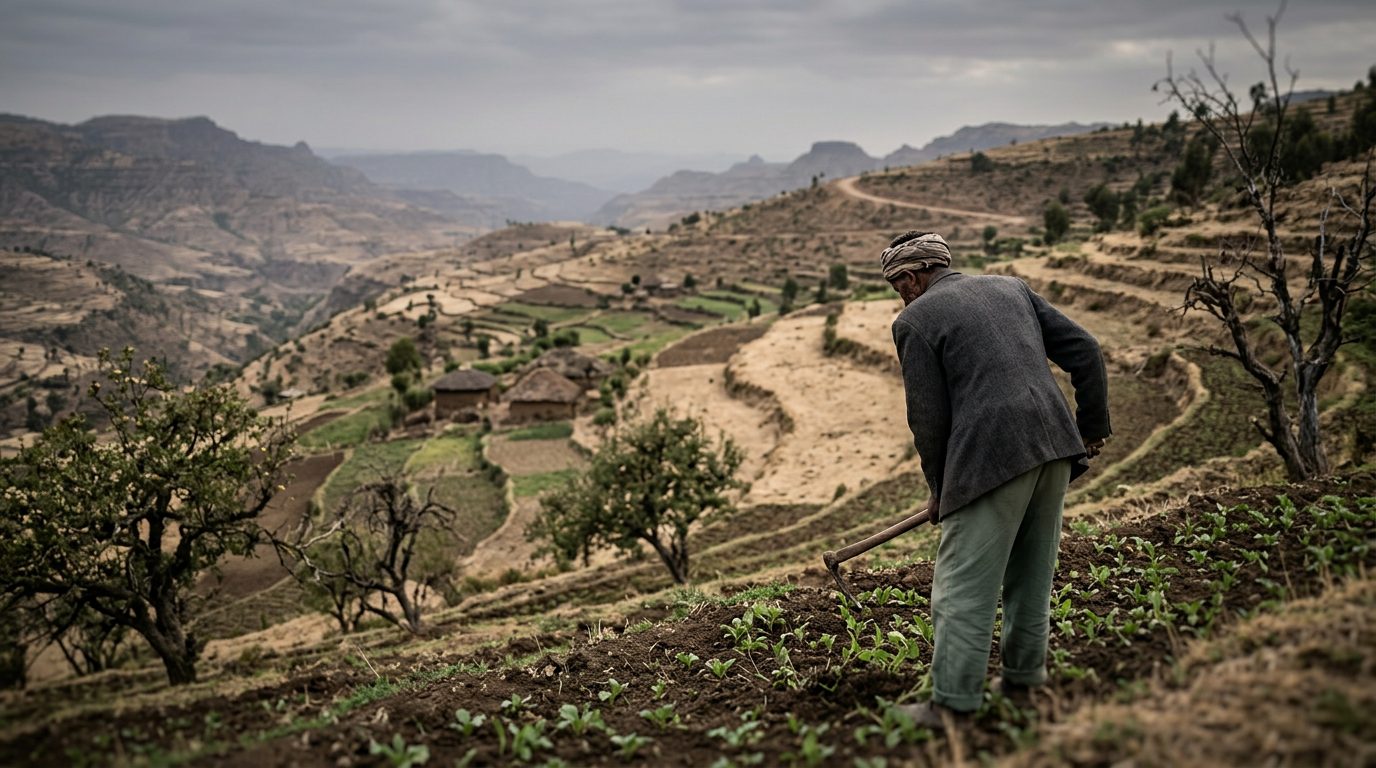
In Yakima County, Washington, the orchards that produce roughly a fifth of the United States' apple crop have spent forty years absorbing more heat days, warmer nights, and shorter cold seasons than growers have known how to plan around. A Washington State University analysis of climate data from 1979 to 2022, led by climate scientist Deepti Singh, found harmful trends in five of six metrics that determine apple quality in Yakima, the country's most productive apple county. Tree physiologist Lee Kalcsits put the compounding problem plainly: what happens in winter now determines what goes wrong in spring. Growers are answering with shade netting and evaporative cooling for now. But the deeper question hanging over Yakima, and over crop geographies from the Ethiopian highlands to the Kenyan savanna, is not how to endure a shifting climate in place. It is whether the plant, the practice, and the people who depend on it, should move somewhere else instead.
This is the slower cousin of human climate migration, and in some ways the more consequential one, because a displaced crop cannot simply cross a border and start over. It has to be bred, tested, replanted, and given years to prove itself in new soil. Agriculture is now visibly being pulled apart by a widening gap between where crops have always grown and where the climate that made those places suitable is heading next. The response taking shape, unevenly and often invisibly, is a three part strategy: farmers relocating what they plant, breeders assisting the migration of the varieties themselves, and gene banks holding the raw genetic material that any future relocation will need.
The Map Is Moving Faster Than the Farmer
Crop suitability maps, the tool researchers use to project where a given plant can still be reliably grown, have been quietly redrawn for two decades. Early modeling work by researchers including Andy Jarvis, whose findings are archived through CGIAR's CGSpace repository, established a pattern that has since been widely confirmed: climate change will shift the geography of crop suitability unevenly, and the regions with the least capacity to adapt will lose the most ground. Sub-Saharan Africa and the Caribbean face the sharpest contraction in cultivable area, while parts of Europe and North America gain new growing potential even as their traditional crop zones face other stresses. That asymmetry is the injustice underneath the technical story. The places least responsible for warming are the ones whose agricultural maps are eroding fastest, and they are also the places with the fewest resources to breed, irrigate, or relocate their way out of it.
CGIAR's newer climate modeling, folded into its 2025 flagship reporting, extends this into direct guidance for breeders: prioritize drought, flood, and heat tolerance, but weight those priorities by which crops the poorest and most dependent populations actually rely on. That is a deliberately unglamorous mandate. It is not about inventing a miracle grain. It is about triage, deciding which of the world's staple crops get the breeding investment to survive where they are, and which need to be nudged toward somewhere else entirely.
Kenya's Breadbasket Problem Has No Easy Replacement
Nowhere is that triage more visible than in East Africa's maize belt. Maize is not native to the region. It arrived through the Columbian exchange after 1500 and was pushed hard by colonial administrations, so thoroughly that by 1990 it supplied more than half of caloric intake in Malawi and Zambia. Today tropical maize yields are projected to fall roughly five percent for every additional degree Celsius of warming, and researchers project Eastern Africa could see yield losses approaching a third at just 1.5 degrees of warming. The 2021-2022 drought cut Kenya's national maize output by 22 percent and touched roughly a million people across the region, according to reporting compiled by MIT Technology Review.
Some farmers are not waiting for a breeding breakthrough. Danson Mutua, a farmer in Kanaani, Kenya, shifted a significant share of his land away from maize toward sorghum, pigeon peas, green gram, and other legumes better suited to erratic rainfall. When the drought hit, his diversified plots kept his household fed while maize dependent neighbors went without. "If I left it out, it would have disappeared," he said of the traditional sorghum seed he kept planting through years when almost nobody wanted it. "People will do anything when starving." Florence Wambugu, chief executive of Africa Harvest, described the harder cultural obstacle: farmers who plant maize, harvest nothing, and plant maize again the next season anyway, because it is what they know. The U.S. backed Vision for Adapted Crops and Soils initiative, which had pledged $200 million as of August 2024 and counts former special envoy Cary Fowler among its architects, is now funding breeding work on twenty so called opportunity crops, including finger millet, Bambara groundnut, and fonio, in an explicit bet that migration away from maize dependency, not just a better maize, is what food security in the region will require.
When the Crop Itself Has to Be Reintroduced to the Climate That Made It
Coffee offers the starkest version of assisted migration, because the plant's wild ancestors are running out of habitat faster than anyone can breed a replacement. Research from the Royal Botanic Gardens, Kew, led by Aaron Davis and Justin Moat, modeled the range of wild Arabica coffee, still concentrated in the Ethiopian and South Sudanese highlands where it evolved, and found that under worst case warming scenarios, bioclimatically suitable locations could shrink by up to 99.7 percent by 2080, effectively extinguishing wild Arabica in the wild. "The worst case scenario, as drawn from our analyses, is that wild Arabica could be extinct by 2080," Moat said. Coffee is the second most traded commodity on earth after oil, so the stakes extend well beyond conservation botany into the household economics of millions of smallholders.
Kew's response, working with Ethiopia's Environment and Coffee Forest Forum and researcher Tadesse Woldemariam Gole, has been to identify core refuge sites likely to remain climatically viable through the century and to begin moving seed and living material out of the most threatened populations into seed banks and botanical collections now, before the wild genetic diversity that future breeding will depend on simply disappears. This is assisted migration in its purest form: not waiting for the plant to fail in place, but actively relocating its genetic material ahead of the climate that is coming for it, so that breeders decades from now still have wild relatives to draw disease resistance and heat tolerance from.
Grapes Are Already Rewriting the Map of Northern Europe
Not every crop migration story is a crisis. Wine grapes are migrating north across Europe largely because warming has made previously marginal regions newly viable, and England is the clearest beneficiary. English sparkling wine, produced from the same chalk soils and now similar temperatures that define Champagne, has gone from a novelty to a serious export category over roughly two decades, and modeling from the University of East Anglia projects continued growth in UK wine production as warming continues. It is a useful reminder that crop migration is not simply a story of loss radiating outward from the equator. It also opens land that was never suitable before, and that reshuffling of winners and losers, not just the losses, is what plant breeders, land use planners, and agricultural economists now have to model.
The Vault Is Not a Backup, It Is a Staging Ground
None of this migration, forced or planned, works without somewhere to keep the genetic diversity that has not yet been needed. The Svalbard Global Seed Vault, built into a mountainside on a Norwegian archipelago inside the Arctic Circle, now holds more than 1.37 million seed samples, after a 2025 deposit season that added over 46,000 samples from institutions in Vietnam, Tanzania, Brazil, Malawi, Sudan, and the Philippines, among others. Stefan Schmitz, executive director of the Crop Trust, which manages the vault alongside the Norwegian government and the Nordic Genetic Resource Center, described the effort as work "about defusing a ticking time bomb that threatens our global food system." The framing is not metaphorical for every depositor. The Philippines has sent roughly a thousand genetic samples to Svalbard since losing 70 percent of its national gene bank collection to a 2006 typhoon, a loss that researcher Hidelisa de Chavez and her colleagues at the University of the Philippines still cite as the reason duplication at Svalbard matters, not as insurance against a hypothetical, but against something that has already happened once.
The vault's purpose is frequently misunderstood as a doomsday backup, to be opened only after some final catastrophe. Its actual daily function is closer to a staging ground. National genebanks and CGIAR centers, including the International Potato Center in Peru, which is cryopreserving hundreds of traditional sweetpotato varieties collected in Madagascar and Zambia, draw on stored diversity constantly to breed varieties suited to conditions that did not exist when the seed was collected. Morocco's national program used genebank held durum wheat lines to release a variety that showed yield gains above 40 percent under severe drought stress this year. That is what assisted migration actually looks like in practice: not a single dramatic relocation, but thousands of small transfers of genetic material from where a trait was preserved to where it is suddenly needed.
The Choice Ahead Is Between Planned and Forced Migration
Human climate migration is often discussed as something to be prevented, mitigated, or, failing that, managed with dignity. Crop migration deserves the same framing, because the alternative to planned relocation is not stability, it is failure in place. A grower who waits for a variety to stop producing before seeking an alternative, a nation that lets its gene bank collection go undocumented and undeposited, a breeding program that treats wild relatives as a curiosity rather than a resource, is choosing forced migration by default: sudden, costly, and frequently irreversible, since a crop population lost to drought or a genebank lost to conflict or disaster cannot be regrown from nothing. The infrastructure for the alternative already exists and is, by the standards of climate response, remarkably cheap and already working. Svalbard's entire operating model runs on a fraction of what a single failed harvest costs a maize dependent economy. What is missing is not the science of assisted migration but the political will to fund it before the emergency, rather than scrambling to catalog what is left after one.
Sources: Washington State University, "Prime apple-growing areas in US face increasing climate risks"; Grist, "The 'doomsday' seed vault in Svalbard just added thousands of climate-hardy crops"; Crop Trust, "Five Ways Crop Diversity Delivered in 2025"; CGIAR/CGSpace, "Changes in climate will modify the geography of crop suitability: agricultural biodiversity can help with adaptation"; MIT Technology Review, "Africa pursues crops of the past to fight hunger"; Royal Botanic Gardens, Kew, "Kew scientists reveal that 60% of wild coffee species are threatened with extinction"; Royal Botanic Gardens, Kew, "Is our daily cup of coffee under threat?"; University of East Anglia, "Study predicts growth in UK wine production due to climate change"; FAO, "Adapting maize production to climate change in sub-Saharan Africa"; Crop Trust, "Svalbard Global Seed Vault" program overview
The Food Observatory Brief
Weekly briefing on food systems, climate, agriculture and policy — straight to your inbox.
More on Climate
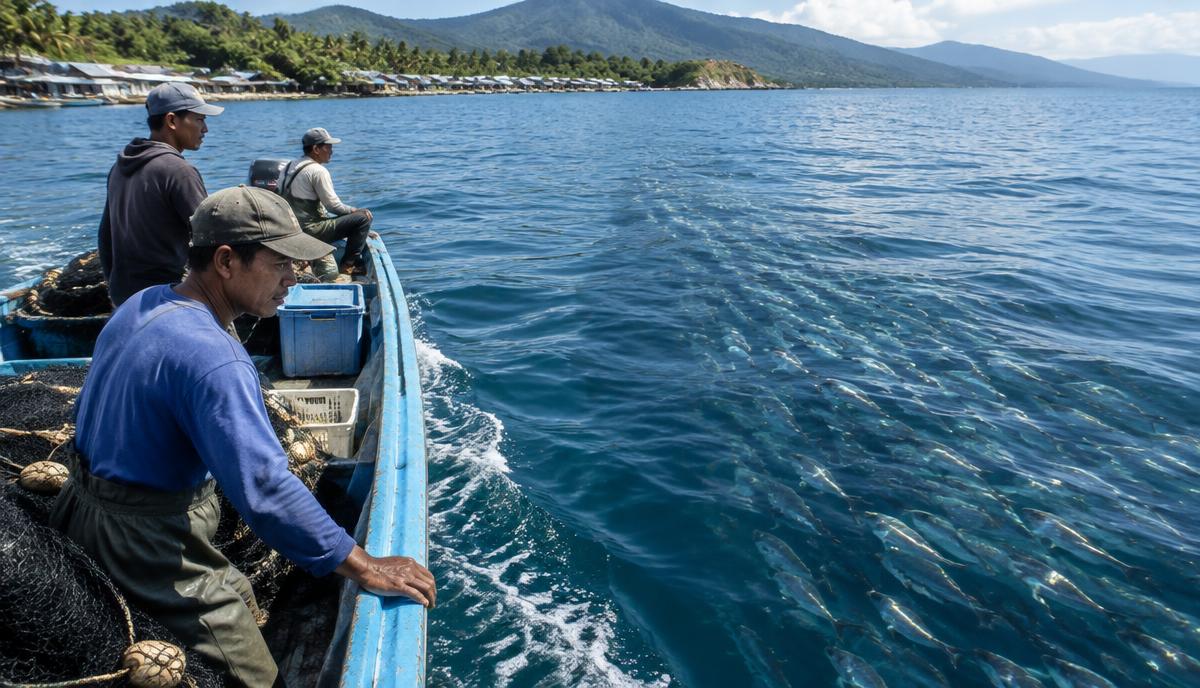
Warming Oceans Are Moving the World's Protein
Fish stocks are moving poleward and into deeper water as the oceans warm, while the countries that depend most on fish protein are often the least able to follow them. This piece argues that maritime boundaries, fisheries agreements and aquaculture investment have not caught up with moving fish.
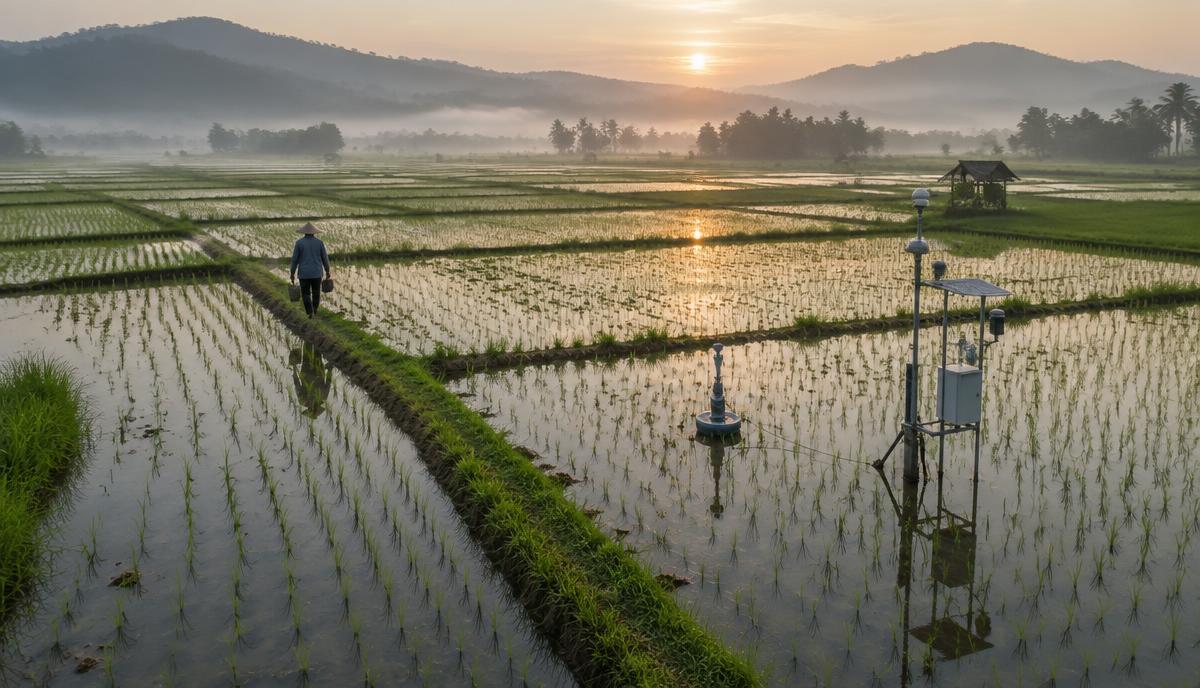
Rice Paddies and the Other Greenhouse Gas Problem
Flooded rice is a major source of human methane, and alternate wetting and drying or direct seeding can cut it while saving water. This piece uses the first payouts at Punjab Agricultural University to show why a known fix still struggles to scale, and what verification, contracts and policy would move adoption across South and Southeast Asia.