Why Extreme Heat Is Reshaping Global Food Production
The world's food system has always depended on weather. It was never designed for sustained heat.
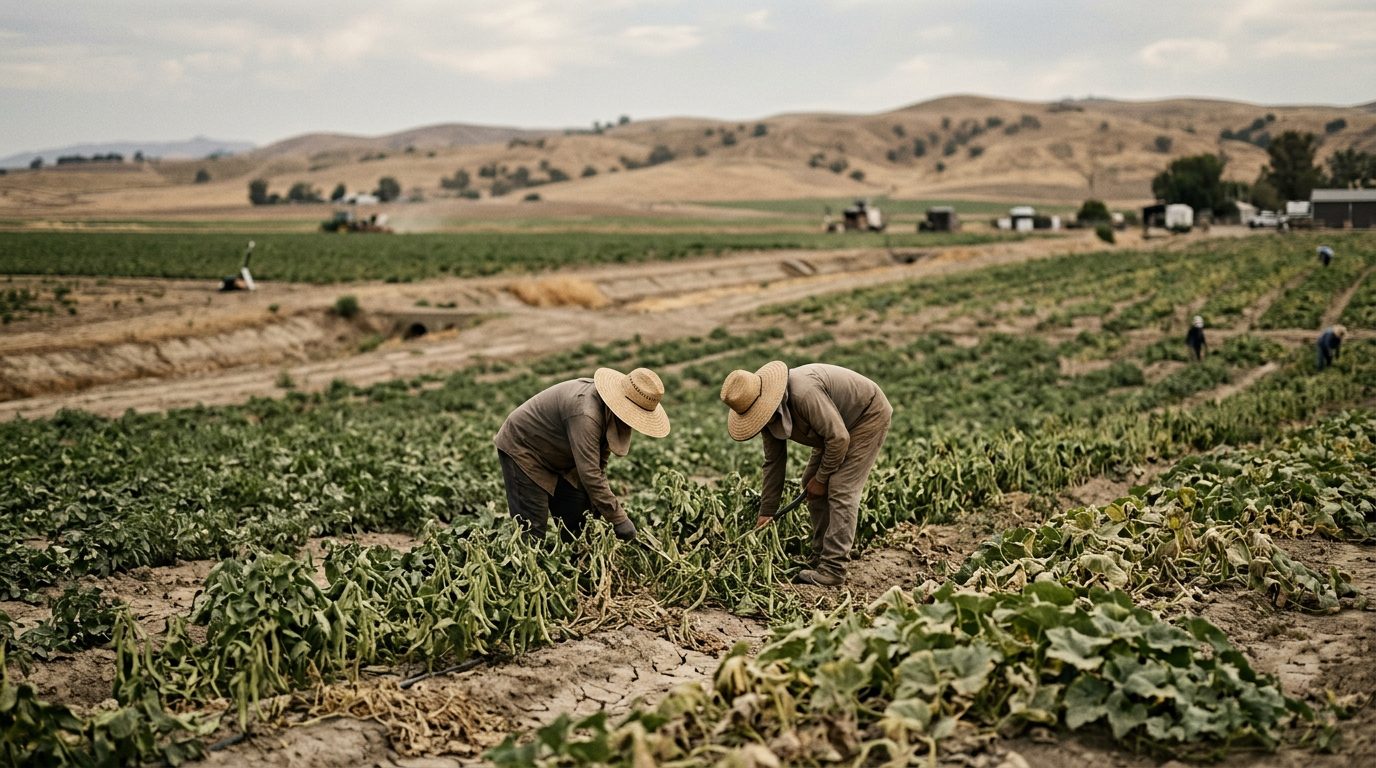
By midday in northern India, the fields fall quiet.
Not because the crops have stopped growing, but because the people tending them can no longer safely remain outdoors. In southern Europe, dairy farmers switch on industrial fans to cool cattle that are producing less milk. Off the coast of South America, unusually warm waters push fish away from traditional fishing grounds. Across continents, the same invisible force is disrupting entirely different food systems.
Extreme heat is no longer simply a weather event. It is becoming one of the defining conditions under which global agriculture operates.
For decades, climate discussions around food focused largely on droughts, floods and shifting rainfall. Heat was often treated as a symptom rather than a primary driver. But a growing body of evidence suggests that temperature itself has become a critical constraint on food production. A joint report released this year by the Food and Agriculture Organization (FAO) and the World Meteorological Organization (WMO) describes extreme heat as a "risk multiplier" that simultaneously affects crops, livestock, fisheries, forests and agricultural labour.
That distinction matters. Unlike a flood that destroys a harvest in one location or a drought confined to a season, heat acts across entire biological systems. It changes how plants photosynthesise, how animals regulate body temperature, how much water soils retain, how long workers can remain in fields and even how global food prices respond.
The consequences unfold as a chain reaction rather than a series of isolated events.
Once daytime temperatures climb beyond roughly 30°C, many staple crops—including wheat, maize and rice—begin losing productivity because photosynthesis becomes less efficient while respiration accelerates. Plants consume more energy simply to survive, leaving less available for grain formation. Heat also shortens growing periods, reducing yields even when rainfall remains adequate.
That biological threshold is surprisingly narrow. Agriculture has always adapted to variability in rainfall and seasons, but the thermal margins within which crops perform well are far less flexible than many realise.
Heat does not stop at the farm gate
The first assumption many people make is that lower yields simply mean less food.
In reality, the effects spread much further.
Lower production tightens supply. Tighter supplies raise prices. Higher prices change consumer behaviour, particularly among lower-income households, who often substitute nutritious foods with cheaper, calorie-dense alternatives. The result is a food system where climate stress gradually becomes a public health issue.
Recent history offers a warning. The food price shocks following the COVID-19 pandemic and the Russia–Ukraine war demonstrated how disruptions in one part of the food system quickly cascade through international markets. Extreme heat creates similar pressures, but instead of originating from geopolitics, they emerge from biology itself.
The impacts are also becoming increasingly synchronised. Historically, poor harvests in one region could often be offset by stronger production elsewhere. Today, simultaneous heatwaves across Europe, Asia and North America make that balancing act far more difficult.
This raises an uncomfortable possibility: global agriculture may be entering an era where multiple breadbaskets fail at the same time.
The overlooked bottleneck is labour
Perhaps the least appreciated consequence of extreme heat is that it threatens food production even before crops fail.
Agriculture remains one of the world''s most labour-intensive industries. Farmers cannot simply move harvesting indoors or shift production into air-conditioned factories. Human bodies remain essential infrastructure.
The FAO–WMO report estimates that parts of South Asia, sub-Saharan Africa and Central and South America could experience as many as 250 days each year when outdoor agricultural work becomes unsafe because of extreme heat.
This changes the economics of farming in ways that rarely appear in climate models.
Shorter working hours delay planting and harvesting. Delays reduce yields. Lower incomes discourage future investment. Insurance costs rise. Rural debt increases. Eventually, some farmers leave agriculture altogether.
Heat therefore reduces food production not only by damaging crops but also by limiting the labour needed to produce them.
The crisis extends beneath the water
Extreme heat is reshaping food systems below the surface as well.
Marine heatwaves have become dramatically more frequent over the past decade. Warmer water contains less dissolved oxygen, forcing fish to expend more energy simply to breathe. Species migrate towards cooler waters, altering fisheries that coastal communities have depended upon for generations.
In 2025, more than 90% of the global ocean experienced at least one marine heatwave, according to the WMO.
That statistic reveals a broader shift. Climate change is no longer acting separately on agriculture and fisheries. It is placing simultaneous pressure on nearly every major source of human food.
Livestock face similar physiological limits. Cattle produce less milk under prolonged heat stress because they eat less while diverting energy towards cooling themselves. Poultry and pigs—unable to sweat effectively—are even more vulnerable. During Europe''s recent heatwave, farmers reported measurable declines in milk production and rising costs associated with keeping animals cool.
The common denominator is not drought or disease.
It is temperature.
Adaptation has limits
Farmers are already responding.
Planting dates are shifting. Heat-tolerant crop varieties are being introduced. Shade structures, improved irrigation, cooling systems and early-warning forecasts are becoming increasingly common.
These measures matter.
But they also reveal a deeper transformation.
Adaptation is no longer about improving productivity. Increasingly, it is about preventing catastrophic losses.
That distinction carries important financial implications. As heat risks become more predictable, agricultural lending, crop insurance and public subsidies will increasingly depend on climate data rather than historical averages. The economics of farming may shift from maximising yields to managing heat exposure.
This explains why the FAO–WMO report places unusual emphasis on climate services, anticipatory action and financial protection alongside traditional agricultural interventions. Insurance, early-warning systems and social protection are becoming as important to food security as fertilisers or irrigation.
In other words, resilience is no longer only an agronomic challenge. It is becoming a financial one.
Conclusion
Extreme heat is often described as another consequence of climate change. In reality, it represents something more fundamental.
For centuries, agriculture has been organised around assumptions about temperature that no longer consistently hold. Fields, fisheries, labour markets, supply chains and food prices were built for a climate that is steadily disappearing.
The future of food production may therefore depend less on growing more food than on learning how to grow it in conditions that agriculture itself was never designed to endure.
Key Takeaways
Extreme heat has become a systemic risk affecting crops, livestock, fisheries, farm workers and food markets simultaneously.
Heat reduces food production through biological limits, labour productivity losses and disruptions across supply chains—not just through drought.
Rising temperatures increasingly translate into higher food prices, poorer diets and greater public health risks.
Adaptation now extends beyond farming practices to finance, insurance, climate services and early-warning systems.
The central challenge is no longer whether heat affects agriculture, but whether global food systems can adapt quickly enough to a hotter world.
Further Reading
FAO–WMO: Extreme Heat and Agriculture
World Meteorological Organization: Extreme Heat Pushes Agrifood Systems to the Brink
FAO Open Knowledge Repository
Sources
FAO & WMO. Extreme Heat and Agriculture (2026).
Reuters. Extreme heat threatens global food systems, UN agencies warn (22 April 2026).
Reuters. As Belgium bakes in the heat, concerns grow over milk and meat production (25 June 2026).
The Food Observatory Brief
Weekly briefing on food systems, climate, agriculture and policy — straight to your inbox.
More on Climate
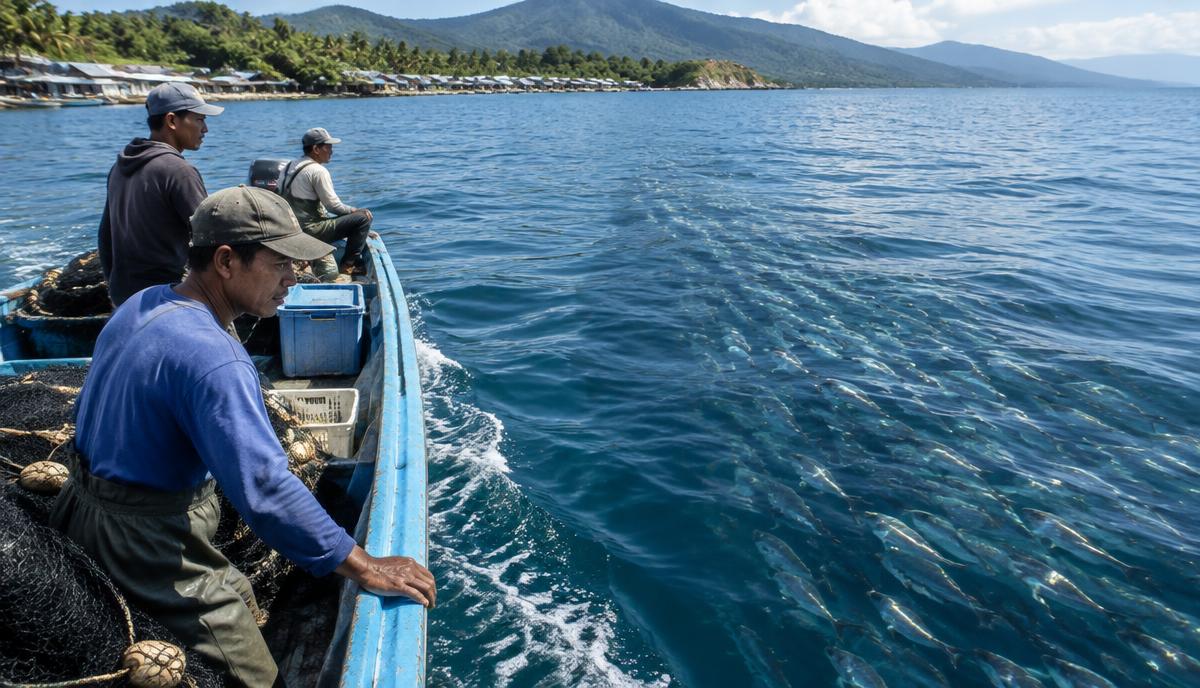
Warming Oceans Are Moving the World's Protein
Fish stocks are moving poleward and into deeper water as the oceans warm, while the countries that depend most on fish protein are often the least able to follow them. This piece argues that maritime boundaries, fisheries agreements and aquaculture investment have not caught up with moving fish.
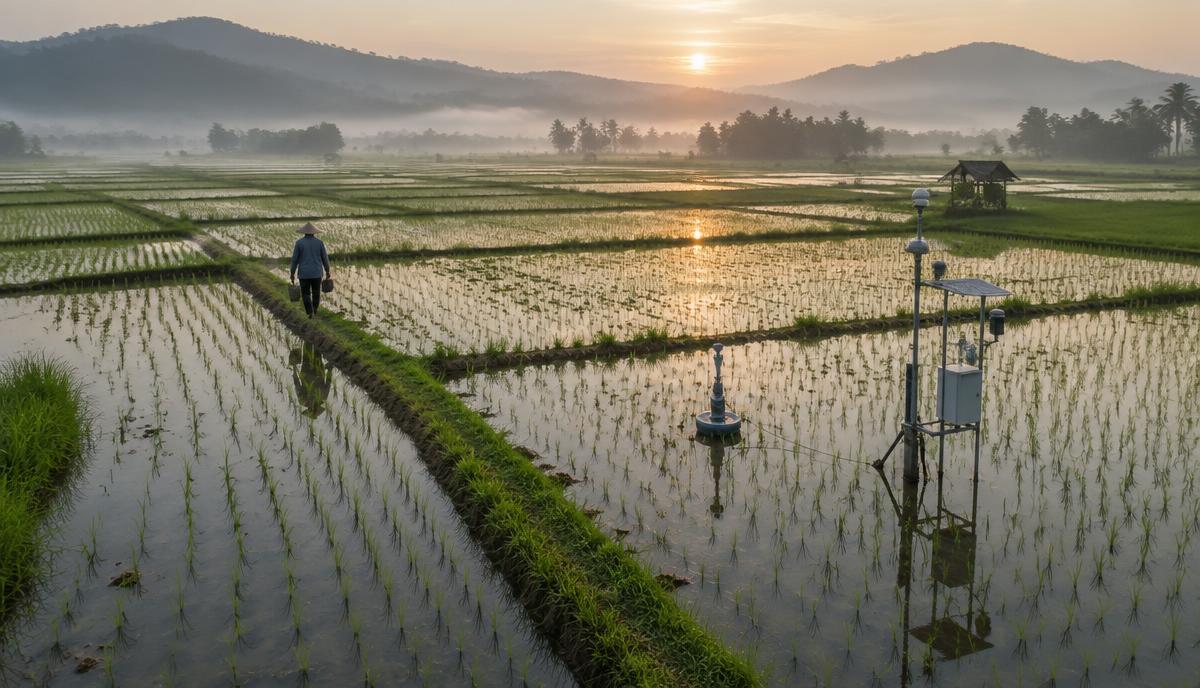
Rice Paddies and the Other Greenhouse Gas Problem
Flooded rice is a major source of human methane, and alternate wetting and drying or direct seeding can cut it while saving water. This piece uses the first payouts at Punjab Agricultural University to show why a known fix still struggles to scale, and what verification, contracts and policy would move adoption across South and Southeast Asia.