Alternative Proteins After the Hype
Beyond Meat's rebrand and retreat from China mark a reckoning for an industry that oversold how fast it would replace meat
Beyond Meat changed its name to Beyond in August 2025, dropped its founding word from the marquee, laid off another 6 percent of its staff, and pulled out of China. It was the kind of move a company makes when the thing it was famous for has become a liability rather than an asset. Six years after Beyond's 2019 IPO turned plant-based burgers into a Wall Street darling and a symbol of imminent dietary revolution, the company that once traded above $230 a share was fighting to convince investors it could survive as a smaller, humbler operation. That trajectory, more than any trend piece about Gen Z eating habits, is the honest starting point for assessing where alternative proteins actually stand.
The hype cycle of 2019 to 2021 promised a wholesale reordering of how the world eats protein, with plant-based meat as the leading edge and cultivated meat close behind. Neither happened on anything like that timeline. But treating the correction as proof the whole project failed is its own kind of distortion. Three different technologies got lumped into one narrative during the boom, and they are unwinding at three different speeds now that the money has tightened and the marketing has quieted down.
The Plant-Based Retreat Is Real and It Is Mostly American
US retail sales of plant-based meat fell 7.5 percent to $1.13 billion in the 52 weeks ending April 2025, with unit sales down 10 percent, according to data compiled by the Good Food Institute and the Plant Based Foods Association. Refrigerated products, the higher-margin category where Beyond and Impossible built their retail presence, fell even harder, down more than 12 percent in dollars and over 14 percent in units. That extends a losing streak that stretches back to 2022: plant-based meat sales fell 9 percent in 2023 alone, the third consecutive year of decline. Conventional meat, meanwhile, grew during the same window, up 4 percent by GFI's count, undercutting the industry's founding premise that shoppers were substituting one for the other.
The reasons are not mysterious. Price premiums over conventional meat never closed as fast as promised, ultra-processed-food skepticism caught plant-based meat in its crossfire even though the science on that framing is contested, and the early wave of trial customers did not convert into habitual buyers at the rate investors had priced in. Beyond Meat's own numbers tell the story in miniature: 2024 net revenue fell to $326.5 million, down from a 2021 peak near $465 million, while the company burned through cash for years before narrowing its net loss to $37.8 million in 2024 from $160.8 million the year before. CEO Ethan Brown has talked about strengthening the balance sheet and "optimizing capital structure," language that signals survival mode rather than the category-defining growth story Beyond sold at its IPO.
Globally, the Picture Splits in Two
The domestic gloom is not the whole story. GFI's 2026 State of the Industry report puts global plant-based food sales at $28.9 billion in 2025, up 3 percent, with the plant-based meat and seafood subcategory reaching $6.6 billion worldwide. Growth is coming from markets where the products are newer and less politically charged than in the United States: McDonald's introduced plant-based protein slices in India, Danone expanded its Silk Protein line, and European and Asian retail channels have not seen the same multi-year contraction as US shelves. The lesson food-industry analysts increasingly draw is that plant-based meat's problem was never universal consumer rejection so much as an American retail category that expanded faster than genuine repeat demand could support, then got stuck absorbing the correction. That distinction matters for anyone trying to read the US numbers as a verdict on the entire technology rather than on one overbuilt market.
Cultivated Meat Can Now Be Sold, Almost Nowhere at Scale
Cultivated meat's regulatory story has genuinely advanced, just not toward mass availability. Singapore remains the pioneer, having cleared products from Good Meat, Vow and Parima for sale since 2020. The United States followed with approvals for Upside Foods and Good Meat chicken in 2023, then added Wildtype salmon, Mission Barns pork fat, and Believer Meats poultry, bringing the US total to five cleared products under the joint FDA-USDA review process. Australia and New Zealand have completed comparably rigorous safety reviews. By GFI's count, seven companies now hold regulatory clearance somewhere in the world, and commercial sales are technically permitted in Singapore, the US and Australia.
What that clearance has not produced is scale. Believer Meats, one of the approved US companies, shut down in December 2025 despite having cleared the regulatory bar that was supposed to be the industry's chief obstacle. The largest cultivated production facility operating anywhere, run by the Australian company Vow, tops out around 20,000 liters, a fraction of the bioreactor volumes that would be needed to make cultivated meat a grocery-aisle staple rather than a menu novelty served in small runs at a handful of restaurants. Cultivated meat and seafood companies raised just $73.9 million globally in 2025, down 49 percent from 2024's already-diminished $139 million, with the largest rounds going to Aleph Farms, Mosa Meat and BlueNalu rather than to new capacity. Investors have not stopped believing the science works. They have stopped believing it works cheaply enough, soon enough, to justify the capital it would take to get there.
The Backlash Got There Before the Product Did
While regulators in Singapore, the US and Australia were clearing products, a parallel and opposite movement was gaining ground in exactly the places cultivated meat needed political room to operate. Florida banned the sale and manufacture of cultivated meat in 2024, making it a second-degree misdemeanor, with Agriculture Commissioner Wilton Simpson framing the law as protection for the state's "farmers, ranchers, and growers." Alabama and other states followed with their own restrictions. Italy passed a similar ban in 2023, backed by farming lobby groups and cultural anxiety about "synthetic" food displacing traditional cuisine, though the law's legal footing is shakier than its symbolism suggests: Italy appears to have enacted it without completing the European Union's mandatory TRIS review process, and a spokesperson for the Italian cultured-meat startup Bruno Cell has argued the measure "does not currently produce legal effects" as a result. The European Union itself has approved no cultivated meat products at all, though Gourmey and Mosa Meat both have applications under review by the European Food Safety Authority. The net effect is a technology cleared for sale in a small number of jurisdictions and explicitly outlawed in others, which is not a stable footing from which to build the manufacturing scale that would bring costs down.
Fermentation Is Where the Boring, Real Progress Is Happening
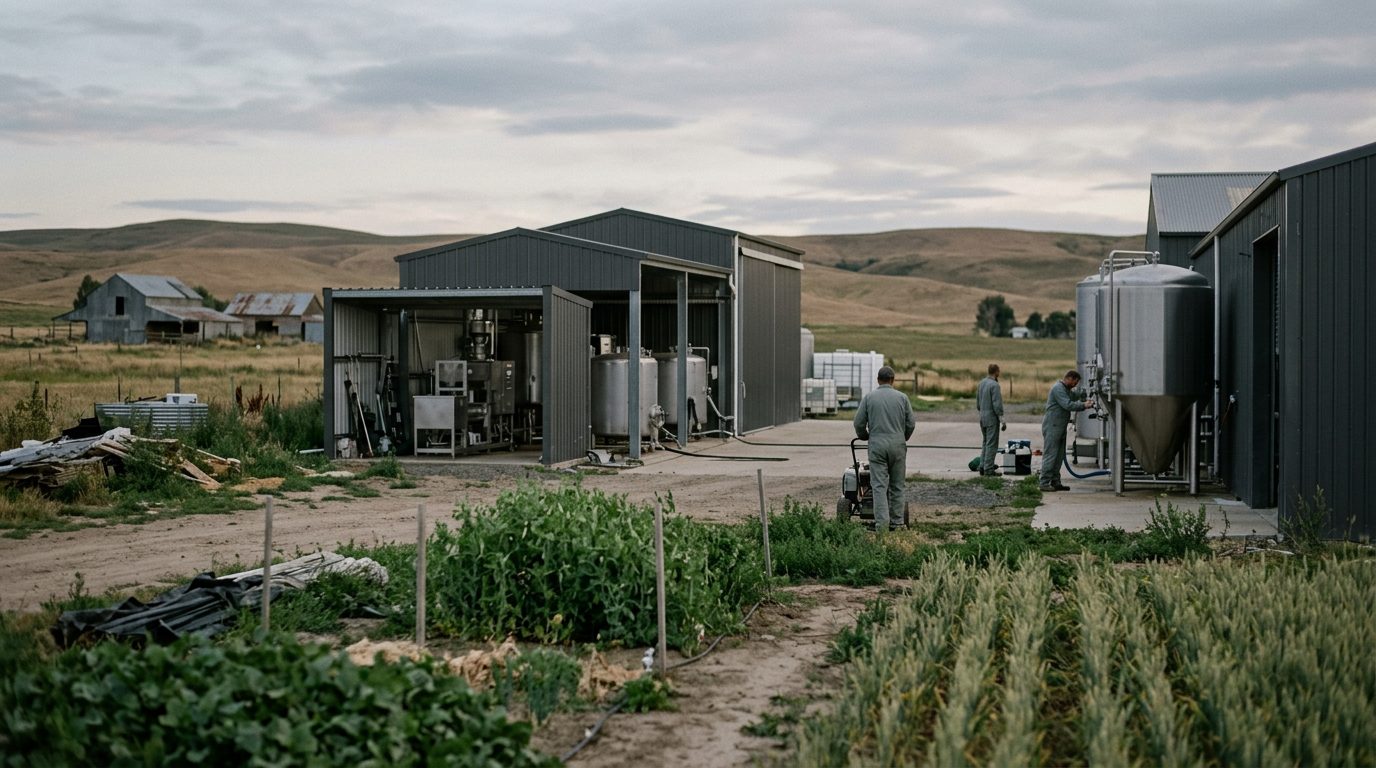
The alternative-protein segment with the least hype left in it is also the one making the most legible progress. Precision fermentation, which engineers microorganisms to produce specific proteins such as dairy whey or egg proteins without the animal, and mycoprotein, the fungal-fermentation process behind Quorn, both operate on cost curves that look more like conventional industrial biotechnology than consumer-brand storytelling. A July 2025 analysis by GFI Europe and the consultancy Arthur D. Little screened 67 candidate molecules for precision fermentation and found roughly a quarter showed genuine cost-competitive potential, concentrated in premium categories like infant formula and sports nutrition where price sensitivity is lower and functional performance matters more than matching a commodity price point. That is a narrower claim than "replace the dairy industry," and it is a more credible one.
Companies in this segment are also showing that costs can fall with operational tuning rather than only with speculative future scale. Pow.Bio reported a threefold productivity gain and a 50 percent cost reduction in dairy protein fermentation at 3,000-liter scale during 2025, and new commercial-scale fermentation facilities opened in Brazil, Canada, China, Sweden and the United Kingdom over the same year. Fermentation investment did fall sharply, down 43.5 percent to $357 million in 2025 from $651 million in 2024, but GFI's Daniel Gertner notes the money that remains is going disproportionately to "later-stage companies generating meaningful revenue through established retail, foodservice, or B2B channels" rather than being spread thin across speculative early bets. That is a sector rationalizing around what actually works, not one collapsing.
The Industry Is Consolidating Around Fewer, Harder Bets
Across all three technologies, the capital story for 2025 is the same: total alternative-protein funding fell to $881 million, down 20 percent year over year and below $1 billion for the first time since 2018, against a 2021 peak of $6.9 billion. Motif FoodWorks, once one of the best-funded fermentation startups with $345 million raised including a $226 million Series B, shut down in September 2024 after a patent dispute with Impossible Foods left large food manufacturers unwilling to license its heme technology while litigation was pending. Its collapse is a reminder that even well-capitalized fermentation science can fail on business execution rather than chemistry. The pattern across the sector, from Beyond's rebrand to Believer Meats' closure to Motif's shutdown, is a shakeout that is separating companies with a real path to unit economics from those that were funded on the assumption that hype alone would carry them to scale.
None of that adds up to failure, and it does not add up to the revolution either. Plant-based meat has settled into a smaller, more contested niche in the US while continuing to grow abroad. Cultivated meat has cleared genuine regulatory hurdles in a few places and hit a wall of both cost physics and political backlash almost everywhere else, leaving it years away from mattering to how most people eat. Fermentation-derived proteins, the least glamorous of the three, are quietly proving that a narrower, ingredient-first strategy aimed at premium and functional markets can produce real cost reductions and real commercial facilities without needing a consumer movement behind it. The next five years of alternative protein will likely be defined not by any single breakthrough product but by that divergence: plant-based brands fighting for retail relevance, cultivated meat grinding through regulatory and capital constraints one jurisdiction at a time, and fermentation companies building unglamorous, profitable footholds in the ingredient supply chain most consumers will never notice they are eating.
Sources: AgFunderNews, "Plant-based meat by numbers: Grim reading for the US retail market, brighter spots in foodservice and globally"; Good Food Institute, "US retail market insights for the plant-based industry"; Food Dive, "Beyond Meat cutting 6% of workforce to reduce expenses"; Green Queen, "More Layoffs, More Losses in Bleak Q2 For Beyond Meat Amid Brand Refresh"; FoodNavigator, "Where countries stand on cultivated meat regulation in 2026"; Euronews, "Viral posts mislead on Italy's 'lab-grown meat' ban"; The Food Institute, "Why is Florida Trying to Ban Cultivated Meat?"; Good Food Institute Europe and Arthur D. Little, "Pathfinding Towards Precision Fermentation Viability" (July 2025); Green Queen, "Alternative Protein Funding Down by 20% in 2025, Falling Below $1B for First Time in 7 Years"; Green Queen, "Motif FoodWorks is Shutting Down, Days After Settling Impossible Foods Lawsuit"; Vegconomist, "GFI's 2026 State of the Industry Reports Detail Mixed Year for Alternative Proteins Across All Three Sectors"; AgFunderNews, "Funding dip for alt protein fermentation signals shift from promise to proof, say GFI"
The Food Observatory Brief
Weekly briefing on food systems, climate, agriculture and policy — straight to your inbox.
More on Innovation
Biologicals and the Quest for Less Nitrogen Fertilizer
Microbial products sold as ways to cut synthetic fertilizer have strong commercial pull because of price volatility and nitrous oxide targets. This piece looks at independent trial evidence, India's nano urea experience and regulatory gaps to set out which claims farmers can reasonably trust.
The Race to Cut Cattle Methane With Feed Additives
Methane inhibitors and seaweed additives promise large cuts in cattle emissions. This piece explains why the technology works in feedlots and dairies but struggles with grazing herds where most emissions sit, and why cost, consumer reaction and who pays are the real bottlenecks.
The Next Generation of Crop Breeding
Gene editing and computational breeding tools have collapsed the timeline for developing new crop varieties from decades to single growing seasons. This piece explains the science behind the new generation of crop breeding, the companies racing to commercialize it, and what faster breeding cycles could mean for climate-resilient agriculture.