Precision Agriculture Is No Longer Experimental
GPS autosteering now runs on 70 percent of large American crop farms, and the technology has stopped being a pilot project
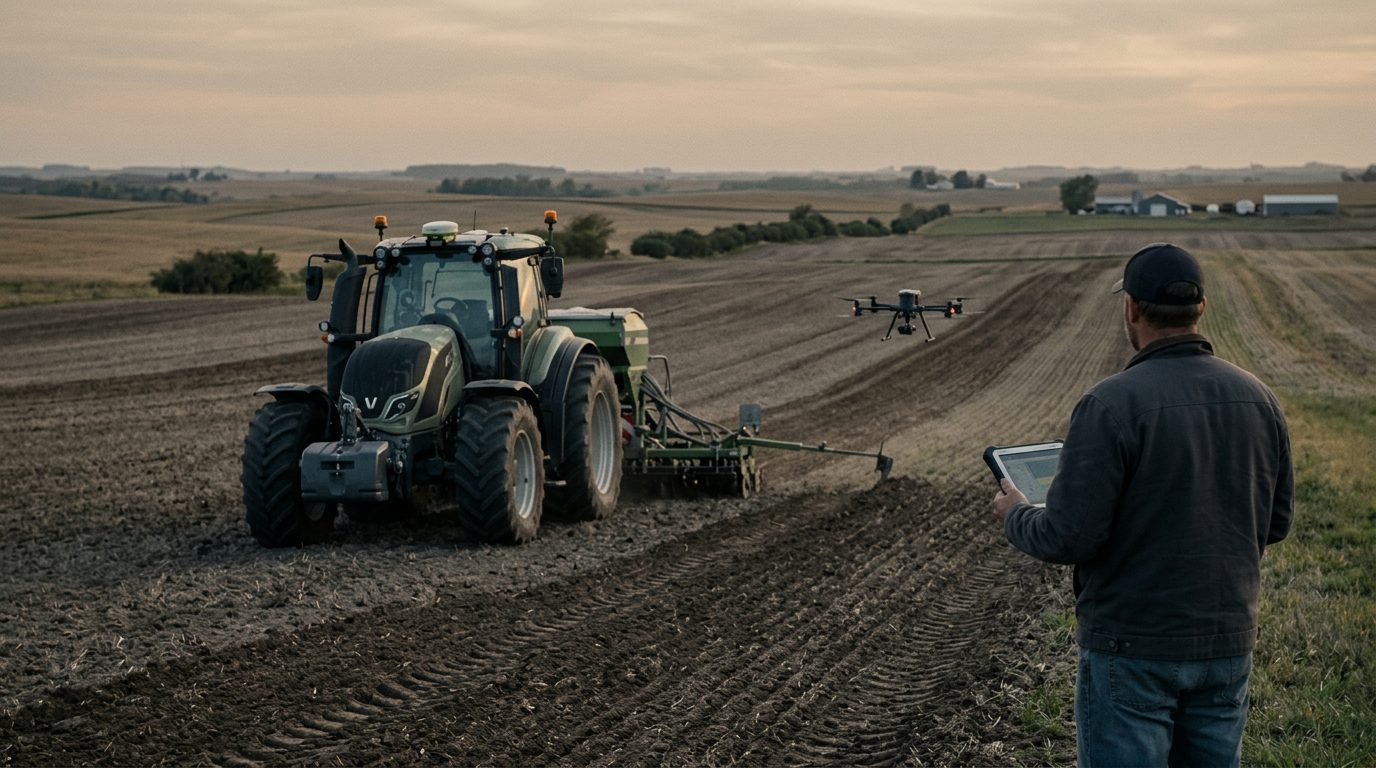
On the majority of American corn and soybean acres planted this year, a tractor drove itself down the row while a computer decided, foot by foot, how much fertilizer to lay down. That is not a pilot project or a university test plot. It is Tuesday. According to the USDA's Economic Research Service, GPS autosteering systems now run on roughly 70 percent of large-scale crop farms and 52 percent of midsize operations, up from adoption rates in the single digits in the early 2000s. Variable rate application, yield mapping, and drone-based scouting have followed the same trajectory, moving from novelty to routine over the past decade and a half. The story of precision agriculture in 2026 is not whether the technology works. It is how thoroughly it has already been priced into how commercial farming operates.
The Adoption Curve Has Already Bent
Skeptics of precision agriculture often argue from an outdated picture, one in which GPS-guided tractors and variable rate spreaders are boutique tools for a handful of tech-forward operators. The USDA's Agricultural Resource Management Survey, the government's most rigorous instrument for tracking on-farm technology use, tells a different story. Auto-steer guidance climbed from about 5 percent of corn acreage in 2001 to 58 percent by 2016, and reached above 70 percent on the largest operations by the late 2010s. Sorghum growers hit nearly 73 percent adoption of guidance systems by 2019, cotton growers about 65 percent. Kansas State University agricultural economist Terry Griffin, who has tracked precision technology diffusion for two decades, has observed that the fastest-adopted tools are consistently the ones that automate a task the farmer used to do by hand or eye, which is exactly what autosteer and yield mapping do. The lag is not in whether large commercial operations have precision tools. It is in how deep into the toolkit, and how far down the farm-size ladder, that adoption reaches.
What "Mainstream" Actually Means on the Ground
Mainstream does not mean universal, and honest reporting on this topic has to hold both facts at once. The GAO's 2024 review of precision agriculture found that only about 27 percent of all U.S. farms and ranches used precision practices as of mid-2023, a figure that looks modest until it is weighted by acreage rather than by farm count. Because farm size is so skewed, that 27 percent of operations accounts for a hugely disproportionate share of total production. Retailer surveys compiled by agricultural economist Terrance Hurley and colleagues put autosteer on roughly 77 percent of U.S. cropland and yield monitoring on about 72 percent by 2023, even though a majority of individual farm operations, mostly small ones, still use none of it. Precision agriculture is mainstream in the sense that matters most to food supply: it governs how most of the country's calories and fiber actually get planted, fed, and harvested, even while it remains marginal on the balance sheet of a small family operation working a few hundred acres.
The Machinery Companies Have Already Bet the Business
Wall Street tends to be a decent lie detector for whether a technology is experimental or load-bearing, and the major farm equipment manufacturers have restructured their entire business models around precision agriculture staying central to farming. Deere & Company now counts 440,000 monthly active users on its Operations Center platform and has covered more than 5 million acres globally with its See and Spray targeted-application system, which the company says cuts herbicide use by 50 to 60 percent on treated acres by spraying only where weeds are actually detected rather than blanketing entire fields. More telling than the initial sign-up numbers is retention: Deere reports a 70 percent renewal rate for its Precision Essentials software subscriptions overall, and above 90 percent among customers in their second year. Farmers do not renew a subscription at a 90 percent clip because a technology is a novelty they are trying out. They renew because the software is paying for itself, season after season, and dropping it would mean giving that value back.
The Money That Variable Rate Technology Actually Saves
The economic case for variable rate application, adjusting seed, fertilizer, or pesticide rates automatically as equipment moves across zones of differing soil fertility, rather than spreading a single blanket rate over an entire field, is no longer theoretical. Ohio State University field trials comparing variable rate fertilizer application against uniform application in no-till fields found savings of $36 to $88 per acre, driven by cutting fertilizer where soil tests showed it was not needed and concentrating it where it was. On a 45-acre test field, switching from uniform application to a soil-type-based variable rate approach cut total fertilizer volume by more than 40 percent while researcher Randall Reeder found yields held steady or improved, since nutrients were being placed where crops could actually use them instead of being wasted on already-fertile ground. USDA's own national data back this up in aggregate: farms using yield and soil maps show about 1.8 percent higher net returns than non-adopters, a modest-sounding figure that compounds into real money across thousands of acres and multiple seasons. Variable rate technology has plateaued at 31 to 37 percent adoption on corn, soybean, and winter wheat acreage nationally, a level that has held roughly steady since 2013 according to Purdue economist Jennifer McFadden's review of adoption survey data, which suggests the input-intensive row crops most suited to the economics of variable rate application have already largely sorted themselves into adopters and non-adopters.
Brazil Has Leapfrogged Without the Legacy Baggage
Brazil offers a useful counterpoint to the assumption that precision agriculture is primarily a U.S. and European story. The country had 1.35 million tractors in operation as of 2023, and the majority of units sold since 2015 have come factory-equipped with GPS and telemetry hardware, meaning Brazilian growers are acquiring precision capability as a default feature of new equipment purchases rather than as a costly retrofit. Survey data cited by the agricultural technology firm BemAgro, which has processed precision data on 7 million hectares for more than 400 client companies across 11 countries, found that 84 percent of Brazilian farmers report using at least one modern technology such as GPS in production. The gap in Brazil is not hardware ownership, which is now close to saturated on commercial farms; it is data utilization. More than 80 percent of Brazilian farmers do not access or actively use the data their own equipment's sensors are already collecting, and the digital systems built into their tractors frequently sit dormant. Investment from agribusiness majors like Atvos and Suzano into precision data platforms signals that the country's largest players see closing that utilization gap, not expanding equipment penetration, as the next phase of adoption.
Drones Have Found Their Niche, Not Their Ceiling
Field scouting by drone has grown into a standard practice for detecting crop stress, pest pressure, and irrigation problems days or weeks before those issues would be visible from the ground or from a slower-moving satellite pass, but it has not displaced ground-based and human scouting the way autosteer displaced manual driving. National adoption figures put drone use for actual spray application, as opposed to imagery and scouting, under 10 percent of farmland, reflecting regulatory hurdles around beyond-visual-line-of-sight flight and the higher capital cost of spray-capable aircraft compared to simple camera drones. Among farms that have adopted drones for any purpose, roughly two-thirds use the imagery specifically for weed pressure analysis, according to a 2021 corn-sector survey, which suggests the practice has settled into a well-defined role: identifying problems fast rather than replacing the equipment that treats them. That is a meaningfully different adoption pattern than GPS guidance or yield mapping, and it is a reminder that "precision agriculture" is not one technology diffusing at one speed but a bundle of distinct tools, each finding its own market fit on its own timeline.
The Real Adoption Gap Is Farm Size, Not Geography
The most consistent finding across every adoption survey, American, Australian, Danish, or Brazilian, is that farm size predicts precision technology use better than crop type, region, or even national income level. USDA data show yield map adoption at just 7 percent on farms under 200 acres compared with 50 percent on farms above 1,725 acres, and the GAO's review flagged upfront acquisition cost as the single most commonly cited barrier by farmers who have not adopted. A $40,000 to $80,000 GPS and variable rate retrofit is a rounding error against the input budget of a 5,000-acre commercial grain operation and a genuinely prohibitive capital outlay for a diversified 150-acre farm selling into local markets, where the equipment's fixed cost cannot be spread across enough acres to pay for itself within a reasonable window. This dynamic repeats globally: Denmark, one of the most digitally advanced agricultural economies, has precision technology deployed on 78 percent of crop area but only 40 percent of individual farms, because its larger operations account for a disproportionate share of total farmland. Smallholder farmers in the developing world face the same math with far less capital and far smaller machinery to begin with, which is why the United Nations Development Programme has focused its precision agriculture initiatives on scaled-down, shared-access models such as cooperative-owned soil sensors and subscription drone services rather than expecting individual small farms to buy their own equipment.
Where the Growth Curve Goes From Here
The global precision agriculture market was valued at roughly $12.9 billion in 2025 and is projected to grow at a compound annual rate above 6 percent through the early 2030s, according to Fortune Business Insights, a trajectory that reflects steady penetration into new geographies and additional crop types rather than explosive growth in an already-established market. That is precisely what a mature, mainstream technology market looks like: not the hockey-stick adoption curve of a genuinely new innovation, but the grinding, single-digit-percentage annual expansion of a toolkit that most of the intended commercial market has already bought, and that is now working its way down to smaller operations, into new crops beyond corn, soybeans, and wheat, and into countries where equipment penetration still lags. The debate worth having about precision agriculture in 2026 is not whether it works, the ROI data on variable rate fertilizer and the retention data on platforms like Deere's Operations Center have settled that question, but who still cannot afford to participate, and what it will take to close that gap before the productivity advantage it confers widens the divide between the largest farms and everyone else.
Sources: USDA Economic Research Service, "Variable rate technology adoption is on the rise" (Chart of Note); USDA Economic Research Service, "Precision agriculture use increases with farm size and varies widely by technology" (Chart of Note); USDA Economic Research Service, "Precision Agriculture in the Digital Era: Recent Adoption on U.S. Farms"; DTN/Progressive Farmer, "USDA's Big Precision Tech Study Shows High Adoption Rates Among Largest Farms"; U.S. Government Accountability Office, GAO-24-105962, "Precision Agriculture: Benefits and Challenges for Technology Adoption and Use"; Farm Progress, "Big Savings from Variable Rate Fertilizer" (Ohio State University field trial data); Jennifer McFadden et al., "Global Adoption of Precision Agriculture: An Update," proceedings paper; Fortune Business Insights, "Precision Agriculture Market Size, Share and Industry Report"; TechGeography, "BemAgro: Precision Infrastructure for Brazil's Farms"; 24/7 Wall St., "Deere's $20 Billion Precision Ag Push Is Transforming Farming"; United Nations Development Programme, "Precision Agriculture for Smallholder Farmers"
The Food Observatory Brief
Weekly briefing on food systems, climate, agriculture and policy — straight to your inbox.
More on Innovation
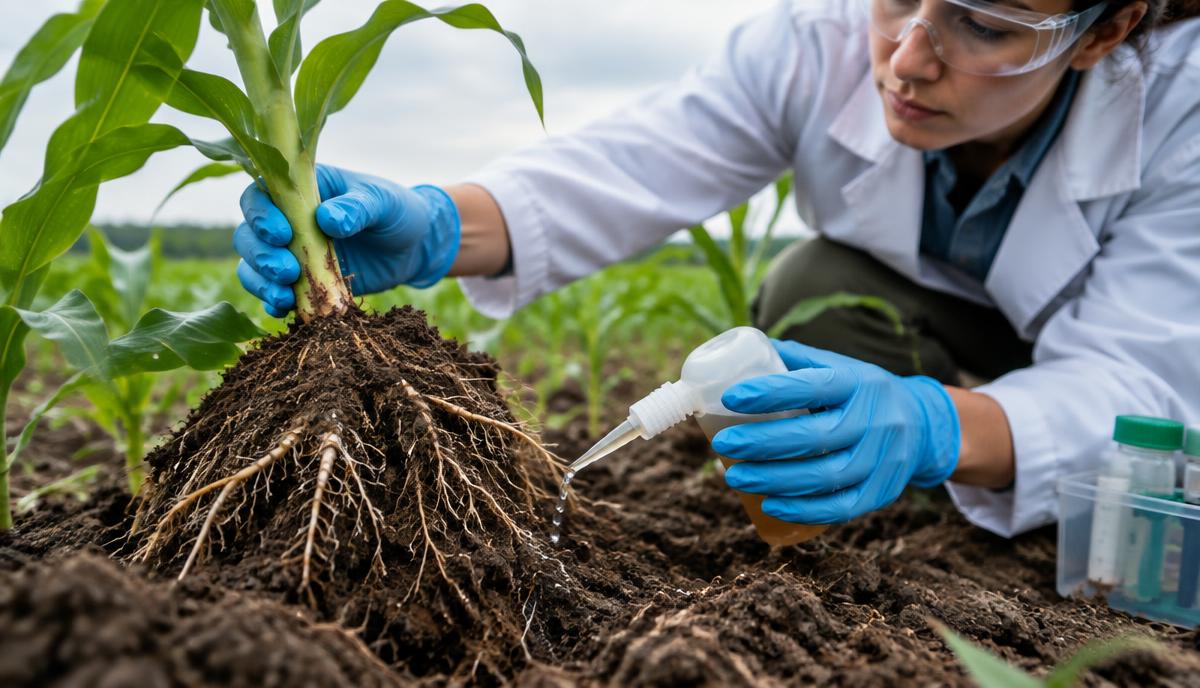
Biologicals and the Quest for Less Nitrogen Fertilizer
Microbial products sold as ways to cut synthetic fertilizer have strong commercial pull because of price volatility and nitrous oxide targets. This piece looks at independent trial evidence, India's nano urea experience and regulatory gaps to set out which claims farmers can reasonably trust.
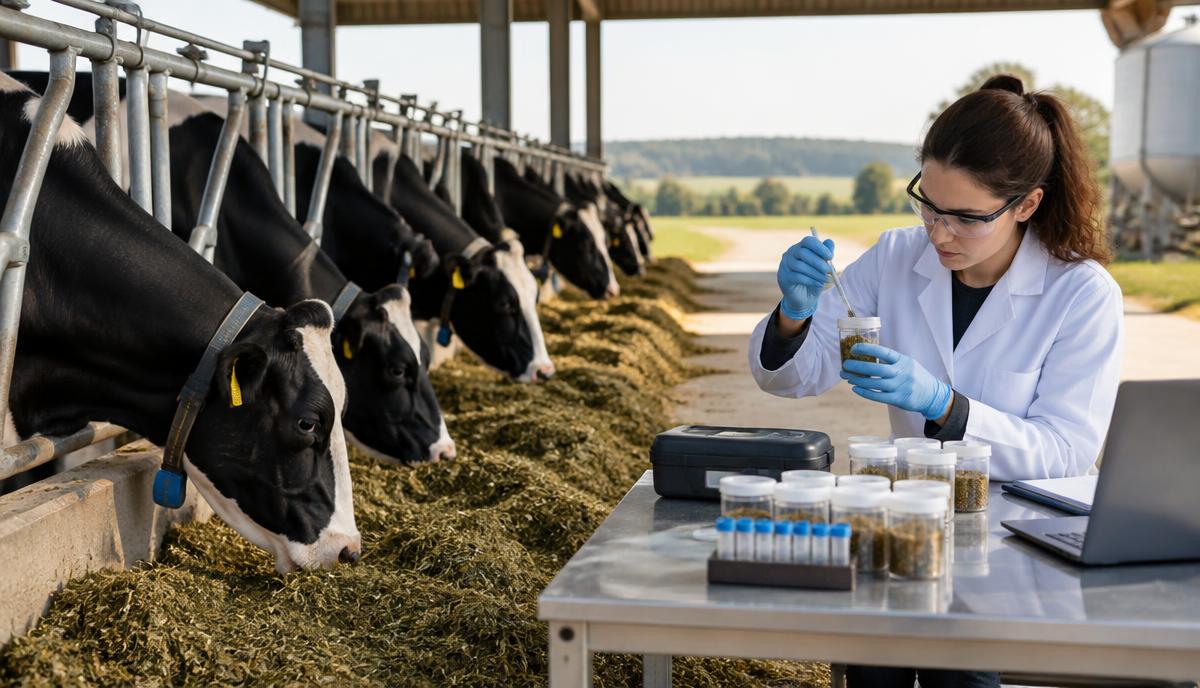
The Race to Cut Cattle Methane With Feed Additives
Methane inhibitors and seaweed additives promise large cuts in cattle emissions. This piece explains why the technology works in feedlots and dairies but struggles with grazing herds where most emissions sit, and why cost, consumer reaction and who pays are the real bottlenecks.
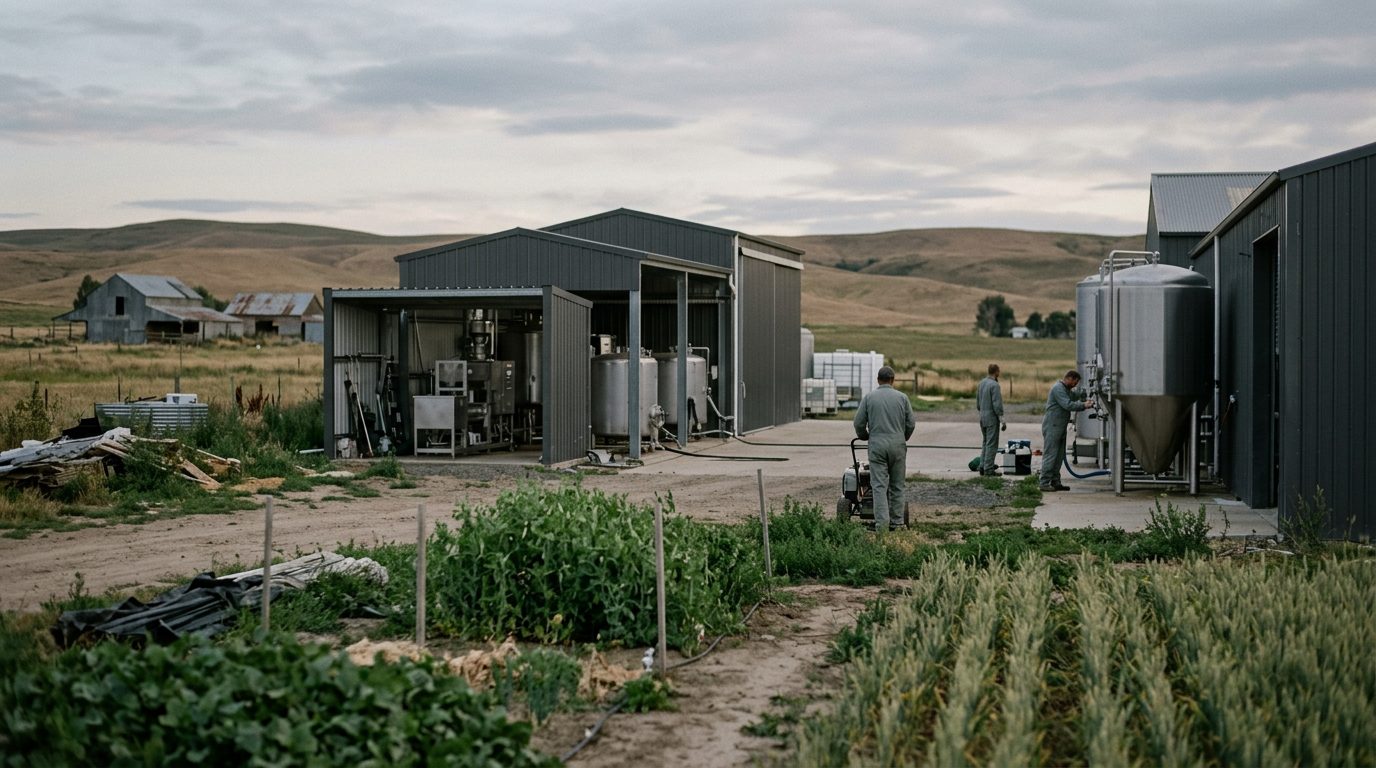
Alternative Proteins After the Hype
Alternative protein companies raised billions on the promise of rapidly displacing conventional meat, then hit a wall of stalled sales, layoffs, and investor retreat. This piece looks past the hype cycle's collapse to what alternative proteins are actually achieving now, and where the technology still has a credible path forward.