Beyond Calories: The Next Food Security Challenge
The world produces enough calories to feed everyone, yet roughly half of all people are deficient in an essential nutrient
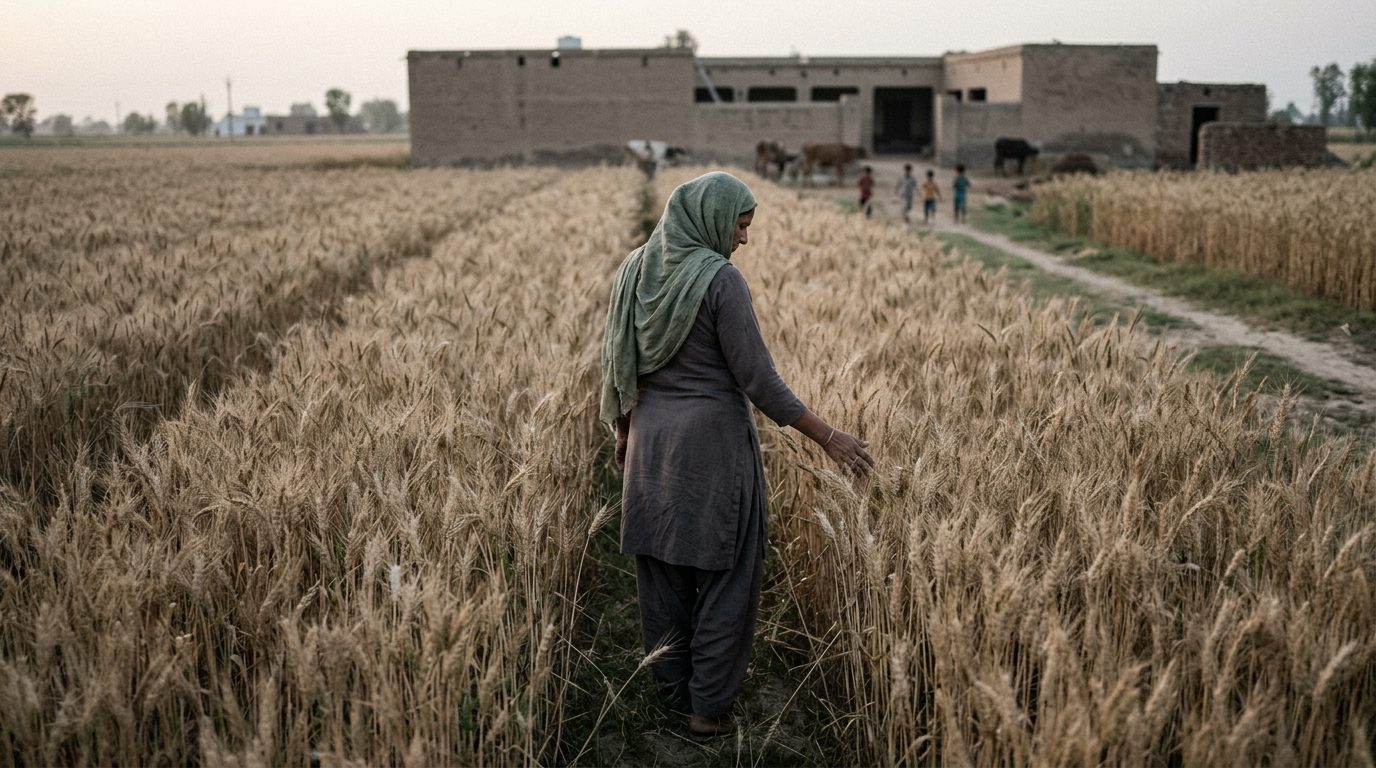
A farmer in Punjab can now grow enough wheat to feed several families for a year, and that wheat can still leave a child's blood short of the zinc and iron her body needs to build a working immune system. This is not a contradiction in the data. It is the defining fact of food security in 2026: the world produces enough calories to feed everyone on the planet, yet roughly half of all people, by the count of a Lancet Global Health-anchored analysis backed by GAIN and the USAID Advancing Nutrition project, are deficient in at least one essential vitamin or mineral. More than half of children under five and two in three women of reproductive age carry some form of micronutrient deficiency. In parts of Sub-Saharan Africa and South Asia, nine in ten women do.
For eighty years, food security policy has measured success the way the Green Revolution taught it to: in tons of grain per hectare, in calories per capita, in whether a population is getting "enough to eat." That framework won real victories against famine and acute hunger. It is now obsolete as a governing metric, and the institutions that set global food policy are, unevenly and sometimes reluctantly, starting to say so.
The Arithmetic That No Longer Adds Up
The United Nations' Food and Agriculture Organization estimated in its 2024 State of Food Security and Nutrition in the World report that 2.33 billion people, nearly 29 percent of humanity, faced moderate or severe food insecurity in 2023, and that between 713 million and 757 million experienced outright hunger. Those numbers describe scarcity of a familiar kind. But sitting beside them is a figure that describes a different problem entirely: 2.83 billion people, more than a third of the world, could not afford a healthy diet in 2022, even though far fewer than that go hungry in the caloric sense. The average cost of a healthy diet reached $3.96 per person per day in purchasing-power terms that year, an 11 percent jump from 2021. People are not simply short on food. They are priced out of the kind of food that keeps a body functioning well.
This is the gap that hidden hunger occupies: the space between eating enough and eating adequately. A diet dominated by refined maize, rice, or wheat can supply ample energy while starving the body of vitamin A, iron, zinc, iodine, and folate, the micronutrients that govern immune function, cognitive development, and maternal survival. The International Food Policy Research Institute's 2024 Global Food Policy Report put the underlying failure bluntly: less than half of the world's adult population consumes a diet diverse enough to be considered healthy. IFPRI director general Johan Swinnen framed the stakes in the report's foreword, arguing that "healthy diets, sustainably sourced, should be a right for all of humanity," a standard that calorie-counting alone was never built to enforce.
When Malnutrition Wears Two Faces at Once
The double burden of malnutrition is the clearest evidence that the old framework has broken down. FAO data show that even as childhood stunting has declined globally, from 26.3 percent in 2012 to 22.3 percent in 2022, adult obesity has climbed in the opposite direction, from 12.1 percent to 15.8 percent over the same decade, with projections putting the global obese adult population above 1.2 billion by 2030. These are not separate populations moving in opposite directions. Research published in 2024 and 2025, including a household-level study from Guatemala published in the European Journal of Clinical Nutrition, documents stunted children and overweight or obese caregivers living under the same roof, eating from the same kitchen, shaped by the same economic constraints. A household can be simultaneously food-insecure and overweight when the cheapest available calories come from starchy staples and processed carbohydrates rather than from the fruits, vegetables, dairy, and protein that diet quality requires.
This pattern breaks the intuitive logic that undernutrition and overweight sit at opposite ends of a single spectrum, one solved by more food and the other by less. Both, increasingly, are downstream of the same root cause: diets that are calorically sufficient but nutritionally thin, produced by food systems engineered to maximize yield of a handful of staple crops rather than the nutrient density of what people actually eat. Mexico, Egypt, and much of urbanizing South and Southeast Asia now report rising obesity alongside persistent micronutrient deficiency in the same national populations, a pattern the World Health Organization has tracked for over a decade without it meaningfully reshaping how most agricultural ministries set priorities.
Retooling the Measuring Stick
The most concrete sign that the field is moving came in March 2025, when the UN Statistical Commission formally adopted Minimum Dietary Diversity as an official indicator under Sustainable Development Goal 2, ending a process led by Switzerland, FAO, UNICEF, and WHO. The indicator, split into a women's version led by FAO and a children's version led by UNICEF, does something calorie counts cannot: it asks whether a woman consumed at least five of ten defined food groups, spanning pulses, dairy, eggs, meat and fish, leafy greens, and vitamin-A-rich produce, within the previous twenty-four hours. José Rosero Moncayo, FAO's chief statistician, said the change gives countries "a new tool for formulating evidence-based strategies for enhancing nutrition through diet interventions." Lynnette Neufeld, who directs FAO's food and nutrition division, called dietary diversity "a critical missing link" in tracking progress on hunger.
That sounds like a technical adjustment to a UN indicator framework. It is closer to a philosophical break. For decades, SDG monitoring and national food security assessments have leaned on measures like the Prevalence of Undernourishment, essentially a calorie-availability statistic, as the headline number. Diet diversity metrics do not ask whether a population has enough energy. They ask whether it has variety, and variety is what predicts whether children get the micronutrients that calories alone cannot supply.
Breeding Nutrients Instead of Just Yield
If measurement is one front, plant breeding is the other, and it is where the shift shows up most physically. HarvestPlus, the CGIAR-affiliated program that has spent two decades breeding staple crops for higher micronutrient content rather than higher yield alone, reported in its 2024 annual review that more than 360 million people benefited from biofortified foods that year, a 9 percent increase over 2023. The program's zinc-enriched wheat now accounts for more than half of Pakistan's wheat grain production. Its vitamin-A-enriched orange maize reaches more than 10 million consumers in Nigeria. Twelve new biofortified crop varieties were released across five countries in 2024 alone, and biofortified meals reached more than a million schoolchildren across Asia and Africa through institutional feeding programs.
Biofortification is, in effect, an admission that the Green Revolution's plant-breeding priorities left something out. Norman Borlaug's high-yield dwarf wheat and rice varieties, which anchored the original Green Revolution starting in the 1960s, were selected overwhelmingly for output per hectare and disease resistance. Nutrient density was not a breeding target, and in some documented cases modern high-yield staple varieties carry lower concentrations of iron, zinc, and protein than the traditional varieties they displaced, a pattern researchers writing in Food Science & Nutrition in 2025 have called the nutritional pitfall of modern staple crops. HarvestPlus and its CGIAR partners are effectively re-breeding staples to correct a blind spot baked into agricultural research fifty years ago, working crop by crop and country by country because there is no shortcut around the plant genetics involved.
The Policy Machinery Is Slower Than the Evidence
None of this has yet displaced calories as the organizing metric of most national food policy, and the reasons are structural rather than intellectual. Caloric sufficiency is cheap to measure, politically legible, and directly tied to the acute emergencies, famine, conflict-driven displacement, drought, that dominate humanitarian response. Nutrient adequacy is harder to measure, harder to message to finance ministries, and slower to show results. A government can point to a bumper cereal harvest in a single growing season. Reducing anemia in women of reproductive age, which FAO projects will actually worsen to 32.3 percent by 2030 under current trajectories despite decades of nutrition programming, requires sustained investment in dietary diversity, food fortification, health systems, and often behavior change that plays out over a generation.
Derek Headey and other IFPRI researchers, in the 2024 Global Food Policy Report's chapter on affordability, argue that existing social protection transfers across Asia and Africa "barely begin to fill the healthy diet affordability gap," meaning that even where governments know a population is nutritionally underserved, the cash and subsidy tools currently deployed are calibrated to the old, cheaper problem of caloric shortfall rather than the more expensive one of dietary quality. That mismatch between what policy tools are built to fix and what the evidence says needs fixing is the real obstacle, more than any lack of awareness among the technocrats who write these reports.
What Actually Has to Change
The intellectual case for retiring calorie sufficiency as food security's central metric is no longer contested among the institutions that study this problem closely; FAO, IFPRI, HarvestPlus, WHO, and GAIN are functionally in agreement, even if their reports use different vocabulary to say so. What remains unresolved is whether the money and the measurement systems that sit underneath agricultural policy, crop research funding, subsidy design, school feeding programs, humanitarian response protocols, will move at the same pace as the diagnosis. The SDG dietary diversity indicator adopted in 2025 gives statisticians a better instrument. Biofortified staples give farmers a better seed. Neither changes the incentive structures that still reward ministries of agriculture for tonnage over nutrient density, or the humanitarian systems still funded and evaluated primarily on calories delivered per dollar spent. Closing that gap, between what the evidence now shows and what the budgets still measure, is the actual work of the next decade in food security, and it will not happen by producing more food. It will happen by finally deciding to count something different.
Sources: FAO, IFAD, UNICEF, WFP and WHO, "The State of Food Security and Nutrition in the World 2024"; FAO, "New SDG indicator on Minimum Dietary Diversity adopted by UN Statistical Commission" (2025); IFPRI, "The 2024 Global Food Policy Report: Food Systems for Healthy Diets and Nutrition"; GAIN, "1 in 2 worldwide face hidden hunger" (citing Lancet Global Health / USAID Advancing Nutrition analysis); HarvestPlus, "Scaling Impact, Enriching Lives: HarvestPlus 2024 Annual Report," CGIAR; Yilmaz et al., "Hidden Hunger in the Age of Abundance: The Nutritional Pitfalls of Modern Staple Crops," Food Science & Nutrition (2025); Nature (European Journal of Clinical Nutrition), "Double burden of malnutrition in Guatemala: co-existence of childhood stunting and overweight and obesity within the household" (2025); World Health Organization, "Obesity and overweight" fact sheet; FAO, "Household Dietary Diversity" and "Minimum Dietary Diversity for Women" methodology pages
The Food Observatory Brief
Weekly briefing on food systems, climate, agriculture and policy — straight to your inbox.
More on Health

School Meals Are the Most Underrated Food Policy
School meals reach hundreds of millions of children and work at once as nutrition policy, education policy, social protection and a guaranteed market for local farmers. This piece explains why they are the rare food policy where health, farmer income and equity point the same way, and which contract terms decide whether the benefits materialise.
Antimicrobial Resistance Starts on the Farm
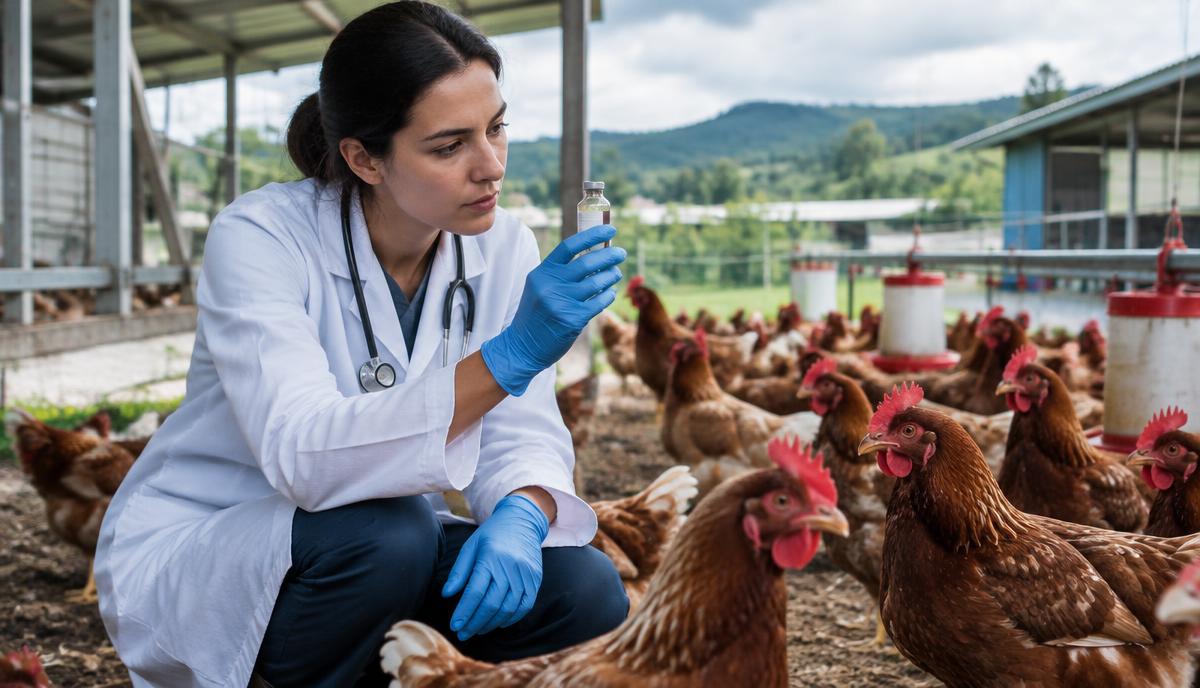
A large share of the world's antibiotics goes to livestock and aquaculture, and resistance genes travel from farms to people through food, water and soil. This piece argues that drug resistance cannot be solved inside hospitals alone, and examines Europe's experience cutting farm use, the role of vaccines and husbandry, and the reality in places with almost no vets.

Ultra-Processed Foods and the Fight Over a Definition
Regulators, researchers and food companies are contesting what counts as ultra-processed food, because whatever the definition captures decides what gets labelled, taxed, restricted in school meals or marketed. This piece traces how the NOVA research category became a legal one, what the evidence on health outcomes does and does not show, and what a workable definition could look like.