Can Agriculture Become Nature Positive?
Knepp Estate rewilded itself out of food production entirely, raising the question of what nature positive farming means for everyone else
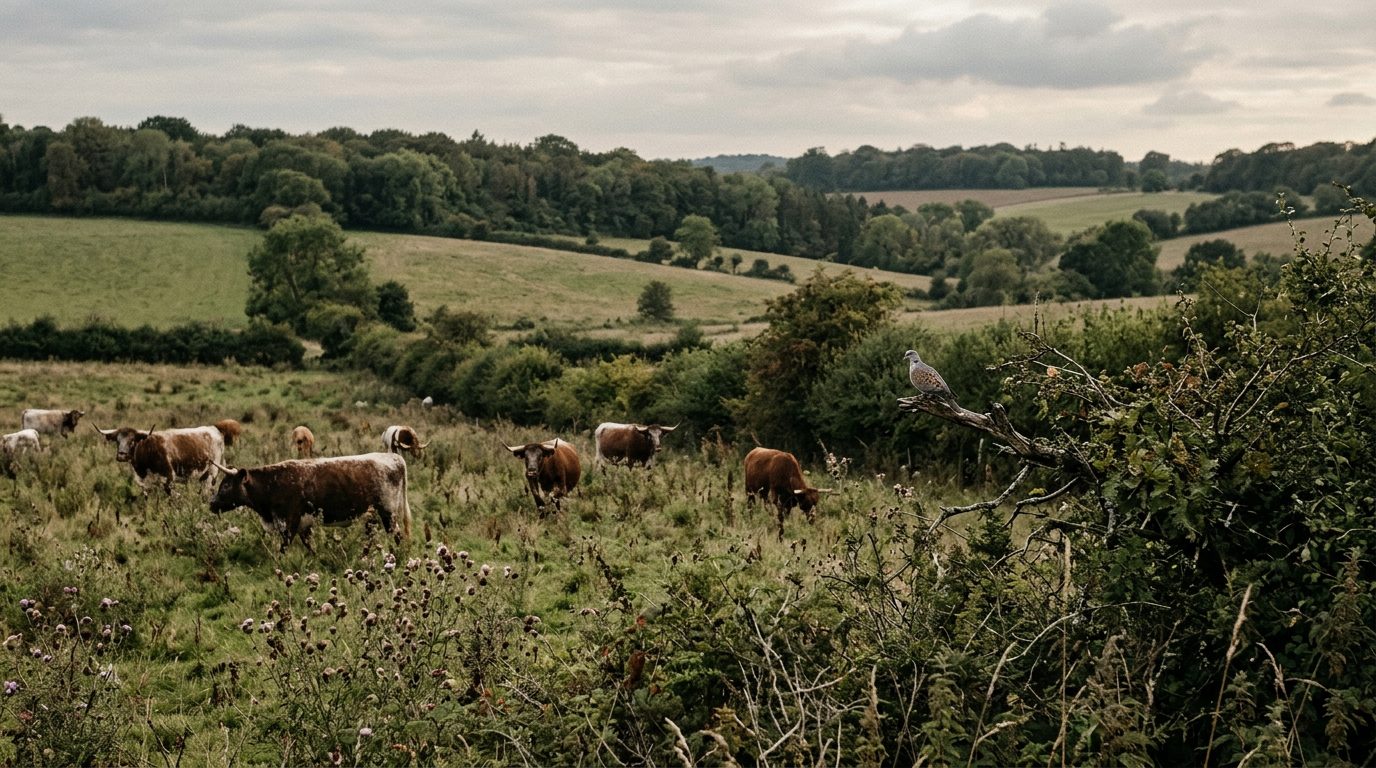
On a 1,000-acre estate in West Sussex, a herd of longhorn cattle and a scatter of Tamworth pigs have replaced the wheat and dairy operations that lost money for seventeen straight years. Knepp Estate now hosts breeding pairs of turtle doves and nightingales, species in freefall almost everywhere else in Britain, and its owners sell the meat at a premium while charging visitors to camp among it. Conservationists cite Knepp constantly. What they cite less often is the uncomfortable fact underneath it: Knepp got there by taking land out of food production entirely. That is not a template most of the world's farmers can follow, and it is exactly the tension sitting inside the phrase "nature positive" as it moves from ecological theory into corporate strategy.
Nature positive is a specific claim, not a mood. It means halting and reversing biodiversity loss so that by a fixed date, usually 2030, ecosystems measured against a 2020 baseline are demonstrably richer, not merely less depleted. The term gained institutional weight after the Kunming-Montreal Global Biodiversity Framework, agreed by nearly 200 countries in December 2022, set 23 targets including the now-famous 30x30 goal of protecting 30 percent of land and sea by 2030. Agriculture sits at the center of whether any of this is achievable, because agriculture is the thing the framework is largely about, whether its architects say so plainly or not.
The Sector the Framework Is Actually Aimed At
Food production is the leading driver of terrestrial biodiversity loss on the planet. A 2021 Chatham House analysis, produced with the UN Environment Programme and Compassion in World Farming, found agriculture is a contributing threat to 24,000 of the roughly 28,000 species currently at risk of extinction, a staggering 86 percent. Habitat conversion for cropland and pasture, pesticide and fertilizer runoff, and the replacement of diverse ecosystems with genetically narrow monocultures do more cumulative damage to wild species than any other human activity, including fossil fuel extraction. That is the inconvenient premise behind Target 15 of the Kunming-Montreal framework, which calls on large companies and financial institutions to assess, disclose, and progressively reduce their biodiversity-related risks and negative impacts. For a mining company, that target is a compliance exercise layered onto existing operations. For a food company, it is closer to an indictment of the core business model.
That distinction explains why "nature positive" lands so differently across sectors. An energy company can point to a solar farm and claim alignment with planetary boundaries without touching its fundamental logic of resource extraction. A food company cannot point to anything analogous without changing how it grows things, because growing things at scale is the impact.
What Corporate Adoption Actually Looks Like So Far
The infrastructure for corporate accountability now exists in a way it did not three years ago. The Taskforce on Nature-related Financial Disclosures, or TNFD, published its final recommendations in September 2023, giving companies a structured framework for reporting dependencies and impacts on nature, modeled deliberately on the climate-disclosure architecture of the TCFD. By July 2025, according to the TNFD's own status report, 1,817 organizations had joined the TNFD Forum and 620 organizations, representing roughly $20 trillion in assets under management, had publicly committed to TNFD-aligned reporting, with more than 500 first- and second-generation reports published. Agriculture, food, and beverage companies are among the more engaged sectors, with the TNFD's sample of 57 such companies showing relatively strong disclosure rates on governance and strategy.
The Gap Between Reporting and Reducing
The trouble, which the TNFD's own report all but concedes, is that disclosure and transformation are not the same thing. Only 22 to 45 percent of reporting companies actually disclosed against core land-use-change metrics, the kind of data that would show whether a company's supply chain is converting habitat. Familiar legacy metrics like water use and waste showed noticeably higher adoption, suggesting many companies are repackaging environmental reporting they already had rather than building new nature assessments from scratch. CDP data from a broader corporate sample tells a similar story: in 2022, 87 percent of surveyed companies responded to biodiversity questions, but 70 percent still did not assess their value chain's impact on biodiversity at all, and 55 percent had taken no action progressing whatever commitments they had made in the prior year. Sue Armstrong Brown, CDP's global director for environmental standards, put the gap bluntly: commitments are not turning into action at the pace required.
Nestlé and Unilever, two of the largest buyers of agricultural commodities on earth, illustrate the pattern at company scale. Both have made regenerative agriculture central to their nature and climate messaging, funding farmer transitions to reduced tillage, cover cropping, and hedgerow restoration across parts of their supply chains. Both have also faced persistent criticism that these programs cover a small fraction of total sourcing volume relative to the scale of their commodity footprints, and that the underlying purchasing model, which rewards volume and low unit cost, has not fundamentally changed. A regenerative pilot on a few thousand hectares does not offset sourcing decisions across millions.
Why Ecologists Keep Using the Word Greenwashing
Skepticism from the scientific community is not a fringe position; it comes from researchers who helped shape the concept. Dr. Joseph Bull of the University of Oxford, who has published on the ecological foundations of nature positive, has warned that pledges risk becoming a substitute for, rather than a driver of, the harder work of reducing impacts directly. His Oxford colleague, Professor Dame E.J. Milner-Gulland, has made the same point from a different angle, arguing that nature positive offers "an optimistic and aspirational vision" but that aspiration cannot be allowed to substitute for practical steps. Their concern centers on what conservation science calls the mitigation hierarchy, the sequenced requirement to avoid harm first, minimize what cannot be avoided, and restore or offset only what remains. Nature positive language, applied loosely, lets companies skip straight to offsets and biodiversity credits while impacts on the ground continue largely unchanged.
Policy retreats have reinforced the skepticism. In February 2024, the European Commission withdrew its proposed Sustainable Use of Pesticides Regulation, which would have made the Farm to Fork Strategy's target of halving pesticide use by 2030 legally binding, after months of farmer protests across the continent. Commission President Ursula von der Leyen called the measure a "symbol of polarization" as she scrapped it. By February 2025, the EU's agriculture commissioner was telling reporters plainly that pesticide cuts were off the table. This is the policy environment nature positive commitments now operate inside: voluntary corporate pledges advancing in the same period that binding regulatory targets are being abandoned under agricultural-lobby pressure. Campaign groups like PAN Europe called the withdrawal a "black day for health and biodiversity," and the sequence undercuts the premise that private-sector disclosure alone can substitute for regulation.
What a Genuine Transition Actually Costs
The clearest evidence on what real change requires, rather than what companies claim it requires, comes from field trials rather than corporate sustainability reports. The ASSIST project, run across 17 commercial farms in southern England between 2018 and 2021 and published in the Journal of Applied Ecology in 2025, tested farming systems that added wildflower margins, cover crops, and in-field flower strips to conventional arable rotations. The results were genuinely encouraging on the ecological side: more earthworms, more pollinators, more natural predators like ladybirds and lacewings, fewer pest aphids, and yields in flowering crops like oilseed rape that matched or exceeded intensive baselines because of improved pollination and soil health.
The Subsidy Question Nobody Wants to Answer
But lead researcher Dr. Ben Woodcock of the UK Centre for Ecology and Hydrology was direct about the economics: the enhanced system only matched conventional farming's profitability because of existing agri-environmental subsidies, and the more ambitious version of the system needed increased subsidies to break even against intensive practice. Without new financial incentives, he noted, most farmers will simply not adopt these methods, whatever the biodiversity upside. That finding matters more than any corporate pledge, because it identifies the actual constraint: nature-positive farming is frequently possible without catastrophic yield loss, but it is rarely profitable without public money or a premium market, and neither is guaranteed at scale.
Smaller-scale examples show the range of what is being attempted. In Peru, the agroindustrial company Agrovision has used TNFD-aligned reporting to document over 2,000 hectares set aside for conservation within its operations and more than 100 kilometers of hedgerow and living-fence reforestation designed to function as wildlife corridors through cultivated land, an approach it presented at the CBD's COP16 summit in Cali. In tropical agroforestry systems more broadly, research published in Nature Communications has documented genuine win-win outcomes, cocoa and coffee systems grown under diverse tree canopies that sustain high biodiversity alongside commercially viable yields, though these results depend heavily on crop type, shade tolerance, and market access for tree products that intensive monoculture does not provide.
The Honest Answer
Agriculture can become measurably better for nature at the level of individual farms and specific commodity systems; the ASSIST trial and tropical agroforestry research both demonstrate that the ecology is not the limiting factor. What remains unresolved is whether the economics and the politics will move at anything like the pace the Kunming-Montreal Framework's 2030 deadline requires. Corporate disclosure frameworks like TNFD have done real work in forcing companies to measure what they previously ignored, and that measurement is a precondition for accountability. But measurement is not transformation, and the gap between the two, 620 companies disclosing against a $20 trillion asset base while land-use-change metrics remain the least reported category, is where the greenwashing critique lands hardest. The farms that are genuinely getting there, whether a rewilded English estate or a hedgerow-laced Peruvian agribusiness, are getting there through direct financial support, premium markets, or both. Nature positive agriculture is technically achievable. Whether it becomes the norm rather than the exception depends on whether subsidies, procurement contracts, and regulation catch up to what the ecology has already proven possible, and on that question, 2024 and 2025 have supplied more evidence of retreat than of resolve.
Sources: CBD/UNEP, "Kunming-Montreal Global Biodiversity Framework" and Target 15 business disclosure requirements; TNFD, "TNFD Status Report," September 2025; TNFD, "TNFD 2024 Report" (Agrovision Perú case study); Chatham House, "Food System Impacts on Biodiversity Loss," 2021, with UNEP and Compassion in World Farming; CDP, "New data shows companies recognising biodiversity risks but majority not turning commitments into action," press release; University of Oxford, "Greenwashing is a threat to achieving a 'Nature Positive' world," 2023; UK Centre for Ecology & Hydrology, "Nature-friendly farming boosts biodiversity and yields but may require new subsidies," 2025; Woodcock et al., "Agroecological farming promotes yield and biodiversity but may require subsidy to be profitable," Journal of Applied Ecology, 2025; Bloomberg, "EU Withdraws Push to Halve Pesticide Use After Farmer Protests," February 2024; Euronews, "Pesticide cuts are off the table, says EU agriculture commissioner," February 2025; PAN Europe, "Black Day for Health and Biodiversity: EU Commission withdraws proposal for Pesticide Reduction," 2024; Nature Communications, "Win-win opportunities combining high yields with high multi-taxa biodiversity in tropical agroforestry," 2022; Positive News, reporting on Knepp Estate rewilding project
The Food Observatory Brief
Weekly briefing on food systems, climate, agriculture and policy — straight to your inbox.
More on Agriculture
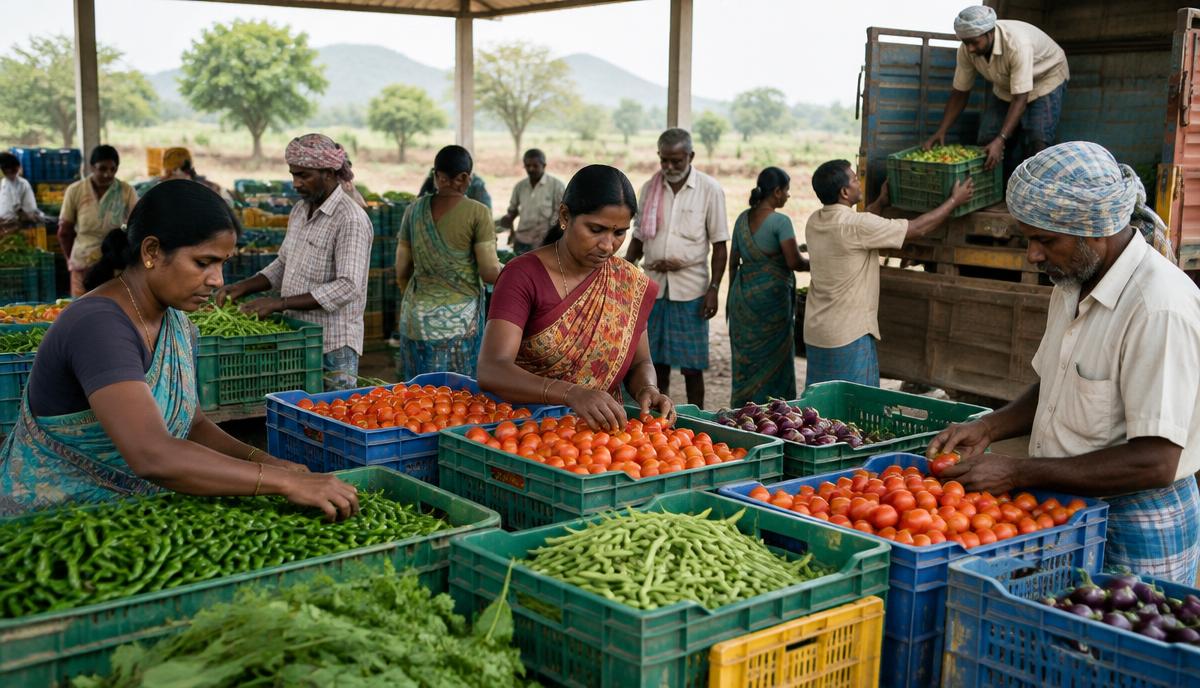
Farmer Producer Organisations and the Case for Collective Scale
Collective structures are the missing link between smallholder fragmentation and market power, yet most farmer producer organisations fail on governance, working capital and market linkage rather than enthusiasm. This piece draws on India's scheme data and examples from Anand, Oromia and Nashik.
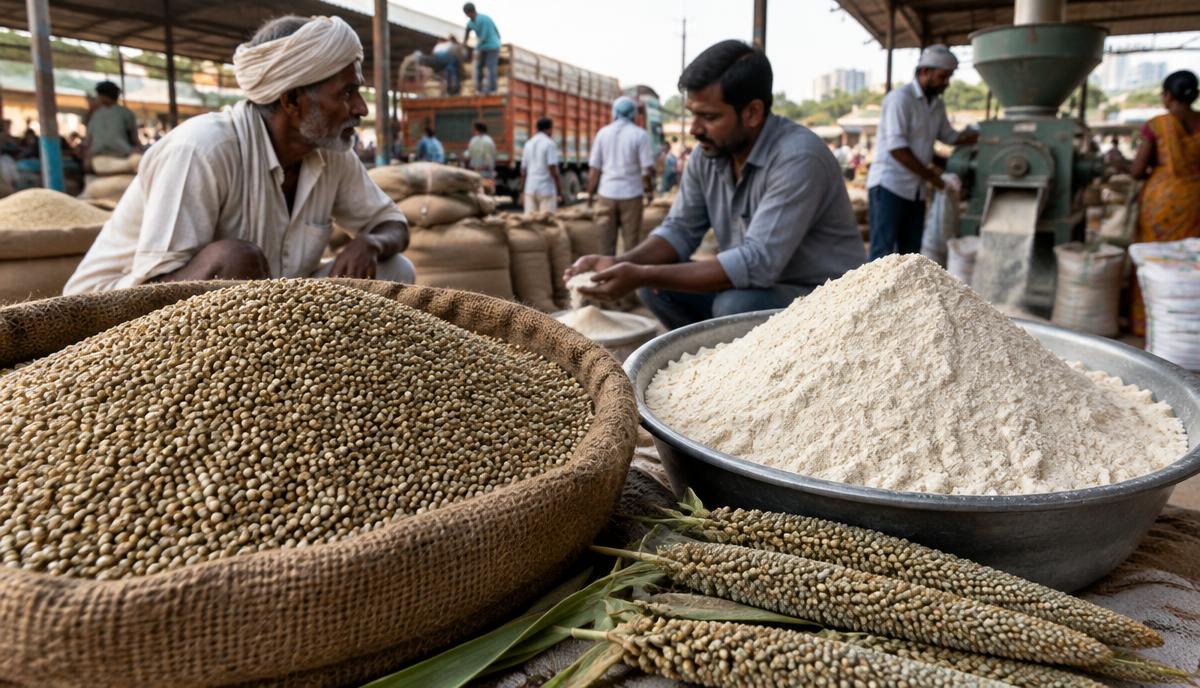
Millets Are Having a Moment. Can the Market Keep Up?
After the 2023 International Year of Millets, demand-side attention has outrun the supply chain behind these crops. This piece looks at yields, processing, shelf life, public procurement and farmer incentives in India and Africa to explain whether the moment lasts.
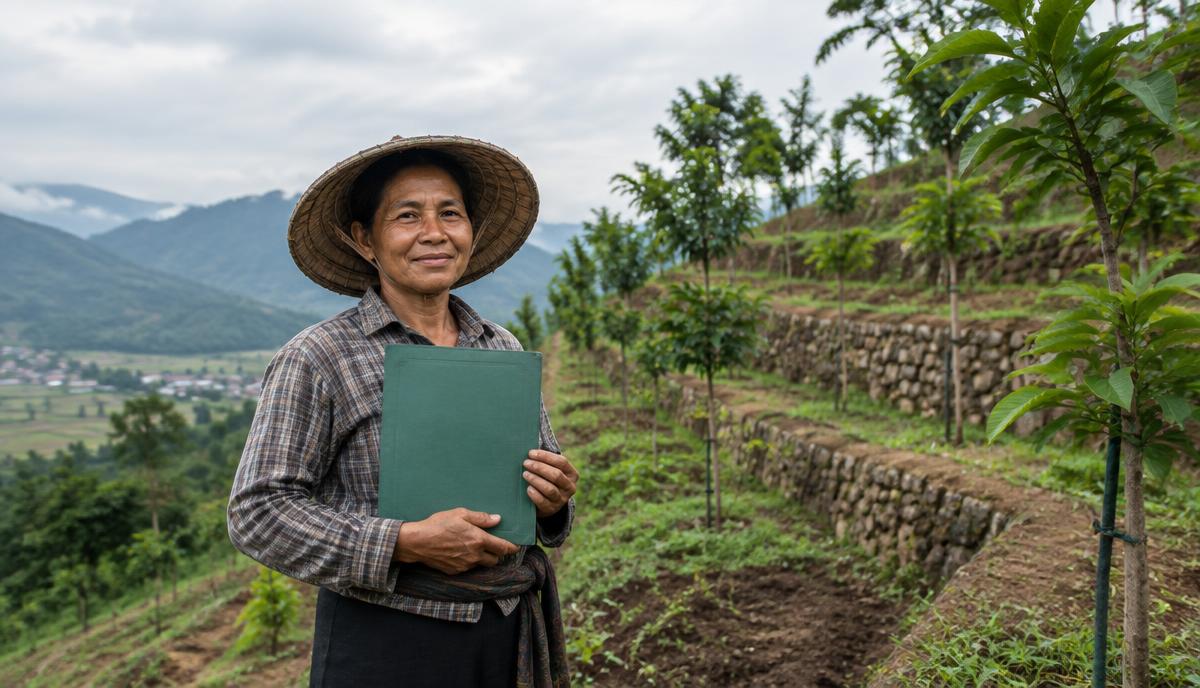
Land Tenure Decides Whether Farmers Invest
Whether a farmer plants trees, builds terraces or takes a loan depends heavily on confidence of holding the land. This piece argues that tenure security is a precondition for the soil and climate agendas that donors promote, and that women, tenants and pastoralists are the most exposed.