Why Soil Is Finally Becoming an Economic Asset
Farmland appraisers are starting to price soil health directly, treating dirt as a metered input instead of a background condition
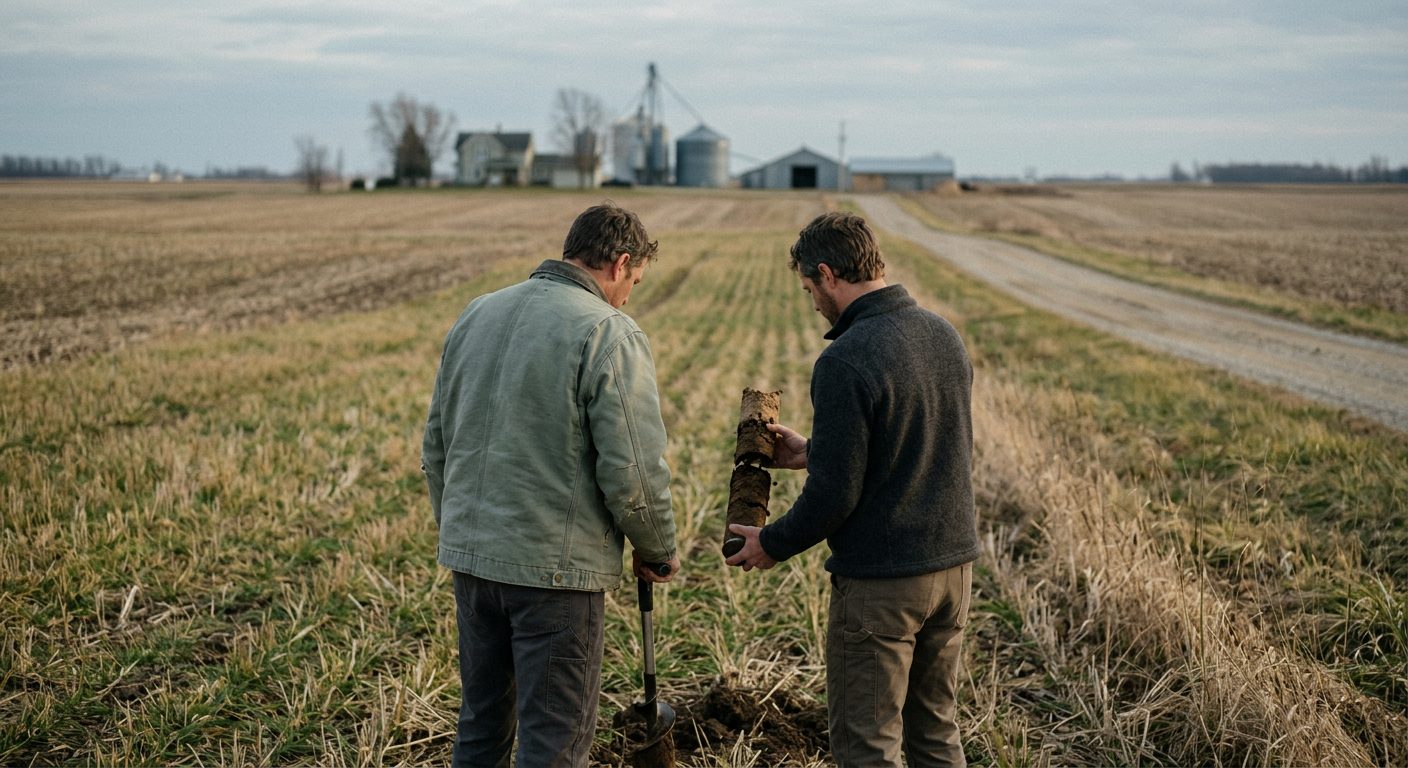
In DeKalb County, Illinois, appraisers spent 2024 doing something the farmland market has avoided for decades: pricing eleven parcels of corn and soybean ground using a regression model built on soil health measurements rather than the comparable-sales method that has governed farm appraisal since the Dust Bowl. The pilot, run by the Chicago-based Delta Institute, treated organic matter, aggregate stability and biological activity as inputs to value instead of background conditions that acreage and location were assumed to capture on their own. That distinction, whether soil is priced or merely described, is the whole story of what is happening to dirt right now.
For most of American agricultural history, soil was the one input on the balance sheet nobody metered. Water gets a meter, land gets a deed, equipment gets a depreciation schedule, but the biological engine underneath all of it was treated as a fixed, free good that came bundled with the acre. That assumption is breaking down across four fronts at once: carbon markets that pay for what soil sequesters, appraisers who are starting to price what soil measurably does for yield stability, insurers testing whether healthier ground means fewer claims, and a research base connecting soil erosion risk directly to loan and indemnity performance.
Carbon Markets Made Soil Payable, If Not Yet Reliable
The clearest evidence that soil has entered a market is the money already moving through it. Truterra, the sustainability arm of Land O'Lakes, paid farmers $4 million in its first program year for roughly 200,000 metric tons of sequestered carbon, an average of about $20,000 per participant and, for some, over $100,000, working out to roughly $20 a ton. Cargill and Truterra offered close to $25 per credit in 2022, while Nori and Indigo Ag paid nearer $20, according to reporting compiled by Ambrook Research. Contract terms range wildly too, from one-year commitments at Cargill to ten-year lockups at Bayer.
BloombergNEF's analysis of the space is more sobering about scale. As of 2022, agricultural credits made up just over one percent of the 1.7 billion credits issued across the voluntary carbon market, and within that sliver only 344,800 of roughly 22 million agricultural credits came from actual removal and soil sequestration rather than avoided-emissions accounting. BloombergNEF still projects carbon farming could generate $13.7 billion in annual credit revenue by 2050, but it is blunt about why the sector remains marginal today: a lack of standardized measurement, unreliable modeling in place of direct soil sampling, and regulatory infrastructure that has not caught up to the science.
The Additionality Problem Nobody Has Solved
The growing pains are not just technical, they are structural. Lance Unger, an Indiana farmer profiled by Ambrook, had already adopted no-till and cover cropping before a carbon broker approached him, raising the question economist Jerome Dumortier put directly: paying for practice changes made years before a contract existed is not what a carbon payment is supposed to reward. Soil scientist Jennifer Pett-Ridge has argued the field needs to get more modest before it gets more ambitious, saying the honest starting point is simply not losing the carbon already stored, since most brokers still rely on modeling rather than the direct sampling considered the gold standard. Farmer Alexis Stevens called the whole landscape "the wild, wild West," and found that between cover-crop costs and yield risk from reduced tillage, the payments did not pencil out for her operation. Agricultural law specialist Tiffany Dowell Lashmet has flagged a quieter cost too: these contracts require farmers to hand over years of farm records and aerial imagery to private companies, a data-privacy tradeoff few growers fully price in before signing.
What DeKalb County Proved About Appraisal
Carbon payments are a cash flow, but the more durable shift is happening in how land itself gets valued. The Delta Institute's Illinois work analyzed farmland sales data from 2017 through 2023 across the state's central corn belt and concluded that soil health metrics were essentially absent from standard appraisal practice, even though they plausibly affect long-run productivity and resilience. Its 2024 pilot built a composite soil health index for each of the eleven test properties, ran regression analysis against actual sale prices, and folded the results into final valuations. The project's own conclusion was unambiguous: agricultural real estate is, in its words, "a nascent marketplace for soil health to be valued as an asset," with room to expand the model across the Corn Belt and Great Lakes region.
That builds on something the land market already half-does. Soil productivity indexes like Iowa's Corn Suitability Rating and the federal National Commodity Crop Productivity Index have shaped appraisals for years, and firms including Peoples Company and Farmers National Company routinely cite them in listings. But those indexes are static snapshots of inherent soil type, not measurements of biological condition that changes with management. The shift underway is from asking what a soil is to asking what a soil is currently doing, and pricing the difference.
Michigan Is Testing Whether Healthier Ground Means Cheaper Insurance
If carbon markets and appraisal are the demand side of pricing soil, crop insurance is where the risk math gets tested directly. Michigan's Department of Agriculture and Rural Development launched a NextGen Crop Insurance Pilot this year, backed by a $480,900 state grant, enrolling corn and soybean growers across four Thumb-area counties, Saginaw, Tuscola, Huron and Sanilac, that together represent roughly twelve percent of the state's agricultural land. Farmers pay a $35 membership fee and must show adoption of cover crops, crop rotation, reduced tillage and recent soil sampling to qualify. Rather than replacing federal coverage, it operates as a farmer-owned captive insurance layer that could pay dividends after four years if the pool's losses come in low. MDARD director Tim Boring framed the logic plainly: improved soil health improves weather resiliency, and that resiliency correlates with decreased weather risk, the kind of claim an actuary can eventually test against real loss data. The stakes are not abstract; USDA Economic Research Service figures cited in the pilot's own materials show federal crop insurance indemnities rose 109 percent between 2015 and 2024.
The Research Base Regulators Can No Longer Ignore
Michigan's bet is not speculative science. A 2021 study led by researchers at Yale, published through the university's Bradford Lab, found that higher soil organic matter measurably protected U.S. maize yields and lowered crop insurance payouts specifically under drought conditions, a direct link between a soil property and an insurance outcome. A more recent analysis in the Journal of Agricultural and Applied Economics went further, combining 2017 National Resources Inventory soil data with a decade of Risk Management Agency loss data across 2,660 counties. The researchers tested Universal Soil Loss Equation variables, erosion tolerance, soil erodibility, vegetative cover, against actual loss ratios and found real correlations, which by their own logic means something is off: if federal premium rates already priced soil risk correctly, loss ratios and soil characteristics should show no relationship at all. They found one, which points to room for actuarial refinement RMA has not yet made.
Lenders Are Circling the Same Data, More Quietly
Banks have been slower to move than insurers, but the groundwork is visible. The Soil Health Institute has published guidance specifically aimed at agricultural lenders on what soil health investments mean for loan risk, and UNEP's Finance Initiative has built out a natural capital credit risk framework for agricultural lending more broadly, treating degraded soil as a bankable liability rather than an externality. Farm Credit System affiliates, including Frontier Farm Credit, now maintain standing sustainable agriculture programs that steer credit toward conservation practices. None of this yet amounts to a soil score showing up on a term sheet the way a credit score does on a mortgage, but the infrastructure, the data standards, the actuarial studies, the appraisal pilots, is being built by the same institutions that would need it to underwrite that way.
The Asset Class Is Forming Whether or Not the Infrastructure Is Ready
What ties DeKalb County to the Thumb of Michigan to the fine print of a Truterra contract is a single, underappreciated shift: the institutions that move capital through farmland, appraisers, insurers, carbon buyers and lenders, have all independently concluded that soil condition is measurable, variable and financially consequential enough to act on. The carbon markets remain the shakiest leg, plagued by additionality problems and thin verification, and no major insurer has yet repriced a policy purely on a soil test. But the direction is set. A farm's dirt is no longer just the surface a deed describes. It is becoming a line item, and the institutions that figure out how to measure it well will be the ones that end up pricing American farmland for the next generation.
Sources: BloombergNEF, "Unlocking Agricultural Carbon Market Opportunities"; Ambrook Research (Offrange), "The Fuzzy Math of Soil Carbon Markets"; Truterra, "Truterra Carbon Program Pays $4 Million to Farmers for 200,000 Metric Tons of Carbon Stored in First Year"; Delta Institute, "Soil Health-focused Land Valuation Market Research in Illinois"; AgWeb, "Michigan Crop Insurance Pilot Tests Whether Soil Health Can Lower Risk"; Yale School of the Environment / Bradford Lab, Kane et al., "Soil organic matter protects US maize yields and lowers crop insurance payouts under drought," Environmental Research Letters (2021); Journal of Agricultural and Applied Economics, Cambridge University Press, "Soil Characteristics and Crop Insurance Losses"; Soil Health Institute, "What do agricultural lenders need to know about soil health?"; UNEP Finance Initiative, "Natural Capital Credit Risk Assessment in Agricultural Lending"; Peoples Company / DreamDirt, "CSR2 & PI: What They Mean for Your Farm's Land Value"
The Food Observatory Brief
Weekly briefing on food systems, climate, agriculture and policy — straight to your inbox.
More on Agriculture
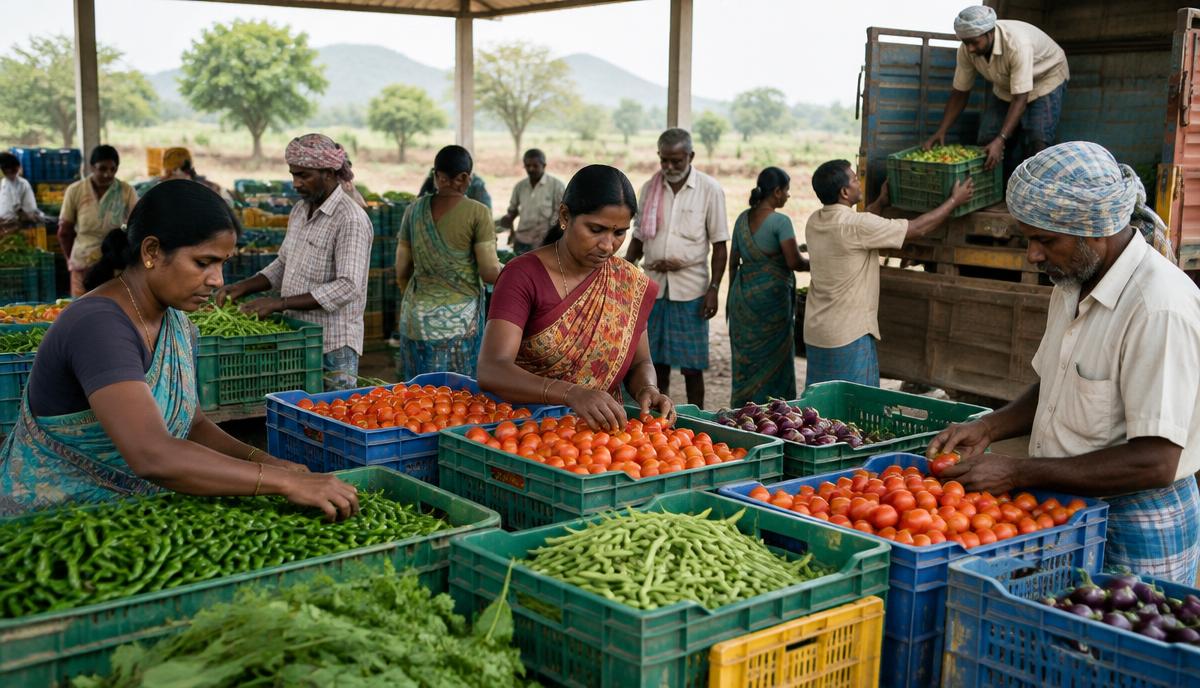
Farmer Producer Organisations and the Case for Collective Scale
Collective structures are the missing link between smallholder fragmentation and market power, yet most farmer producer organisations fail on governance, working capital and market linkage rather than enthusiasm. This piece draws on India's scheme data and examples from Anand, Oromia and Nashik.
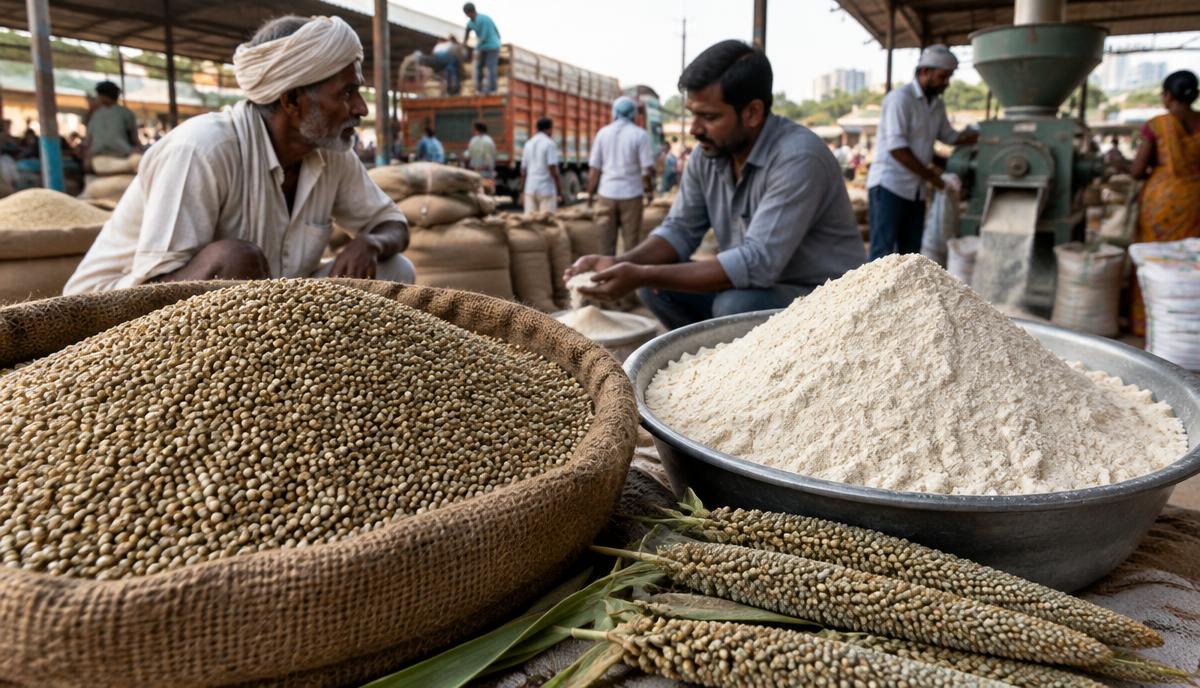
Millets Are Having a Moment. Can the Market Keep Up?
After the 2023 International Year of Millets, demand-side attention has outrun the supply chain behind these crops. This piece looks at yields, processing, shelf life, public procurement and farmer incentives in India and Africa to explain whether the moment lasts.
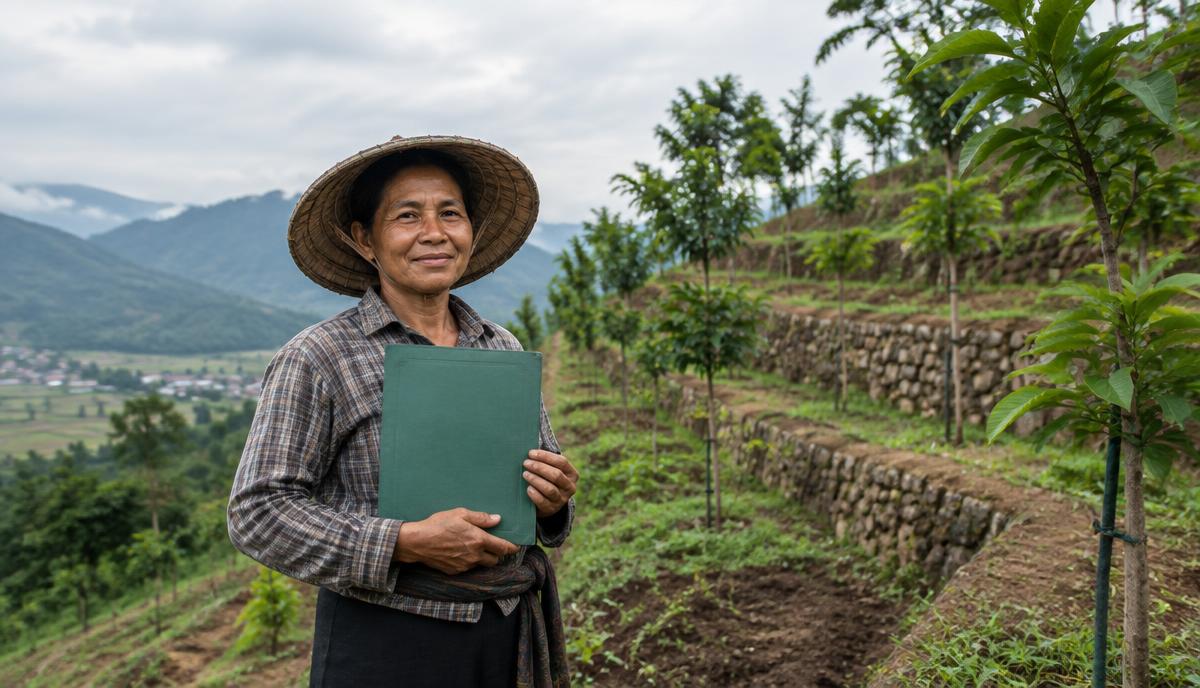
Land Tenure Decides Whether Farmers Invest
Whether a farmer plants trees, builds terraces or takes a loan depends heavily on confidence of holding the land. This piece argues that tenure security is a precondition for the soil and climate agendas that donors promote, and that women, tenants and pastoralists are the most exposed.