Farming's Data Revolution Has Arrived
Precision agriculture has matured into farming's core infrastructure, and a fight over who owns the data has arrived with it
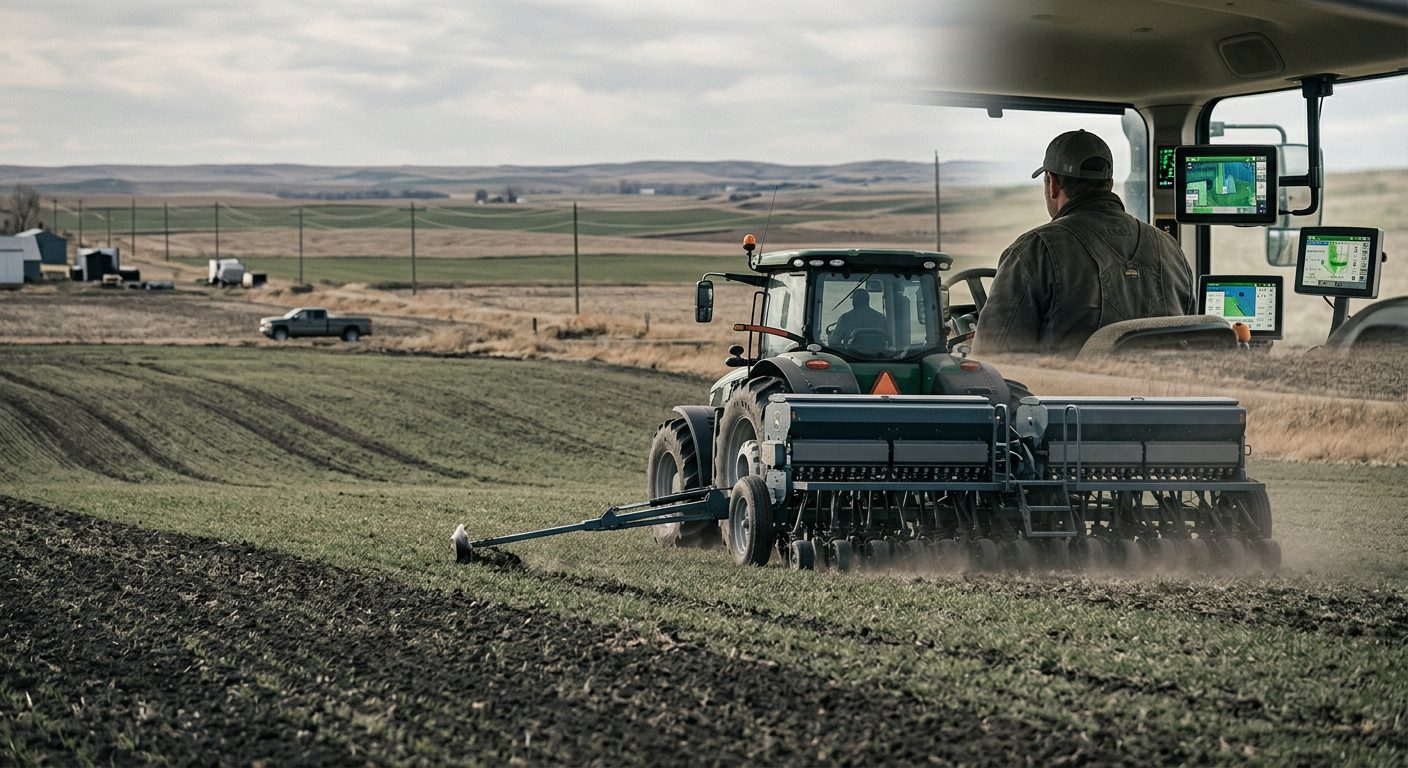
A tractor rolling across an Iowa cornfield today generates more data in an afternoon than the farm's paper records held for a decade. Every pass logs GPS position, seed population, fuel burn, soil moisture and yield down to the square meter, streamed automatically to a cloud server the farmer never signed up to visit personally. The machinery has become the sensor network, and the sensor network has become the argument. Precision agriculture, once a niche upgrade sold on fuel savings and tighter fertilizer rates, has matured into the defining infrastructure shift in American farming, and it has arrived with a fight already built in: who owns the information a farm produces, and who gets to profit from it.
That fight is no longer theoretical. In February 2025 the Federal Trade Commission and attorneys general in Illinois, Arizona, Michigan, Minnesota and Wisconsin sued Deere & Company, alleging the equipment giant had spent decades restricting access to the diagnostic software and repair tools farmers need to fix their own machines, forcing them into costlier, slower dealer-network repairs. The case settled in July 2026 with a ten-year consent order requiring Deere to give farmers and independent repair shops the same electronic fault-code access, component reprogramming tools and technical manuals its authorized dealers use. "Today's settlement enables farmers to do what they've done for generations, fix their own tractors and other farm equipment, without having to pay an authorized John Deere dealer," said Daniel Guarnera, director of the FTC's Bureau of Competition. A separate class-action suit, filed by farmers in federal court in northern Illinois, produced a $99 million settlement fund the same year for equipment owners affected since 2018.
A Combine Is Now a Data Terminal
The repair fight and the data fight are the same fight wearing different clothes. Modern farm equipment is proprietary hardware running proprietary software that reports to a proprietary cloud, and Deere's control over any one layer, the diagnostic port, the parts catalog, the agronomic dashboard, extends its leverage over the others. That is why the fault-code lawsuit reads, in places, like a data-access complaint: the plaintiffs argued that Deere's monopoly on repair information let it "hinder competition, inflate farmers' repair costs and degrade farmers' ability to obtain timely repairs," in the FTC's language, while the same closed architecture routed the operational data those machines generate straight back to Deere's own Operations Center platform by default. Colorado became the first state to pass an agricultural right-to-repair law in 2023, effective the following year, and more than a dozen states introduced similar bills within the first two months of 2025 alone, according to Investigate Midwest's tracking of the legislative wave. The pattern is consistent across states: require manufacturers to sell diagnostic software, firmware and documentation at fair prices, while carving out protection for trade secrets.
The Market Nobody Priced Correctly
What makes this fight worth national attention rather than a niche agricultural-policy footnote is the size of the asset in question. The global precision agriculture market is on pace to reach roughly $27 billion by 2030, and separate market analyses put the agriculture IoT segment, the sensors, connected equipment and telematics layer specifically, above $12 billion in the same window, according to research compiled by Coherent Market Insights and other industry trackers. Nearly 27 percent of U.S. farms already use some form of precision technology, per figures cited by Civil Eats. That is not a market for machinery anymore. It is a market for the exhaust the machinery produces: the seeding maps, the as-applied chemical rates, the yield files, the soil-sample histories that, aggregated across millions of acres, let a company forecast a harvest, price an input, or train a model months before the farmer down the road knows what his own bins will hold.
Whose Field, Whose File
Farmers and legal scholars have spent a decade wrestling with a genuinely unresolved question: does data generated by a farmer's equipment, on a farmer's land, using a farmer's inputs, belong to the farmer by default, or does it belong to whoever built the software that recorded it? Most agtech contracts now state that farmers retain ownership on paper, but the fine print routinely grants providers broad rights to aggregate, anonymize and monetize that same information, and to share it with corporate partners. Rebekka Siemens, a California almond grower, described the arrangement bluntly to Civil Eats: "It's essentially like we're being charged to use the service and then the company is making even more money off of us by selling our data." Andrew Nelson, a Washington grower quoted in the same reporting, put his discomfort in more personal terms, saying handing operational data to "the person that I'm having to buy a three-quarter of a million-dollar machine from just doesn't sit quite right." The unease is not abstract paranoia. A company that can see planting dates, input purchases and yield outcomes across thousands of farms holds a market-intelligence advantage no individual grower can match, and nothing in most contracts obligates it to share that advantage back.
The Coalition Trying to Write the Rules
The industry's own answer to that imbalance has existed since 2014, when the American Farm Bureau Federation convened commodity groups and technology providers to write a baseline contract standard, eventually formalized as Ag Data Transparent. The coalition's certification, updated again in 2024, rests on principles that read almost like a bill of rights for farm data: that farmers should own the information originating from their operations, that providers must disclose in plain language how data is used, including whether it trains AI models, that farmers can retrieve their own records "in a usable format and in a reasonable time," and that reasonable security safeguards apply against loss or unauthorized access. The catch is that certification is voluntary. A grower using a platform outside the ADT roster has no guarantee any of those principles apply, and even certified providers write their own contract language around the framework rather than adopting uniform terms.
Building the Plumbing Between Rival Platforms
Ownership disputes aside, farmers face a more mundane daily obstacle: a planter running one brand's monitor, a sprayer running another's, and a yield-mapping app that speaks to neither. AgGateway, an industry consortium, has spent years building the Agricultural Data Application Programming Toolkit, known as ADAPT, an open-source translation layer meant to let farm management software read and write data across competing equipment brands without a farmer manually re-entering field boundaries and prescriptions for every tool in the shed. The effort matters because interoperability is itself a form of market power. A closed data format that only works inside one company's ecosystem functions as a subtler lock-in than any repair-port restriction, nudging a farmer toward buying that company's next planter, sprayer and subscription simply because switching means starting the digital farm record over from zero.
When the Buyer of Your Data Is Also Your Supplier
The starkest version of the conflict of interest sits with the input companies themselves. Bayer's Climate FieldView platform, built after the company's 2018 acquisition of Climate Corporation, collects planting, spraying and yield data from tens of millions of acres, the same company that sells the seed and crop-protection products those fields depend on. Friends of the Earth has argued the platform functions as a data-capture mechanism that helps Bayer target chemical sales even as the company works to contain years of Roundup litigation liability. Corteva and Trimble run comparable platforms. None of this requires bad faith to be a problem. A company that sells nitrogen and simultaneously sees, in near real time, exactly how much nitrogen every customer applied and what yield resulted has an information asymmetry no independent agronomist or competing retailer can match, and that asymmetry compounds every season the data keeps flowing one direction.
A Legislative Answer Taking Shape
State legislatures have begun treating this as a policy gap rather than a contract dispute to be negotiated farm by farm. Nebraska's proposed Agriculture Data Privacy Act would bar platforms from monetizing farm data without explicit grower consent, an approach that, if it spreads to other farm states, would functionally establish in statute what Ag Data Transparent has only ever offered as a voluntary pledge: that the party generating the data, not the party hosting the server, holds the first claim on its value. Elizabeth Vaughan of the Small-Farm Tech Hub framed the long-term stakes starkly, asking whether the trajectory of consolidated data control ends with "Amazon" as the country's effective food producer, or whether independent farmers retain enough leverage over their own information to stay in business on their own terms.
The right-to-repair settlements of 2025 and 2026 proved that regulators and courts will act once a monopoly's mechanics become obvious enough, a locked diagnostic port is a simple thing to explain to a jury. Data control is a harder story to tell because the harm is diffuse and cumulative rather than a tractor stuck idle in a field. But the underlying economics are identical: whoever controls the pipe controls the value flowing through it. Farmers spent the last two years winning back the right to open their own equipment. The next fight, already underway in statehouses and standards committees, is over whether they also get to open their own files.
Sources: Federal Trade Commission, "FTC, States Secure Settlement with Deere & Company, Advancing Farmers' Right to Repair"; Farm Progress, "John Deere settles right-to-repair lawsuit for $99 million"; Investigate Midwest, "John Deere faces lawsuit as lawmakers introduce right-to-repair bills"; Civil Eats, "A Hidden Crop for Corporate Tech: Farm Data"; Ag Data Transparent, "Core Principles"; AgGateway, "Get Connected: ADAPT Standard"; Friends of the Earth, "Following $10 Billion Roundup Settlement, Bayer Uses Climate Program as Front to Lock in Control of Farmer Data and Sell More Roundup"; Coherent Market Insights, "Internet of Things (IoT) in Agriculture Market Size, Share & Forecast, 2026-2033"; Electronic Frontier Foundation, "Farmers Are Getting Control Of Their Equipment Back"; U.S. PIRG, "John Deere and Right to Repair over the years"
The Food Observatory Brief
Weekly briefing on food systems, climate, agriculture and policy — straight to your inbox.
More on Agriculture
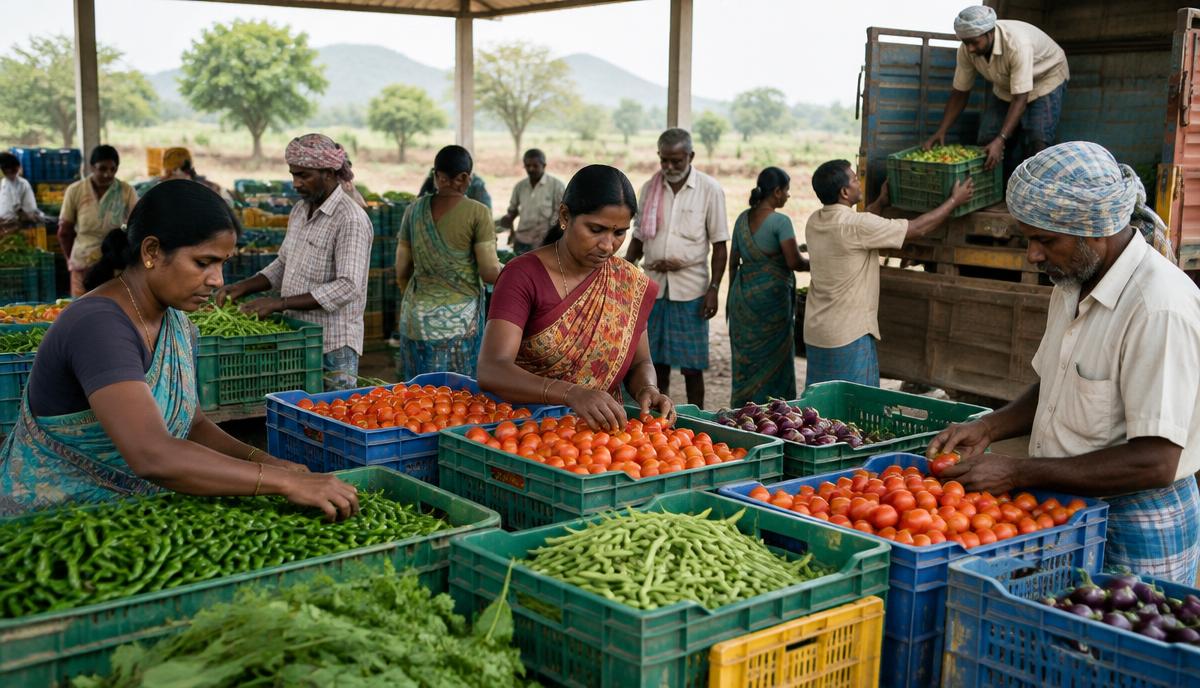
Farmer Producer Organisations and the Case for Collective Scale
Collective structures are the missing link between smallholder fragmentation and market power, yet most farmer producer organisations fail on governance, working capital and market linkage rather than enthusiasm. This piece draws on India's scheme data and examples from Anand, Oromia and Nashik.
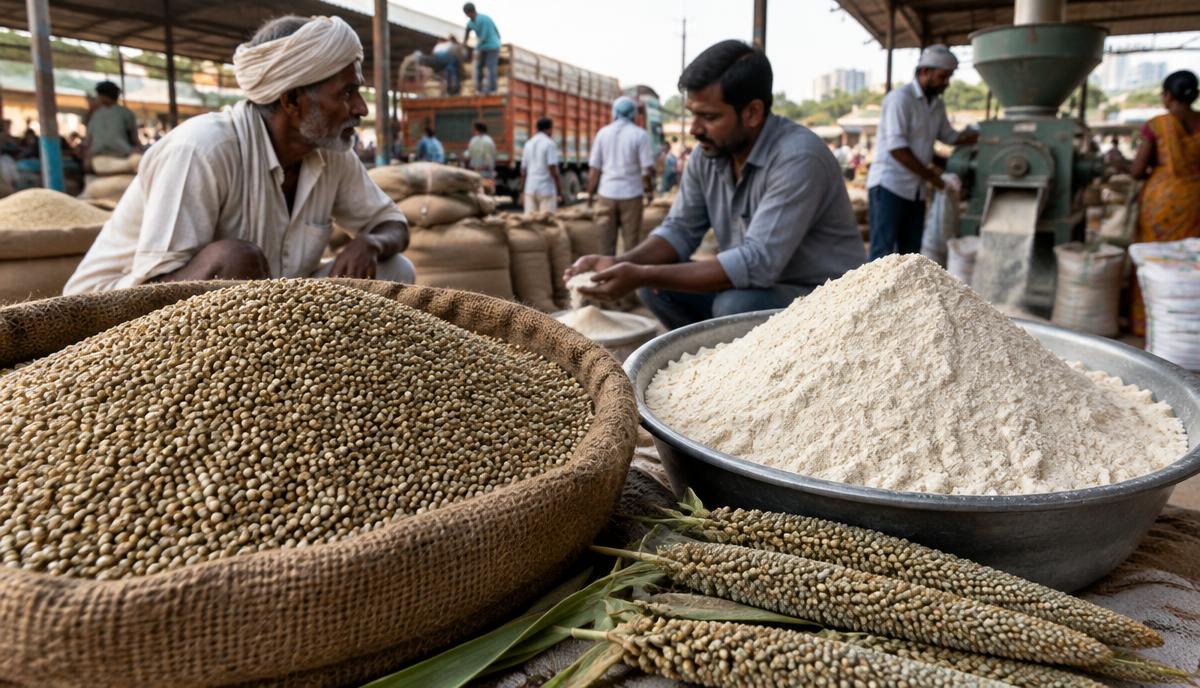
Millets Are Having a Moment. Can the Market Keep Up?
After the 2023 International Year of Millets, demand-side attention has outrun the supply chain behind these crops. This piece looks at yields, processing, shelf life, public procurement and farmer incentives in India and Africa to explain whether the moment lasts.

Land Tenure Decides Whether Farmers Invest
Whether a farmer plants trees, builds terraces or takes a loan depends heavily on confidence of holding the land. This piece argues that tenure security is a precondition for the soil and climate agendas that donors promote, and that women, tenants and pastoralists are the most exposed.