Millets Are Having a Moment. Can the Market Keep Up?
Pearl millet flour turns rancid in about six days, which is a supply chain problem, not a promotion problem
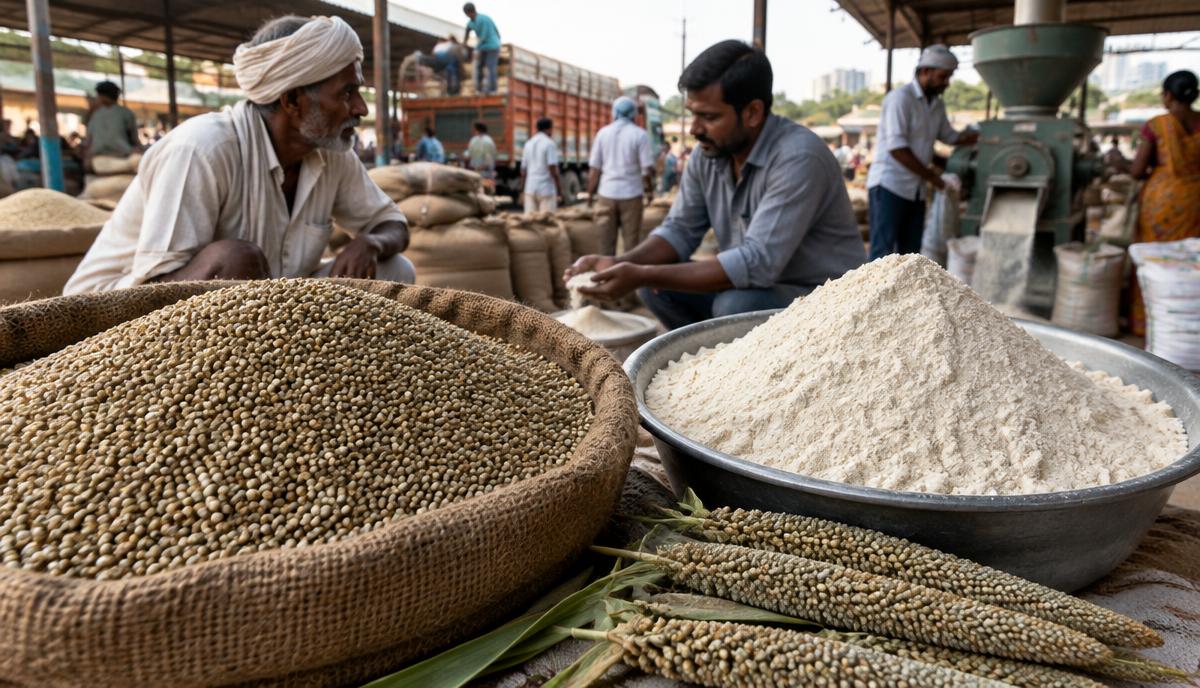
Pearl millet flour stored in a gunny sack turns rancid in about six days. Kept in a polythene bag, it lasts ten before it becomes unpleasant, and by day eleven to fourteen, depending on the container, it is inedible. That finding, from work reviewed by Indian agricultural researchers on the enzyme lipase in the grain's germ and outer layers, is a small fact with large consequences. It means that the grain at the centre of a global promotion campaign cannot be milled in the village, carried to a city and sold on a shelf the way wheat flour can. The 2023 International Year of Millets put these crops in front of ministers, chefs and supermarket buyers. The supply chain behind them was built for something else.
Attention is not the same as demand
The case for millets is easy to make and mostly true. Sorghum, pearl millet, finger millet and the smaller grains tolerate heat and thin rainfall, need few inputs, and carry more fibre and minerals than polished rice. The FAO, which coordinated the Year after a UN General Assembly resolution sponsored by India, built its campaign on exactly these points. But the same FAO page admits a number that should temper the mood: millets, sorghum included, make up less than 3 percent of the global grain trade.
A grain can be admired and still not be bought in volume. Awareness campaigns move urban shoppers who will pay for a packet of ragi biscuits. They do not change the economics facing a farmer in Rajasthan or Niger deciding what to plant. Those decisions depend on yield, price, storage and an assured buyer, and on each of these millets start from behind.
A shrinking crop with a famous name
India grows more millets than any country, roughly 39 percent of the world total by USDA estimates, but the crop has been contracting for six decades. Researchers writing through Cornell's Tata-Cornell Institute found that millet area fell from 37 million hectares in 1965-66 to 12.5 million in 2020-21. Production over the 15 years to 2022-23 peaked above 200 lakh tonnes in 2010-11 and bottomed at 137 lakh tonnes in 2018-19, according to the Directorate of Economics and Statistics. The government's own account of 2024-25 puts output at 180.15 lakh tonnes, more than 60 percent of it bajra, which is a recovery from the low but not a return to the peak. Millets have slid from about 8 percent of India's foodgrain output in 2010-11 to around 5 percent.
Consumption fell faster than production. Rural per capita sorghum intake dropped from 9.96 kg to 2.64 kg between 1991-92 and 2011-12, according to NSSO data cited by ICRISAT. Millets now make up some 6 to 7 percent of the Indian staple diet.
Why farmers walked away
The Tata-Cornell study covering 1981 to 2015 found that millet farmers earned about a third of what wheat farmers did and 42 percent of what paddy farmers did. Millet prices stagnated across the period while costs rose, and minimum support prices for millets grew more slowly than their production costs, the reverse of the pattern for wheat and rice. Net margins fell by 30 percent in the first fifteen years of this century relative to the previous two decades.
Yield is the root of it. ICRISAT scientists Shalander Kumar, Abhishek Das and M.L. Jat put average Indian millet productivity at 1 to 1.5 tonnes per hectare, well below rice. A drought-tolerant crop that earns a third of the competing crop's income does not need a better slogan. It needs a higher yield or a better price, ideally both. The 276 new millet varieties the government reported approving in 2024-25 matter, but a released variety changes a farm only when seed reaches the farmer and a buyer waits for the larger harvest.
The procurement gap
Wheat and rice farmers sell into a state machine. The ICRISAT overview of millet supply chains reports that governments procure 45 to 70 percent of wheat and rice, but only 1 to 3 percent of pearl millet and sorghum and about 15 percent of finger millet. In the 2022-23 harvest, north Indian pearl millet farmers received prices below the support price, which is what an announced price looks like without procurement behind it.
This is the quiet reason the public distribution system matters more than any retail trend. A ration programme that buys millets in bulk gives farmers a floor and gives consumers a grain at near-zero cost. Under the National Food Security Act, coarse grains are priced at Re 1 per kg for eligible households, against Rs 2 for wheat and Rs 3 for rice. Yet Karnataka, which has distributed ragi and sorghum through ration shops since 2015, saw weak uptake even where millets are a traditional food. Processed millets spoil faster than rice or wheat, and small millets need dehulling machinery that many villages do not have. Where rice is nearly free, a household takes the grain it can store.
School meals show the same gap between instruction and delivery. In February 2022 the Centre asked states to introduce millet menus under PM POSHAN at least once a week, noting that the scheme already allows wheat, rice and coarse grains. It was a request, not a mandate, with no procurement pipeline attached.
What Odisha got right and where it strains
The Odisha Millets Mission, launched in 2017, is the most useful test of whether a supply chain can be built deliberately. It paired production support with a buyer. Farmers registered through an app and the state agency bought ragi at a support price, which a review for Ideas for India puts at around Rs 38 per kg in recent years against the Rs 10 to 15 per kg that open markets offered before the mission. Unregistered farmers now get about Rs 25 as the market has adjusted upward. Demonstration area grew from 54,000 hectares in 2017 to 82,000 in 2022 across 177 blocks in 30 districts. Ragi yields reached up to 10 quintals per acre in some areas, double the old ceiling of 5.
Procurement and consumption were linked. Ragi distributed through the ration system rose from 109,629 quintals over 2019 to 2021 to 402,500 quintals in 2022-23, and ragi snacks reached children through the child-nutrition programme. The mission also paid for processing machinery, Rs 2 to 3 lakh per farmer group or self-help group.
The strains are instructive. Payments took up to ten days to reach farmers who had been used to cash at the mandi. Registration required land records, which excludes tenants and those without clear title, who are often the poorest cultivators. And the review notes that many households still see millets as a poor person's food, which no procurement scheme repairs. The mission shows that the model works when the state is both buyer and builder, and that it depends on continued budget support. Its limits are the limits of public money.
The shelf-life problem and the price premium
On the private side, the arithmetic is uncomfortable. ICRISAT notes that millet flour keeps only 20 to 30 days, which pushes processors toward premium pricing, packaging and quick turnover. In 2023, subsidised rice and wheat cost rural households Rs 2 to 3 per kg while millets sold at Rs 30 to 40 at market rates. A price gap of that size confines millets to a niche of health-conscious urban buyers.
The government has tried to widen it from the processing side. Its production-linked incentive scheme for millet-based products set aside Rs 800 crore and approved Rs 793.27 crore for 29 companies, with products required to contain at least 15 percent millet. Such support favours biscuits and ready mixes, which keep better than flour, and risks making millets an ingredient on a label rather than a staple on a plate. Exports tell a similar story: 89,165 tonnes worth about 37 million dollars in 2024-25, under 1 percent of domestic output. Research on lipase suppression offers a way out, since hydrothermal treatment reduced lipase activity by nearly half in one set of trials and some pearl millet lines carry lipase gene variants that slow rancidity. Neither reaches a village mill yet.
Africa's version of the same problem
Across Africa, sorghum and millet are staples where little else grows, and the pattern of weak yields and thin markets is familiar.
Fonio shows how the processing bottleneck works in practice. The West African grain matures in as little as 70 days on poor soils, yet average yields sit near 600 kg per hectare, and its husk is so small that dehulling by hand is punishing. Reporting from Mali, which targeted just under 42,000 tonnes for 2019 to 2023, identifies post-harvest processing and quality control as the main barrier to export markets. Yolélé, the brand founded around chef Pierre Thiam, reached more than 2,000 US grocery stores, so buyers exist. What is scarce is cleaned, consistent grain in volume.
Where a buyer is guaranteed, farmers respond. East African Breweries Limited contracted sorghum farmers in western Kenya, paying Sh24 per kg at the farm gate and Sh30 delivered to its Nakuru stores, with weather-indexed insurance attached. Smallholders were then averaging about a tonne per hectare or less, against a target of 2.25. In the Sahel, an ICRISAT-backed project in Mali lifted average yields from 880 to 1,300 kg per hectare across four regions and reached 10,000 households through improved millet and sorghum varieties. A brewer in Kenya, a seed system in Mali and a procurement scheme in Odisha work for the same reason: each pairs a farmer with a buyer before asking for more grain.
Where the moment holds or breaks
The sequence that decides whether millets last is the reverse of the one most campaigns follow. Demand promotion comes first and supply is expected to follow. In practice, the farmer needs a yield that pays and a buyer that shows up before anyone discovers that ragi is good for them. India's next test is concrete: whether pearl millet and sorghum procurement rises above 1 to 3 percent of output, and whether the flour-stability research becomes a mill-level technology. If procurement stays where it is, the area under millets will keep tracking the price of wheat and rice, and the Year of Millets will be remembered as a good communications campaign.
**Sources:** ICRISAT, "Farm to fork: An overview of millet supply chains in India"; Tata-Cornell Institute for Agriculture and Nutrition, "Indian Millet Cultivation Plagued by Low Yields, Prices, and Profits"; Press Information Bureau, Government of India, "Shree Anna for Shreshta Bharat: Empowering India through Millets"; Press Information Bureau, Government of India, "Introducing millets in Mid-Day Meal Scheme"; Ideas for India, "Odisha Millets Mission: An update at the end of IYM 2023"; Factly, "Despite Awareness and Other Efforts, Production of Millets is Largely Stagnant"; FAO, "International Year of Millets 2023: About"; ICAR, "A Perspective on Addressing Rancidity in Pearl Millet"; India Development Review, "Mainstreaming millets through the public distribution system"; How We Made It In Africa, "Potential to export Mali's fonio to superfood consumers globally"; ICRISAT, "Rising from Drought: Resilient Harvests Flourish in the Sahel"; Farmbiz Africa, "Farmers scale up sorghum farming as brewers come calling"
The Food Observatory Brief
Weekly briefing on food systems, climate, agriculture and policy — straight to your inbox.
More on Agriculture
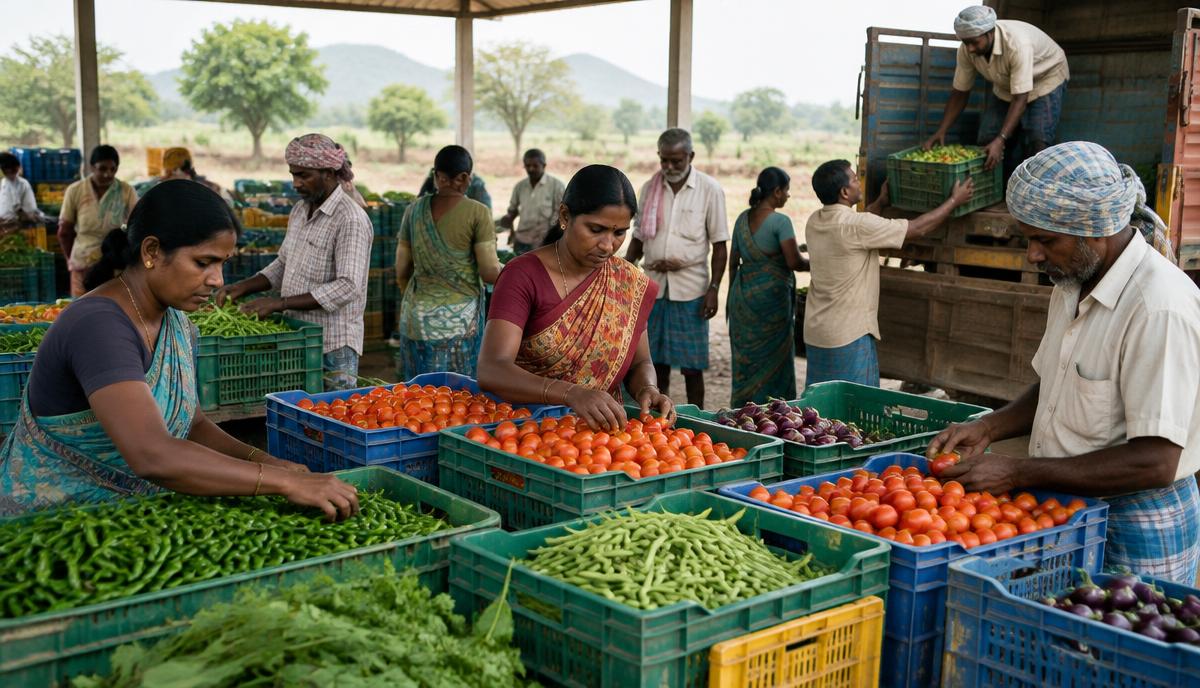
Farmer Producer Organisations and the Case for Collective Scale
Collective structures are the missing link between smallholder fragmentation and market power, yet most farmer producer organisations fail on governance, working capital and market linkage rather than enthusiasm. This piece draws on India's scheme data and examples from Anand, Oromia and Nashik.
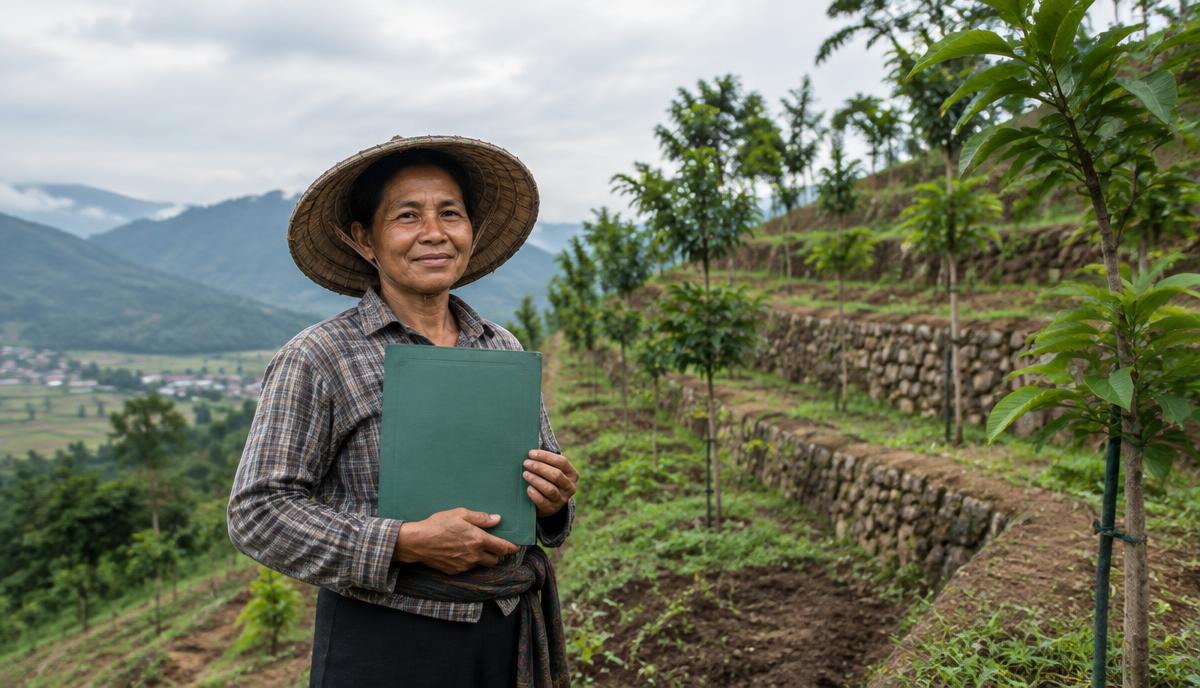
Land Tenure Decides Whether Farmers Invest
Whether a farmer plants trees, builds terraces or takes a loan depends heavily on confidence of holding the land. This piece argues that tenure security is a precondition for the soil and climate agendas that donors promote, and that women, tenants and pastoralists are the most exposed.
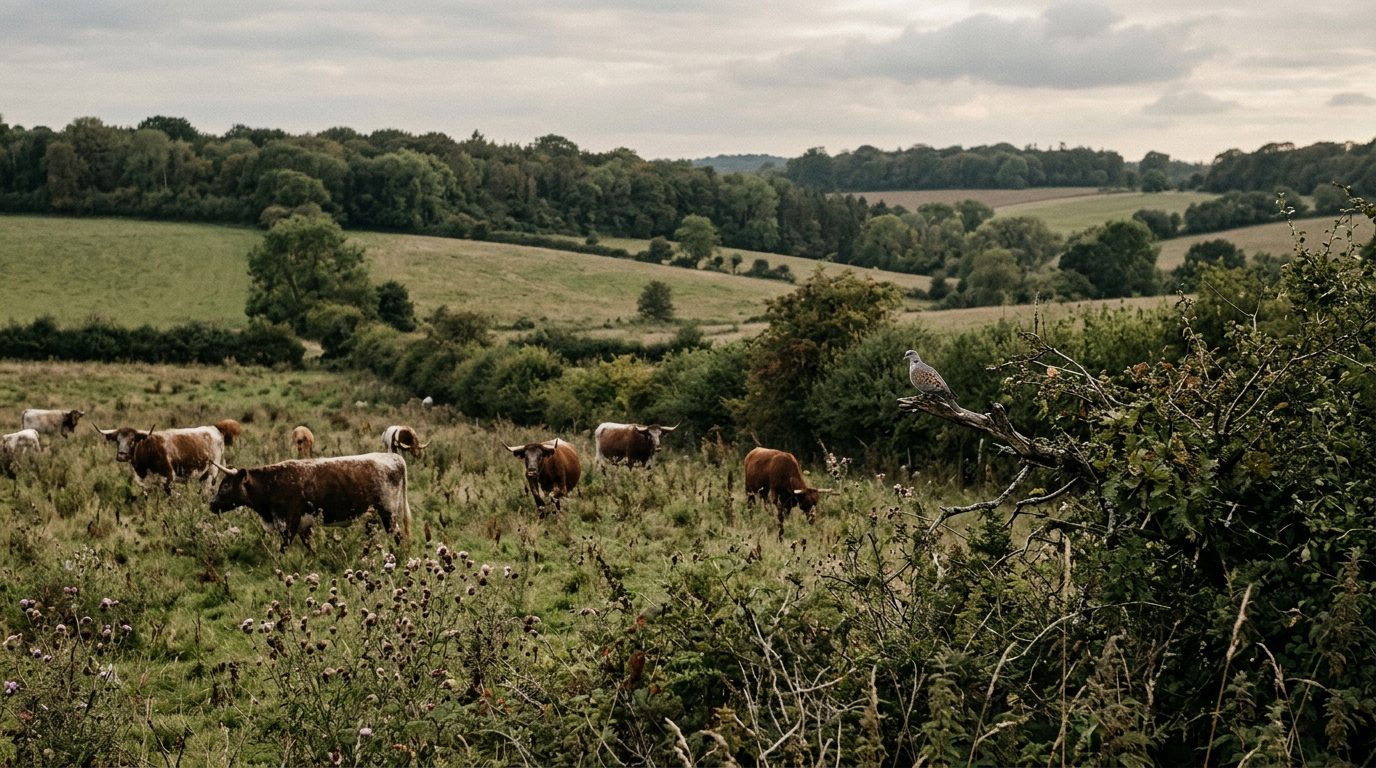
Can Agriculture Become Nature Positive?
A West Sussex estate that replaced unprofitable wheat and dairy operations with free-roaming cattle and returning turtle doves has become a conservation icon, but its model depends on taking land out of production altogether. This piece examines whether nature positive agriculture can scale to farms that still need to grow food.