Farmer Producer Organisations and the Case for Collective Scale
India has formed its 10,000th farmer producer organisation, but registrations say little about bargaining power
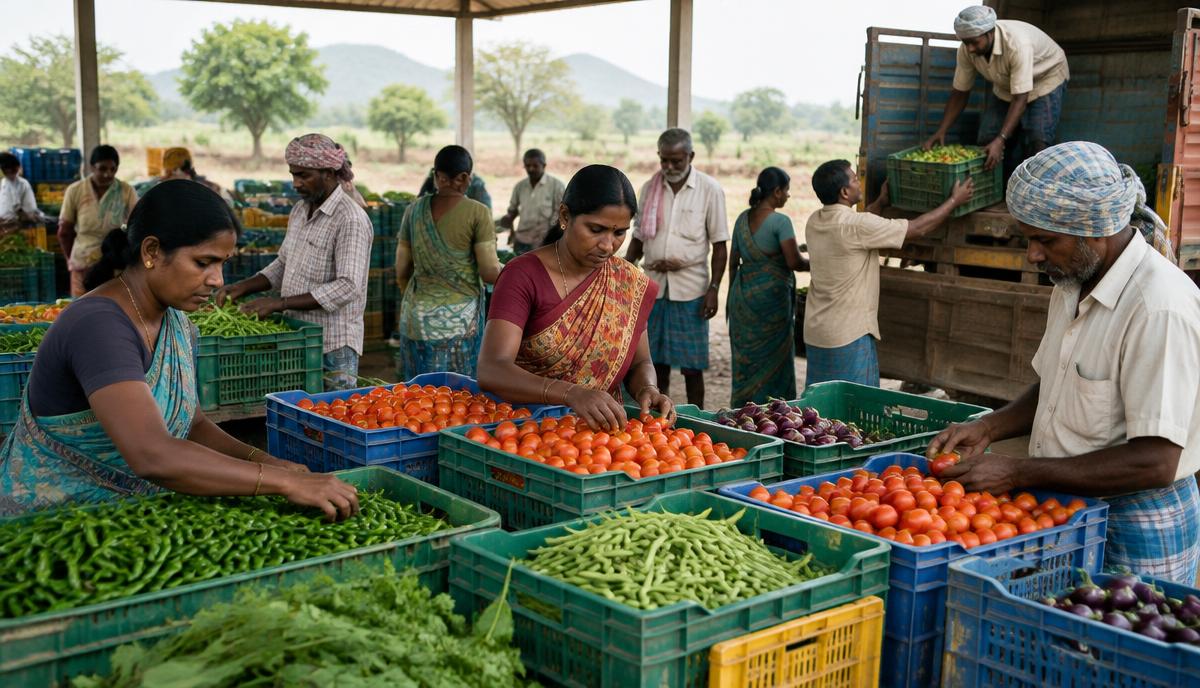
On 28 February 2025 India's agriculture ministry announced that the 10,000th farmer producer organisation under its central scheme had been formed, in Khagaria district of Bihar, around growers of maize, banana and paddy. The scheme, launched on 29 February 2020 with an outlay of ₹6,865 crore, had by then connected roughly 3 million farmers, 40 per cent of them women. Those figures measure registrations and enrolments. They say little about whether the organisations behave like businesses with bargaining power, and the evidence assembled since suggests that a minority do.
Fragmentation is a pricing problem
A farmer with a hectare of land sells a few quintals to whoever arrives at the gate, at a price set elsewhere, and cannot wait for a better one because the loan falls due. Market power comes from volume, grading, timing and the ability to walk away, and a single smallholder has none of the four. A collective structure can supply all of them at once, which is why it is the missing link between a fragmented farm sector and a functioning market.
The strongest cross-country evidence points the same way. A 2020 scoping review in Nature Food by Bizikova and colleagues covered 239 studies of farmers' organisations in sub-Saharan Africa and India. Some 57 per cent reported positive effects on farmer income, but only 19 per cent found gains in crop yield. Marketing assistance and market information were the services most strongly associated with higher incomes. In other words, the gain comes from selling better, not from growing more. The same review found that benefits flowed mainly to farmers who were not marginalised, and that 67 per cent of the studies reported only improvements, a reminder that failures are underreported.
What Anand, Oromia and Nashik share
Three very different organisations show what the structure can do when it works. Amul began in 1946 as the Kaira District Cooperative Milk Producers' Union, set up to escape a private dairy's grip on the procurement of local milk. Today the Gujarat federation behind it draws on 18,600 village societies grouped under 18 district unions, 3.6 million farmers and about 30 million litres of milk a day, and it reported revenue of ₹65,911 crore for 2024-25.
In Ethiopia, the Oromia Coffee Farmers Cooperative Union was founded in 1999 with 34 primary cooperatives and 23,691 members. By 2010 it counted 197 cooperatives and about 194,000 farmers. It used a policy change that allowed direct coffee exports to deal with foreign buyers itself, and its sales grew from 126 tonnes in 2001 to 4,889 tonnes in 2010, according to the union's own account to the United Nations. It has since added a members' bank that offers pre-harvest finance, and Fairtrade premiums have paid for schools, clinics and water points.
Sahyadri Farms near Nashik, a farmer-owned company formed in 2010, now has about 30,000 small and marginal farmer members and reports turnover of ₹1,954.7 crore for 2024-25, with exports to 42 countries. These are company figures and should be read as such. What the three have in common is not enthusiasm among members, which every failed collective also had at the start. Each one took control of a step beyond the farm gate, whether processing, export or packing, and each built professional management around it.
Governance fails before the market does
The cautionary case is Kenya Cooperative Creameries. Founded in 1925, it was the dominant processor for smallholder dairy farmers until the 1980s, when political appointees took over its board and used contracts and asset purchases for private gain. After milk prices were decontrolled and its urban monopoly ended in 1992, the weaknesses showed. By 1999 it could not pay farmers for milk, and over 2,000 dairy farmers dissolved its board. The Kenya Commercial Bank put it into receivership over a loan of about 1.5 billion shillings. After the state took it back in 2003 as New KCC, daily milk intake rose from 40,000 litres in 2002 to 400,000 litres in 2006, which shows how much demand and farmer supply had been waiting beneath the mismanagement.
Indian FPOs face a quieter version of the same risk. NAARM's policy paper on FPOs notes that organisations started by a few progressive farmers often struggle to balance personal interest against the interests of members, and that members then drift away. Agriculture Secretary Devesh Chaturvedi told a CII summit in December 2025 that the 10,000 FPOs "have to be handheld", and officials acknowledged that some exist only on paper. A February 2026 report from the Tata-Cornell Institute and the Bankers Institute of Rural Development found that of 45,547 farmer producer companies promoted as of September 2024, only 43 to 49 per cent were still operating after their government support ended. Women-led organisations survived past that point at rates 4 to 13 per cent higher than those led by men, which suggests that the way an FPO is governed predicts its survival better than its crop.
Equity grants do not buy inventory
An FPO that cannot finance a season's purchases cannot aggregate, and aggregation is the whole point. The NAARM paper found that the average paid-up capital of most FPOs was between ₹1 lakh and ₹3 lakh, with about half holding authorised capital of ₹1 lakh or less. Lenders will not extend working capital against a balance sheet that thin, and an FPO has no collateral of the kind banks recognise.
The scheme addresses this in two ways. It matches member equity at ₹2,000 per farmer, up to ₹15 lakh per FPO, and it runs a credit guarantee fund managed by NABSanrakshan, a NABARD subsidiary. The fund covers 85 per cent of a loan up to ₹1 crore and 75 per cent of a loan between ₹1 crore and ₹2 crore, with no collateral required, through 58 empanelled lenders. The February 2025 data show where the gap lies. Equity grants of ₹254.4 crore had reached 4,761 FPOs, but guarantee cover of ₹453 crore had been issued to only about 1,900. A grant is a one-time cushion, while a guarantee only matters if a bank agrees to lend. The Tata-Cornell report found that most FPOs use little debt, which it read as a sign of constrained credit access and not of prudence.
Backward linkages are easy, forward linkages are not
Buying seed and fertiliser in bulk is a service members can see and value immediately. Selling produce in volume to a processor or retailer under a contract is far harder. NAARM's paper observes that FPOs are more successful at building backward linkages than forward ones, and that the second kind decides whether they can sustain themselves. A group that only cuts input costs by ₹50 to ₹100 a bag is a buying club, and members will leave when a dealer matches the discount.
The turnover numbers reflect this. The Agriculture Secretary put the cumulative turnover of scheme FPOs in 2024-25 at about ₹9,000 crore. Spread over 10,000 organisations, that is roughly ₹90 lakh each, against ₹1,954.7 crore at one Nashik company. Collective scale is not reached by registering ten thousand small entities. It is reached when a few thousand farmers commit to a common grade, a common calendar and a buyer who has agreed to take the volume.
Scale arrives in layers
The NAARM paper reports that about 60 per cent of FPOs have 500 members or fewer, and only 10 to 15 per cent have more than 1,000. A body that small may be a sound village institution, but it cannot own a cold chain or negotiate with a national buyer. Amul's structure answers this: village societies collect, district unions process, and a state federation sells and builds the brand. Oromia follows the same logic, with primary cooperatives that stay local and a union that deals with the world.
Most Indian FPOs are stand-alone companies, and the scheme's money goes to each one individually, not to a shared tier that markets for many of them. Equity limits and compliance rules are being reconsidered as the government moves to extend the scheme for five years from 2026, and at the December 2025 summit officials discussed raising the grant ceiling and easing Companies Act penalties during an FPO's first years. Those changes help at the margin. The more useful step would be to treat the second tier, the federation or shared marketing company that pools volume from dozens of FPOs, as a funded part of the scheme in its own right.
What the extension should be judged on
Formation counts were the right measure for 2020, when the question was whether farmers would organise at all. They are the wrong measure for the next five years. The test for the extended scheme should be how many FPOs hold a working-capital line that a bank actually disbursed, how many sell a majority of their volume through forward contracts or a federation, and how many still hold member meetings and publish audited accounts after their handholding period ends. If a quarter of the 10,000 meet all three conditions by 2031, India will have built something closer to Amul than to Kenya Cooperative Creameries before its fall, and the remaining organisations can be judged on whether they were allowed to merge or close instead of lingering as registrations.
**Sources:** Press Information Bureau, Government of India, "10,000 FPOs Achieved under Government's Flagship Scheme"; Small Farmers' Agribusiness Consortium (SFAC), "Credit Guarantee Fund (CGF) under the 10K FPO Scheme"; NAARM, "FPOs in India: Creating Enabling Ecosystem for their Growth" (policy paper); Tata-Cornell Institute for Agriculture and Nutrition and Bankers Institute of Rural Development, "The State of Farmer Producer Organizations in India"; ETV Bharat, "Govt To Extend FPO Scheme For Five Years, Address Compliance And Capital Hurdles"; Nature Food (Bizikova et al.), "A scoping review of the contributions of farmers' organizations to smallholder agriculture"; Business Standard, "Revenue of Amul's parent firm GCMMF rises 11% to Rs 65,911 crore in FY25"; Oromia Coffee Farmers Cooperative Union (Tadesse Meskela), "Status of OCFCU 2010", United Nations DESA; Fairtrade International, "Oromia Coffee Farmers Cooperative Union, Ethiopia"; International Labour Organization, "Green and fair: Cooperatives in Ethiopia"; UK Department for International Development (assets.publishing.service.gov.uk), "The Revitalisation of Kenya Cooperative Creameries: The Politics of Policy Reforms in the Dairy Sector in Kenya"; Global Agriculture, "Sahyadri Farms: A Farmer-Led Collective Transforming Indian Agriculture"
The Food Observatory Brief
Weekly briefing on food systems, climate, agriculture and policy — straight to your inbox.
More on Agriculture
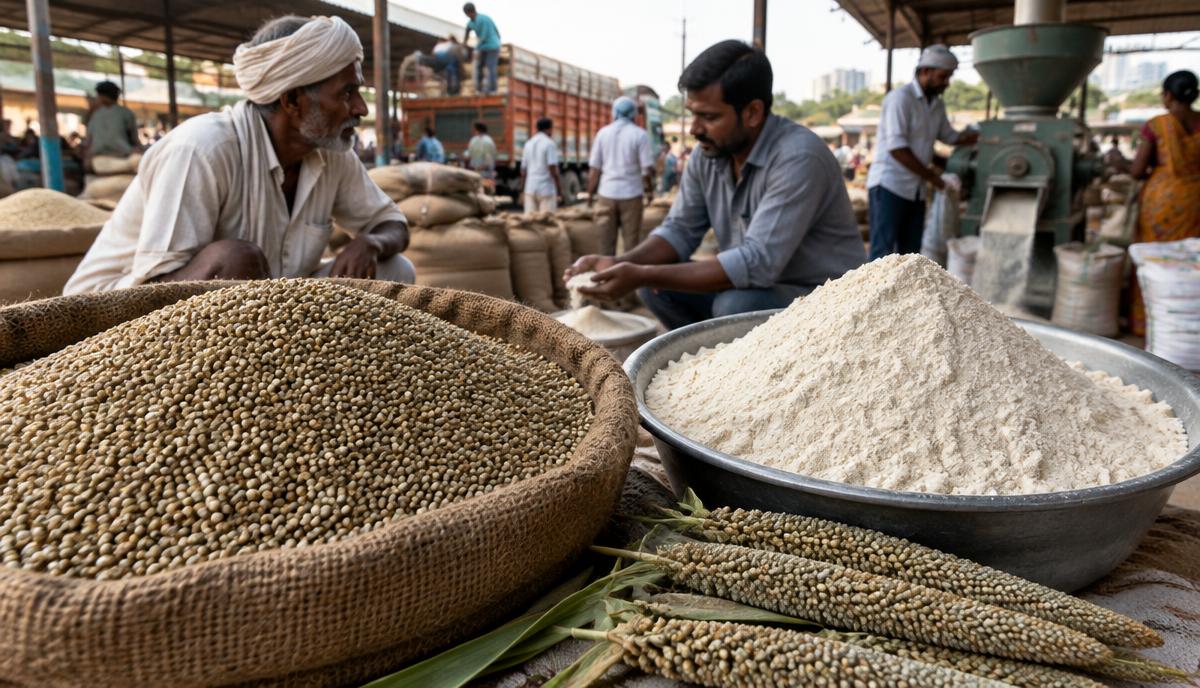
Millets Are Having a Moment. Can the Market Keep Up?
After the 2023 International Year of Millets, demand-side attention has outrun the supply chain behind these crops. This piece looks at yields, processing, shelf life, public procurement and farmer incentives in India and Africa to explain whether the moment lasts.
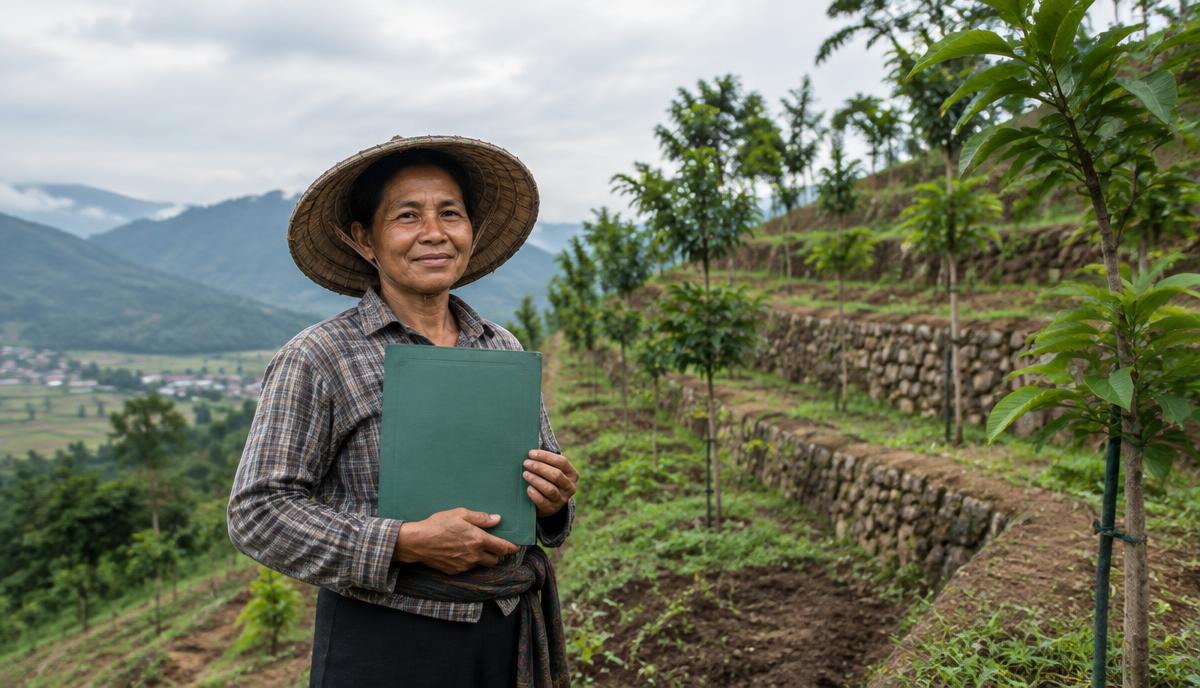
Land Tenure Decides Whether Farmers Invest
Whether a farmer plants trees, builds terraces or takes a loan depends heavily on confidence of holding the land. This piece argues that tenure security is a precondition for the soil and climate agendas that donors promote, and that women, tenants and pastoralists are the most exposed.
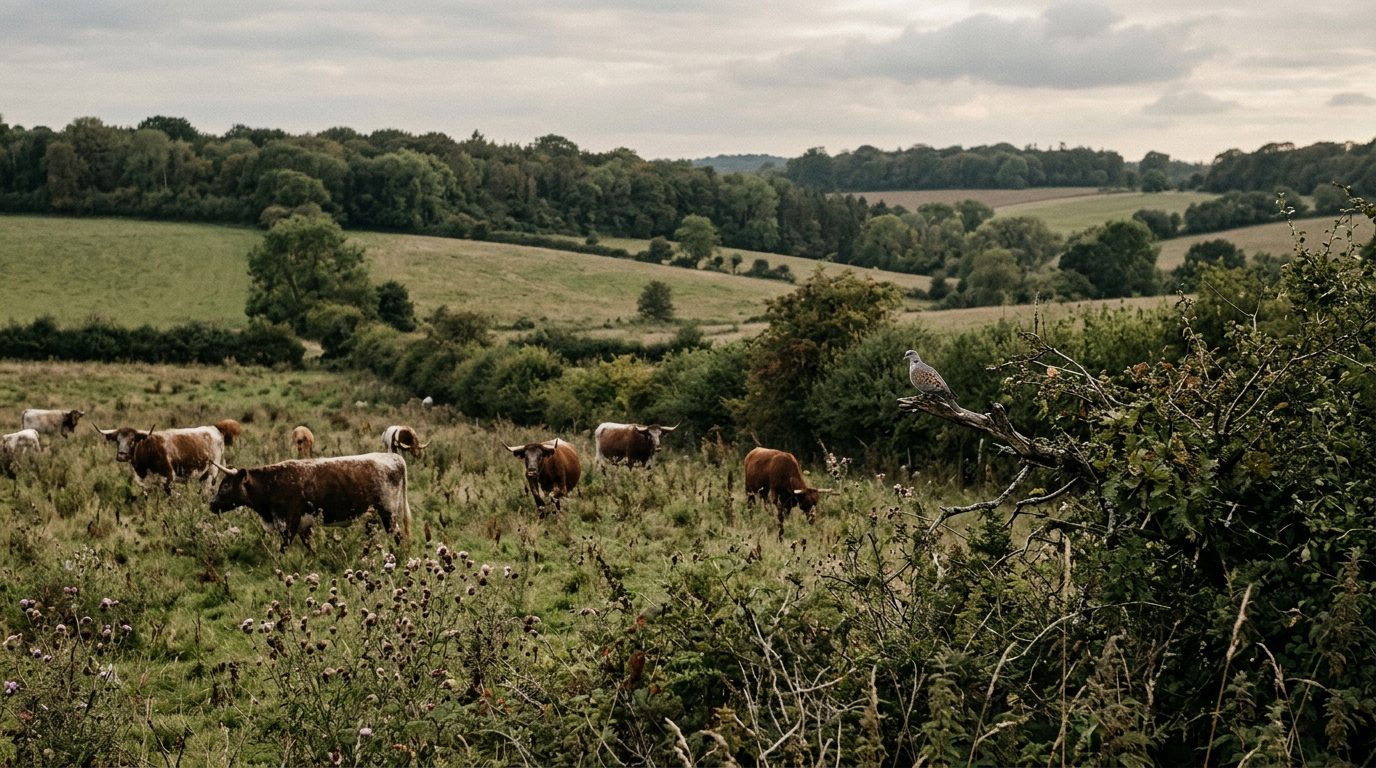
Can Agriculture Become Nature Positive?
A West Sussex estate that replaced unprofitable wheat and dairy operations with free-roaming cattle and returning turtle doves has become a conservation icon, but its model depends on taking land out of production altogether. This piece examines whether nature positive agriculture can scale to farms that still need to grow food.