Regenerative Agriculture Is Growing. Measuring It Remains Difficult.
Major food companies have pledged tens of millions of acres to regenerative farming, but measuring the results is proving harder than the pledges
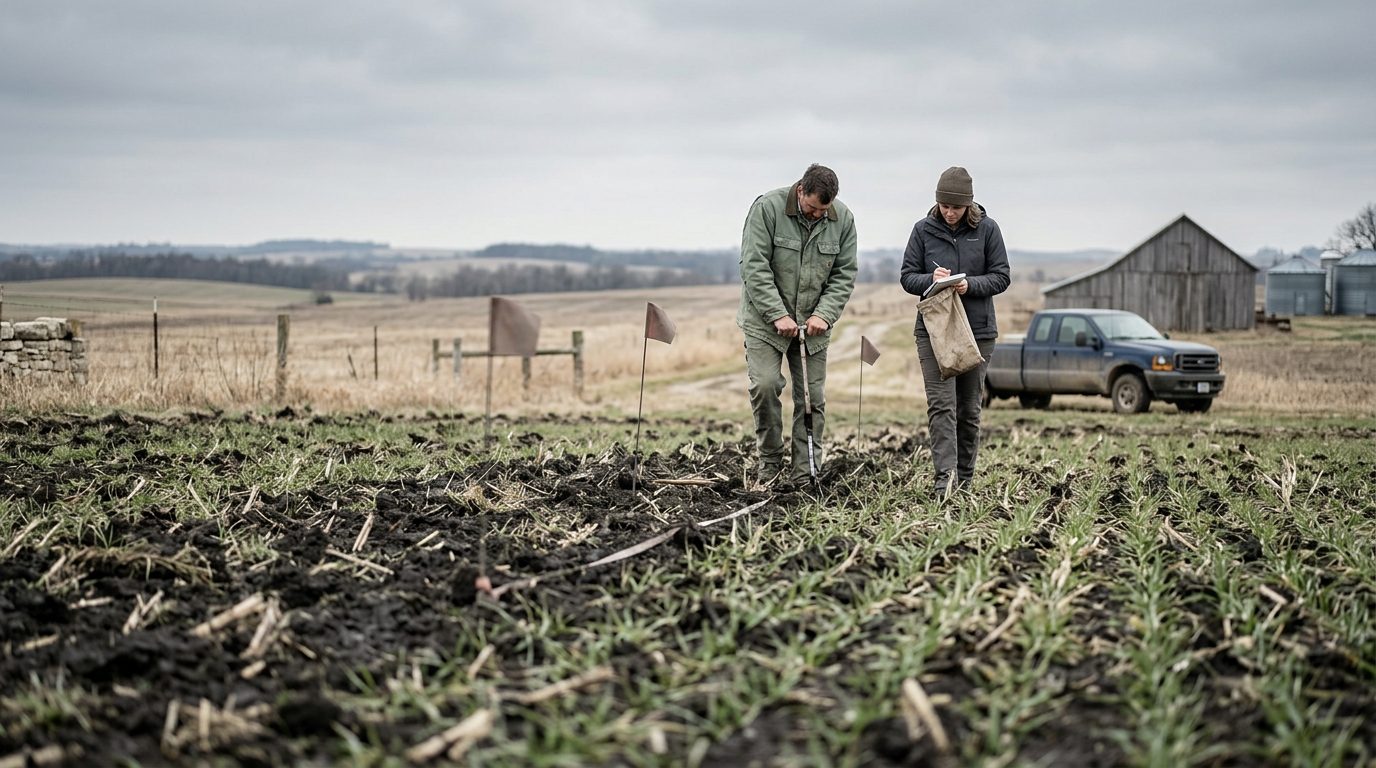
PepsiCo says it has reached 4.7 million of the 10 million acres it has pledged to convert to regenerative farming by 2030. Cargill has promised 10 million acres across North America by the same deadline. General Mills, which set the trend in 2019 with a 1-million-acre commitment, reported hitting the halfway mark in 2024. Walmart has folded regenerative practices into a companywide pledge to become, in its own language, "a regenerative company." Between them, the largest players in American food and agriculture have now attached specific, headline-grabbing acreage numbers to a word that, on closer inspection, none of them defines the same way, and that scientists still cannot reliably measure at the scale these companies are promising.
That gap between the confidence of the pledges and the uncertainty of the underlying science is the real story of regenerative agriculture in 2026. The movement has won over boardrooms and mainstream retailers with a compelling premise: cover cropping, reduced tillage and diversified rotations can rebuild soil health, pull carbon out of the atmosphere and cut agriculture's emissions footprint, all while making farms more resilient to drought and flood. Some of that premise holds up well in the agronomic literature. But the leap from "these practices are usually good for soil" to "we can certify, credit and market a precise carbon benefit from them" is where the trouble starts, and it is a leap corporate sustainability teams have made much faster than the science underneath them has been able to follow.
A Buzzword Becomes a Balance-Sheet Line Item
Five years ago, regenerative agriculture was mostly a niche term used by soil scientists and a subculture of ranchers influenced by figures like Allan Savory and Gabe Brown. Today it is a line item. PepsiCo's 2030 goal, first announced in 2021 covering roughly 7 million acres, has since been expanded to 10 million acres, its entire agricultural footprint. Cargill set its own 10-million-acre North American target in 2020 and has since paired with PepsiCo directly, expanding regenerative corn practices across 240,000 Iowa acres through a joint program launched in 2025. General Mills and Walmart jointly pledged 600,000 acres of wheat and other crops by 2030, a partnership that later grew to include grain processor ADM, which says its own regenerative footprint has scaled past 5 million acres. Walmart's ambitions go further still: the retailer set a 2020 goal to help "protect, manage or restore" at least 50 million acres of land, alongside a comparable ocean commitment, as part of becoming what it calls a regenerative company by 2030.
These are not small bets. They represent hundreds of millions of dollars in farmer incentive payments, technical assistance and carbon-market infrastructure, increasingly tied to the sustainability claims companies make to investors. Regenerative agriculture has also become an investment category of its own, with market forecasts projecting continued growth through the next decade. The commercial incentive to declare success is enormous. So is the exposure if that success cannot be substantiated.
Nobody Agrees on What the Word Means
Ask five institutions to define regenerative agriculture and it is entirely possible to get five different answers, none of them wrong exactly, but none identical either. There is no federal standard, and the USDA has never adopted an official definition. Private certifications have rushed into that vacuum, most prominently Regenerative Organic Certified, built on top of USDA Organic and requiring soil health practices, animal welfare standards and fair labor provisions, positioned by its backers as the rigorous ceiling. Lower down the ladder sit programs like Regenified, whose loosely audited claims drew a pointed rebuke from Consumer Reports, which argued the label risked undermining the credibility of the entire category.
States have started wading in too, with mixed results. California finalized an official definition in January 2025, but the process illustrated the underlying problem rather than solving it. Early drafts called for the "elimination" of synthetic pesticide reliance; the final language softened that to mere "reduction," letting conventional operations claim the regenerative label with only marginal changes to their practices. Rebekah Weber of California Certified Organic Farmers put the practical consequence bluntly: "I could survey 100 farmers and show them this definition and they would each have a different interpretation." Anne Schechinger of the Environmental Working Group has called instead for USDA to set a national standard built around measurable practice requirements, rather than leaving each state, retailer and certifier to write its own rules. Until that happens, "regenerative" functions less like a technical standard and more like a marketing category actors fill in according to their own commercial interests, precisely the dynamic critics describe as greenwashing risk.
The No-Till Carbon Assumption Doesn't Hold Up
Much of the corporate regenerative push leans heavily on no-till and reduced-till farming, on the theory that leaving soil undisturbed keeps carbon locked underground. That assumption is now under direct scientific challenge. No-till and minimum-till practices cover roughly 107 million acres of American corn and soybean production, about 60 percent of the total, but a 2025 analysis by Friends of the Earth found that 93 percent of those acres depend on herbicide applications, with no-till and minimum-till corn and soy accounting for roughly a third of all U.S. pesticide use. More consequentially, the report concluded that conventional no-till farming is not reliably linked to increased soil carbon at all, even though much corporate and carbon-market investment in "regenerative" no-till rests on exactly that assumption. Montana farmer and organic advocate Nate Powell-Palm argues the industry conflates a single practice with a genuine systems change, contending that only holistic approaches, with certified organic standards as the clearest existing proxy, produce reliable regenerative outcomes.
Why Soil Carbon Is So Hard to Pin Down
Even where regenerative practices genuinely do build soil carbon, measuring how much, cheaply and reliably enough to support a market, is a distinct and harder problem. Soil organic carbon varies enormously across a single field depending on depth, moisture, texture and sampling season, so direct measurement requires dense, repeated physical sampling to detect a signal against a very noisy baseline. That is expensive at the scale of millions of acres, and it is precisely the tension driving current MRV, or measurement, reporting and verification, research: how to get statistically defensible carbon numbers without bankrupting the credit in the process of proving it exists.
A team led by Gabriel Moinet at Wageningen University, working with Rothamsted Research scientists Stephan Haefele and Marcelo Galdos, argued in a widely discussed 2024 analysis that current estimates of soil's carbon storage potential are being seriously overstated. Their central finding is unglamorous but important: only about a third of the carbon added to soil in a given year through compost or crop residue actually stays there, with the rest decomposed by microbes and released back to the atmosphere within months. The researchers warned that "overly optimistic estimates for current technical potential can be highly misleading for policymakers," a caution aimed as much at climate policy as at carbon-credit marketing. Estimates for how much of global emissions soil carbon could realistically offset span an enormous range in the literature, from near 30 percent of annual anthropogenic emissions down to closer to 1 percent, a spread that itself signals how unsettled the science remains. Emily Oldfield, a senior scientist at the Environmental Defense Fund, has pointed out that much of the evidence base comes from small research plots concentrated in the Global North, a narrow slice of the world's cropping systems and climate zones being asked to justify claims applied globally. Mark Bradford, a soil ecologist at Yale, has emphasized a related distinction lost in marketing materials: building new soil carbon stocks is fundamentally different, and harder, than merely slowing the rate at which existing carbon is lost, even though both show up as a climate benefit on paper.
The Carbon Credit Market's Reckoning
Those scientific doubts have already reshaped the commercial market. Agricultural carbon credit purchases and retirements fell sharply from their 2022 peak, a decline driven in part by journal articles and investigative journalism questioning whether credited practices delivered the reductions buyers were paying for. Indigo Ag, one of the largest soil carbon credit issuers, has continued expanding, crossing 2 million metric tons of verified soil carbon impact and selling 2.85 million tonnes of removal credits to Microsoft, but the broader market has grown more cautious about permanence, additionality and measurement uncertainty than it was during the initial enthusiasm of 2021 and 2022. Buyers increasingly want to know not just that a credit was issued, but what measurement method stood behind it and how confident that method actually is.
Building Better Ways to Measure the Dirt
The response from both researchers and companies has been to invest in measurement infrastructure rather than abandon the underlying goal. "Measure and remeasure" protocols, which pair direct soil coring at the start and end of a crediting period with statistical modeling to fill the gaps between samples, are emerging as a more economically defensible middle path than either pure modeling or exhaustive annual sampling, according to recent peer-reviewed work on crediting methodologies. Remote sensing is advancing alongside it: companies including Regrow, Boomitra and Cargill's own RegenConnect program combine satellite imagery, in-field sensors and machine learning trained against verified ground-truth samples to estimate carbon change across huge acreages without sampling every field every year. None of these approaches yet fully substitutes for physical measurement, but the pairing of sparse, expensive ground truth with dense, cheap remote inference is where most serious MRV researchers now expect the field to converge.
The Practices Are Probably Good. The Proof Is Still Catching Up
None of this scientific uncertainty means regenerative practices are worthless. Cover cropping, diversified rotations and reduced chemical inputs carry well-established benefits for water retention, erosion control and biodiversity that do not depend on resolving the carbon accounting debate. The problem is narrower: the commercial and policy apparatus built around regenerative agriculture, its corporate pledges, its carbon credits, its retail marketing, has moved well ahead of the field's ability to verify the precise climate benefit it keeps promising investors and consumers. Companies like General Mills, PepsiCo and Cargill are not wrong to invest in these practices, and the researchers pushing back on overstated claims are not arguing farmers should till more or cover crop less. What they are arguing, consistently, is that acreage counted is not carbon proven, and that the industry's credibility over the next several years will depend far more on whether MRV science can catch up to the pledges than on how many more acres get added to the tally.
Sources: Rothamsted Research, "Potential of soils to sequester carbon being 'seriously overestimated'"; Civil Eats, "California Decides What 'Regenerative Agriculture' Means. Sort of."; Civil Eats, "Why Most No-Till Agriculture Is Not Actually Regenerative"; Yale School of the Environment, Canopy magazine, "Market Correction"; Trellis, "5 years in, how does General Mills' regenerative agriculture commitment measure up?"; Trellis, "How ag giant ADM scaled its regenerative program to 5m acres"; PR Newswire, "PepsiCo Announces Progress Toward 2030 Agriculture Goals"; PR Newswire, "Cargill to advance regenerative agriculture practices across 10 million acres of North American farmland by 2030"; General Mills, "General Mills and Walmart join forces to advance regenerative agriculture across 600,000 acres by 2030"; Consumer Reports Advocacy, "The Regenified label risks credibility of regenerative agriculture"; IOP Science, "Measure-and-remeasure as an economically feasible approach to crediting soil organic carbon at scale"; WBCSD, "Walmart sets goal to become a regenerative company"
The Food Observatory Brief
Weekly briefing on food systems, climate, agriculture and policy — straight to your inbox.
More on Agriculture
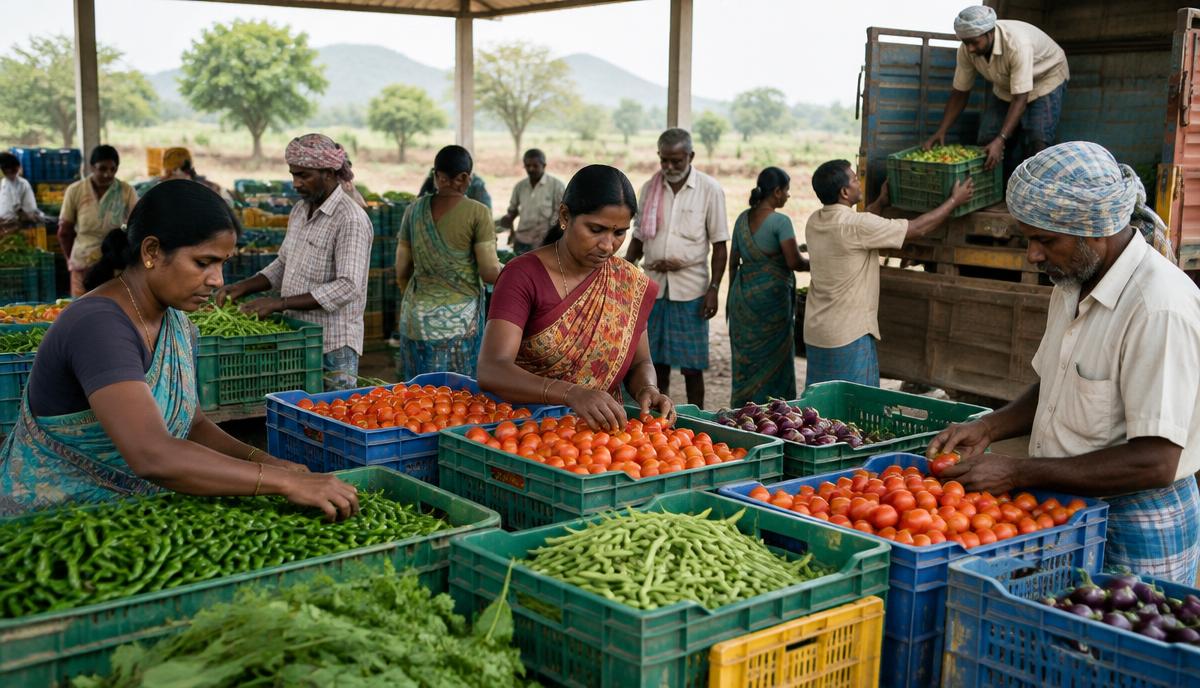
Farmer Producer Organisations and the Case for Collective Scale
Collective structures are the missing link between smallholder fragmentation and market power, yet most farmer producer organisations fail on governance, working capital and market linkage rather than enthusiasm. This piece draws on India's scheme data and examples from Anand, Oromia and Nashik.
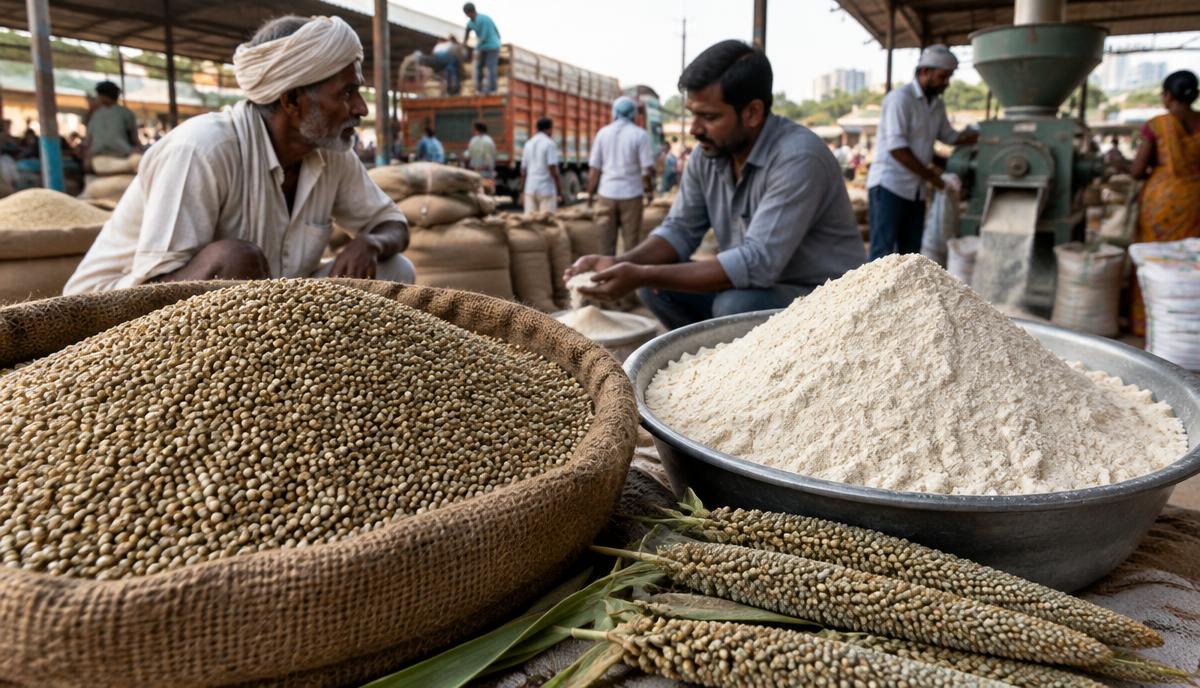
Millets Are Having a Moment. Can the Market Keep Up?
After the 2023 International Year of Millets, demand-side attention has outrun the supply chain behind these crops. This piece looks at yields, processing, shelf life, public procurement and farmer incentives in India and Africa to explain whether the moment lasts.
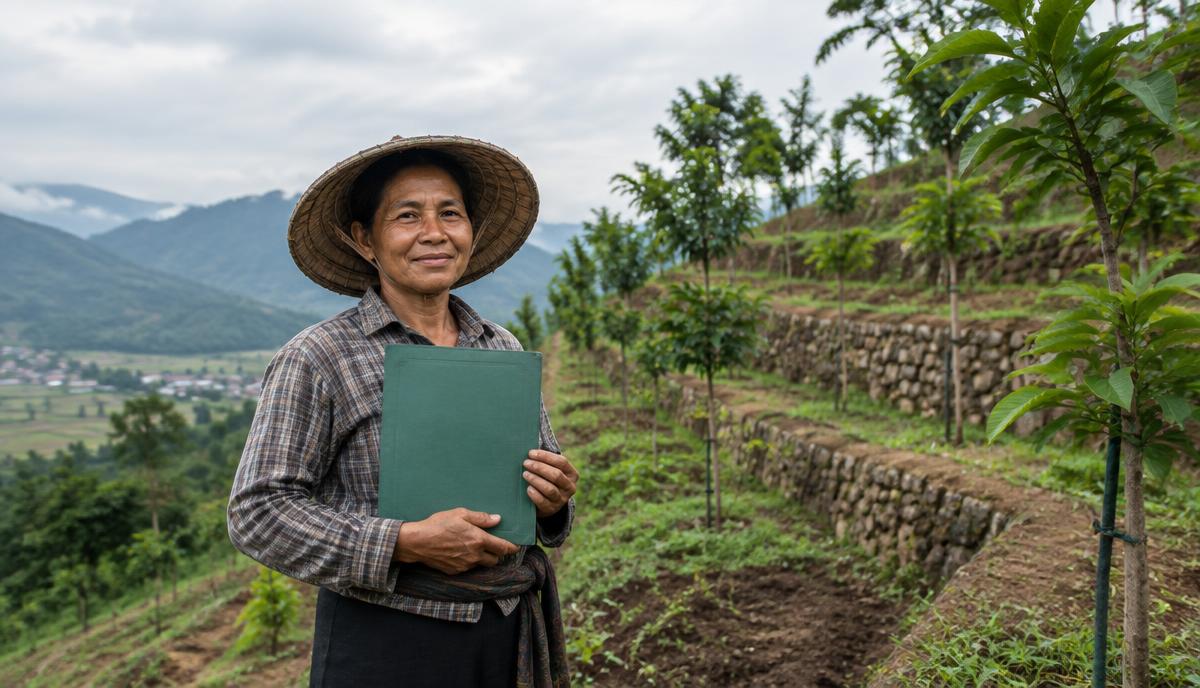
Land Tenure Decides Whether Farmers Invest
Whether a farmer plants trees, builds terraces or takes a loan depends heavily on confidence of holding the land. This piece argues that tenure security is a precondition for the soil and climate agendas that donors promote, and that women, tenants and pastoralists are the most exposed.