Can Healthy Diets Also Be Climate Friendly?
The EAT-Lancet Commission argues what is good for arteries and what is good for the planet are increasingly the same diet
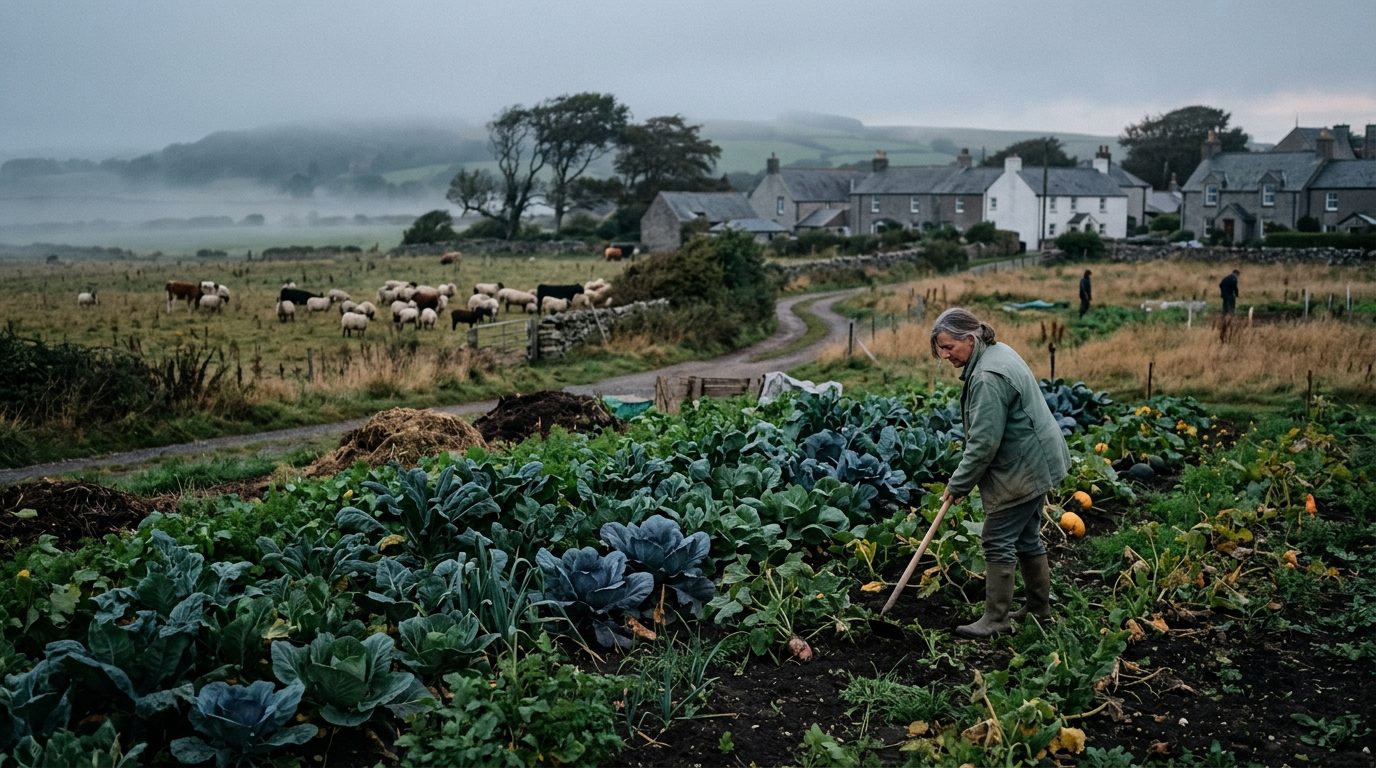
When the EAT-Lancet Commission published its first Planetary Health Diet in 2019, it arrived with a number so large it functioned as a headline in itself: adopting the diet globally could prevent roughly 11 million premature deaths a year while keeping food production within the planet's environmental limits. Six years and one meat-industry-funded backlash later, the Commission's October 2025 update raised that estimate to 15 million deaths averted annually, alongside a finding that agricultural greenhouse gas emissions could fall by more than half if diets shifted the way the report proposes. The pairing of those two numbers is the whole argument of the planetary-health-diet project: that what is good for arteries and what is good for the atmosphere are, for the most part, the same food on the same plate.
That argument holds up better than its critics like to admit, and worse than its authors sometimes imply. The genuine alignment between healthy and climate-friendly eating is one of the more robust findings in nutrition science of the last decade. The genuine tension, over cost, culture and nutritional adequacy for specific populations, is just as real, and it is the part of the story that gets flattened when the diet is presented as a simple global prescription rather than a target that different places will have to reach by different roads.
The Overlap Is Real, and It Is Large
The core of the Planetary Health Diet, as re-articulated by Commission co-chair Walter Willett of the Harvard T.H. Chan School of Public Health, is unglamorous: a plate built around vegetables, fruit, whole grains, legumes and nuts, with red meat scaled back to roughly a serving a week, dairy to about one serving a day, and fish, poultry and eggs each appearing a couple of times weekly. This is not a vegan diet or even a strictly vegetarian one. It is, in the Commission's own language, "flexitarian," and it shows up in both cardiology journals and climate models because the foods it restricts, red meat and dairy chief among them, are simultaneously the ones most strongly linked to cardiovascular disease, type 2 diabetes and certain cancers, and the ones with the highest land, water and emissions footprint per gram of protein produced. Cut the same food group for either reason and the other benefit follows largely for free.
Newer research has only sharpened that picture. A 2024 modeling study found that a global shift toward more plant-based eating could cut diet-related greenhouse gas emissions by around 17 percent while also reducing agricultural air pollution enough to prevent more than 200,000 premature deaths a year from cleaner air alone, a co-benefit distinct from the direct effects of eating differently. Meta-analyses of plant-forward dietary patterns continue to find reduced all-cause mortality among people who eat this way, even after controlling for the usual confounders of income and education that dog nutrition epidemiology. The direction of the effect, less red meat and dairy, more plants, is one of the least argued-over points in the field.
What "Feeding 10 Billion People" Actually Requires
The 2025 Commission report, co-chaired by Willett, earth-system scientist Johan Rockström and nutrition scientist Shakuntala Thilsted, and drawing on more than 70 researchers across six continents, expanded its scope beyond the 2019 report's focus on greenhouse gases and land use to model food's effect on freshwater use and other planetary boundaries as well. Its central claim is that current global food production is compatible with feeding a population expected to reach roughly 10 billion only if the composition of diets changes, not merely their efficiency. Better farming technology alone will not close the gap; what people eat has to move too, which means the diet has to work as global policy rather than as a lifestyle choice available only to people who already have disposable income and grocery options.
The Price of a Better Plate
The single most stubborn obstacle to any plant-forward transition is not cultural resistance or lobbying, though both matter. It is cost. The UN Food and Agriculture Organization's 2024 State of Food Security and Nutrition in the World report found that 2.8 billion people, 35.4 percent of humanity, could not afford a healthy diet in 2022. The global average cost of that diet was $3.96 per person per day in purchasing-power-parity terms, a figure that dwarfs the incomes many households in low- and middle-income countries have available for food after other essentials. The unaffordability is heavily concentrated: 64.8 percent of people in Africa cannot afford a healthy diet, compared with 35.1 percent in Asia and just 4.8 percent in Northern America and Europe. FAO chief economist Maximo Torero has noted that affordability recovered to pre-pandemic levels in upper-middle- and high-income countries by 2022, but not in the poorer ones, meaning the gap between who can eat well and who cannot has been widening rather than closing.
That is the affordability problem that makes "just eat more legumes and vegetables" sound glib to a family in rural Nigeria or urban Manila for whom a diverse diet of fresh produce is simply not within reach at current prices, while a calorie-dense, less nutritious diet is. The diet's own modelers argue their recommendations would, at scale, lower costs by shifting land and capital toward less input-intensive crops, and the 2025 report leans on that argument explicitly, projecting that job losses in livestock sectors would be offset by growth in fruit and vegetable production. Whether that transition materializes as promised, given how entrenched subsidies and infrastructure for meat and dairy already are, remains an open question rather than a settled one.
The Nutrients a Global Template Can Miss
A parallel and more technical critique comes not from industry but from nutrition scientists themselves. A widely cited 2023 analysis in The Lancet Planetary Health, led by researchers including Ty Beal of the Global Alliance for Improved Nutrition and Jessica Fanzo of Johns Hopkins University, found that the original Planetary Health Diet fell short of recommended intakes for six micronutrients: iron, zinc, calcium, folate, vitamin A and vitamin B12. The shortfall was sharpest for women of reproductive age, for whom the diet supplied only about 55 percent of recommended iron intake, a serious gap given how common iron-deficiency anemia already is among women and adolescent girls worldwide. The researchers also flagged that the diet's heavy reliance on legumes and grains introduces phytates, compounds that bind minerals and reduce their absorption, and that plant sources of vitamin A are markedly less bioavailable than animal ones.
None of this means the diet is unhealthy in aggregate; it means a single global template, applied without adjustment, can create nutrient gaps for specific vulnerable groups, including pregnant women, young children in their critical growth window and postmenopausal women needing more calcium and zinc for bone health. A 2024 follow-up in the same journal proposed fixes, fortification, targeted supplementation, modest increases in specific plant foods rich in these nutrients, rather than abandoning the framework. The 2025 report has folded some of this in, discussing fortification and supplement strategies tailored to particular populations rather than presenting one ratio of food groups as universally sufficient.
Whose Diet, Whose Land, Whose Culture
The sharpest resistance to EAT-Lancet has never really been about the science of iron absorption. It has been about who gets to decide what other people eat, and about livelihoods built around animals rather than crops. Livestock keeping is not incidental in much of the world; for pastoralist communities across East Africa, parts of South Asia and the Andes, cattle, goats and camels are simultaneously a nutrition source, a savings account, a cultural institution and, in dryland regions unsuited to arable farming, often the only viable use of the land at all. A diet framework drafted largely by researchers in wealthy countries, prescribing a global cap on red meat, was always going to read to some of these communities as an instruction to abandon an economy that has sustained them for generations, however carefully the Commission tried to frame it as an average target rather than a uniform mandate.
The backlash to the 2019 report was not purely organic, either. An investigation by the Changing Markets Foundation found that a coordinated social media campaign under the hashtag #Yes2Meat, amplified by voices with undisclosed ties to meat industry funding, reached an estimated 26 million people and shaped public perception of the report as an elitist attack on farmers well beyond what its content argued. That does not erase the legitimate version of the same critique, made by agroecology researchers and farmer advocates who argue the report's modeling treats livestock as fungible units of emissions rather than as part of integrated farming systems that, done well, build soil health and provide ecosystem services a monoculture cannot. The World Health Organization itself declined to formally endorse the 2019 report, citing this tension between a globally averaged prescription and locally specific food cultures and needs.
Rewriting the Diet Without Rewriting the Politics
The 2025 Commission's response to six years of criticism was not to retreat from its core recommendation but to make the framework more explicitly adaptable. Willett has described the update as building in room for "cultural diversity and individual preferences" rather than a single fixed plate, and the report now pairs its dietary targets with country-specific examples showing how different culinary traditions, from Andean quinoa-based diets to West African grain-and-legume staples, can meet the same nutritional and environmental goals through different foods. It also puts far more weight than the 2019 version on the justice side of the ledger: fair wages for farmworkers, land rights for smallholders and indigenous communities, and the inclusion of pastoralists and small producers in decisions about food policy rather than treating them as populations to be redirected from above.
That shift matters, because the evidence genuinely does point toward a diet that is both healthier and lighter on the planet, and abandoning that finding because its first packaging was politically clumsy would be its own kind of failure. But evidence about what an optimal average diet looks like is not the same as a plan for getting several billion people, many of whom cannot currently afford enough vegetables, there without displacing the livelihoods and food cultures built around what came before. The honest version of this story is not that healthy and climate-friendly diets are the same thing, full stop, nor that they are fundamentally at odds. It is that the alignment is real and worth acting on, while the path to it runs directly through affordability, nutrient adequacy for the people most at risk of deficiency, and a much larger say for the communities whose land and livelihoods the transition would actually reshape. Getting the destination right was always the easier half of the problem.
Sources: The Lancet Commissions / EAT Forum, "The 2025 EAT-Lancet Commission Report Launches"; EAT Forum / Nutrition Insight, "EAT-Lancet updates Planetary Health Diet to reflect cultural and class realities"; Harvard T.H. Chan School of Public Health, "This dietary pattern could save lives and the planet"; FAO, "Healthy diets remain unaffordable for a third of the world's population"; FAO, "The State of Food Security and Nutrition in the World 2024"; The Lancet Planetary Health, "Estimated micronutrient shortfalls of the EAT-Lancet planetary health diet" (2023); The Lancet Planetary Health, "Recommendations to address the shortfalls of the EAT-Lancet planetary health diet from a plant-forward perspective" (2024); Nutrition Insight, "EAT-Lancet Commission's planetary health diet lacking in micronutrients, flag experts"; Green Queen, "Plant-Forward Planetary Health Diet Can Lower Global Emissions by 17%"; Phys.org, "Switching to plant-based diets means cleaner air and could save more than 200,000 lives around the world"; FoodPrint, "The meat industry smeared the Planetary Health Diet. Now its creators are back with more evidence."; Changing Markets Foundation, analysis of #Yes2Meat social media campaign, cited via FoodPrint
The Food Observatory Brief
Weekly briefing on food systems, climate, agriculture and policy — straight to your inbox.
More on Health

School Meals Are the Most Underrated Food Policy
School meals reach hundreds of millions of children and work at once as nutrition policy, education policy, social protection and a guaranteed market for local farmers. This piece explains why they are the rare food policy where health, farmer income and equity point the same way, and which contract terms decide whether the benefits materialise.
Antimicrobial Resistance Starts on the Farm
A large share of the world's antibiotics goes to livestock and aquaculture, and resistance genes travel from farms to people through food, water and soil. This piece argues that drug resistance cannot be solved inside hospitals alone, and examines Europe's experience cutting farm use, the role of vaccines and husbandry, and the reality in places with almost no vets.

Ultra-Processed Foods and the Fight Over a Definition
Regulators, researchers and food companies are contesting what counts as ultra-processed food, because whatever the definition captures decides what gets labelled, taxed, restricted in school meals or marketed. This piece traces how the NOVA research category became a legal one, what the evidence on health outcomes does and does not show, and what a workable definition could look like.