Farmers Need Better Finance, Not Just Better Seeds
Smallholder farmers are gaining access to drought-tolerant seeds and satellite-priced insurance, but finance remains the binding constraint
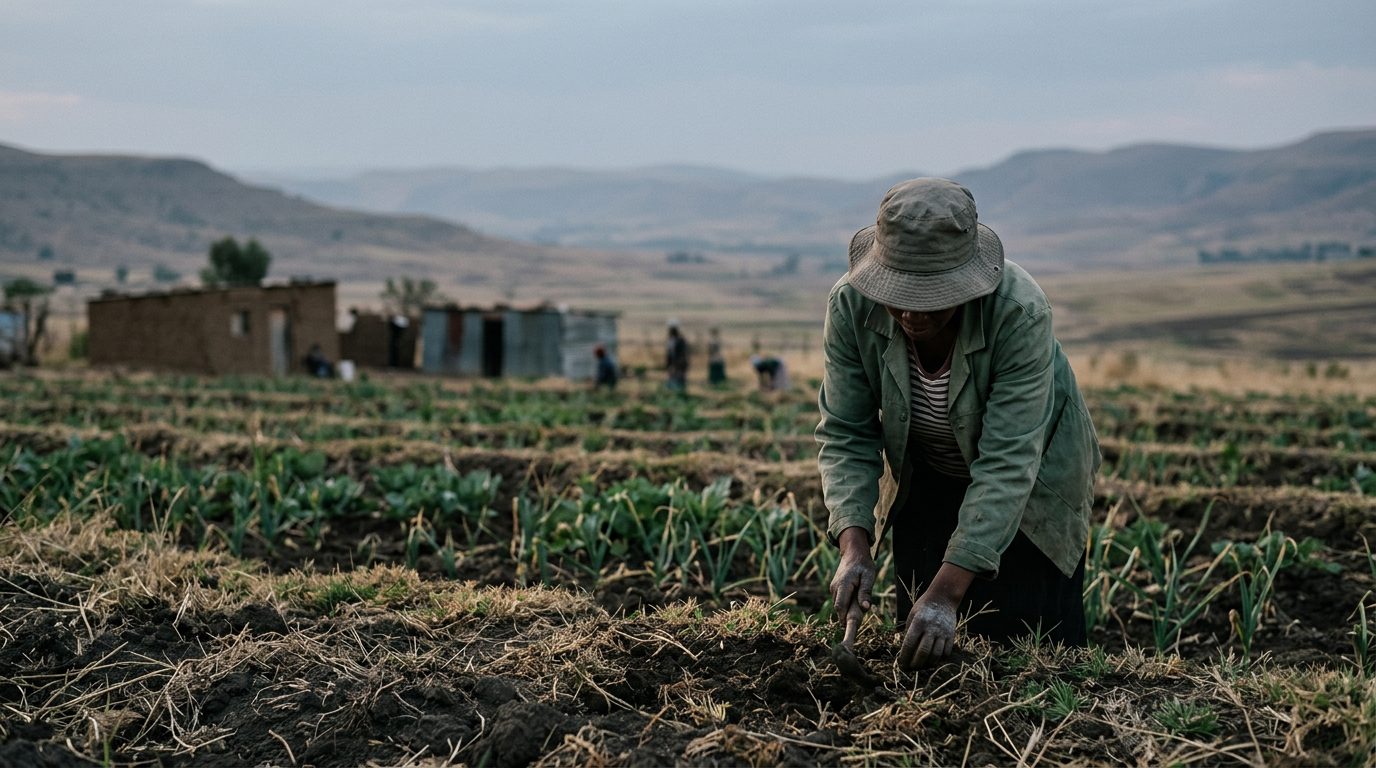
A farmer in western Kenya can now plant a maize variety bred to survive three weeks without rain, insure her crop against drought with a product priced by satellite rainfall data, and check commodity prices on a phone that costs less than a bag of fertilizer. What she often cannot do is borrow four hundred dollars in March to buy that fertilizer, at a rate that does not eat her harvest, from a lender who understands that her income arrives once a year in September. The last two decades of agricultural development have poured resources into the first set of problems: better genetics, better information, better tools. The problem that has been left largely unsolved is the second one, and it is the one that determines whether any of the rest gets used.
The Size of the Shortfall
This is not a marginal gap. According to ISF Advisors, the research group behind the annual State of the Sector report on smallholder finance, global demand for agricultural credit among smallholder households runs to roughly 323 billion dollars a year. Supply, from banks, microfinance institutions, cooperatives and other formal lenders, comes to about 95 billion. The shortfall exceeds 200 billion dollars annually, according to the group's October 2025 report, "Beyond the Frontier: Decoding Viability in Smallholder Finance." More than 285 million smallholder households worldwide farm five hectares or less. Collectively they grow close to 30 percent of the world's food supply, and most finance that production out of savings, informal moneylenders, or nothing at all. ISF Advisors frames the gap as a structural mismatch between how agricultural income behaves and how formal credit is priced, not a temporary market failure, which is why the figure has held roughly steady even as digital tools have proliferated around it.
Why the Calendar Defeats Conventional Credit
The reasons formal credit does not reach these farmers are structural, not incidental. Agricultural income is seasonal and lumpy: a farmer earns almost everything at harvest and needs cash months earlier, at planting, exactly the mismatch that conventional loan products, built around monthly repayment, are not designed to handle. Collateral requirements compound the problem. CGAP, the World Bank-housed research group on financial inclusion, has found that roughly 80 percent of loans requiring collateral ask for real property, while three-quarters of small enterprises, agricultural producers included, hold only movable assets: a harvest, livestock, equipment. Land titles across much of sub-Saharan Africa and South Asia are also fragmented or informally held, so even farmers who own land often cannot use it as security. Then there is risk. Drought, flood, pest outbreaks and price swings hit an entire lending portfolio at once when a bank's borrowers are concentrated in one growing region, a harder risk to price than the idiosyncratic defaults an urban retail lender deals with. ISF Advisors' cost data illustrates the result: microfinance institutions and banks that lend to smallholders average about a 10 percent margin in a normal year, falling to 7 percent in a climate shock, while traders and processors who extend credit against future deliveries often lend at a loss, averaging negative 13 percent normally and negative 42 percent in a bad year. Lending to smallholder farmers is unprofitable by design, precisely why capital flowing into seed companies and ag-tech startups avoids it.
What India's Largest Farm Credit Program Still Misses
India shows how far a government can scale formal agricultural credit and still leave the underlying mismatch unresolved. The Kisan Credit Card scheme, launched in 1998, now has an operative loan book that crossed 10 lakh crore rupees, roughly 120 billion dollars, reaching 7.72 crore farmers, more than 77 million people, according to figures released by India's finance ministry in 2025. The card gives farmers a revolving line of credit timed to the crop cycle, with an interest subvention bringing the effective rate to around 4 percent for prompt repayers, and a collateral-free borrowing limit raised to 200,000 rupees in 2025. On paper this is the seasonally aligned product ISF Advisors and CGAP argue the market needs. In practice, researchers at the International Food Policy Research Institute have documented persistent gaps in who it reaches: eligibility is tied to land records, so tenant farmers, sharecroppers and the tens of millions of agricultural laborers who work land they do not own are largely excluded, as are women who farm but whose husbands or fathers hold the title. Scale is not fit, and a well-funded, government-backed credit product can still miss the farmers who need it most when it is built on the same land-title assumptions as the lenders it improves on.
Financial Engineering Built Around the Harvest, Not the Calendar
None of this means the problem is unsolvable. One Acre Fund supplies seed and fertilizer on credit at planting time and collects repayment after harvest, aligning the loan to the crop cycle rather than the calendar; the organization reported serving 5.5 million farmers in 2024 and has set a target of 10 million families by 2030. Root Capital has built its lending around agricultural cooperatives and agribusinesses rather than individual farmers, on the logic that aggregation is what makes underwriting affordable at a scale a single bank branch could never reach. Warehouse receipt financing, expanding again across East and West Africa, lets a farmer or cooperative deposit grain in a certified warehouse and borrow against the receipt instead of land, turning the harvest itself into usable collateral, as the World Bank documented in a pilot project in Senegal's river valley. Index insurance, paying out on measured rainfall or satellite-derived vegetation data rather than an assessor's visit, has cut the cost of insuring against drought enough that lenders in Kenya now bundle it with credit to make banks willing to lend at all. What these models share is a common insight: the loan has to bend to the shape of a farming season, not the other way around.
The Promise, and the Risk, of Scoring a Farmer by Her Data
On the data side, CGAP has documented how transaction and cash-flow histories are beginning to substitute for physical collateral: in Nigeria, a cash-flow-based lending program to women entrepreneurs sustained a 99 percent repayment rate over 32 months without collateral, and India's account aggregator framework, built on bank-statement sharing rather than land titles, had financed more than 10 billion dollars in loans by the end of 2024. In Kenya, Apollo Agriculture underwrites loans using satellite imagery, weather data and machine-learning models rather than a loan officer's farm visit, an approach that drew enough investor confidence, including from Softbank and the Chan Zuckerberg Initiative, that the company closed Kenya's first private-sector agricultural loan securitization in 2026. That is a genuine expansion of who can get credit. But researchers who study these systems, including the Center for Effective Global Action at Berkeley, have flagged the downside: digital credit that arrives instantly, without a human underwriter's judgment, can push already-stretched borrowers into debt faster than their harvest can support, particularly when several lenders score the same thin transaction history and none can see what the others have already lent. Digital scoring has expanded who is reachable; it has not solved the older problem of pricing agricultural risk honestly.
Where Development Finance and Blended Capital Come In
Because agricultural lending is often unprofitable on commercial terms, much of the capital reaching smallholder lenders is not purely commercial. Development finance institutions, including the International Finance Corporation, have increasingly used blended finance, combining concessional public or philanthropic money with commercial capital so a lender's early losses are absorbed by donors rather than the investors the market needs at scale. ISF Advisors has argued these subsidies need to get "smarter," targeted at building the data and risk infrastructure a market needs rather than simply covering losses indefinitely. Currency risk matters just as much: The Currency Exchange Fund, known as TCX, hedges local-currency lending in frontier markets so agricultural lenders do not absorb a foreign-exchange shock on top of a drought. Structures like these amount to an admission that the capital flowing readily into seed companies and ag-tech startups will not flow into farm credit on its own.
Climate Money Is Flowing Around Farmers, Not to Them
Climate finance makes the imbalance especially visible. IFAD estimates that small-scale farmers receive around 0.8 percent of global climate finance, roughly 5.5 billion dollars a year, against a need the organization puts at closer to 75 billion dollars in additional annual funding for these farmers to adapt at all. The money moving toward climate-resilient agriculture is going overwhelmingly toward inputs and technical assistance, not toward the credit and insurance infrastructure that would let a farmer actually afford to use a drought-tolerant seed or shift to a more resilient crop in the first place. A farmer handed a free packet of drought-tolerant maize seed but no financing for the fertilizer it needs to perform is not meaningfully better off than one growing an ordinary variety.
The Unfinished Half of Agricultural Innovation
The seed breeders, the agronomists, and the ag-tech founders building better tools for smallholder farmers have done real and valuable work. But a farmer who cannot borrow working capital at planting season will not buy the improved seed regardless of how much better it performs, and a cooperative that cannot access a credit line timed to its crop cycle will not adopt the irrigation technology sitting on a demonstration plot next door. India's Kisan Credit Card shows that even a government willing to spend heavily on farm credit can reproduce the exclusions of the banks it replaced, and the newer wave of data-driven lenders shows that better information about a farmer's cash flow is not automatically a safer loan for her. Agricultural innovation has spent a generation optimizing the inputs. The financing system that would let farmers pay for them has been left to informal lenders and the farmers' own thin savings, propped up in places by blended capital that remains a small fraction of what the sector needs. Closing that 200-billion-dollar gap, not releasing the next seed variety, is what will determine whether smallholder agriculture modernizes at all.
Sources: ISF Advisors, "Beyond the Frontier: Decoding Viability in Smallholder Finance" (2025 State of the Sector report); ISF Advisors, "ISF Advisors Launches Global Report on $200 Billion+ Smallholder Finance Gap Amid Rising Climate Pressures"; ISF Advisors, "Getting 'Smarter' on Subsidies to Enable More Financing for Agri-SMEs"; CGAP, "How Digitization Is Disrupting Collateral-Based Lending"; CGAP, "Understanding Smallholders' Financial Needs Is Key First Step"; IFAD, "The $75 Billion Climate Finance Gap: An Imperfect but Important Figure for Small-Scale Farmers"; One Acre Fund, "Our Model" and "Financing and Insurance" program pages; The Currency Exchange Fund (TCX), corporate overview and FAQ; World Bank, "Implementing Effective Warehouse Receipt Financing Systems: Lessons from a Pilot WRS Project in the Senegal River Valley"; Root Capital, "Proven Results" and related agricultural lending publications; Government of India, Press Information Bureau, "Operative Kisan Credit Card (KCC) Amount Crosses ₹10 Lakh Crore Benefiting 7.72 Crore Farmers" and "Government Measures Strengthen Kisan Credit Card Ecosystem"; International Food Policy Research Institute, "Kisan Credit Card and Smallholder Farmers' Economic Performance in Eastern India: A Panel Data Analysis"; Center for Effective Global Action (CEGA), UC Berkeley, research collections "Agricultural Credit, Insurance and Over-Indebtedness Among Smallholder Farmers" and "Digital Credit for Agriculture"; GSMA Mobile for Development, "AI-Driven Smallholder Farmer Lending in Africa: Insights from Apollo Agriculture"; Techish Kenya, "Apollo Agriculture and Kaleidofin Close Kenya's First Private-Sector Agri Securitisation"; International Finance Corporation, "Blended Finance Solutions for Agribusiness"
The Food Observatory Brief
Weekly briefing on food systems, climate, agriculture and policy — straight to your inbox.
More on Agriculture
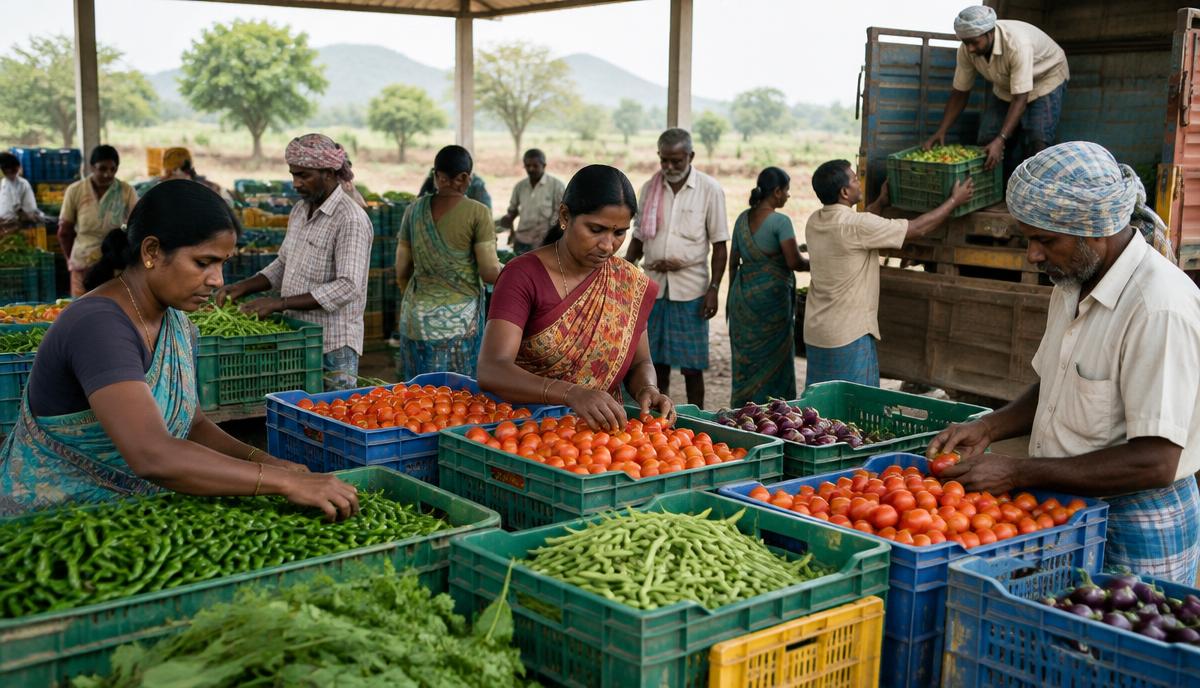
Farmer Producer Organisations and the Case for Collective Scale
Collective structures are the missing link between smallholder fragmentation and market power, yet most farmer producer organisations fail on governance, working capital and market linkage rather than enthusiasm. This piece draws on India's scheme data and examples from Anand, Oromia and Nashik.
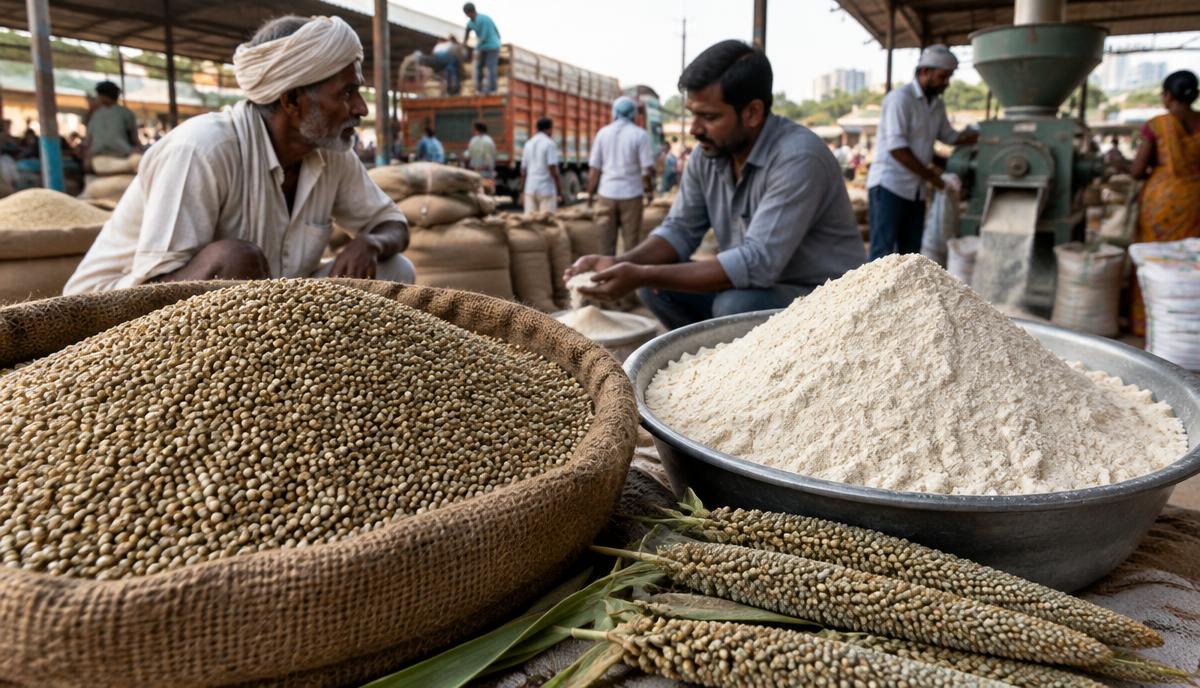
Millets Are Having a Moment. Can the Market Keep Up?
After the 2023 International Year of Millets, demand-side attention has outrun the supply chain behind these crops. This piece looks at yields, processing, shelf life, public procurement and farmer incentives in India and Africa to explain whether the moment lasts.
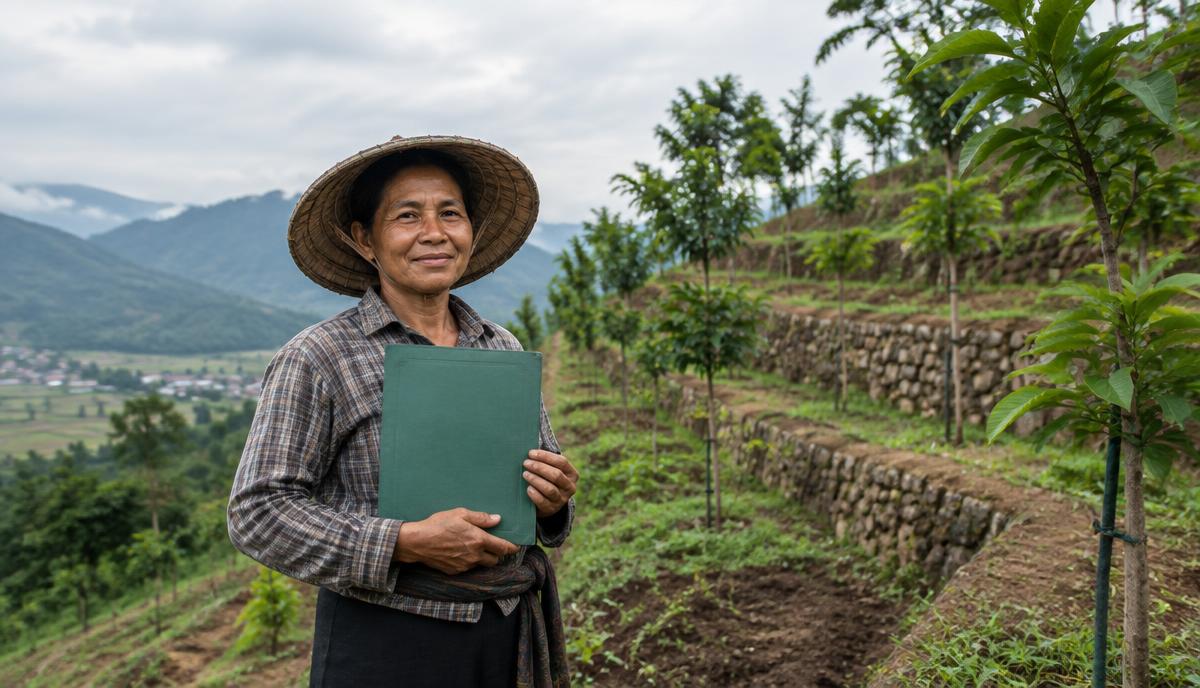
Land Tenure Decides Whether Farmers Invest
Whether a farmer plants trees, builds terraces or takes a loan depends heavily on confidence of holding the land. This piece argues that tenure security is a precondition for the soil and climate agendas that donors promote, and that women, tenants and pastoralists are the most exposed.