Governments Buy Billions of Meals a Year. Is That Food Policy?
Schools, hospitals, prisons and ration shops make governments among the largest food buyers, yet few treat buying as policy
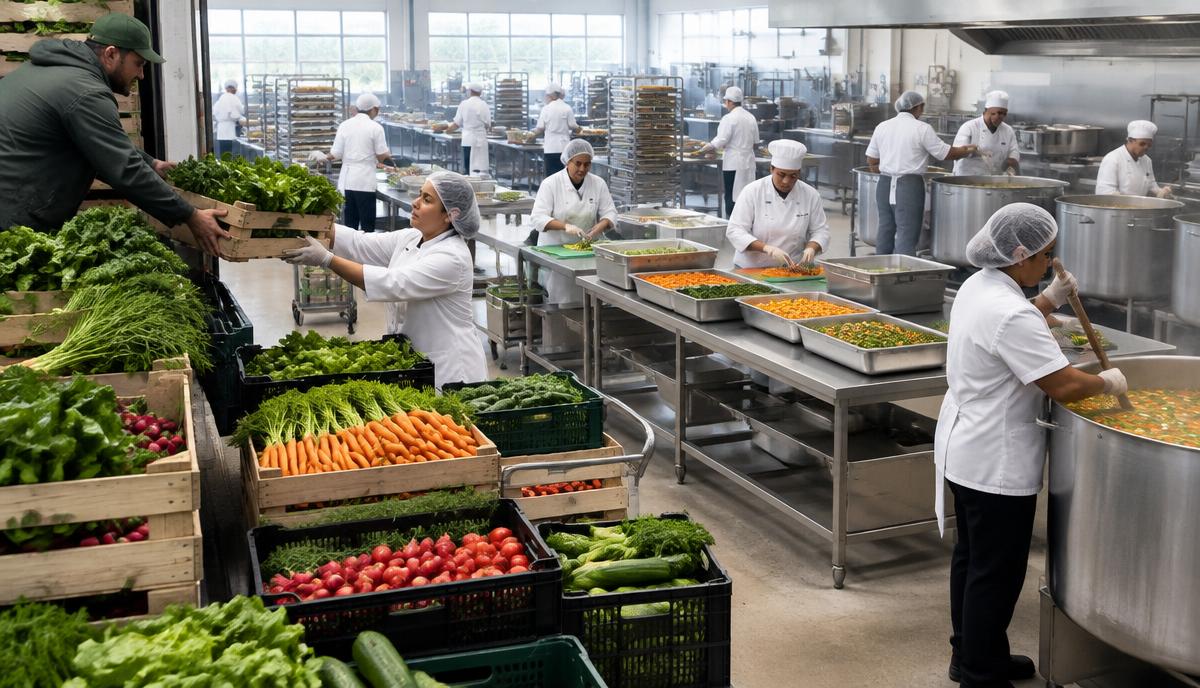
In India, a family holding a ration card collects wheat or rice each month from a fair price shop, free of charge, under a scheme that now reaches roughly 800 million people. Nobody designed that grain flow as a nutrition programme or a climate programme. It is the Public Distribution System, built to keep people fed and to give farmers a guaranteed buyer, and its side effects on cropping patterns, groundwater and diets have been larger than most deliberate food policies ever achieve. That is the point of looking at public procurement. Governments already run some of the biggest food buying operations in their countries. The open question is whether they treat that buying as policy or as logistics.
The buyer nobody counts as a food company
Public institutions are a food market in their own right, and a poorly described one. Schools, hospitals, prisons, barracks, care homes, ministry canteens and welfare schemes each buy for their own purposes, in separate budgets, through separate officials. The OECD estimates that its member countries spend on average 12 percent of GDP and 29 percent of total government expenditure on public procurement of all kinds, and food is a recurring line inside that. The European Commission's Joint Research Centre puts public procurement at 14 percent of EU GDP, and a policy paper from the EU Food Policy Coalition values the European market for social food service at 82 billion euros.
The World Food Programme counts 466 million children who receive school meals worldwide, and says national governments cover up to 99 percent of programme costs. Add the sick, the imprisoned and the enlisted, and the public sector becomes the dependable anchor customer in many regional food economies. A buyer of that size can shape what farmers grow by writing its tender documents with a purpose in mind.
Why a purchase order works where a regulation struggles
Most food policy tools act on someone else's decisions. Taxes and labels try to nudge shoppers, and subsidies try to bend farmers. Procurement is different because the state is the customer, and a customer's preferences are not a regulatory burden. A school district that specifies 50 percent more vegetables does not have to persuade anyone. It only has to say what it will pay for, in a contract that lasts several years, which gives suppliers the certainty they need to invest.
The World Health Organization made this argument in 2022 when it published an action framework on public food procurement and service policies, noting that governments spend between 12 and 20 percent of national GDP on purchasing and that 93 countries already run some form of procurement policy in schools. Having a policy for school meals is common. Having one that covers hospitals, prisons and ministries, with nutrition and sourcing criteria that are measured, is rare.
Brazil wrote the demand into law
Brazil offers the clearest case of a government deciding that its meal programme should also be a farm programme. Its national school feeding programme requires that at least 30 percent of the federal budget transferred to schools be spent on food from family farms. The WHO cites evidence that the rule pushed farmers away from a corn and soy monoculture toward fruit and vegetables, because a guaranteed institutional buyer made the switch bankable.
The Brazilian record also shows what the rule costs to implement, which is the part exporters of the idea tend to omit. A study of the system described small farmers who lacked working capital and waited months for payment, who lost deliveries because roads turned fresh produce to mush, and whose cooperatives sometimes closed after new health regulations demanded facility upgrades they could not afford. The same study found that failures fell as suppliers learned the paperwork. The lesson is that a quota alone does not create supply. It creates a demand signal that supply must be built to meet, which takes credit, storage, roads and time.
Copenhagen treated cooks as the instrument
Denmark's capital approached the problem from the kitchen rather than the farm gate. Copenhagen and Vienna both ran organic procurement policies for around two decades, and the WHO credits them with stimulating organic supply while reducing environmental harm. The Copenhagen House of Food, which supports the city's public kitchens, belongs to a Danish approach built around the staff who actually cook, including bespoke training offered exclusively to kitchens adopting organic goals.
That detail matters because the cost objection to sustainable procurement usually assumes the menu stays fixed. Kitchens that cook from raw seasonal ingredients, waste less and shift the ratio of meat to vegetables can pay more per kilo for better produce inside the same budget. Vienna's hospital association, serving about 30,000 meals a day, has run a programme in which 56 percent of dishes are vegetarian and only 20 percent are meat, with 34 percent of meals organic. The policy works because the menu changed along with the supplier list.
Where the climate gains come from
The environmental case is stronger for some choices than others, and procurement officers need to know which. A life cycle assessment of municipal food buying in Östersund in Sweden found that production causes about 95 percent of the greenhouse gas emissions, with transport, packaging and waste management contributing little. Swapping minced beef for local game or legumes delivered the largest climate reduction, up to 16 percent, and sometimes cut costs. Halving plate waste from 20 percent to 10 percent saved 3.3 million Swedish kronor a year. Raising organic purchases improved climate performance by only about 3 percent, and local sourcing added 4.6 million kronor in annual costs for modest gains.
This corrects the slogan version of the argument. Buying local is not automatically buying low carbon, and a procurement policy that counts kilometres rather than kilograms of beef will miss most of the available benefit. The strongest lever is the composition of the plate, and the second is how much of it is thrown away. Local and organic sourcing earn their place on other grounds, such as farm incomes and soil health, and should be measured as separate goals.
The tender rules that decide everything
In Europe, the main obstacle sits in the legal text rather than the market. EU procurement law is built on equal treatment and non-discrimination, so an authority cannot simply write a tender for farms within 50 kilometres. The Food Policy Coalition paper says current legislation still tends to favour lowest-price tendering and asks the Commission to clarify how local and regional sourcing can be handled. Authorities can score bids on quality, seasonality and emissions, but that takes technical skill many small municipal buyers lack, which is why the JRC published its 2024 review of sustainable criteria in the EU food sector.
Some governments have chosen to set mandatory shares instead. Italy has required 50 percent organic fruit and vegetables in school meals since August 2020, and Latvia requires 30 percent organic procurement. France moved toward binding targets for public canteens from 2022 under its food law, which sets a half share for sustainable and quality products, including a fifth organic. A target in statute removes the discretion that cautious procurement officers use to default to the cheapest bid. It also puts the pressure on supply, which is why the targets work best where a regional organic sector already exists or can be funded to appear.
What the United States learned from buying by values
The Good Food Purchasing Program, which began in Los Angeles in 2012 with the city's school district and other public institutions, took a different route: a scored framework rather than a quota. Institutions are rated against five values covering local economies, environmental sustainability, a valued workforce, animal welfare and nutrition, and commit to improving their scores over time through their existing distributors. It suits a country where federal buying has long been shaped by commodity support: the US Department of Agriculture buys surplus farm products for school meals and food banks, a system driven more by price support than by what children should eat. A values framework lets city buyers pull their own spending in another direction without waiting for Congress.
Supplier capacity is the constraint to plan around
Every successful case runs into the same arithmetic: institutional buyers want volume, consistency and payment terms that small farms struggle to meet. A WHO regional volume warns that preferential purchasing can produce market distortions and disproportionate price increases when competition is thin, and recommends price pre-setting and digital platforms as remedies. Research on Finland and Germany found that the missing link was often mid-scale processing: caterers lacked local pre-processing for peeled, chopped or portioned produce and so relied on specialist suppliers of anonymous vegetables from spot markets.
When a state commits to feeding 118 million schoolchildren daily, as India's mid-day meal programme does, no tender can be rewritten overnight to favour smallholders. A country cannot reach a 30 percent family farm share without cold storage, aggregation points, working capital and a payment system that does not make a farmer wait a quarter for money. Governments that succeed treat procurement reform and supply-chain investment as one budget line. Those that announce the first without funding the second find the contracts going to the same large distributors as before.
Make the existing spend answer to a stated purpose
The strongest argument for deliberate procurement is that the spending already happens and already has effects. Every contract written for wheat, rice or school lunches shapes cropping, diets and rural incomes, whether or not anyone intended it. India's grain system rewards the crops it buys at guaranteed prices and so rewards the regions that grow them. A government that never states its goals simply lets its buyers' defaults set them. The practical step is to require each large public buyer to publish what it purchases by food group and source, set two or three targets that can be audited, and attach to each target a plan for the farmers, processors and kitchen staff who must deliver it. Brazil's quota, Copenhagen's training and Östersund's attention to meat and waste each fix one part of that chain. A government that combined all three would be using its largest food policy tool deliberately for the first time.
**Sources:** World Health Organization, "The untapped potential of healthy public food procurement and service policies to support the repurposing of food and agricultural policies for delivery of affordable healthy diets"; EU Food Policy Coalition, "Sustainable Public Procurement of Food: A Goal Within Reach"; European Commission Joint Research Centre, "Overview and analysis of sustainable product procurement criteria in the EU food sector" (JRC139598); WHO Regional Office for the Eastern Mediterranean and Open Book Publishers, "Reshaping Food Systems to Improve Nutrition and Health in the Eastern Mediterranean Region, 3.5 Public Food Procurement and Service Policies to Support Healthy Sustainable Diets"; Agriculture (MDPI), "Identifying the Policy Instrument Interactions to Enable the Public Procurement of Sustainable Food"; Journal of Cleaner Production, "Balancing competing policy demands: the case of sustainable public sector food procurement"; ScienceDirect, "Assessing the environmental implications of sustainable public procurement of food" (Östersund Municipality study); World Food Programme, "School Meals"
The Food Observatory Brief
Weekly briefing on food systems, climate, agriculture and policy — straight to your inbox.
More on Policy
Desertification Is a Food Security Story
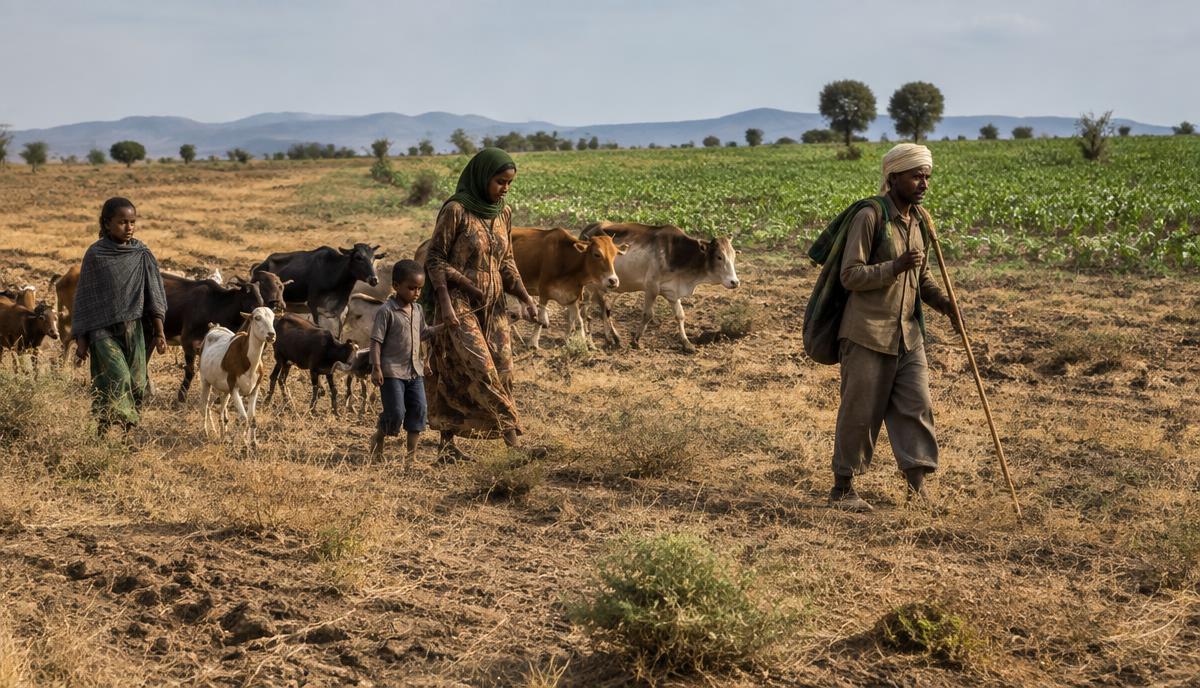
Land degradation affects up to 40 percent of the planet's land and drives yield loss, migration and conflict. This piece reads the outcomes of UNCCD COP17 in Ulaanbaatar as food policy, looks at where restoration pledges outrun finance, and argues that restoring land is the cheapest food security investment available.
Front-of-Pack Labels Are Becoming a Trade Fight
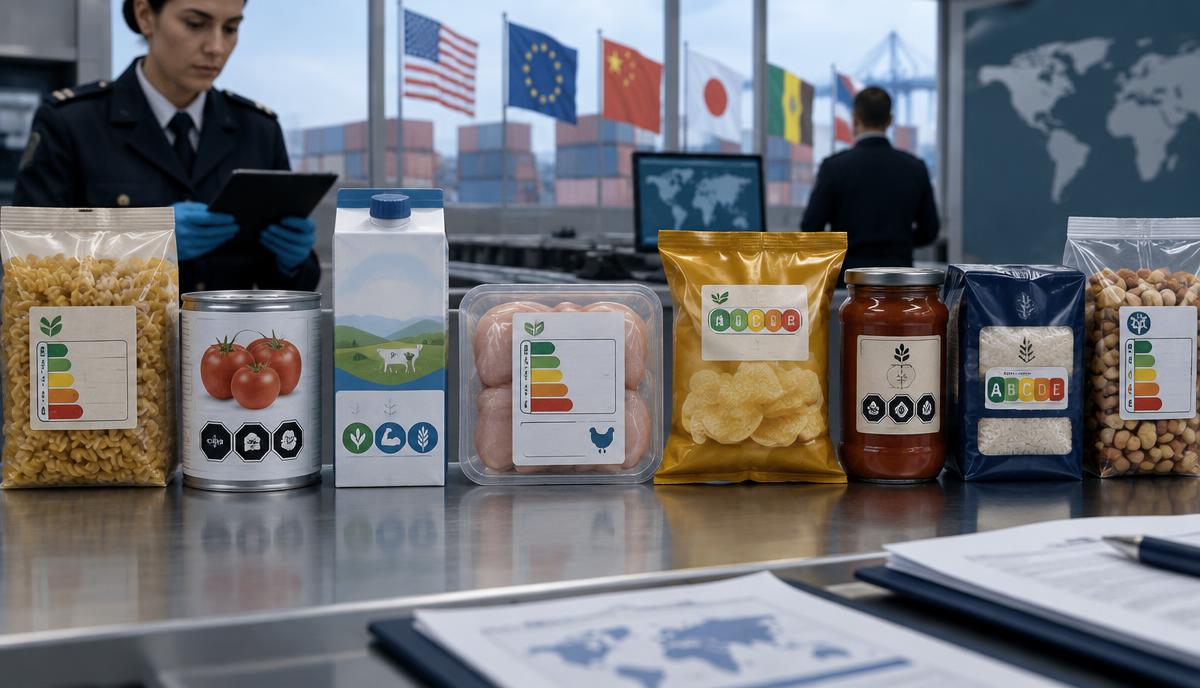
Warning labels, traffic lights and Nutri-Score are spreading, and food exporters now challenge them in trade bodies. This piece argues that the label is the visible edge of a larger fight over whose evidence and whose interests decide diets, with a look at India's court-driven debate.
What the Next Decade of Food Systems Will Look Like
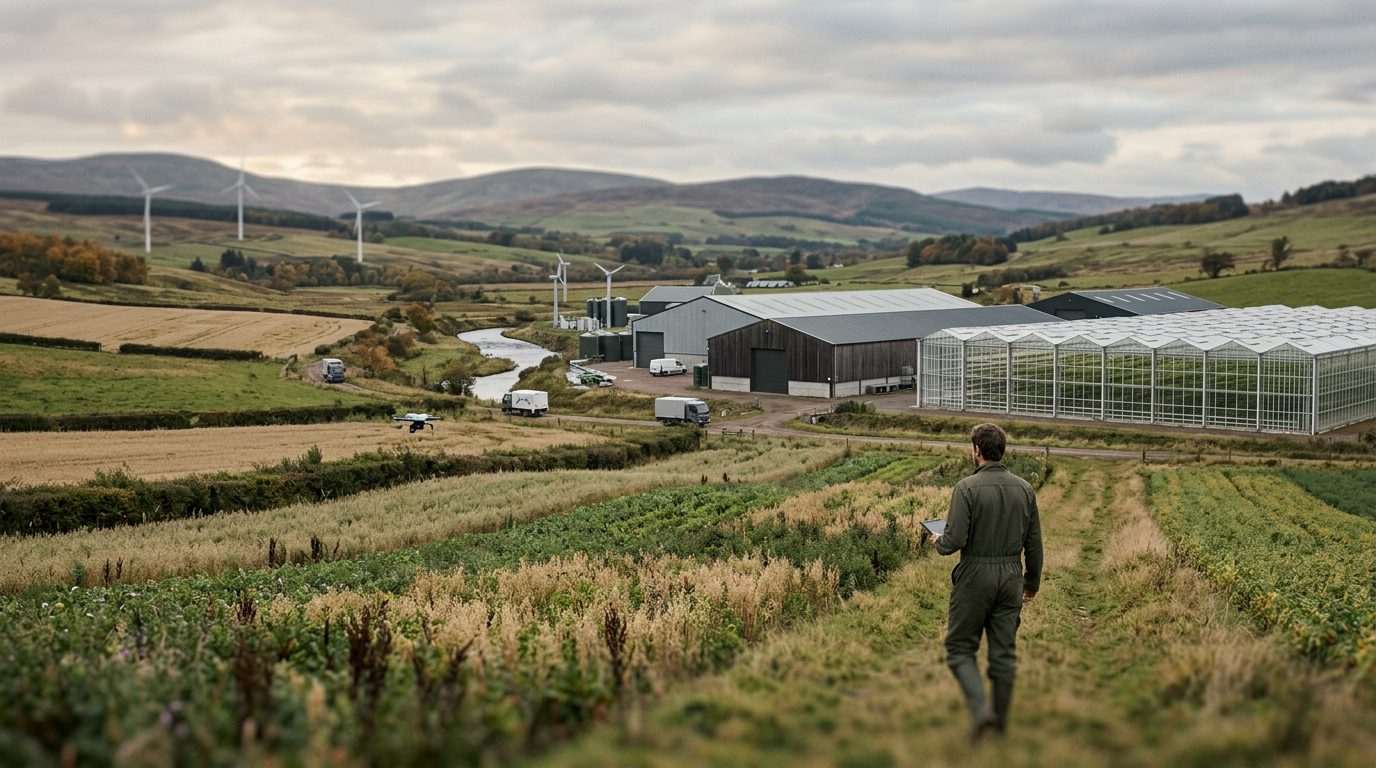
Closing the series, this piece synthesizes where climate pressure, market concentration, shifting diets, and new technology are jointly pushing global food systems over the next ten years. Drawing on institutional forecasts rather than speculation, it argues the defining feature of the next decade will be regional divergence, not a single global trajectory.