Pollinators Are Becoming an Economic Issue
Roughly 2.5 million honeybee colonies converge on California's Central Valley every February in the largest managed pollination event on Earth
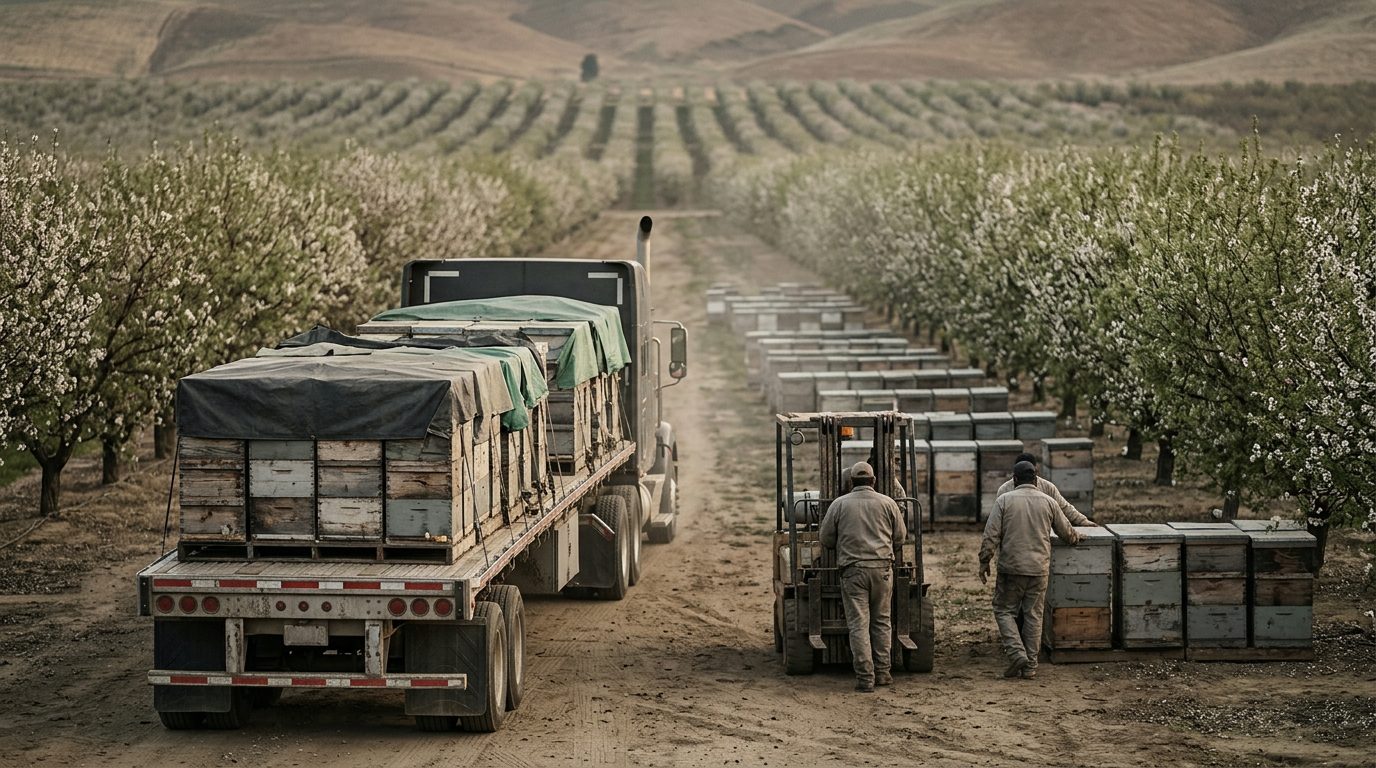
Every February, roughly 2.5 million honeybee colonies converge on California's Central Valley in trucks, on flatbeds, and on forklifts, assembled into what beekeepers and entomologists now routinely call the largest managed pollination event on Earth. The bees are not migrating. They are being rented, at a going rate of around $181 per colony in 2024, to pollinate more than a million acres of almond trees in a bloom window that lasts three to four weeks. What used to be treated as a background ecological service, bees doing what bees do, has become a line item, a futures market, and increasingly a risk disclosure. Pollinator decline is no longer only a conservation story. It is a supply chain story, and the almond industry is where that shift is most visible and most measurable.
The Bee Trucks Roll West
The almond bloom is a logistical event closer to a livestock drive than a farming ritual. Commercial beekeepers from Texas, the Dakotas, Florida, and the Pacific Northwest load hives onto semi-trucks each January and head for California, because almond trees are self-incompatible and produce almost nothing without insect pollination. Growers need roughly two hives per acre delivered during a bloom that can be shortened further by rain, wind, or cold snaps that keep bees grounded. There is no second chance in a season with only one bloom. Daniel Teran, field marketing manager at the bee-logistics company Bee Hero, has described pollination as the second- or third-largest input cost for almond growers, behind land and water. That single fact tells you almonds are no longer just an agricultural crop with a pollinator problem attached. They are a business built on a rented, mobile, biological workforce whose price and availability fluctuate like any other input.
A Rental Market Priced By Scarcity
The dollar figures here are not estimates plucked from advocacy literature. According to USDA's National Agricultural Statistics Service, producers spent more than $400 million on paid pollination services in 2024 across 1.728 million acres nationwide, and almonds alone accounted for $325.8 million of that, about 81 percent of the entire market. The average almond pollination fee came to $181 per colony, compared with roughly $66 per colony for every other pollinated crop combined. That gap is the market's clearest signal: almond growers are willing to pay nearly three times the going rate elsewhere because their crop has no substitute for insect pollination and their bloom window has no slack. Just as tellingly, commercial beekeepers now earn more from renting hives to growers than from selling honey. Pollination income overtook honey revenue nationally in 2022 and stayed ahead of it in 2024, when beekeepers collected $361.5 million from honey against far larger sums from pollination contracts. The American beekeeping industry has quietly become a logistics and rental business that happens to also produce honey, not the other way around.
Record Die-Offs Meet Peak Demand
That rental price is rising because supply is shrinking. The U.S. Beekeeping Survey, coordinated by the Apiary Inspectors of America and Auburn University's Bee Research Laboratory as the successor to years of data gathered by Bee Informed Partnership, recorded colony losses of 55.1 percent in 2023-24 and 55.6 percent in 2024-25, both far above the historical range of 30 to 40 percent losses beekeepers have absorbed in recent years and nearly triple the 15 to 20 percent loss rate the industry considers sustainable. The following year brought some relief, with losses easing to 39.9 percent, but that figure is still double what beekeepers regard as tolerable. Steven Coy, president of the American Honey Producers Association, put it plainly after the survey's release: losing nearly 40 percent of managed colonies in a single year is not a victory. It's a crisis in slow motion. Researchers investigating the worst of these losses have converged on Varroa destructor mites that have developed resistance to amitraz, the miticide beekeepers have relied on most heavily, as a central driver, compounding older pressures from habitat loss, pesticide exposure, and nutritional stress from shrinking forage. Joe Maresh, a past president of the Oregon Beekeepers Association, said last year that roughly half the beekeepers he knew were looking at 50 percent losses, and that the pattern was showing up nationwide, not just in the Pacific Northwest. Tim Hiatt of the Washington State Beekeepers Association was more direct about the market consequence: there simply are not enough bees in the United States to pollinate almonds without straining supply elsewhere.
What A Pollinator Is Actually Worth
Economists have been trying to price pollination for two decades, and the numbers keep landing in territory too large to dismiss as a niche ecological concern. The United Nations' Intergovernmental Science-Policy Platform on Biodiversity and Ecosystem Services estimated in its global pollinator assessment that annual global crop output directly attributable to animal pollination falls between $235 billion and $577 billion. In the United States, USDA's Agricultural Research Service puts the value of crops pollinated by honeybees at roughly $30 billion a year, spanning everything from apples and blueberries to the almonds that depend on managed hives almost entirely. These figures matter less as a single headline number than as a way of showing what happens when a free ecological input starts requiring active, paid management. The $400 million beekeepers collected in rental fees in 2024 is not the value of pollination. It is the cost of replacing, through trucking and contract labor, an ecological function that used to be assumed rather than purchased. As wild pollinator populations decline from habitat fragmentation and pesticide exposure, more of that $30 billion in crop value becomes dependent on a shrinking, increasingly expensive supply of managed colonies, which is precisely the dynamic playing out in almond country.
The Almond Economy's Single Point Of Failure
Concentrating 81 percent of the nation's pollination market and roughly two-thirds of its managed colonies into one crop, in one state, during one three-to-four-week window, creates a structural vulnerability that has nothing to do with weather or mites in isolation and everything to do with how little slack the system has. If colony losses climb again the way they did in 2024-25, or if a cold, wet February keeps bees from flying during bloom, there is no reserve fleet of colonies waiting elsewhere to fill the gap. Growers who can't secure enough hives face reduced yields directly, since almond set is a near-linear function of pollination coverage. Smaller and mid-sized growers are the most exposed, because large operations can lock in contracts and premium colonies months ahead, while everyone else competes for what is left as bloom approaches. The almond industry, in other words, has built a several-billion-dollar annual harvest on top of a single, geographically concentrated, biologically fragile input, and the beekeeping industry supplying it is simultaneously the most consolidated and the most stressed sector of American agriculture.
Beekeepers Are Becoming Migrant Ranchers
The transformation on the beekeeping side is just as consequential as the one in the orchards. Commercial beekeepers increasingly run operations that look less like traditional apiaries and more like specialized livestock haulers, moving colonies across several states each year chasing pollination contracts rather than honey flows. That shift changes the economics of the entire industry. A colony's value is now driven substantially by its pollination-readiness, meaning population size, brood pattern, and health at a specific date in February, rather than by its honey yield over a season. Beekeepers who lose large fractions of their colonies each winter must rebuild populations through splits and purchased packages before bloom, an expensive and uncertain process that gets harder every year losses run above the sustainable threshold. Rebuilding after a 55 percent loss is not simply restocking. It is running a breeding operation under time pressure with a shrinking genetic and financial cushion, and the cost of that rebuild is baked into the rental price growers pay.
The Bill Is Coming Due For Everyone
None of this points toward an ecological abstraction anymore. It points toward a functioning, quantifiable market in which scarcity is already showing up as price. Almond growers are paying $181 a colony because there are not enough healthy colonies to go around, beekeepers are losing more than half their bees some years and still turning a profit only because pollination fees have outpaced honey income, and the broader $30 billion figure attached to honeybee-dependent crops nationally is not a hypothetical loss waiting in the future. It is the value currently riding on an industry absorbing losses that would be considered catastrophic in almost any other agricultural supply chain. The lesson from almond country is not that pollinators need saving in the abstract. It is that American agriculture has already built a market that prices pollinator decline in real dollars, and that market is telling growers, beekeepers, and policymakers the same thing in the clearest language available: scarcity has a cost, and it is being paid right now.
Sources: USDA National Agricultural Statistics Service, "Cost of Pollination" report (2024/2025 release); USDA Economic Research Service, "Pollination services valued at $400 million on 1.7 million acres," Chart of Note; Apiary Inspectors of America and Auburn University Bee Research Laboratory, U.S. Beekeeping Survey results, 2023-24, 2024-25 and 2025-26; Auburn University, "Honey bee colony losses stabilize following record highs, yet pressures persist"; Food Tank, "Bee Colony Collapse Threatens U.S. Food Supply"; Capital Press, "Beekeepers face downward trends for pollination services"; AgNet West, "Bees Are Gold: Almond Pollination in 2026"; Intergovernmental Science-Policy Platform on Biodiversity and Ecosystem Services (IPBES), Assessment Report on Pollinators, Pollination and Food Production; USDA Agricultural Research Service, "The Buzz About Pollinators"; Project Apis m., "Record Losses of 2025: A Flashback to CCD, PPB, and the 4 P's"
The Food Observatory Brief
Weekly briefing on food systems, climate, agriculture and policy — straight to your inbox.
More on Agriculture
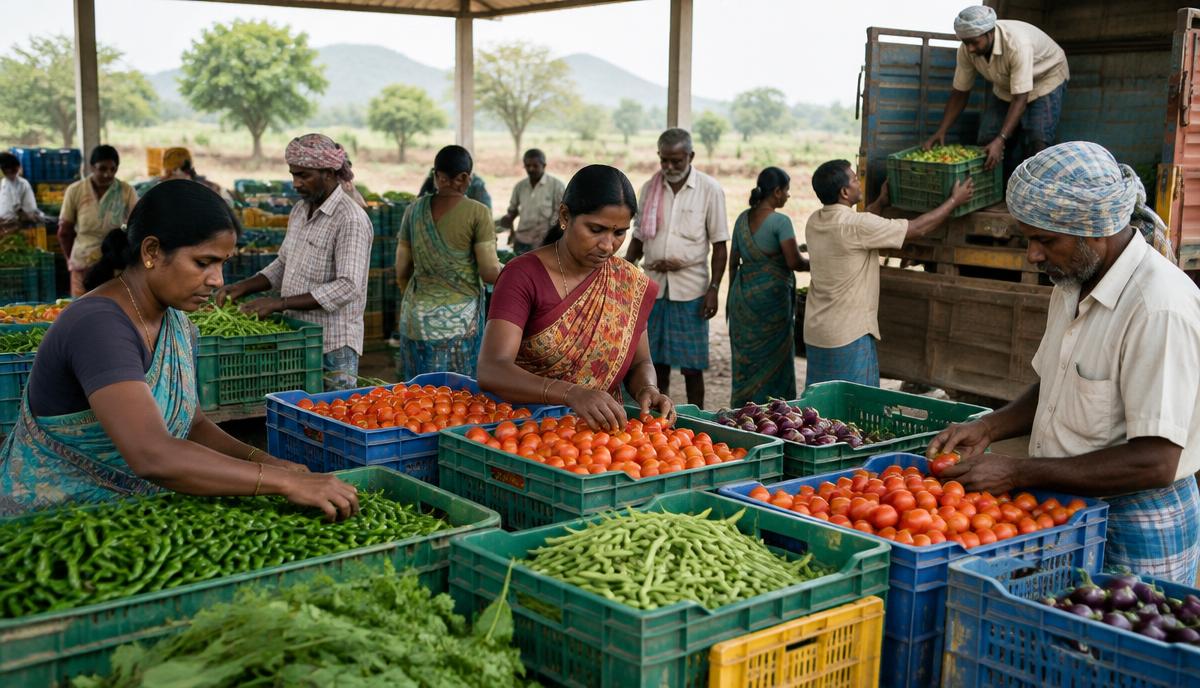
Farmer Producer Organisations and the Case for Collective Scale
Collective structures are the missing link between smallholder fragmentation and market power, yet most farmer producer organisations fail on governance, working capital and market linkage rather than enthusiasm. This piece draws on India's scheme data and examples from Anand, Oromia and Nashik.
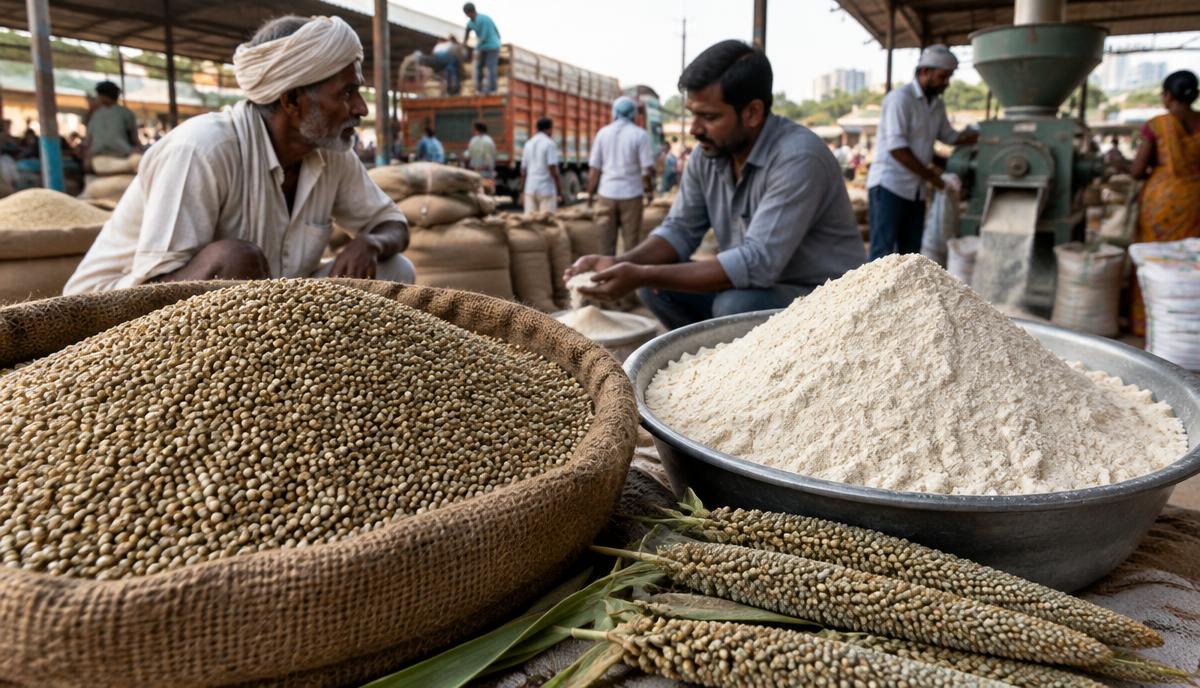
Millets Are Having a Moment. Can the Market Keep Up?
After the 2023 International Year of Millets, demand-side attention has outrun the supply chain behind these crops. This piece looks at yields, processing, shelf life, public procurement and farmer incentives in India and Africa to explain whether the moment lasts.
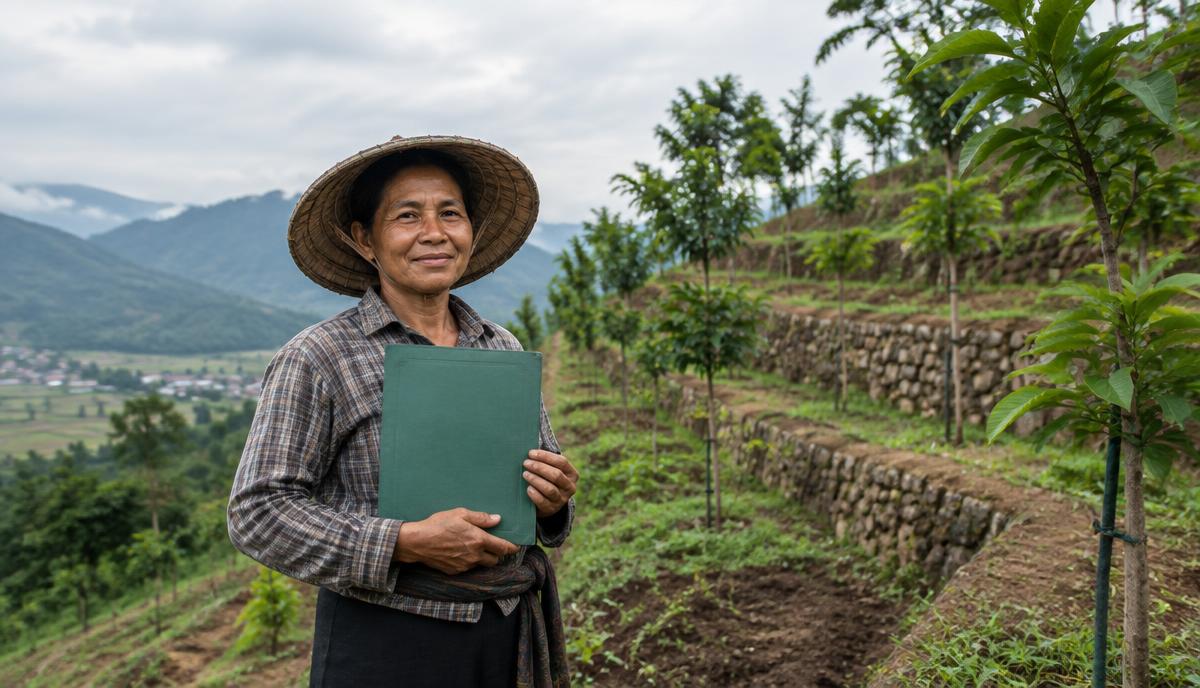
Land Tenure Decides Whether Farmers Invest
Whether a farmer plants trees, builds terraces or takes a loan depends heavily on confidence of holding the land. This piece argues that tenure security is a precondition for the soil and climate agendas that donors promote, and that women, tenants and pastoralists are the most exposed.