The Geography of Food Is Changing
Coffee, cocoa, wine grapes, and wheat belts are sliding toward the poles as growing zones shift under a warming climate
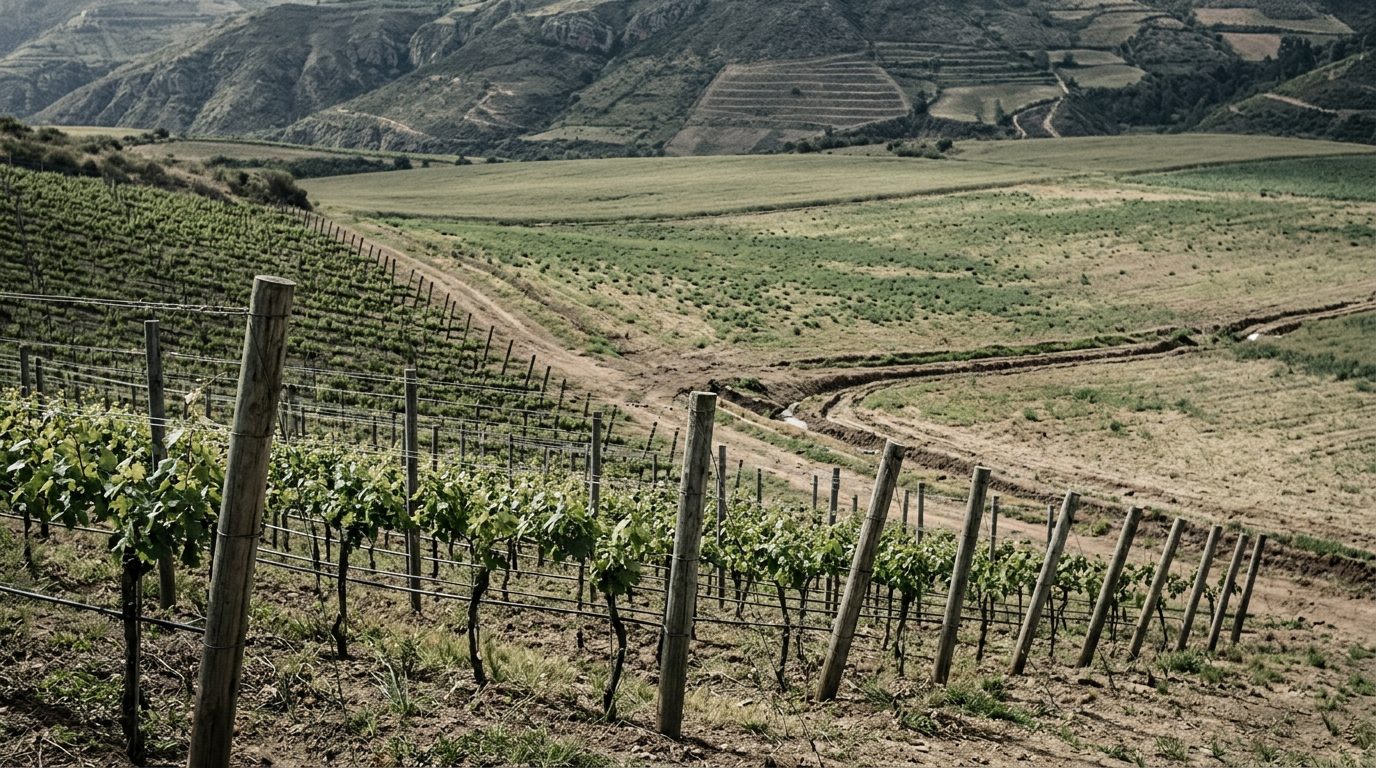
In the chalky hills of Kent and Sussex, English vineyards now sell sparkling wine that regularly beats Champagne in blind tastings, and the Champagne houses have noticed. Land there costs roughly a thirtieth of what it does around Reims and Épernay, the soil is nearly identical, limestone laid down in the same Cretaceous seabed, and the growing season has warmed enough to ripen Chardonnay and Pinot Noir reliably for the first time in generations. What is happening in southern England is not a curiosity. It is one visible instance of a much larger rearrangement: the belts of latitude and altitude that have defined where coffee, cocoa, wine grapes, and wheat grow best are sliding toward the poles and up the mountainsides, and the industries built around them are scrambling to follow.
The Arabica Belt Is Retreating Uphill
Coffee is the clearest case of a crop with almost no margin for error. Arabica needs a narrow temperature band, reliable but not excessive rainfall, and protection from frost, which is why it has historically clustered in tropical highlands between roughly 18 and 22 degrees Celsius in mean annual temperature. A Rabobank analysis published in April 2026 by researchers Camila Bonilla-Cedrez, Lilian Lin, and Guilherme Morya found that 8 percent of today's arabica-growing land is already climatically unsuitable, with that figure projected to reach 20 percent by 2050. The national breakdowns are stark. Brazil's suitable area falls from 81 percent of current growing regions to 62 percent. Colombia drops from 56 percent to 45 percent. Honduras faces the steepest collapse, from 53 percent suitable to just 12 percent, leaving an estimated 85 percent of its current production in marginal territory. Those three countries, plus Ethiopia, accounted for 58 percent of global arabica exports in the 2023-24 season, with Brazil alone shipping 36.5 million 60-kilogram bags. Separate modeling from Switzerland's Zurich University of Applied Sciences, published in 2022, projected reductions of more than 50 percent in the areas of highest suitability by mid-century. Ethiopia is the outlier and the reason the word "shift" fits better than "collapse": its projected suitable area actually rises, from 39 percent to 50 percent, as its high-altitude interior becomes newly hospitable even as its lowland margins fail.
Colombia's Farmers Are Chasing Altitude and Losing Ground
The abstraction of a suitability map becomes a lived problem in Colombia's Eje Cafetero, the coffee axis running through Caldas, Risaralda, and Quindío. Oscar Gomez, who farms a half-hectare plot in the Caldas mountains, describes the shift bluntly: "Before, the seasons seemed etched into the calendar. Today, the climate has gone mad." The coffee berry borer, an insect that used to stay below about 1,600 meters, now infests farms at 1,800 meters and higher, following the warming air uphill and eroding the very altitude advantage that made those farms viable. Cenicafé, Colombia's national coffee research center, has answered with a succession of heat- and pest-resistant hybrids, Castillo and, as of December 2024, Castillo 2.0, now planted on 87.5 percent of the country's coffee area. Some growers are responding by moving toward more resilient blends and shade cover rather than higher yields; Gerardo Carvajal, who farms near Manizales, put it simply: "I'd rather have lower production but keep a healthy environment." The net effect across Latin America is not that coffee disappears, but that the industry's center of gravity keeps climbing, farm by farm, until the mountains run out.
England's Chalk Is the New Champagne
Wine is more forgiving than coffee in one sense, since grapevines tolerate a wider range of conditions, but the industry cares enormously about which range a given variety sits in, because that range defines style, and style defines brand. A study led by Antonio Busalacchi at the University of Maryland's Earth System Science Interdisciplinary Center, working with NOAA, NASA Goddard, and the Pacific Northwest National Laboratory, modeled conditions across two dozen major wine regions through the end of the century and identified clear winners and losers. Germany's Rhine Valley, Oregon and Washington State, Argentina's Mendoza province, and New Zealand gain ground as warming improves ripening in regions that were previously marginal. Bordeaux, South Africa, and South Australia lose it, as growing seasons compress and heat stress becomes routine. Busalacchi's own framing of the stakes is direct: "In the not too distant future, your favorite style of French wine may not come from its namesake region, or even from France at all." England is the most vivid beneficiary. Nyetimber and Gusbourne, both English sparkling wine houses working the same chalk seam that runs under Champagne, placed 32nd and 28th respectively on the World's 50 Best Vineyards list for 2025, Gusbourne's second consecutive year of climbing the ranking. Champagne houses have been scouting and buying land across the Channel for over a decade, drawn by geology that matches their home turf and a climate that increasingly does too.
Bordeaux Rewrites Its Own Rulebook
Bordeaux's problem is not that its vines are dying. It is that they are ripening into a different wine than the one the appellation is built around. Marguerite de Luze, co-owner of the seventh-generation Château Paveil de Luze in the Médoc, has watched Merlot, the backbone of the Bordeaux blend, push past 14.5 percent alcohol by volume against a traditional target of 12.5 to 13.5 percent. "Potential alcohol levels at harvest," she has said, "no longer necessarily correspond to the style of Margaux wines we aim to produce." Budburst, flowering, and veraison now arrive earlier nearly every year, compressing the growing season and shifting harvest dates that had held for a century. The appellation's governing body authorized seven supplementary grape varieties in 2021, including Touriga Nacional and Marselan, specifically to give growers heat-tolerant options without abandoning the Bordeaux name outright. Estates are also extending winter pruning, planting cover crops, and restoring hedgerows to buffer the vineyard microclimate. It amounts to an attempt to hold a place-based identity together while the climate underneath that identity keeps moving.
Cocoa's Narrow Belt Is Fraying
Cocoa is geographically the most concentrated of the four crops, and that concentration is now a liability. West Africa produces about 70 percent of the world's cocoa, with Côte d'Ivoire and Ghana alone accounting for more than half of global supply. Cacao grows well up to about 32 degrees Celsius, but an analysis by Climate Central found that Côte d'Ivoire and Ghana gained roughly 40 additional days a year above that threshold between 2015 and 2024, with Cameroon adding 18 extra heat days annually and Nigeria 14. Of 44 cacao-growing areas the group analyzed, 28 now face at least six extra weeks of heat-limiting conditions each year. Roughly 90 percent of that cocoa comes from smallholders, many earning less than a dollar a day, which leaves little capacity to relocate or invest in adaptation even as prices have responded to the strain, cocoa futures rose 136 percent between July 2022 and February 2024. Research modeling mid-century conditions across West and Central Africa, published through ScienceDirect, projects further contraction of the suitable growing belt, with some estimates putting the loss of currently suitable cocoa land near half by 2050. Unlike coffee or wheat, cocoa has no obvious poleward escape route, since the tropics it needs are, by definition, a fixed band around the equator; the crop's only real option is retreating to whatever pockets within that band retain enough rainfall and shade.
The Wheat Frontier Moves North, at a Cost
Wheat behaves differently again. It is a temperate crop already grown across an enormous range of latitudes, so climate change is less a threat to its existence than a redrawing of its map. Research led by Lee Hannah of Conservation International, published in PLOS One with University of Guelph collaborators, modeled 12 major food crops against 17 climate projections and found that global agricultural land could expand by roughly a third as high-latitude regions warm, with more than 8.5 million square kilometers of new farmland potentially opening across Canada and Russia combined, about 4.2 million in Canada and 4.3 million in Russia. Wheat and potatoes could become viable across Canada's northern provinces and into the Northwest Territories and Yukon. Russia's own agricultural planners have documented winter wheat expanding into regions of Siberia that were unfarmable a generation ago. But the same warming is degrading established belts further south, with Canada's Prairies and the U.S. Midwest facing some of the steepest projected yield losses from heat and drought even as new land opens to their north. And the frontier land carries a heavy cost: Hannah's team estimated that converting all of the newly viable farmland could release around 177 gigatonnes of soil carbon, more than a century's worth of current U.S. emissions. As Krishna Bahadur KC, a co-author on the study, put it, "we need food, but we don't want environmental impacts. We need to find a way to balance."
Terroir Was Never Supposed to Move
What unites coffee, cocoa, wine, and wheat is that each has built an entire economy, and in some cases a national identity, around the assumption that geography is fixed. Champagne is a place before it is a process; Yirgacheffe and the Eje Cafetero carry the same weight for coffee; Ghana's cocoa belt underwrites a national economy. Climate change does not respect any of that. It is quietly reassigning comparative advantage among countries and regions on a timescale of decades rather than centuries, favoring England over France in sparkling wine, Ethiopia over Honduras in arabica, and Siberia over the Ukrainian steppe in wheat, while offering cocoa almost nowhere to go. The economic winners of this reshuffling will be real, but so will the losers, and the losers tend to be smallholders in the tropics with the least capital to adapt. The map of world agriculture that took centuries to settle into place is now being redrawn within a single working lifetime, and the places that get there first, with the right varieties, the right land, and the right capital, stand to inherit industries that took their predecessors generations to build.
Sources: Rabobank, "Climate Risk and the Future of Arabica Coffee Land Suitability" (reported by Daily Coffee News, April 2026); Zurich University of Applied Sciences, 2022 peer-reviewed study on projected global coffee suitability decline by 2050; Mongabay, "Colombia's coffee farmers try to balance innovation and tradition to adapt to climate change" (April 2025); University of Maryland Earth System Science Interdisciplinary Center, global wine region climate suitability study (Antonio Busalacchi et al.); World's 50 Best Vineyards, 2025 rankings (Gusbourne, Nyetimber); Forbes, "How Bordeaux Is Adapting Fine Wine For A Hotter Future" (July 2026); Climate Central, "Climate and Cocoa" analysis of West African heat-day trends (2025); ScienceDirect, "Climate change impacts on cocoa production in the major producing countries of West and Central Africa by mid-century"; PLOS One, Lee Hannah et al. and University of Guelph, projected northward expansion of agricultural land in Canada and Russia; CBC News, "Wheat and corn crops in Canada's Prairies, U.S. Midwest could see biggest losses due to climate change" (2025)
The Food Observatory Brief
Weekly briefing on food systems, climate, agriculture and policy — straight to your inbox.
More on Climate
Warming Oceans Are Moving the World's Protein
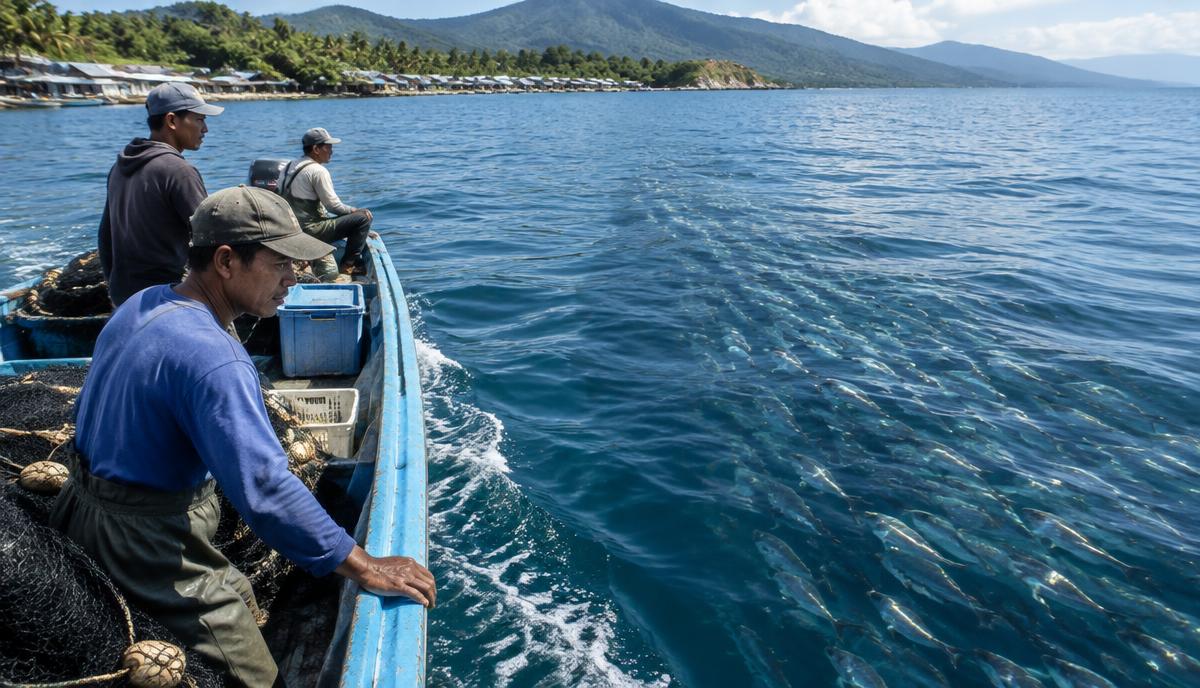
Fish stocks are moving poleward and into deeper water as the oceans warm, while the countries that depend most on fish protein are often the least able to follow them. This piece argues that maritime boundaries, fisheries agreements and aquaculture investment have not caught up with moving fish.
Rice Paddies and the Other Greenhouse Gas Problem
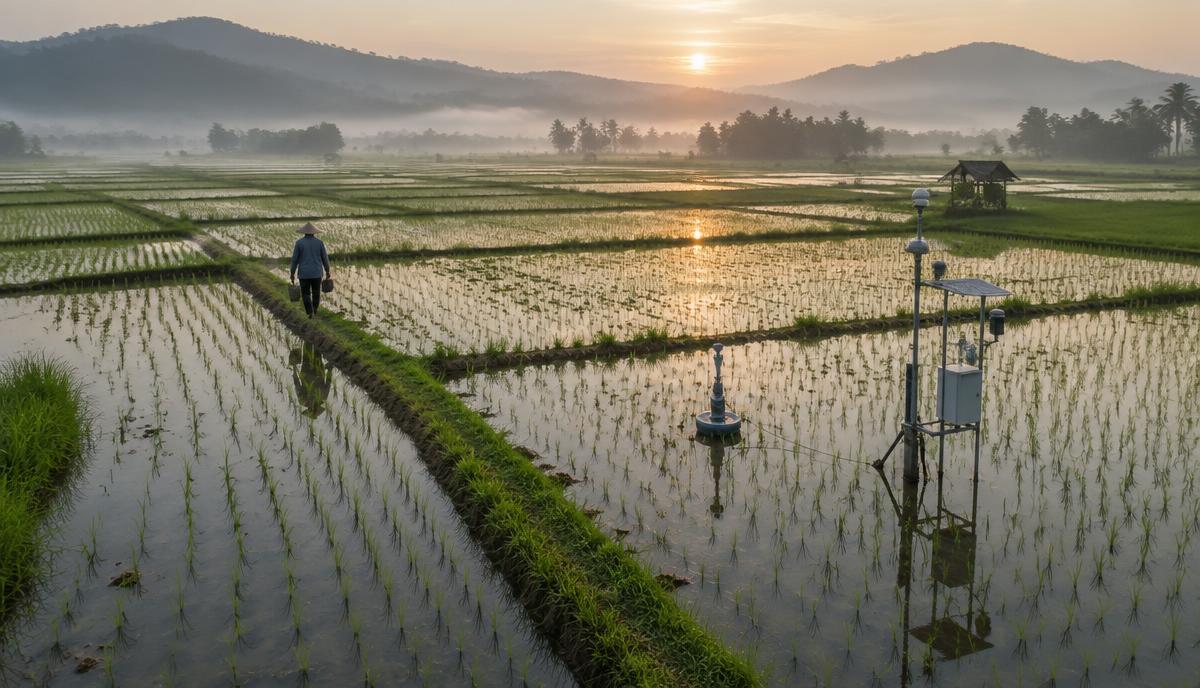
Flooded rice is a major source of human methane, and alternate wetting and drying or direct seeding can cut it while saving water. This piece uses the first payouts at Punjab Agricultural University to show why a known fix still struggles to scale, and what verification, contracts and policy would move adoption across South and Southeast Asia.