The New Politics of Water in Agriculture
Agriculture claims more than 70 percent of global freshwater withdrawals, and the fight over the rest is intensifying
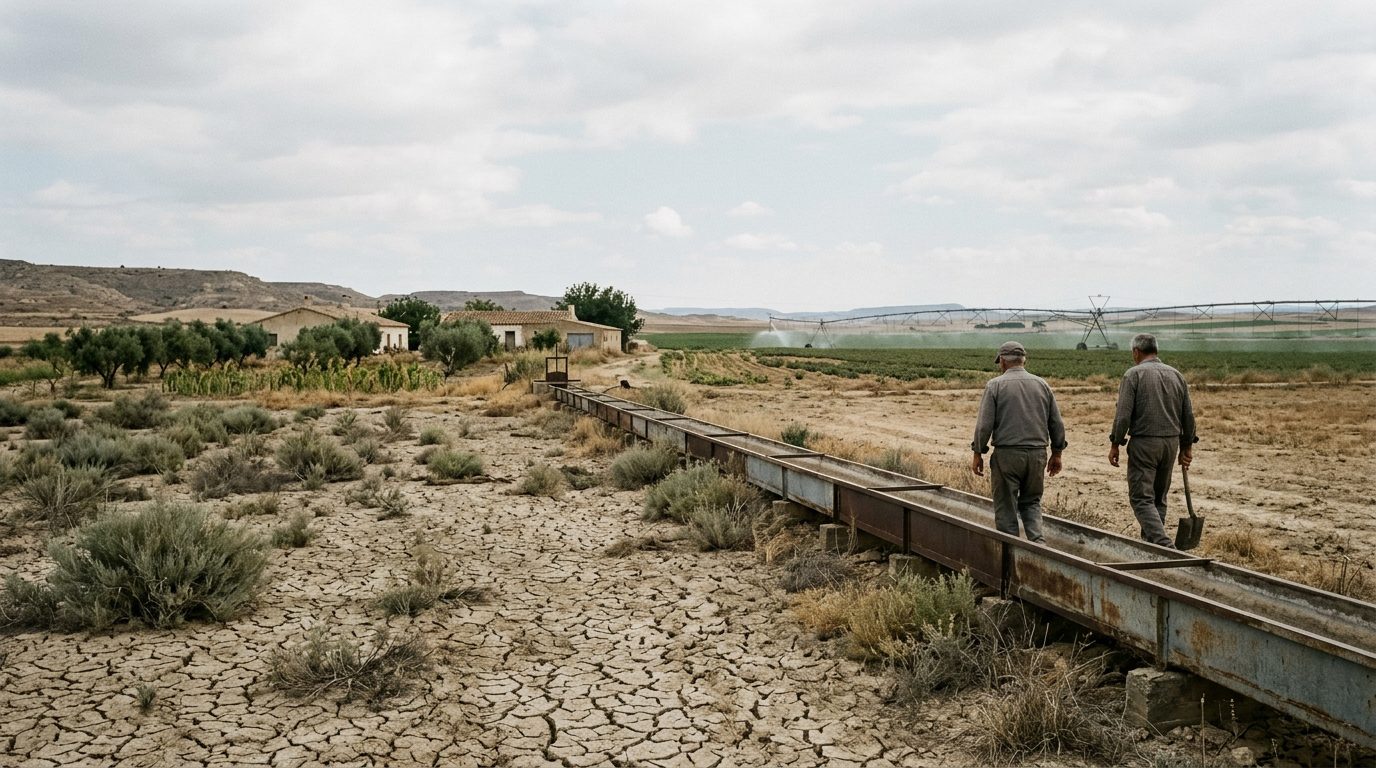
Water has quietly become the most contested input in modern agriculture, more contentious in many basins than land, labor, or even climate policy itself. Farmers grow roughly 70 percent of the food the world eats using water drawn from rivers, aquifers, and reservoirs that cities, industries, and other nations also claim as their own, according to figures compiled by the FAO's AQUASTAT database. That single statistic, agriculture's claim on more than 70 percent of global freshwater withdrawals, is the fault line running under a series of very different disputes now playing out from the American Southwest to the Nile Delta to inland Spain. What used to be a technical question of engineering and rainfall has become a question of power: who gets to keep farming, who has to stop, and who decides.
The Arithmetic Nobody Wants to Say Out Loud
The Colorado River Compact, signed in 1922, promised seven US states and Mexico a combined 16.5 million acre-feet of water a year, a figure negotiators calculated from an unusually wet run of years that never repeated itself. The river has averaged closer to 14 million acre-feet across the twentieth century, and during the current multi-decade megadrought that average has fallen below 10 million acre-feet, according to the National Agricultural Law Center. Lake Powell and Lake Mead, the river's two great storage reservoirs, both touched record lows in August 2026. In Colorado itself, roughly 90 percent of water use supports farming and ranching, and this year's Yampa Basin irrigators received only about half their normal supply. Rancher Philip Rossi, who culled a third of his herd before spring calving, called it the worst year of his life, Colorado Newsline reported. The compact was written for a river that no longer exists, and every allocation fight since has been an argument over who absorbs the shortfall the original math never anticipated.
Seven States, One River, No Deal
That argument reached a formal breaking point in August 2026, when the Bureau of Reclamation finalized new operating rules to replace the guidelines that had governed the river since 2007. The new framework, taking effect October 1, imposes 1.25 million acre-feet of annual cuts on the Lower Basin states of California, Arizona, and Nevada while leaving Colorado, Wyoming, Utah, and New Mexico in the Upper Basin without mandatory reductions, relying instead on voluntary, federally funded conservation. Arizona's water officials warned that deeper cuts could inflict what the state's Department of Water Resources called catastrophic harm on farming operations, including the irrigation-dependent Colorado River Indian Tribes farms, and Arizona has retained legal counsel to challenge the Upper Basin's exemption. California's negotiators called the arrangement a bridge rather than a solution and are demanding that upstream states share the pain. Colorado's negotiators countered that they are already managing drought on their own terms and cannot promise more. What makes this fight distinctly political rather than merely hydrological is that every side has a legally defensible claim, which is exactly why litigation, not compromise, now looks like the likely endpoint.
Punjab's Free Power Trap
If the American West is fighting over a shrinking river, Punjab is fighting over a vanishing aquifer, and the politics are, if anything, more combustible because the crisis is self-inflicted by policy design. Since the late 1990s, successive Punjab governments, from the Congress party to the Shiromani Akali Dal to today's Aam Aadmi Party administration under Chief Minister Bhagwant Mann, have supplied farmers free electricity to run the tube wells that pump groundwater for water-intensive paddy cultivation. The subsidy was originally a response to farmer distress, but it removed any cost signal against overpumping, and Punjab's water table has paid the price. According to figures reported by All India Radio's News on Air, the state extracts roughly 28 billion cubic meters of groundwater a year against a replenishable supply of about 17 billion cubic meters, and 78 percent of Punjab's geographic area now falls into government-designated overexploited or dark zones. In Sangrur district, water levels have dropped more than 44 meters. Commentators writing in The Tribune have accused successive governments of allowing the state to drift toward desertification while water scarcity, remarkably, barely registers in state election manifestos.
A Subsidy No Government Wants to Touch
The politics of undoing that subsidy are brutal, which is precisely why nobody has managed it. Punjab's power utility already supplies free electricity to roughly 90 percent of households in some capacity, and agricultural free power specifically underwrites a farm economy still recovering from the 2020-21 protests against national farm laws, protests that made Punjab's farm lobby one of the most organized and politically feared constituencies in India. The AAP government has floated the idea of excluding the largest landholders from the subsidy, reporting by The Print indicates, a modest reform aimed at trimming costs rather than groundwater use, and even that trial balloon drew immediate backlash. No Punjab government since the subsidy began has been willing to meter or price agricultural power in a way that would discourage pumping, because doing so would be read, correctly, as an attack on farmer welfare in a state where agrarian identity is inseparable from electoral survival. The aquifer is a casualty of a policy nobody can afford to reverse.
The Dam Downstream of Everything
Few water disputes carry higher geopolitical stakes than the one unfolding along the Nile. Ethiopia formally inaugurated the Grand Ethiopian Renaissance Dam on September 9, 2025, a $5 billion, 5,150-megawatt facility, Africa's largest hydroelectric project, built primarily with Ethiopian financing and Chinese loans. For Addis Ababa the dam is a long-overdue claim on a river that flows almost entirely through Ethiopian highlands before reaching Sudan and Egypt, and a partial answer to a country where, despite the new dam, 56 percent of the population still lacks reliable electricity access, according to reporting by Mongabay. For Cairo, the dam is an existential threat. Egyptian Foreign Minister Badr Abdelatty has called Ethiopia's unilateral filling and operation of the reservoir illegal under international law, and Egyptian officials describe the dam as jeopardizing the rights of 150 million people living downstream in Egypt and Sudan. The stakes for agriculture are stark: Egypt receives barely 18 millimeters of rainfall annually and depends on the Nile for nearly all its irrigation water, in a country where agriculture still accounts for roughly 13 percent of GDP. An Egyptian farmer leader quoted by regional press put it plainly, warning that any reduction in Egypt's water share would cut agricultural production and inflict heavy losses on farmers. More than a decade of negotiations among Egypt, Sudan, and Ethiopia have failed to produce a binding agreement on filling and drought-management protocols, leaving one of the world's most consequential rivers governed by improvisation rather than treaty.
Rationing in the Birthplace of Tapas
Southern Europe offers a preview of what water conflict looks like inside a wealthy, democratic country rather than between sovereign states. Catalonia entered 2024 in its worst drought in more than a century, with reservoirs falling to roughly 16 percent of capacity after four consecutive years of receiving about half of normal rainfall, geography professor David Sauri told NPR. Under Catalan emergency law, agricultural users are first in line to lose their water rights when supplies run short, and farmers saw irrigation allocations cut by as much as 80 percent, prompting hundreds of them to drive their tractors and trucks into Barcelona in protest. Meanwhile the region's other great water consumer, tourism, kept expanding: Barcelona alone drew more than 12 million visitors in 2023, generating over 10 billion dollars, even as studies cited by NPR found tourists use two to five times more water per day than residents. City authorities shut down beach showers and asked hoteliers to skip daily towel changes, modest gestures next to the sacrifice demanded of farmers whose legal priority in a shortage is, perversely, to be cut first.
Water Stress Is Now a Map of Political Risk
These four cases are not outliers; they are early instances of a pattern the World Resources Institute's Aqueduct data lays out globally. Twenty-five countries, home to a quarter of the world's population, face extremely high water stress every year, and at least half of humanity experiences highly stressed water conditions for at least one month annually. WRI's analysis finds that 60 percent of the world's irrigated agriculture, including crops as central to global diets as wheat, rice, maize, and sugarcane, sits in areas of extremely high water stress. In the Middle East and North Africa, 83 percent of the population is exposed to extreme stress; in South Asia, the figure is 74 percent. Those numbers describe geography, but they translate directly into politics, because every one of those regions will eventually face its own version of the choice Punjab, Egypt, Spain, and the American Southwest are making right now.
The Argument That Cannot Be Engineered Away
Desalination plants, drip irrigation, and smarter pricing can all buy time, and every government in this article is pursuing some combination of them. But none of these disputes is fundamentally a technology problem waiting on innovation; each is a political settlement waiting to be renegotiated, over compacts written for rivers that no longer flow as promised, subsidies too popular to repeal, treaties two upstream nations never signed, and laws that decide whose taps run dry first. The twentieth century treated water scarcity as an engineering challenge to be solved with dams and canals. The twenty-first is revealing it as a distributional fight with winners and losers, and the governments now stalling on Colorado River guidelines, Punjab's power subsidy, and Nile basin treaties are not failing to find a solution so much as failing to admit that a solution requires someone, somewhere, to receive less water than they have always assumed was theirs.
Sources: Colorado Newsline, "As litigation looms and drought takes its toll, state officials defiant over Colorado River's future"; KUNC, "Colorado is spared from mandatory cuts as feds finalize Colorado River rules for next two years"; National Agricultural Law Center, "Looking Ahead: As Guidelines on the Colorado River Set to Expire, Attention Turns to What Comes Next"; FAO AQUASTAT, via Our World in Data, "Agricultural water as a share of total water withdrawals"; News on Air (All India Radio), "Punjab water scarcity reaches critical point amid rapid depletion of groundwater levels"; The Tribune (India), "How Punjab ignored its water crisis"; The Print, "Looking to save costs, Punjab's AAP govt deliberates on excluding big farmers from power subsidy"; Mongabay, "Ethiopia's Renaissance mega-dam fuels energy hopes and regional anxiety"; NPR, "In Spain, a years-long drought is pitting locals against the tourism industry"; World Resources Institute, "25 Countries Face Extremely High Water Stress"
The Food Observatory Brief
Weekly briefing on food systems, climate, agriculture and policy — straight to your inbox.
More on Climate
Warming Oceans Are Moving the World's Protein
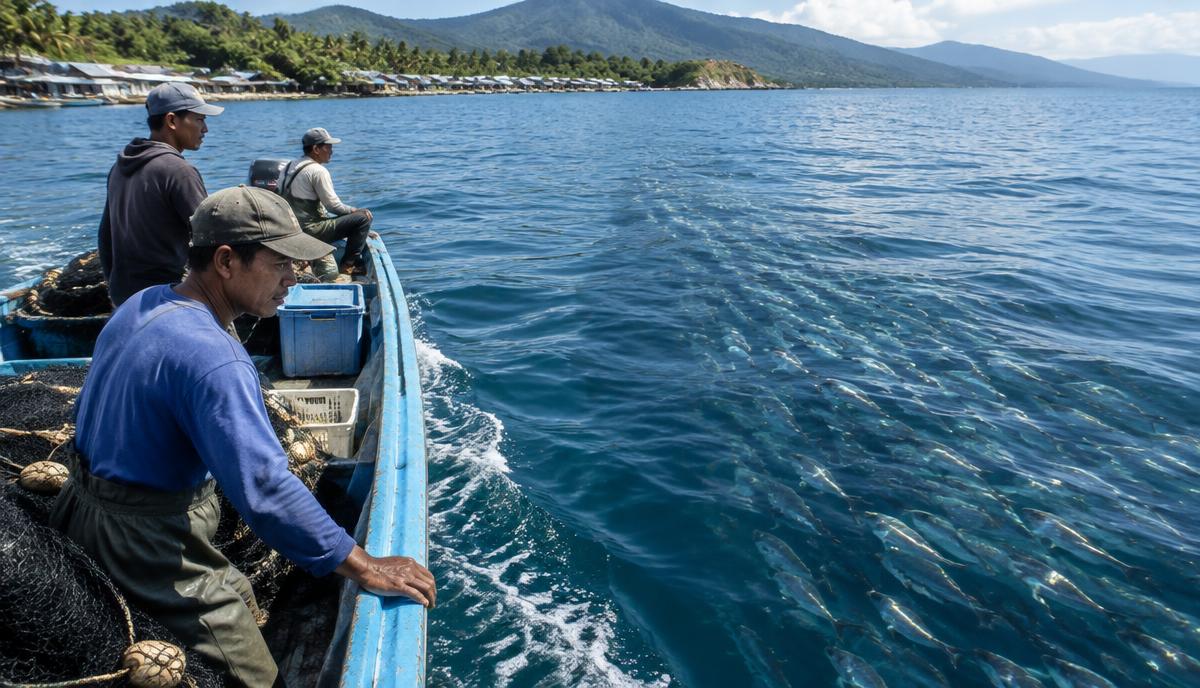
Fish stocks are moving poleward and into deeper water as the oceans warm, while the countries that depend most on fish protein are often the least able to follow them. This piece argues that maritime boundaries, fisheries agreements and aquaculture investment have not caught up with moving fish.
Rice Paddies and the Other Greenhouse Gas Problem
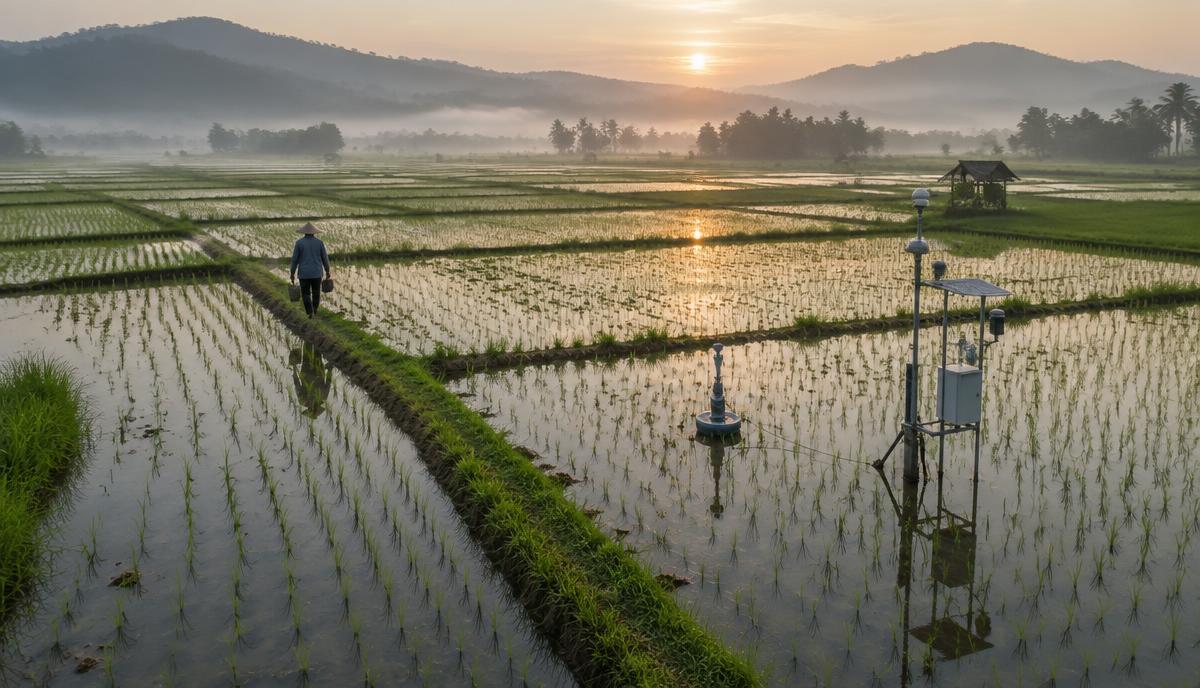
Flooded rice is a major source of human methane, and alternate wetting and drying or direct seeding can cut it while saving water. This piece uses the first payouts at Punjab Agricultural University to show why a known fix still struggles to scale, and what verification, contracts and policy would move adoption across South and Southeast Asia.