The Quiet Rise of Food Systems Diplomacy
India's 2023 rice export ban was framed as domestic politics, but it registered abroad as an act of statecraft
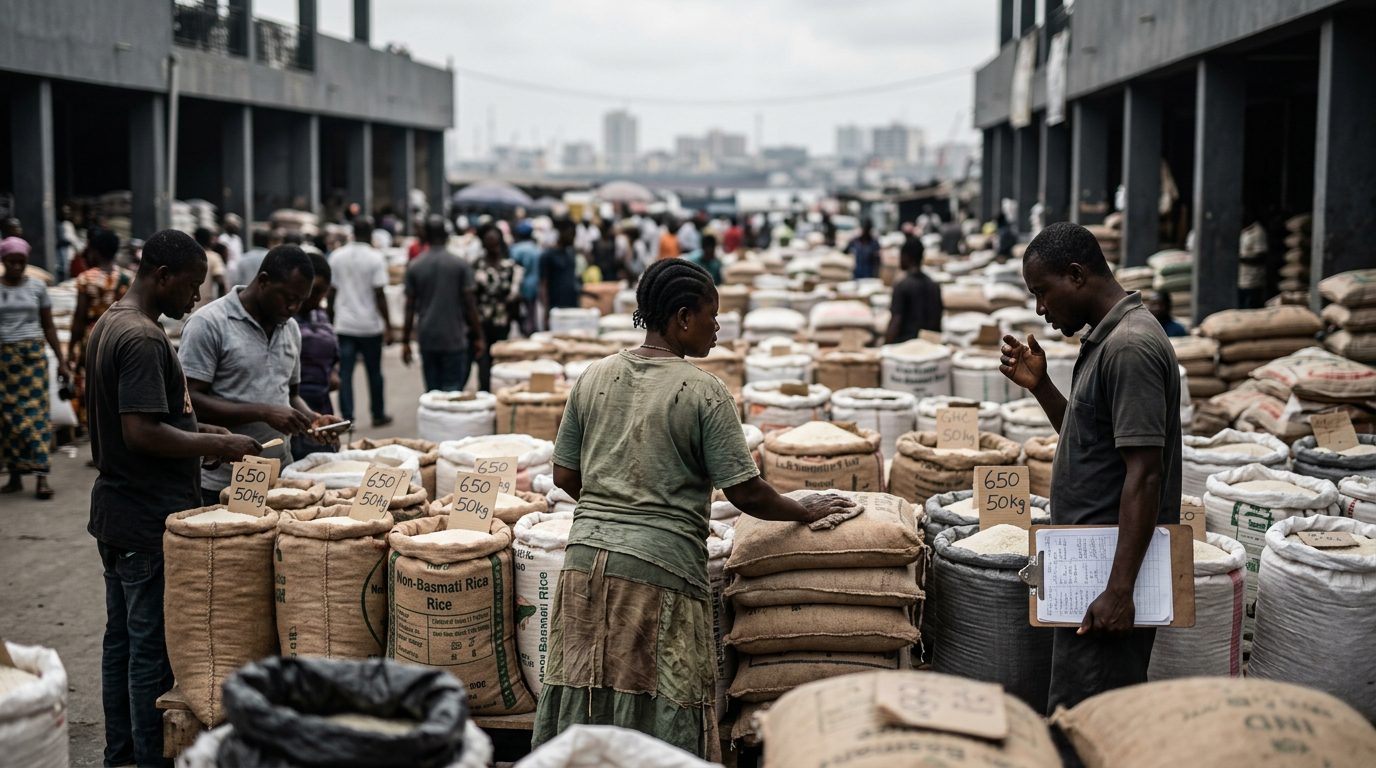
When India's government moved in July 2023 to ban exports of non-basmati white rice, the decision was framed at home as a hedge against food inflation ahead of state elections. Outside India, it registered as something closer to an act of statecraft. Within weeks the Thai white rice benchmark, the reference price for roughly ninety importing countries, jumped and held near $615 per metric ton, about 20 percent above pre-restriction levels, according to the International Food Policy Research Institute. Sub-Saharan African consumers, who buy more than half of India's rice exports in a normal year, absorbed an estimated $3.8 billion in additional costs before New Delhi began unwinding the restrictions in late 2024. India's export volumes fell from 21.3 million metric tons to 14.3 million metric tons in a single year. New Delhi did not design the ban primarily as leverage over foreign governments, but the effect, and the growing awareness of that effect, is reshaping how capitals think about agriculture.
That shift, from food as a commodity to food as an instrument of national power, is the connective tissue running under a string of headlines that otherwise look unrelated: export bans across South and Southeast Asia, farmland purchases across the Horn of Africa and Central Asia, the collapse of a wartime grain corridor in the Black Sea, and a decade of Chinese agribusiness investment along the Belt and Road. Each looks, on its own, like trade policy, private investment, wartime logistics, or development aid. Taken together, they describe a foreign policy domain that governments now treat as distinct from both agriculture and humanitarianism, one where controlling the movement of calories is handled with the same deliberateness once reserved for oil and currency.
The Rice That Moved a Continent's Prices
India's rice restrictions unfolded in stages: duties on unhusked and non-basmati white rice starting in September 2022, an outright ban on non-basmati white rice in July 2023, and a minimum export price on basmati varieties the following month. The government's stated rationale was purely domestic, protecting consumers from inflation. But the restrictions arrived at a moment when Russia had just abandoned the Black Sea Grain Initiative, and the compounding effect on global grain markets was immediate and geographically uneven. The Philippines, Nigeria, Senegal, and Ivory Coast, all heavily reliant on Indian supply, had to scramble for Thai and Vietnamese alternatives at inflated prices. What the episode demonstrated, more than any policy paper could, is how exposed dozens of import-dependent governments are to the domestic political calendar of a single exporting state. USDA's Foreign Agricultural Service tracked rice export prices hitting their highest level in more than a decade during the restriction period, a reminder that a decision made for a state election in Uttar Pradesh can determine what a household in Dakar pays for its staple grain.
Alfalfa Diplomacy and the Water Governments Don't Have
Saudi Arabia, the United Arab Emirates, and Qatar face a structural problem no amount of oil wealth solves directly: they have almost no arable land and vanishingly little fresh water. Since the 2008 food price crisis exposed how quickly grain-exporting nations restrict shipments when their own populations feel the pinch, Gulf governments have pursued food security by acquiring the land and water of other countries outright. Researcher Christian Henderson has documented that Gulf states acquired more than 2 million hectares of farmland abroad between 2000 and 2022, with Saudi Arabia, the UAE, Qatar, and Kuwait together controlling roughly 500,000 hectares in Sudan alone. Saudi Star farms 14,000 hectares in Ethiopia's Gambela region. Emirati firm Al Dahra operates across Morocco, Romania, Serbia, and Spain. Saudi dairy giant Almarai's subsidiary Fondomonte grows water-intensive alfalfa in Arizona, a deal that has become politically toxic in a drought-stricken American Southwest precisely because it makes visible what these arrangements really are: the export of water embedded in crops, from wherever water still exists to wherever it doesn't. Henderson calls this pattern "ecologically unequal exchange," in which the ecological cost of food is paid by the growing state while the food itself, and often the profit, flows to the Gulf.
What distinguishes the current wave from earlier waves of foreign farmland investment is its integration with state strategy rather than private opportunism. Sovereign wealth funds and state-linked firms, including Abu Dhabi's ADQ and Saudi Arabia's Public Investment Fund, now structure these deals alongside port and logistics investments from companies like DP World and AD Ports, giving Gulf states leverage not just over farmland but over the trade corridors that move African agricultural output to market. Analysts at ORF Middle East describe an active competition between Riyadh and Abu Dhabi for influence across African agricultural supply chains, a rivalry playing out in land deals as much as in embassies.
The Corridor Russia Was Never Going to Keep Open
The Black Sea Grain Initiative, brokered by the United Nations and Turkey in July 2022, let Ukraine export roughly 33 million metric tons of grain over its year of operation despite the ongoing invasion. Ukraine's pre-war exports had accounted for a third of sub-Saharan Africa's wheat imports, and when Russia withdrew from the deal in July 2023, the effects rippled outward fast. IFPRI researchers Joseph Glauber and Rob Vos found that global wheat exports to sub-Saharan Africa fell 7 percent, or 1.4 million metric tons, in the year that followed, with Ukraine's own shipments to the region collapsing 55 percent. West Africa absorbed 70 percent of that total decline. World Food Programme deliveries to Ethiopia, Kenya, Sudan, and Somalia were put directly at risk.
What made Russia's withdrawal an act of diplomacy rather than mere wartime logistics was what came next. Moscow simultaneously offered free grain shipments to Burkina Faso, Zimbabwe, Somalia, Mali, Eritrea, and the Central African Republic, framing itself as a reliable partner to non-aligned governments even as it choked off the broader export corridor that had been feeding the same continent. Punishing the trade architecture the West depended on while rewarding individual governments willing to stay neutral on the war is as explicit a use of food as leverage as exists in this story. Ukraine has since clawed back export volumes by hugging Romanian and Bulgarian territorial waters, protected implicitly by NATO coastlines rather than by any restored agreement with Moscow, which is itself a small illustration of how thoroughly the grain trade has become entangled with military geography.
Beijing's Slower, Longer Game
China's approach looks less dramatic than a wartime blockade but is arguably more durable. Since the Belt and Road Initiative launched in 2013, Beijing has committed more than a trillion dollars across roughly ninety countries, with GRAIN.org estimating $43 billion of that flowing specifically into foreign agricultural production over the past decade. The China-Pakistan Economic Corridor includes fertilizer plants and Sinochem's hybrid wheat pilot farms. In Kazakhstan, the Silk Road Fund has earmarked $2 billion for agriculture, with COFCO and CITIC Construction building tomato-paste and livestock operations. In Africa, Chinese state-linked firms have built agro-industrial parks in Mozambique, Uganda, and Zambia, and a special economic zone in Senegal designed as a springboard for wider regional expansion.
The structural difference from the Gulf model is financing. China pairs agricultural investment with infrastructure, ports, and rail, financed through state banks like the China Development Bank and the Asian Infrastructure Investment Bank, creating long-term debt and supply-chain relationships rather than discrete land purchases. And unlike the postwar architecture of American and European food aid, built around the World Food Programme and public accountability requirements, Chinese food assistance tends to arrive bundled into bilateral loans or Belt and Road project financing, with far less transparency about terms and a closer link to Beijing's diplomatic asks, whether on UN votes, resource access, or Taiwan's international standing.
Why the Same Bag of Grain Reads Differently Depending on the Flag on It
The postwar Western model treated food aid as a humanitarian good administered through multilateral channels, even when it doubled as Cold War influence-buying. That model is now retreating at the exact moment its competitors are expanding. The Council on Foreign Relations' Diana Roy reports that US humanitarian aid funding fell more than 70 percent in 2025, with only $5.4 billion allocated for international humanitarian assistance in 2026, a 16 percent cut from the prior year. IFPRI Director General Johan Swinnen and CFR fellow Michael Werz have both pointed to the resulting vacuum as the reason China's bilateral, infrastructure-linked model and the Gulf's ownership-based model are gaining relative weight even without matching Western aid volumes dollar for dollar.
Meanwhile the line between structural leverage and outright starvation as a weapon of war keeps blurring. Sudan's civil war has featured deliberate blockades of aid convoys into famine-threatened el-Fasher. Washington vetoed six UN Security Council resolutions on aid access to Gaza between 2023 and 2025. Russia vetoed the renewal of cross-border humanitarian aid into Syria in 2023. The UN Security Council adopted Resolution 2417 unanimously in 2018, explicitly prohibiting the use of starvation as a method of warfare, yet it carries no enforcement mechanism, and more than 295 million people experienced acute hunger in 2024 regardless.
The New Desks in Foreign Ministries
What ties India's rice policy to Gulf farmland deals to Chinese agribusiness financing to Black Sea naval politics is not scarcity. The world still produces enough calories to feed everyone in it. What has changed is the institutional recognition, inside foreign ministries, national security councils, and sovereign wealth funds alike, that food flows can be managed as deliberately as energy or semiconductors: export bans functioning as sanctions-lite instruments, farmland deals functioning as forward strategic basing, food aid functioning as alignment currency, and shipping corridors functioning as chokepoints to be opened or closed on command.
The countries left most exposed are the ones that treated food security as someone else's problem to solve through market access alone. Bangladesh, Nigeria, the Philippines, and Egypt do not control the harvests, wars, or elections that increasingly decide what appears on their citizens' plates, and no amount of domestic agricultural investment fully insulates them from decisions made in New Delhi, Riyadh, Moscow, or Beijing. Food security has stopped being an adjunct to agricultural policy or a category of humanitarian response. It has become its own arena of statecraft, with its own instruments and its own logic, and the governments still treating it as a subset of trade policy are the ones most likely to be caught without leverage the next time it matters.
Sources: International Food Policy Research Institute, "India's export restrictions on rice continue to disrupt global markets, supplies, and prices"; International Food Policy Research Institute, "India lifts export restrictions on rice"; International Food Policy Research Institute, "End of the Black Sea Grain Initiative: Implications for sub-Saharan Africa"; USDA Foreign Agricultural Service, "Rice Export Prices Highest in More Than a Decade as India Restricts Trade"; MERIP, "Extractive Agribusinesses: Guaranteeing Food Security in the Gulf"; ORF Middle East, "UAE and Saudi Arabia's agricultural diplomacy in Africa: Competition, cooperation and its strategic implications"; GRAIN.org, "The Belt and Road Initiative: Chinese agribusiness going global"; Council on Foreign Relations, "The World Agreed to Stop Using Food as a Weapon. It Hasn't."; Foreign Affairs, "Food Weaponization Makes a Deadly Comeback"; Council on Foreign Relations, "Food Security as National Security"
The Food Observatory Brief
Weekly briefing on food systems, climate, agriculture and policy — straight to your inbox.
More on Policy
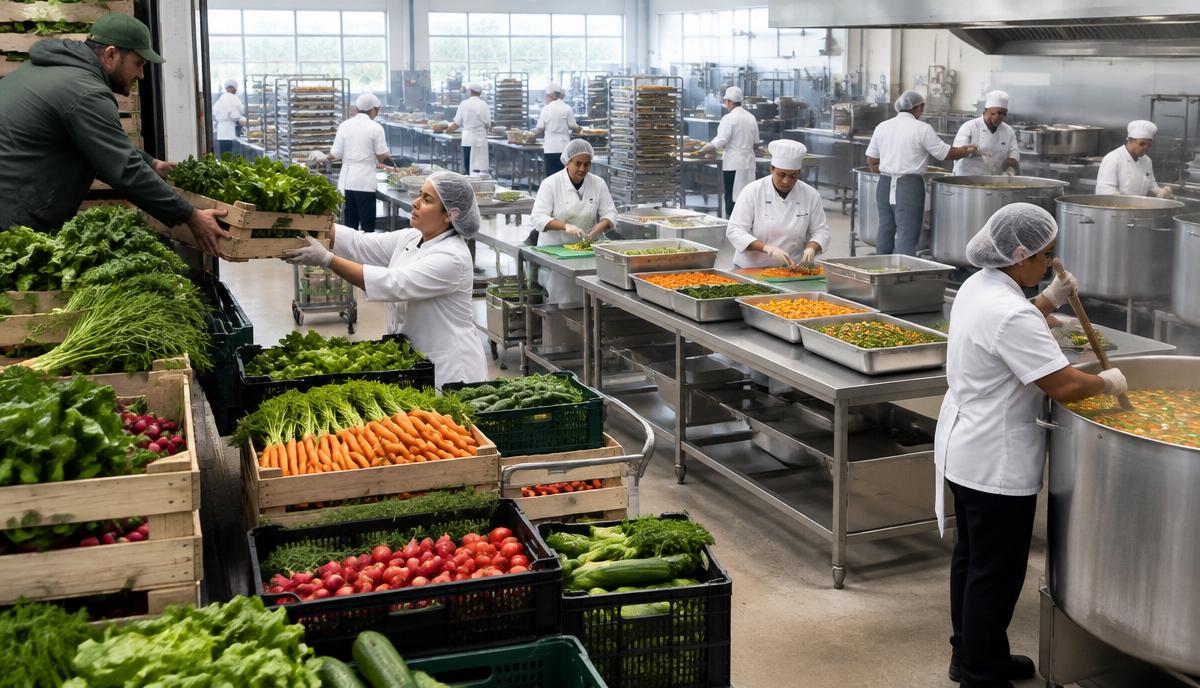
Governments Buy Billions of Meals a Year. Is That Food Policy?
Public procurement is a food policy lever most governments already hold and rarely use deliberately for health, local farmers or climate. This piece looks at Brazil, Copenhagen, US city programmes and India's public distribution system, and at the tender rules that decide what actually gets bought.
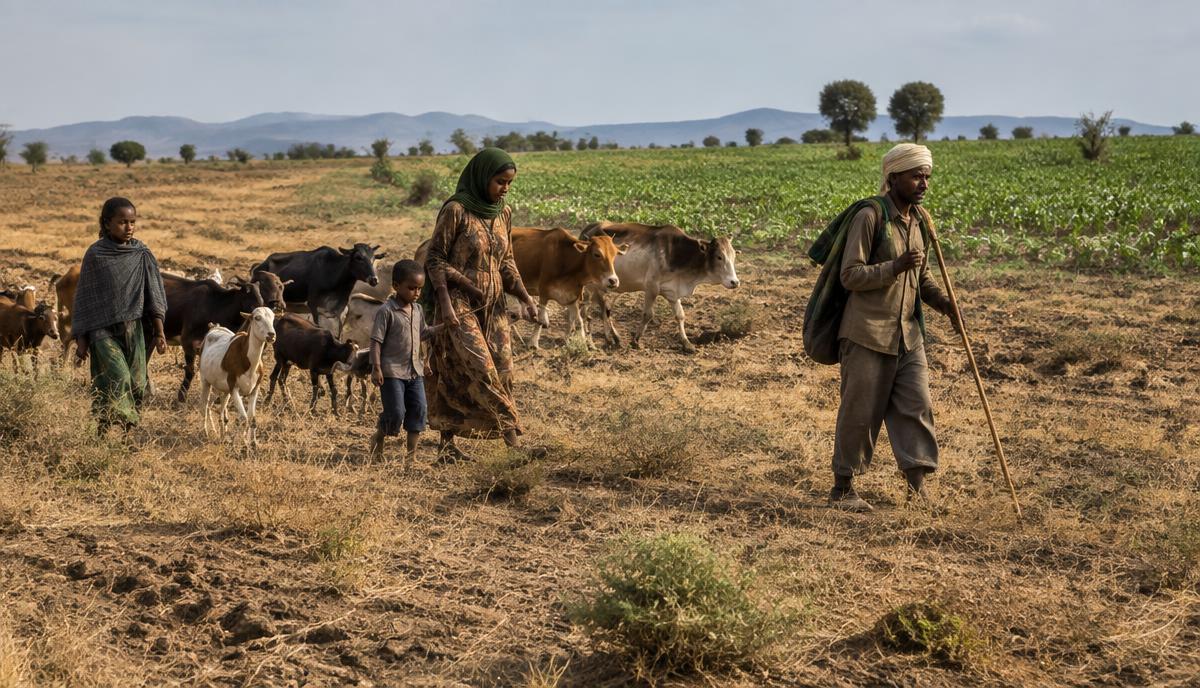
Desertification Is a Food Security Story
Land degradation affects up to 40 percent of the planet's land and drives yield loss, migration and conflict. This piece reads the outcomes of UNCCD COP17 in Ulaanbaatar as food policy, looks at where restoration pledges outrun finance, and argues that restoring land is the cheapest food security investment available.
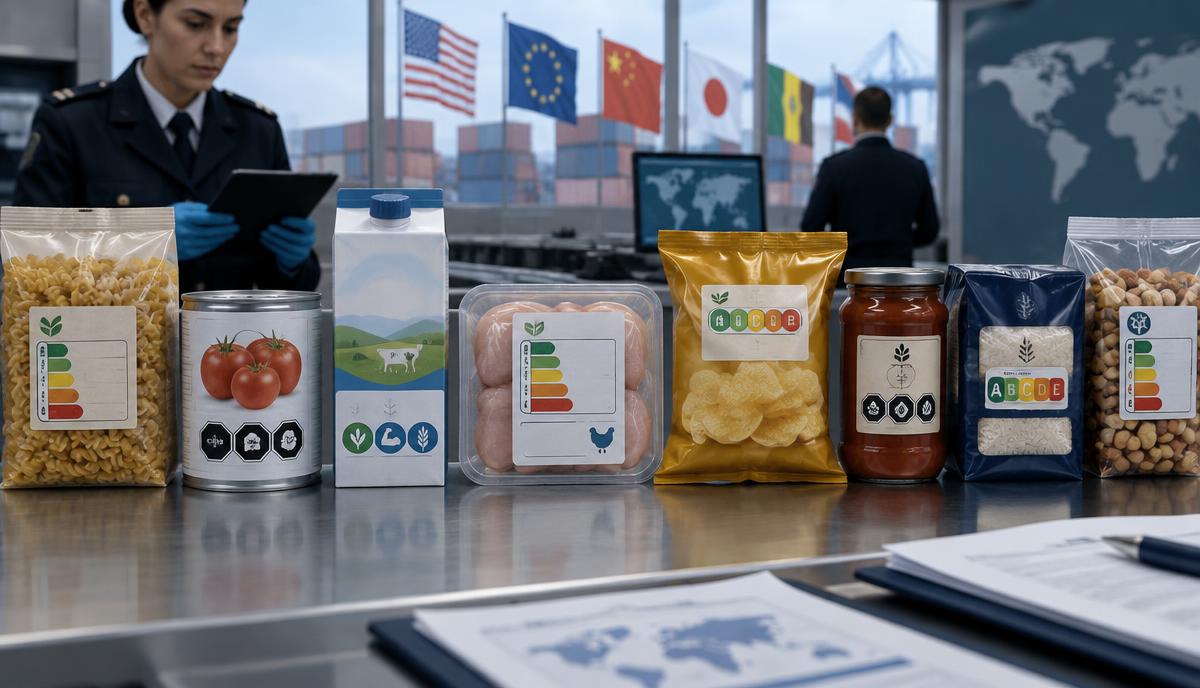
Front-of-Pack Labels Are Becoming a Trade Fight
Warning labels, traffic lights and Nutri-Score are spreading, and food exporters now challenge them in trade bodies. This piece argues that the label is the visible edge of a larger fight over whose evidence and whose interests decide diets, with a look at India's court-driven debate.