Why Agricultural Subsidies May Be the Biggest Climate Policy Nobody Talks About
Governments hand out up to 800 billion dollars a year to farmers and agribusiness, almost none of it designed with climate in mind
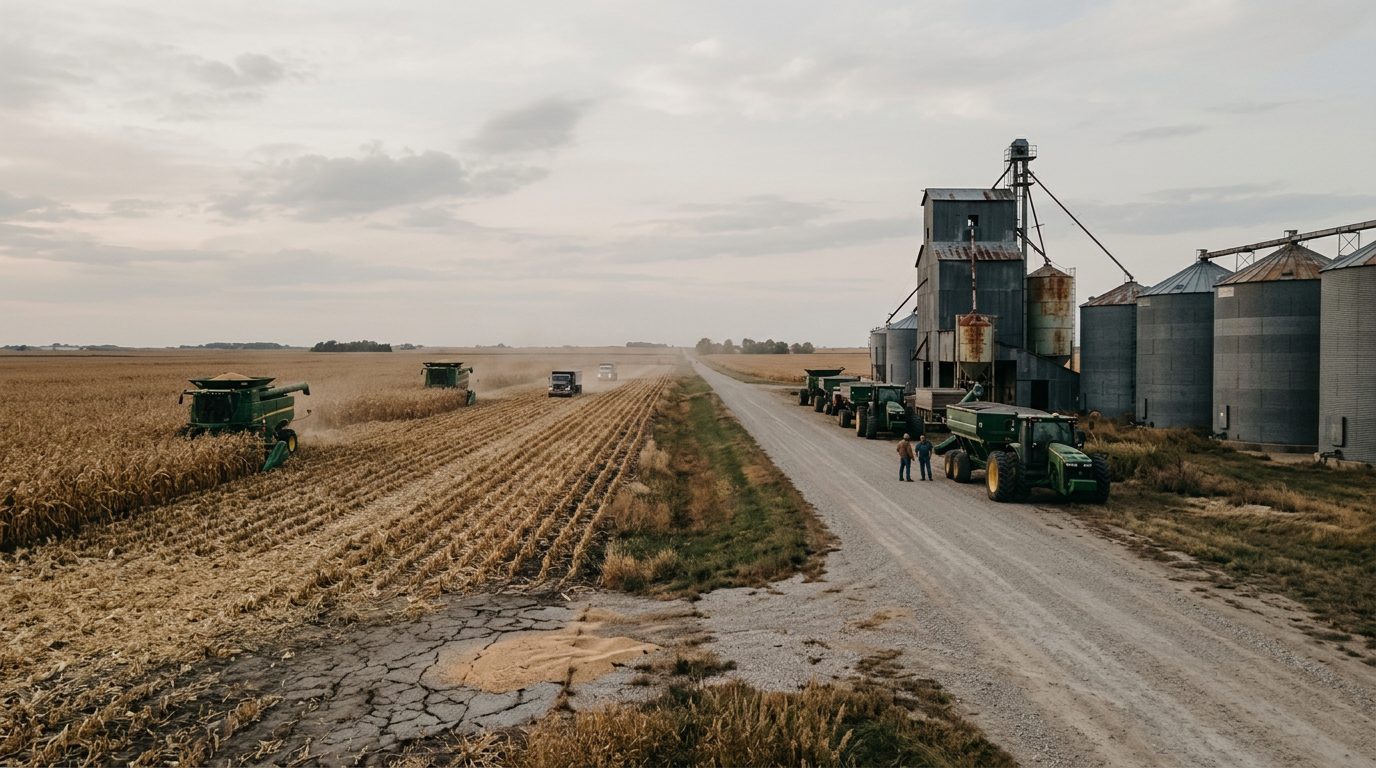
Every year, governments hand out somewhere between $500 billion and $800 billion to farmers and agribusiness, a sum that dwarfs the annual budget of most national climate programs and rivals the total value of global fossil fuel subsidies. Almost none of that money was designed with climate in mind. It was designed to keep commodity prices low, to protect politically important rural voting blocs, and to preserve a system of staple crop and livestock production that took shape in the mid twentieth century, long before anyone in a finance ministry thought about greenhouse gases. The result, according to a joint 2021 analysis by the Food and Agriculture Organization, the United Nations Development Programme and the UN Environment Programme titled "A Multi-Billion-Dollar Opportunity," is that roughly 87 percent of the $470 billion in direct farm support they measured actively distorts prices and harms the environment, human health, or both. Reworked and updated in subsequent years, that finding has become one of the most consequential and least discussed numbers in climate policy.
The Half-Trillion-Dollar Blind Spot
Climate coverage tends to fixate on power plants, electric vehicles and carbon markets, and for good reason those sectors matter enormously. But food systems, according to FAO estimates, generate around a third of global greenhouse gas emissions once land use change, fertilizer production, methane from livestock and transport are counted together. Despite that scale, agricultural subsidy reform draws a fraction of the attention paid to phasing out coal plants or subsidizing heat pumps. The OECD's Agricultural Policy Monitoring and Evaluation reports, which track support across more than fifty countries representing the bulk of global farm output, have repeatedly found that the majority of that support is still coupled to output or to specific inputs rather than to environmental performance, meaning farmers are effectively paid more the more they produce and the more inputs they use, regardless of the ecological cost. The OECD's own recommendation, restated in its 2024 and 2025 editions, is to redirect that support toward innovation and productivity gains that do not require expanding emissions-intensive output. Governments have heard this advice for years. Very little of the money has actually moved.
Subsidizing the Diesel and the Herd
The mechanics of the distortion are not abstract. Fuel tax exemptions for tractors and irrigation pumps lower the cost of diesel for farmers in dozens of countries, which removes any price signal to conserve fuel or shift to electrified equipment. Fertilizer subsidies, especially the urea subsidy that has long defined Indian and Indonesian agricultural policy, encourage overapplication because the price to the farmer bears little relation to the environmental cost of the nitrous oxide that excess nitrogen releases into the atmosphere, a gas roughly three hundred times more potent than carbon dioxide over a century. Livestock support functions the same way in reverse: price floors, feed subsidies and export credits for beef and dairy make meat and milk cheaper to produce than an unsubsidized market would allow, which sustains a global cattle herd whose enteric methane emissions are a leading driver of near term warming. None of these programs were built as climate policy, which is precisely the point. They were built to maximize output, and output maximization in a fossil fuel and land intensive food system is almost definitionally emissions maximization.
The Corn and Soybean Gravity Well
Nowhere is this clearer than in the United States, where the farm bill, a piece of legislation renewed roughly every five years, channels tens of billions of dollars annually into crop insurance premium subsidies that are disproportionately claimed by corn and soybean growers in the Midwest. Because insurance is priced far below its actuarial cost, according to analysis from groups including the National Sustainable Agriculture Coalition, farmers face little financial incentive to diversify into rotations or perennial crops that would sequester more carbon and require less synthetic fertilizer. STAT News, reporting in late 2024, argued that this architecture locks in a system oriented around a handful of commodity crops that feed livestock, biofuel refineries and ultra-processed food manufacturing rather than a more varied and lower emissions food supply. The 2024 farm bill process stalled repeatedly in Congress, and by late 2025 the Trump administration was issuing multibillion dollar ad hoc payments, including a $12 billion "farmer bridge payment" program announced in December, on top of existing subsidy structures, further entrenching the commodity crop model rather than reforming it.
Brussels Writes the Checks, Nature Pays the Bill
The European Union offers the starkest illustration of how hard reform is even where the political will exists on paper. The Common Agricultural Policy, roughly a third of the entire EU budget, has for decades tied a large share of payments to the amount of land farmed rather than to environmental outcomes, a structure critics have long argued rewards scale and intensity over stewardship. Carbon Brief's analysis of successive CAP reforms has found that even the "green architecture" introduced in recent cycles, with its eco-schemes and conditionality requirements, has done little to bend the sector's emissions trajectory, in part because member states retain wide discretion over how strictly to enforce environmental conditions. The CAP reform proposed for the post 2027 budget period has drawn sharper criticism still. The Parliament Magazine reported in 2025 that the plan would cut the agricultural budget, shift more decision making back to national capitals, and weaken environmental ambition further, a trajectory that runs directly counter to what climate scientists say the sector needs.
A Bigger Lever Than It Looks
Put the numbers side by side and the scale becomes hard to ignore. The United States' signature climate law, the Inflation Reduction Act, authorized on the order of $370 billion in clean energy incentives over a full decade. Global agricultural subsidies exceed that sum in a single year, and by the World Bank's broader accounting, which folds in agriculture alongside fossil fuel and fisheries subsidies, the distorting total reaches into the trillions. A June 2023 World Bank report made the case bluntly: redirecting even a portion of that spending toward practices like reduced tillage, agroforestry, precision fertilizer use and diversified cropping would represent one of the cheapest tons of avoided carbon available anywhere in the global economy, because the money is already being spent. This is not a case for new taxes or new appropriations. It is a case for spending the same dollars differently, which is what makes the potential impact per dollar of political effort so unusually high compared with policies that require raising fresh revenue or building infrastructure from scratch.
Every Farmer Protest Is a Warning Shot
If the economics are this favorable, why has almost nothing changed. Part of the answer is that agricultural subsidies are a textbook case of concentrated benefits and diffuse costs. A relatively small number of large producers and agribusiness interests receive the bulk of the money and organize fiercely to defend it, while the costs, in emissions, biodiversity loss and taxpayer expense, are spread thinly across billions of people who rarely trace those costs back to farm policy. When reform is attempted clumsily, the backlash can be severe and instructive. The Dutch government's push to cut nitrogen pollution from livestock triggered mass tractor blockades that reshaped national politics and spawned a new farmers' party. French farmers shut down highways around Paris in early 2024 over environmental rules and falling incomes. Sri Lanka's abrupt 2021 ban on synthetic fertilizer imports, imposed with little transition support, collapsed rice and tea yields and became a global cautionary tale, one that opponents of reform anywhere now invoke reflexively. These episodes are not arguments against repurposing subsidies. They are arguments for doing it gradually, with income support decoupled from production and real investment in the agronomic transition, rather than abrupt withdrawal.
The Bureaucracies Built to Never Change
The deeper obstacle is institutional. The CAP and the US farm bill are not simply funding lines, they are administrative ecosystems, with career civil servants, insurance companies, commodity boards and congressional committees whose staffing and influence depend on the programs continuing largely as they are. Reform proposals get negotiated inside these structures, which gives entrenched interests an early and often decisive seat at the table. OECD Secretary General Mathias Cormann has repeatedly urged member governments to redirect support toward research, extension services and environmental payments, and the advice has been echoed publicly for years, yet the share of coupled, production linked support has fallen only modestly across the countries the OECD tracks. Bureaucratic inertia is not a footnote to this story, it is close to the whole story.
What Repurposing Actually Looks Like
None of this means reform is impossible, only that it has to be built around the same political economy that has blocked it so far. Countries that have successfully shifted farm payments toward conservation, such as targeted eco scheme expansions in parts of the EU and results based payment pilots in the United States, tend to share a common feature: they preserve farm income while changing what income is paid for. That is the template repurposing has to follow at scale, replacing payments for volume and inputs with payments for practices that store carbon, cut methane and reduce fertilizer overuse, phased in on a timeline farmers can plan around rather than imposed overnight. The FAO, UNDP and UNEP report was explicit that this is not a call to cut support to farmers, it is a call to stop paying them to make the climate crisis worse. Until governments treat agricultural subsidy reform with the urgency they apply to power sector and transport policy, one of the largest and cheapest climate levers in the world will keep sitting in plain sight, fully funded and pointed in the wrong direction.
Sources: FAO, UNDP, UNEP, "A Multi-Billion-Dollar Opportunity: Repurposing Agricultural Support to Transform Food Systems"; UNEP, "UN report calls for repurposing of USD 470 billion of agricultural support that distorts prices, environment and social goals"; World Bank, "Trillions Wasted on Subsidies Could Help Address Climate Change" (press release, June 2023); World Bank, "Repurposing Harmful Subsidies for Better Climate Outcomes" (COP29 factsheet, November 2024); OECD, "Agricultural Policy Monitoring and Evaluation 2025"; OECD, "OECD advises countries to redirect public subsidies and other support for agriculture to innovation" (press release, 2024); Carbon Brief, "Q&A: Will EU Common Agricultural Policy reforms help tackle climate change?"; The Parliament Magazine, "EU CAP reform 2025: Cuts, renationalisation and weaker environmental ambition spark criticism"; STAT News, "Agricultural subsidies are killing Americans and fueling the climate crisis" (October 2024); Nature Communications, "Agricultural subsidies and global greenhouse gas emissions"
The Food Observatory Brief
Weekly briefing on food systems, climate, agriculture and policy — straight to your inbox.
More on Policy
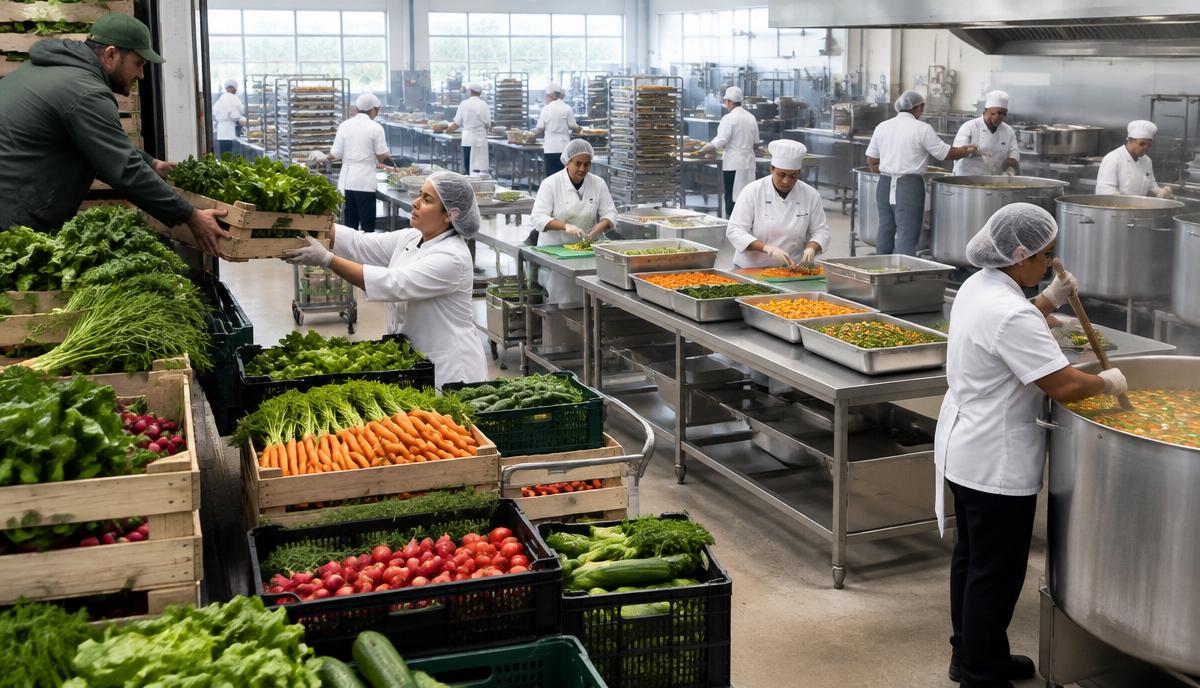
Governments Buy Billions of Meals a Year. Is That Food Policy?
Public procurement is a food policy lever most governments already hold and rarely use deliberately for health, local farmers or climate. This piece looks at Brazil, Copenhagen, US city programmes and India's public distribution system, and at the tender rules that decide what actually gets bought.
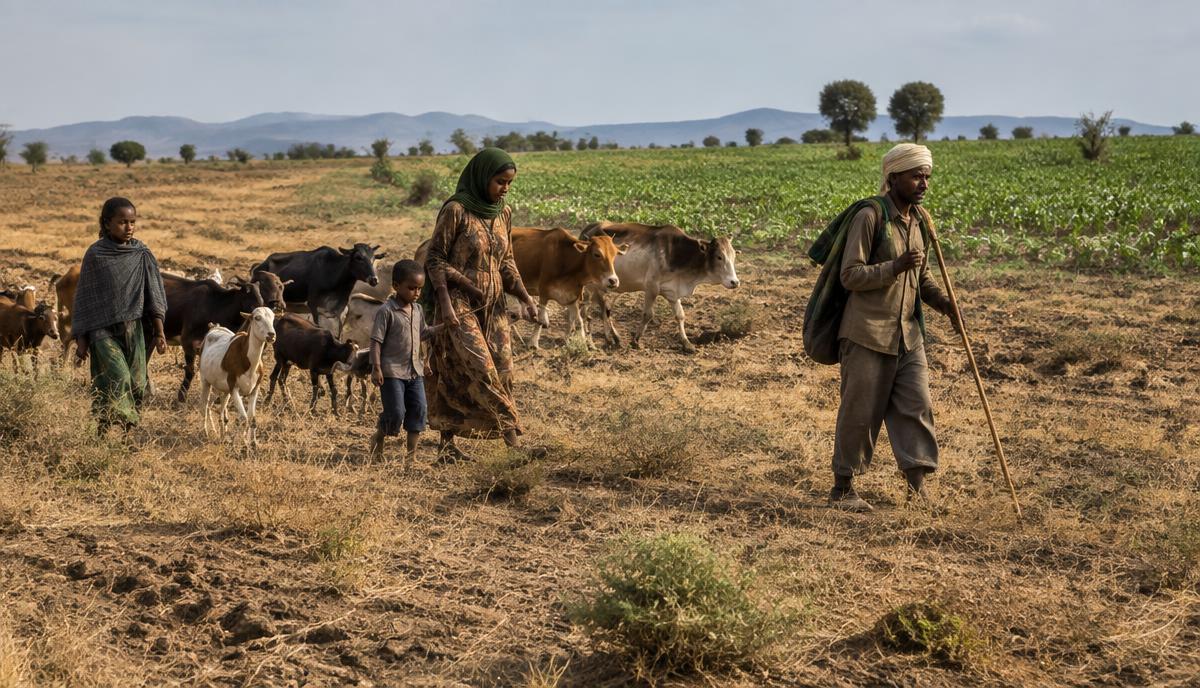
Desertification Is a Food Security Story
Land degradation affects up to 40 percent of the planet's land and drives yield loss, migration and conflict. This piece reads the outcomes of UNCCD COP17 in Ulaanbaatar as food policy, looks at where restoration pledges outrun finance, and argues that restoring land is the cheapest food security investment available.
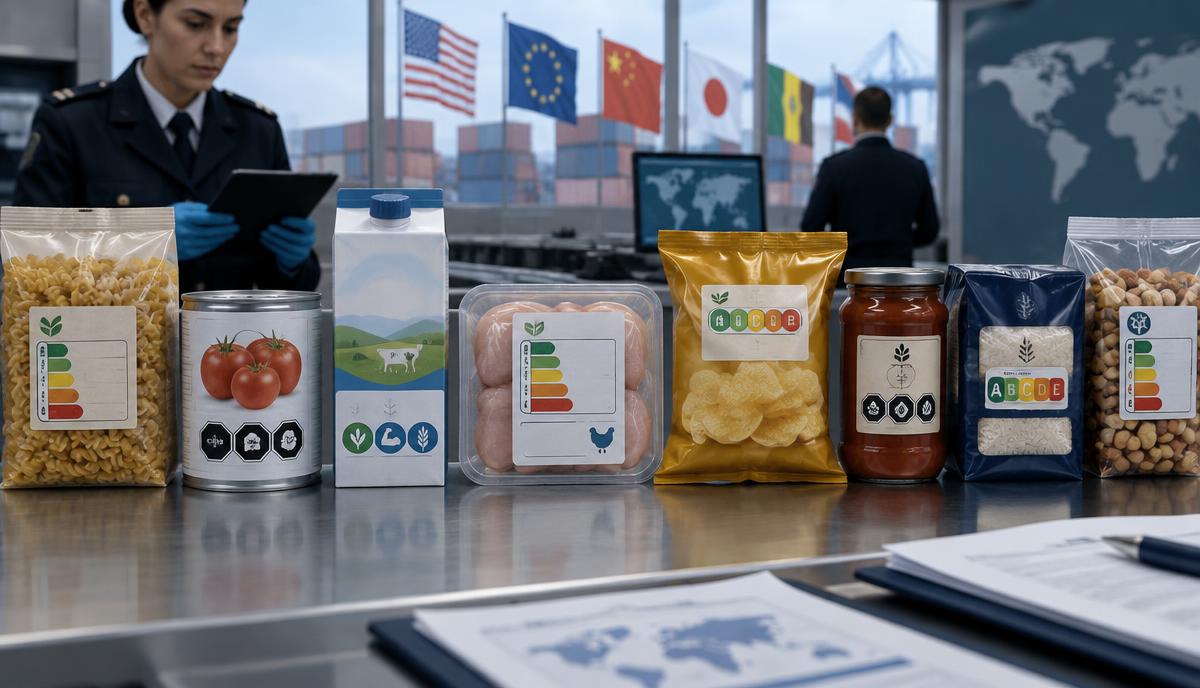
Front-of-Pack Labels Are Becoming a Trade Fight
Warning labels, traffic lights and Nutri-Score are spreading, and food exporters now challenge them in trade bodies. This piece argues that the label is the visible edge of a larger fight over whose evidence and whose interests decide diets, with a look at India's court-driven debate.