Why Biodiversity Is Food Infrastructure
A single fungus spreading through soil at a few meters a year is on pace to end the commercial banana as the world knows it
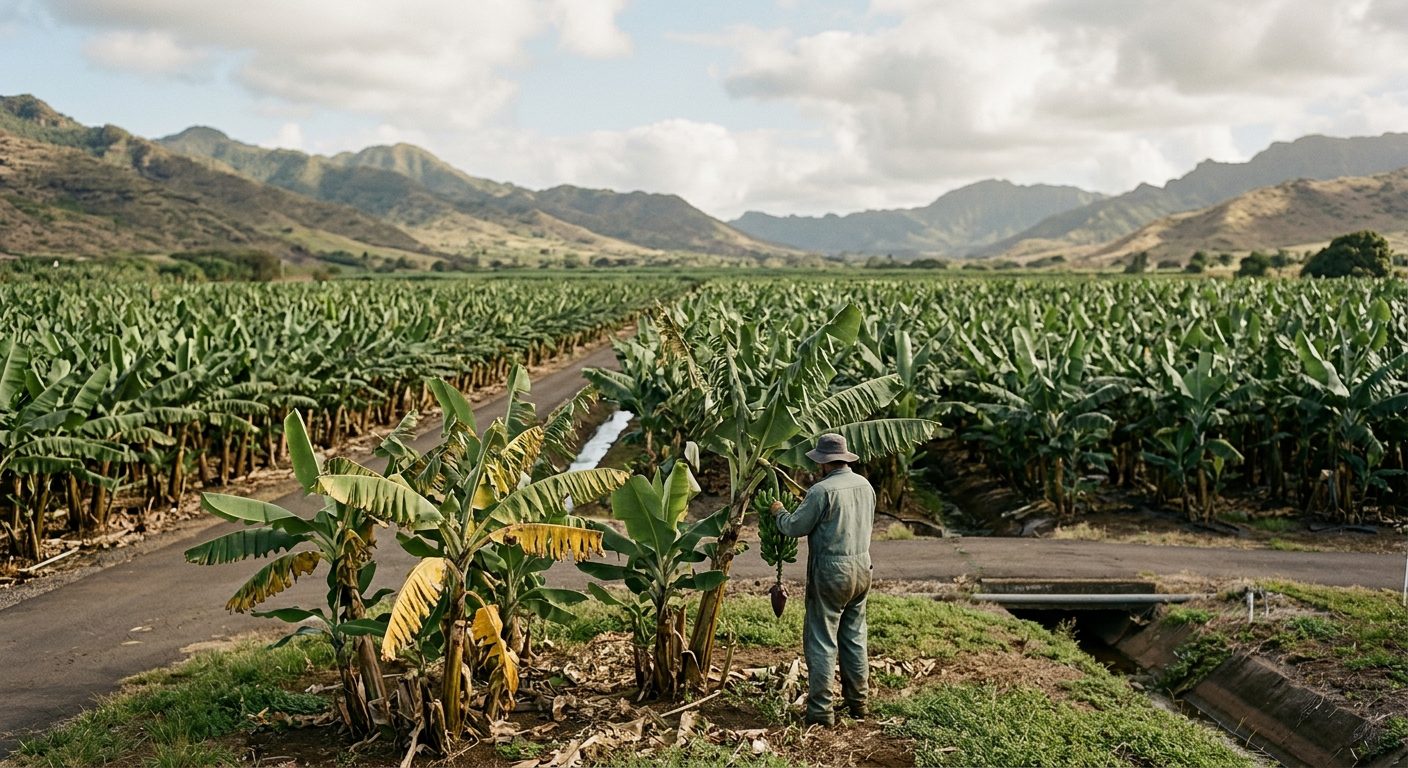
A single fungus, moving through soil at a few meters a year, is on pace to end the commercial banana as the world knows it. Tropical Race 4, the strain of Panama disease now confirmed on every continent where bananas are grown commercially, kills Cavendish plants by clogging their vascular tissue until they starve from the inside. No fungicide reaches it once it is in the ground, and the spores survive in soil for decades. This one pathogen can threaten a fruit eaten by billions not by bad luck but by design: nearly every export banana on earth is a genetically identical clone, propagated by cuttings because the fruit is sterile. Remove the genetic variation that would let some plants resist the fungus and you are left with a monoculture as brittle as a bridge built from a single untested batch of steel. That is the least abstract way to understand what biodiversity does in a food system. It is not scenery. It is the redundancy that keeps the system standing.
Economists talk about infrastructure as the stuff that has to work quietly, all the time, for everything else to function: the grid, the water mains, the roads. Biodiversity plays that role in agriculture, at every link in the chain, from the microbes in a teaspoon of soil to the wild grasses at the edge of a wheat field. When any one of those links degrades, the failure doesn't stay contained. It shows up as fertilizer bills, pesticide dependency, and, eventually, outright crop loss. Treating biodiversity as an environmental add-on rather than a structural input is why these failures keep arriving as surprises.
The soil underneath a harvest is a living machine, and it is running down
A gram of healthy farm soil can hold billions of bacteria and thousands of fungal species, and that community does the work fertilizer only supplements: fixing nitrogen, cycling phosphorus, breaking down organic matter into forms roots can use, and building the structure that lets water infiltrate instead of running off. Soil-microbiome research in journals like Frontiers in Microbiology has converged on an uncomfortable finding: intensive monocropping, heavy fertilizer use, and repeated pesticide application simplify this community, favoring fast-growing organisms over the diverse consortia that make soil resilient to drought and disease, a decline the FAO's Global Soil Partnership warns undermines agricultural productivity itself. The result is a treadmill: as the living component of soil thins out, farmers compensate with more synthetic nitrogen and phosphorus, which further suppresses the microbial diversity that would have done that work for free, and which shows up over years as nitrogen runoff degrading water downstream. Soil is not a passive medium fertilizer sits in. It is infrastructure with a maintenance requirement, and that requirement is diversity.
Plant breeders are quietly mining wild relatives because cultivated genomes ran dry
Modern crop varieties are extraordinarily productive and extraordinarily narrow. A century of breeding for yield, uniformity, and shelf life has repeatedly bred out the genetic variation that would let a crop fend off a new pathogen or tolerate an unfamiliar drought. When that resistance is needed, breeders go looking for it in crop wild relatives, the uncultivated cousins of domesticated crops that still carry genetic diversity agriculture left behind. The Crop Trust's decade-long Crop Wild Relatives project, run with the Millennium Seed Bank at Kew, sent more than a hundred scientists across 25 countries to collect nearly 5,000 seed samples from over 320 wild relative species tied to 28 major food crops, depositing more than 14,000 CWR-derived breeding lines in genebanks that have already produced new varieties of rice, durum wheat, potato, and alfalfa now in farmers' fields. This is how breeding routinely restocks traits domestication depletes: disease resistance for rusts and blights, drought tolerance for regions seeing shifting rainfall, heat tolerance for crops bred in a cooler climate than the one they now face. The trouble is that the reservoir is shrinking on roughly the same timeline breeders need it. A widely cited climate-modeling study found that as much as 22 percent of wild relatives of staple crops including peanut, potato, and bean could disappear by 2055 as their native habitats change faster than the plants can migrate. Losing a wild relative before it is collected is the genetic equivalent of a research library burning down before anyone has read the books.
When natural enemies disappear, chemistry has to do their job at a markup
Every field that isn't sprayed into a biological dead zone has an unpaid workforce of spiders, parasitic wasps, ground beetles, and birds eating the insects that would otherwise eat the crop. A 2024 meta-analysis in Proceedings of the Royal Society B, drawing on a large global dataset of field experiments across crop types and climates, found that natural predators reliably suppress pest populations and increase yields, consistently enough that the authors describe predator conservation as a viable complement to chemical control, not a boutique alternative to it. A diverse community of predators and parasitoids simply covers more pest species, at more life stages, in more conditions, than any single control method can. Strip that diversity out through habitat loss, broad-spectrum insecticides that kill beneficial insects along with the target pest, or the reduction of field margins to bare ground, and the pests it used to hold in check rebound faster than the crop can be protected another way. Farmers respond by spraying more, which further suppresses the predator community and raises the odds of another rebound, a self-reinforcing spiral entomologists describe as free biological control being replaced, acre by acre, with a purchased and increasingly expensive substitute. Pest control by natural enemies is not an aesthetic preference for fewer chemicals. It is a service with real, calculable value, and the invoice for losing it goes straight to input costs.
Pollinators are a supply chain with almost no slack left in it
Roughly three-quarters of the world's leading food crops benefit at least partially from animal pollination, and pollinator diversity matters as much as raw abundance, because different crops, bloom times, and weather conditions favor different bee, fly, and moth species. A November 2025 study in Nature Communications, led by agricultural economists at the University of Hohenheim, modeled what a collapse of wild pollinators across Europe would do to the food system, and the numbers were not abstract. European crop yields would fall by roughly 7.8 percent overall, with pollinator-dependent crops dropping more than 15 percent and their producer prices rising nearly 19 percent. The modeled global welfare loss came to about 34 billion euros annually, with vitamin A availability across Europe dropping close to 4 percent, a hit the study's authors tied to 58 million more Europeans facing moderate or severe food insecurity. What makes the pollinator case distinct is how directly it maps onto specific foods on a specific shelf: almonds, apples, blueberries, and squash have no synthetic substitute for a bee visiting a flower at the right moment. Managed honeybee hives can be trucked in to supplement wild pollinators, and increasingly are, but that is a sign of the underlying infrastructure straining, not evidence it doesn't matter: a trucked-in workforce is costlier, more vulnerable to colony collapse, and covers fewer plant species than a diverse wild pollinator community does on its own.
The Cavendish is what happens when uniformity wins every argument except the last one
It's worth returning to the banana, the cleanest illustration of what geneticists call genetic vulnerability: risk that comes from a crop's uniformity rather than from any single external threat. The Cavendish became the world's export banana in the 1950s precisely because it resisted the strain of Panama disease that had wiped out its predecessor, the Gros Michel. The industry's fix at the time was rational: swap in a resistant clone and keep going. What it did not do was diversify the genetic base underneath the new default variety, because the Cavendish's seedlessness, the trait that makes it easy to eat, also makes it sterile and propagated by cuttings, with no natural mechanism for accumulating new resistance genes. Tropical Race 4 evolved to defeat exactly the resistance that made the Cavendish dominant, and because every plantation Cavendish is genetically the same plant, TR4 doesn't have to adapt to different hosts as it spreads. It only has to work once. Queensland University of Technology researcher James Dale's team has built a transgenic variety, QCAV-4, that inserts a resistance gene sourced from a wild Southeast Asian banana relative, Musa acuminata ssp. malaccensis. In field trials on TR4-infected soil in Australia's Northern Territory, the engineered plants have survived more than seven years against a standard Cavendish's roughly eighteen months, a demonstration that the fix for a monoculture's vulnerability came from the wild genetic diversity the monoculture had discarded. Genetic uniformity delivers efficiency until the day it delivers catastrophe, and there is no way to know which day that will be in advance.
Redundancy is the whole point, and it has no line item in a harvest report
None of this is an argument that biodiversity is nice to have alongside a productive food system. It is the argument that biodiversity, at every scale from soil bacteria to wild banana relatives, is the redundancy that keeps a productive food system from being one pathogen, one drought, or one bad season away from failure. Roads and power grids get maintenance budgets because everyone understands what happens when they are neglected. Biodiversity loss in agriculture fails more quietly, showing up first as higher input costs, then as narrower margins for error, and only at the end as the kind of collapse a fungus like TR4 or a pollinator crash represents. The FAO has estimated that some 75 percent of the genetic diversity present in the world's food crops at the start of the twentieth century had been lost by its end, a system drawing down a reserve for a hundred years without replenishing it at the same rate. That reserve does not restock itself on the timeline agriculture needs. Wild crop relatives, soil microbial communities, predator insects, and pollinator populations are the parts of the food system that do the load-bearing work nobody bills for, right up until the day something breaks and everybody pays.
Sources: Food and Agriculture Organization, Global Soil Partnership, "Soil biodiversity and soil fertility"; Crop Trust, "Crop Wild Relatives Project" overview and results; Nature Communications, "The economic, agricultural, and food security repercussions of a wild pollinator collapse in Europe" (2025); Proceedings of the Royal Society B, "Predators control pests and increase yield across crop types and climates: a meta-analysis" (2024); ABC News (Australia), reporting on the QCAV-4 Panama disease-resistant Cavendish banana field trials (2025); Nature Communications, "Transgenic Cavendish bananas with resistance to Fusarium wilt tropical race 4"; Phytopathology, "The Vulnerability of Bananas to Globally Emerging Disease Threats"; FAO Newsroom, "Crop biodiversity: use it or lose it"; Beyond Pesticides, reporting on insect biodiversity decline and agricultural pesticide use
The Food Observatory Brief
Weekly briefing on food systems, climate, agriculture and policy — straight to your inbox.
More on Agriculture
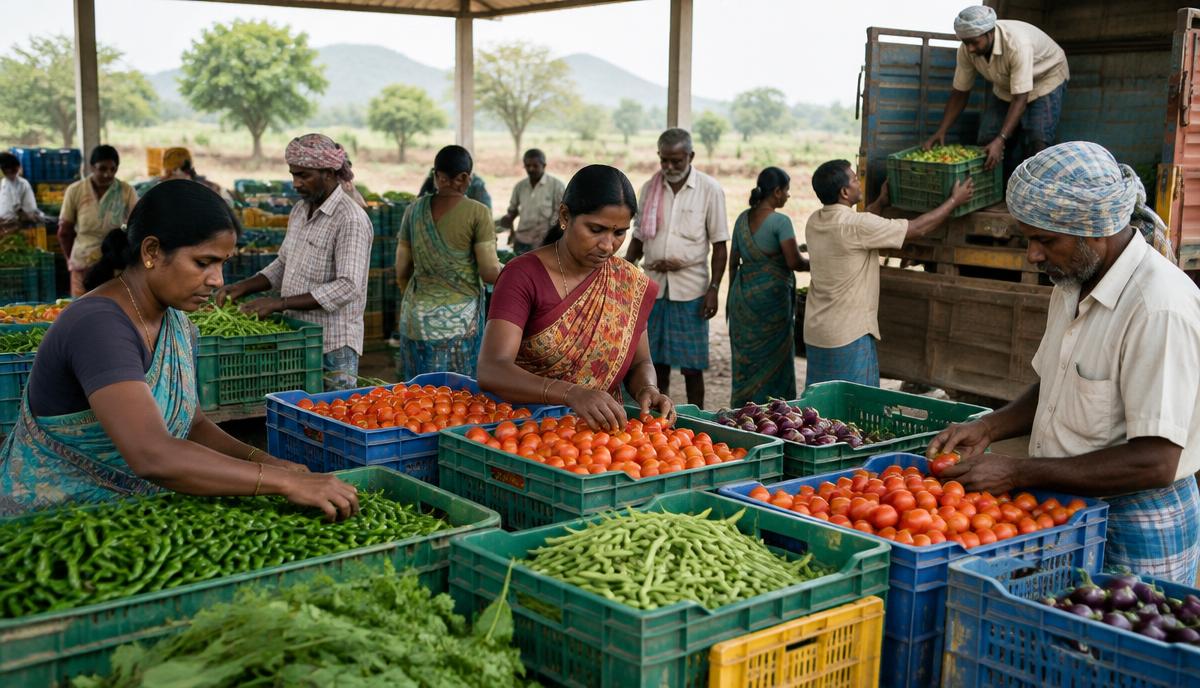
Farmer Producer Organisations and the Case for Collective Scale
Collective structures are the missing link between smallholder fragmentation and market power, yet most farmer producer organisations fail on governance, working capital and market linkage rather than enthusiasm. This piece draws on India's scheme data and examples from Anand, Oromia and Nashik.
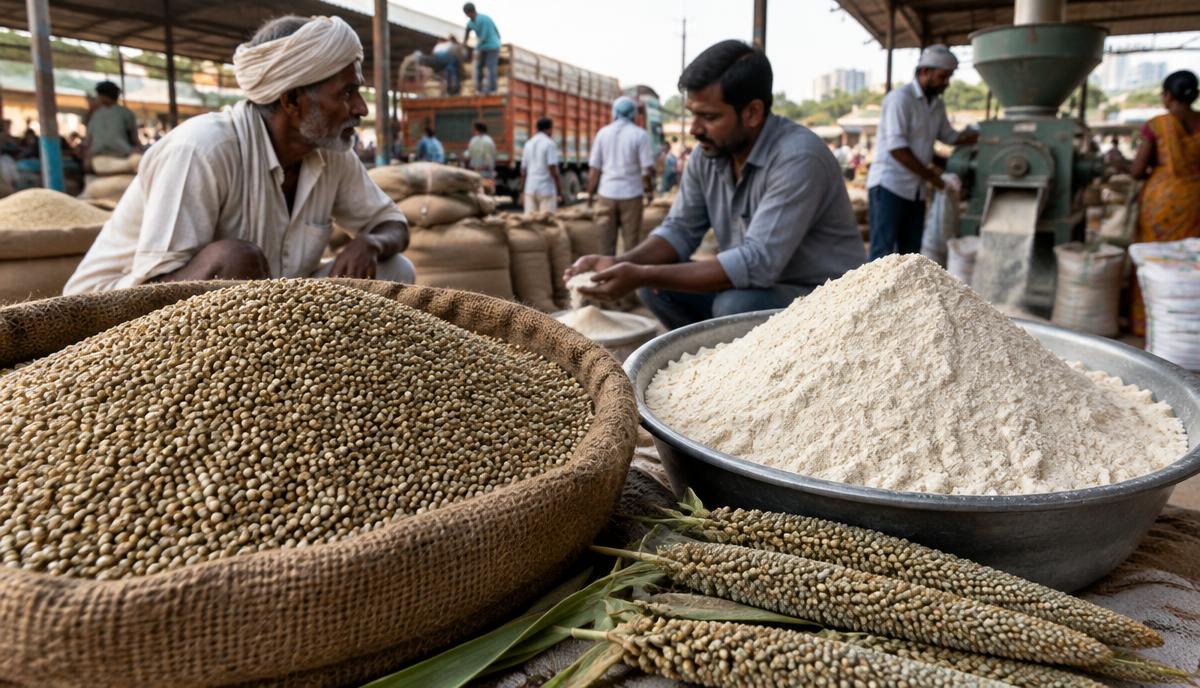
Millets Are Having a Moment. Can the Market Keep Up?
After the 2023 International Year of Millets, demand-side attention has outrun the supply chain behind these crops. This piece looks at yields, processing, shelf life, public procurement and farmer incentives in India and Africa to explain whether the moment lasts.
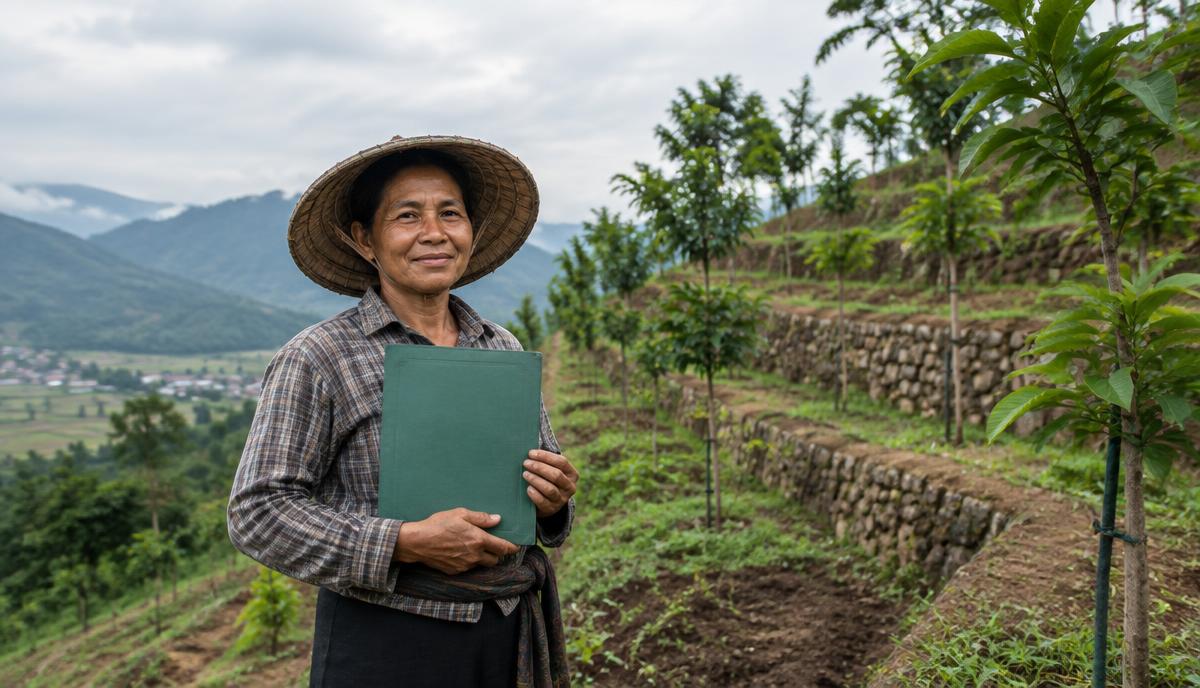
Land Tenure Decides Whether Farmers Invest
Whether a farmer plants trees, builds terraces or takes a loan depends heavily on confidence of holding the land. This piece argues that tenure security is a precondition for the soil and climate agendas that donors promote, and that women, tenants and pastoralists are the most exposed.