Why Food Systems Are the World's Largest Employer
Agrifood systems employ more than a billion people worldwide, more than any other sector, and most of that work is informal and unprotected
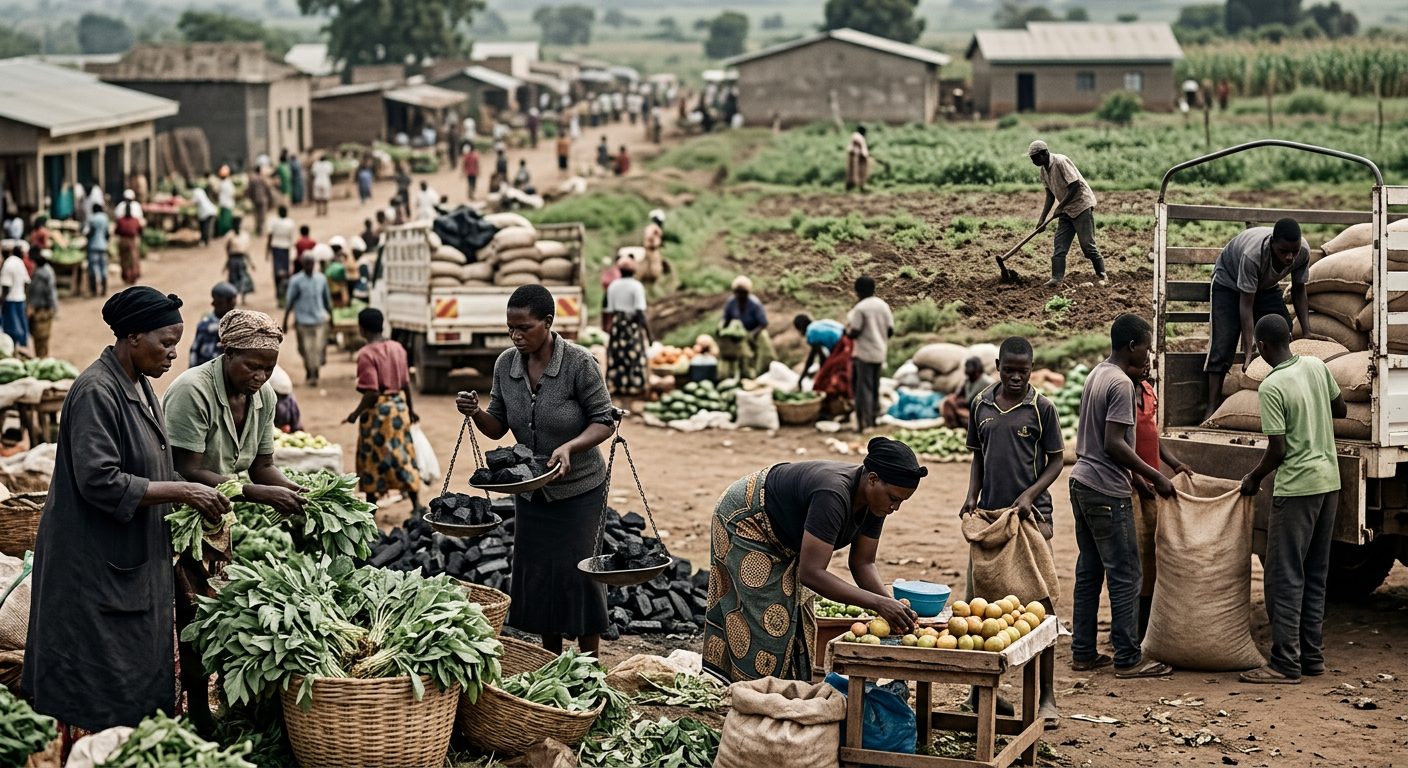
Before dawn in Kisumu, Kenya, a woman arranges tomatoes and dried fish on a wooden table at the edge of a commuter path, work she will repeat until dusk, six or seven days a week, for a living that appears in no labor ministry's payroll records and no pension scheme. She is one of more than a billion people worldwide who grow, harvest, process, transport, cook, or sell the food that ends up on someone else's plate. According to the UN Food and Agriculture Organization, agrifood systems directly employed 1.23 billion people in 2019, the most recent year for which full global estimates exist, making food the single largest source of livelihoods on the planet, ahead of manufacturing, construction, and every other sector tracked by international labor statisticians. Nearly 3.8 billion people, roughly half of humanity, live in households that depend on agrifood systems for some portion of their income.
That scale alone would justify sustained attention from economists and policymakers. What makes the story more urgent is the condition of that workforce. The same data that establishes food's employment dominance also reveals a sector defined by informality, low pay, seasonal insecurity, and a near-total absence of the protections that workers in finance, technology, or even mid-tier manufacturing take for granted. Understanding why food systems employ so many people, and why so few of those jobs come with a floor beneath them, requires looking at the entire chain from field to fork, not just the farm.
The Anatomy of a Billion-Person Workforce
Agrifood employment is not simply farming. FAO's accounting splits the sector into primary production, which employed about 857 million people as of the most recent estimates, and off-farm segments, including processing, packaging, transport, wholesale, retail, and food service, which added roughly 375 million more. Globally, agrifood systems accounted for 39.2 percent of total employment in 2021, a share that has been falling for two decades as economies industrialize and urbanize, down from 52.2 percent in 2000. But the aggregate figure obscures a sharp regional divide. In Africa, agrifood systems still account for nearly two-thirds of all employment, 64.5 percent by FAO's count, while in Europe the figure has fallen to under 15 percent. Asia sits in between, with roughly 830 million agrifood workers representing about 41.5 percent of the continent's employment, and China and India together accounting for close to 60 percent of that Asian total.
The off-farm segment is where the sector's diversity becomes most visible. It includes the workers on an assembly line in a poultry processing plant in Arkansas, the drivers moving produce from Punjab's wholesale markets to Delhi's neighborhoods, the cashiers at a supermarket chain in São Paulo, and the vendor in Kisumu selling tomatoes from a table. A multi-city survey by the African Food Security Urban Network found that 70 percent of households in the cities studied normally bought food from informal traders, with nearly a third shopping there almost daily, evidence that this informal layer is not a marginal curiosity but the backbone of urban food access across much of the Global South.
The Informality Trap That Swallows Most of the Sector
Informal employment, meaning work without a written contract, tax registration, or access to social insurance, is the default condition across most of agrifood systems rather than an exception. The International Labour Organization estimates that roughly 58 percent of workers worldwide hold informal jobs, and agriculture alone accounts for about one-third of all informal employment globally. In low-income countries, agriculture makes up 62 percent of informal jobs, compared with just 9 percent in high-income countries, a gap that tracks closely with where subsistence and smallholder farming remain economically dominant rather than a side activity.
Informality is not incidental to low pay; it is largely why pay stays low. A worker without a contract has no recourse when wages are withheld, no entitlement to a minimum wage floor, and no access to unemployment insurance if a harvest fails or a market shuts down. Seasonal and migrant agricultural laborers face a compounded version of this precarity. Investigations by the Business and Human Rights Resource Centre and reporting from outlets including the Financial Times have documented recurring patterns of wage theft, recruitment debt, and unsafe conditions among migrant workers in meatpacking and fruit-picking operations across North America and Europe, sectors that have become structurally dependent on workers with the least bargaining power precisely because those workers have the fewest alternatives and the least legal standing to object.
What Happened When the Pandemic Tested the System's Weakest Link
COVID-19 offered an unplanned stress test of just how exposed agrifood workers were, and the results were stark. Global agrifood employment fell by 6.8 percent in the pandemic's first year, with Latin America absorbing the steepest shock at an 18.8 percent decline. The damage fell unevenly by gender: FAO data shows that 22 percent of women working in off-farm agrifood roles lost their jobs during that period, compared with just 2 percent of men in equivalent positions. Street vendors, who depend on daily foot traffic and cash transactions, were among the hardest hit as lockdowns emptied commuter routes and market days were suspended by public health orders, a disruption WIEGO researchers documented across dozens of cities where informal trade had no safety net to fall back on. The episode demonstrated something structural rather than incidental: a workforce with no formal employment status also has no formal mechanism for receiving the relief, furlough pay, or unemployment benefits that cushioned job losses in more regulated sectors.
Why Women Carry a Disproportionate Share of Undervalued Work
Gender is not a side issue in agrifood labor; it shapes who does which jobs, who gets paid for them, and who does not. FAO's 2023 report on the status of women in agrifood systems found that 36 percent of working women globally are employed in the sector, compared with 38 percent of men, a rough parity in headline participation that masks deep structural inequality underneath. In sub-Saharan Africa, 66 percent of employed women work in agrifood systems, against 60 percent of men, and in Southern Asia the gap widens sharply, with 71 percent of working women in agrifood roles compared with 47 percent of men. Where women are concentrated, pay and security both decline. Women in agricultural wage employment earn on average 82 cents for every dollar men earn in equivalent work, and a 24 percent productivity gap persists between women and men farming plots of identical size, a gap driven not by skill but by unequal access to land, credit, and extension services. Men hold more secure land tenure rights than women in 40 of the 46 countries FAO tracked. FAO estimates that closing these gaps in farm productivity and wages could add nearly 1 trillion dollars to global GDP and lift 45 million people out of food insecurity, numbers that reframe gender inequity in agrifood systems as a solvable economic drag rather than an unfortunate cultural footnote. Yet a review of agricultural policy documents across 68 countries found that while 75 percent acknowledged women's roles in farming, only 19 percent set specific policy goals to address the inequality.
Rural Youth Are Leaving Faster Than Farming Can Modernize
Young people make up roughly half of the global agrifood workforce, according to FAO research on youth aged 15 to 35, with especially high concentrations in food processing and food service, sectors that offer entry-level jobs but rarely a path to ownership or management. At the same time, rural youth unemployment has become a destabilizing force in regions like the Near East and North Africa, where IFAD has warned that idle, underemployed young populations in agricultural regions are a driver of both migration and instability. The pattern is consistent across much of the developing world: land fragmentation from inheritance, limited access to credit for young farmers without collateral, and the visible gap between rural incomes and urban wages push a generation toward cities or toward emigration altogether, even as the agrifood sector desperately needs new entrants to replace an aging farmer population. The result is a paradox where a sector large enough to employ a billion people cannot convince enough of its own young workers that farming itself is a viable future, pushing many instead into the off-farm links of the same food chain, where processing and retail jobs are more plentiful but no better protected.
Cooperatives, Certification, and the Slow Push Toward Living Incomes
Efforts to formalize and improve agrifood labor conditions have accelerated over the past decade, though unevenly. Living income initiatives, led by organizations including IDH, the Sustainable Trade Initiative, and adopted in various forms by major cocoa and coffee buyers such as Nestlé, aim to close the gap between what smallholder farmers actually earn and what constitutes a decent standard of living in their region, a gap that remains wide in cocoa-growing areas of West Africa despite years of corporate sustainability pledges. Producer cooperatives have proven one of the more durable tools for improving farmer bargaining power, allowing smallholders to pool output, negotiate better prices, and access credit and training that would be unavailable to any single household. The ILO has separately advanced a new international labor standard aimed specifically at transitions out of informality, encouraging governments to extend social protection, minimum wage coverage, and labor inspection into sectors, agriculture chief among them, that have historically sat outside the reach of labor law. WIEGO's advocacy for street vendors has pushed several city governments to formally recognize informal traders and integrate them into urban planning rather than treating them as targets for eviction, an approach researchers argue improves both worker security and food safety simultaneously, since vendors folded into formal municipal systems gain access to clean water, waste removal, and stable selling sites.
The Case for Treating Food Labor as Infrastructure
The throughline across farm, factory, and market stall is that food systems have grown large precisely because they absorb workers that more capital-intensive sectors cannot, and they have stayed underpaid precisely because that absorption has never come with the legal protections that other large employers were eventually forced to accept. Fixing that imbalance is not a matter of charity toward smallholders and vendors; it is a matter of correcting a labor market failure at a scale larger than any other industry on earth. A billion workers keeping the world fed deserve the same floor of pay, safety, and recourse that the labor movements of the twentieth century won for miners, factory workers, and dockhands, and the tools to get there, from cooperative bargaining power to enforceable living income benchmarks to formal recognition of informal vendors, already exist in pilot form across dozens of countries. What remains is the political will to scale them to match the size of the workforce they are meant to serve.
Sources: FAO, "Estimating Global and Country-Level Employment in Agrifood Systems," FAO Statistics Working Paper Series 23/34; FAO, "Almost Half the World's Population Lives in Households Linked to Agrifood Systems."; FAO, "FAO Adds to Data Coverage of Employment in Agrifood Systems."; FAO, "Women's Equality in Agrifood Systems Could Boost the Global Economy by $1 Trillion, Reduce Food Insecurity by 45 Million" (from "The Status of Women in Agrifood Systems," 2023); FAO, "Youth in Agrifood Systems" (FAO Knowledge Repository, 2025); ILOSTAT, "Decent Work Reality Check: Informality Across the World of Work."; International Labour Organization, "Ways Out of Informality: How a New ILO Standard Tackles the Informal Economy Trap."; IFAD, "High Unemployment Rates Among Rural Youth Are Destabilizing the Near East and North Africa Region."; WIEGO, "Feeding Cities: Informal Retailers Play Crucial Role in Urban Food Security."; WIEGO, "For World's Street Vendors, Life May Never Be the Same After COVID-19."; IDH, the Sustainable Trade Initiative, "Roadmap on Living Income."; Business and Human Rights Resource Centre, "Not Just a Number: Tracking Migrant Worker Abuse in Global Supply Chains, 2025 Global Analysis."
The Food Observatory Brief
Weekly briefing on food systems, climate, agriculture and policy — straight to your inbox.
More on Policy
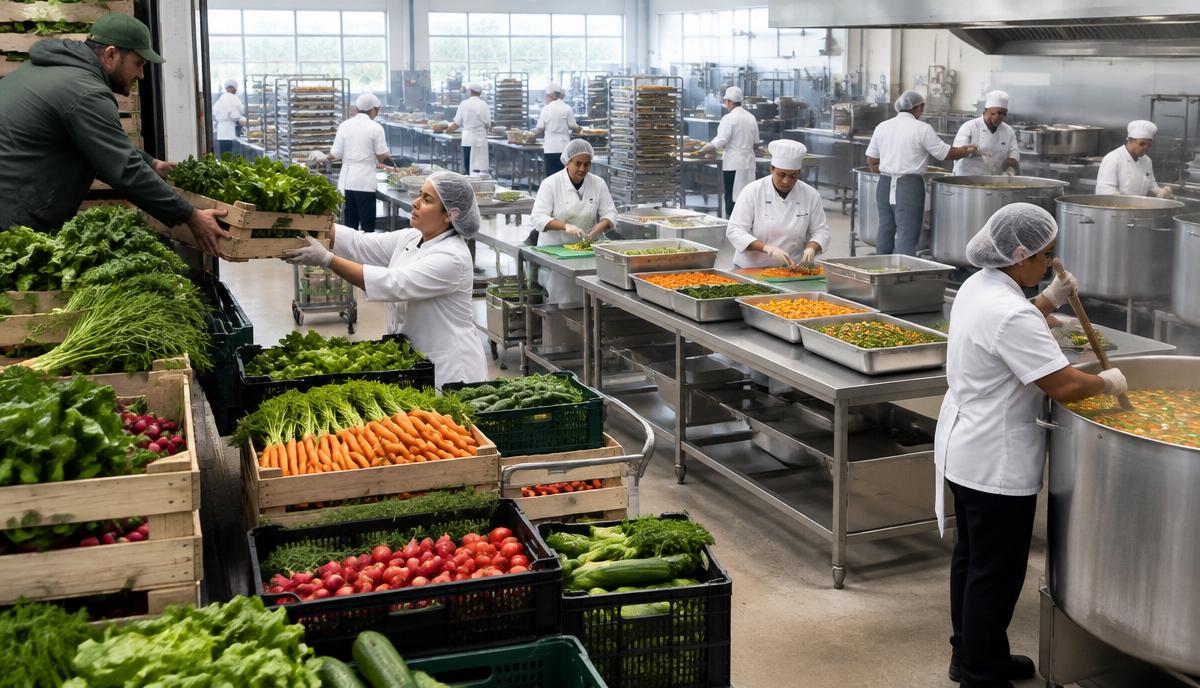
Governments Buy Billions of Meals a Year. Is That Food Policy?
Public procurement is a food policy lever most governments already hold and rarely use deliberately for health, local farmers or climate. This piece looks at Brazil, Copenhagen, US city programmes and India's public distribution system, and at the tender rules that decide what actually gets bought.
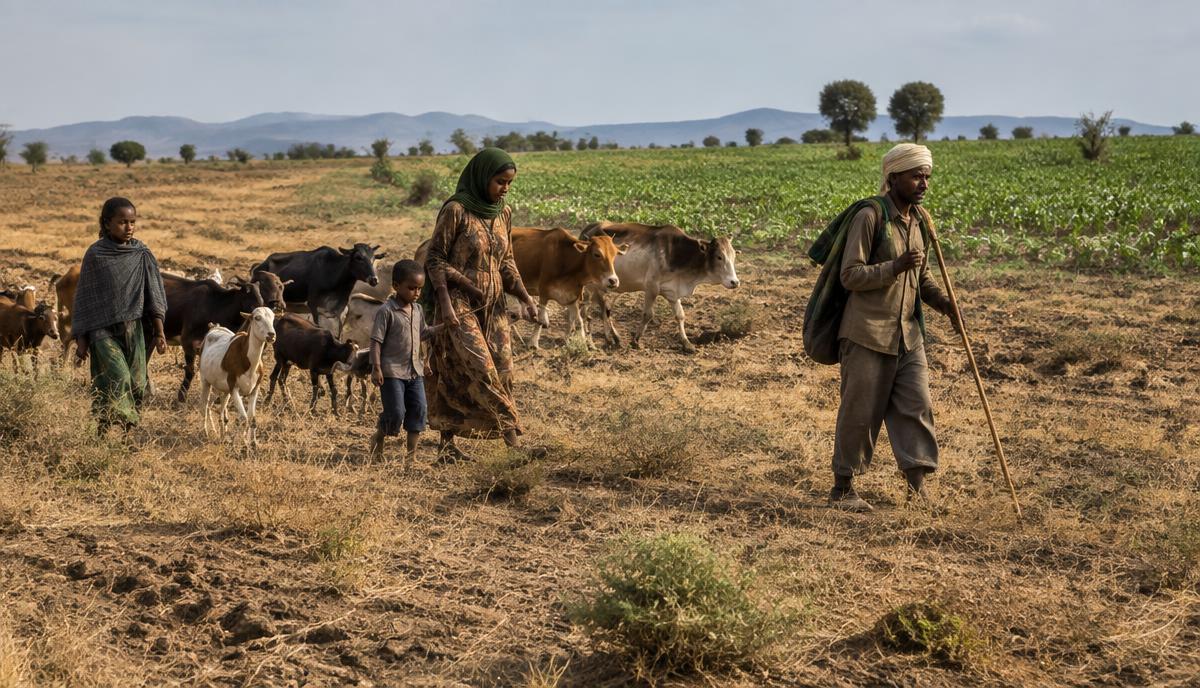
Desertification Is a Food Security Story
Land degradation affects up to 40 percent of the planet's land and drives yield loss, migration and conflict. This piece reads the outcomes of UNCCD COP17 in Ulaanbaatar as food policy, looks at where restoration pledges outrun finance, and argues that restoring land is the cheapest food security investment available.
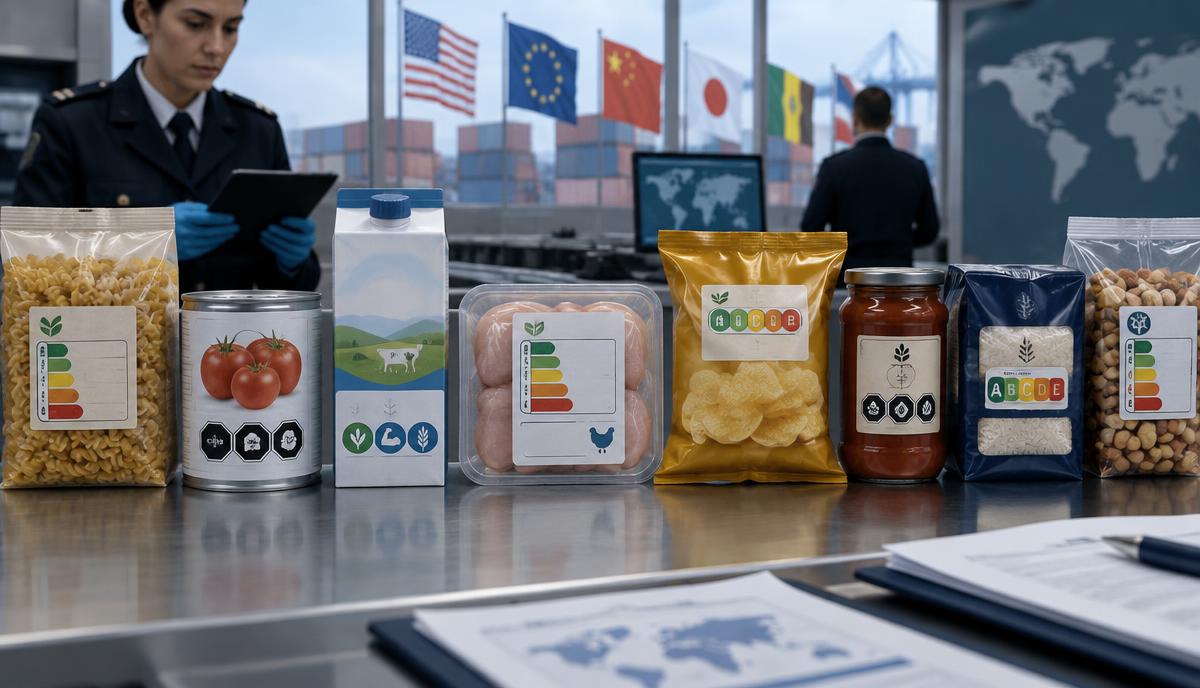
Front-of-Pack Labels Are Becoming a Trade Fight
Warning labels, traffic lights and Nutri-Score are spreading, and food exporters now challenge them in trade bodies. This piece argues that the label is the visible edge of a larger fight over whose evidence and whose interests decide diets, with a look at India's court-driven debate.