Why Heat Is Becoming Agriculture's Most Expensive Input
Heat has quietly become a line-item cost across farming, from pumping water to cooling barns to keeping workers upright
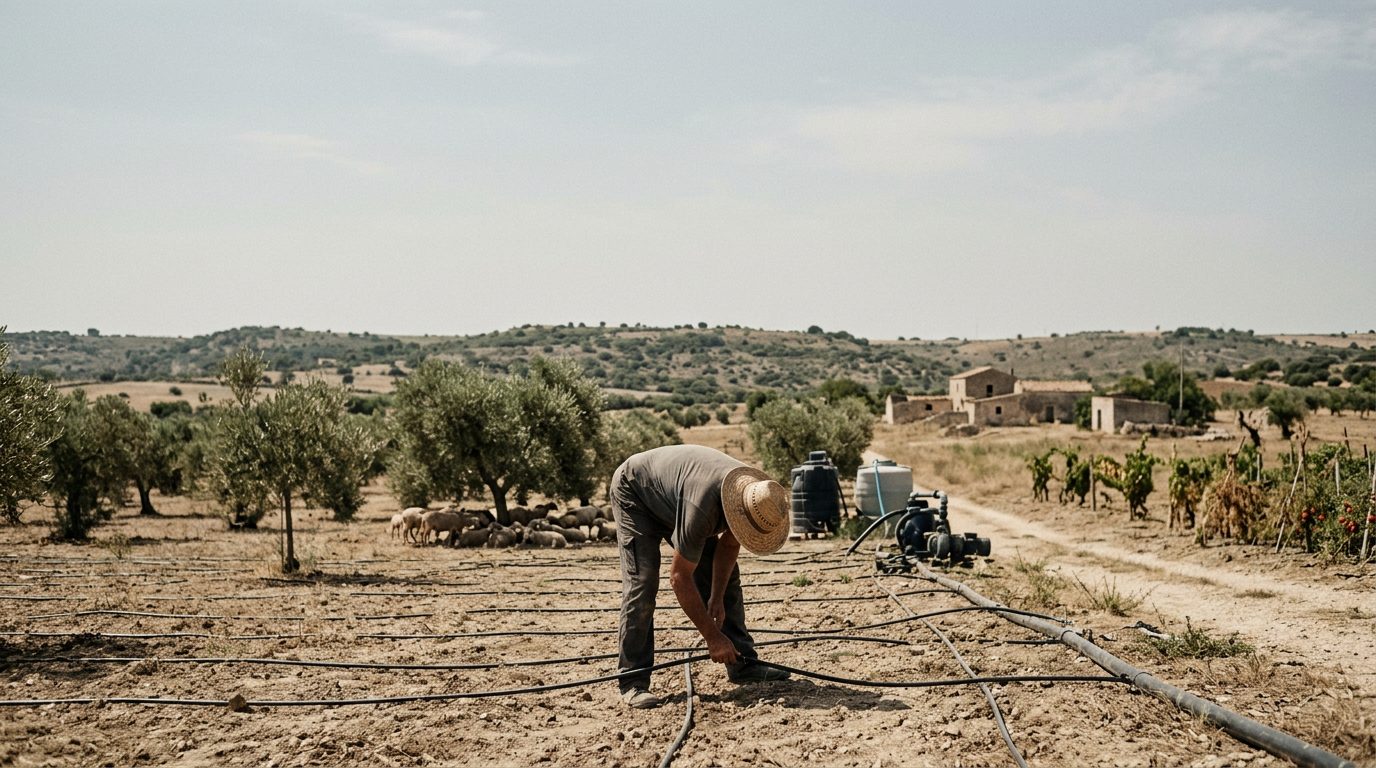
Ask a Punjab wheat farmer, a Wisconsin dairy operator, or a Gujarat construction contractor what has gotten more expensive this decade, and heat rarely makes the list out loud. Diesel, fertilizer, and labor do. But heat is quietly embedding itself in every one of those line items, driving up what farmers pay to pump water, cool barns, replace dead cattle, and simply keep workers upright in the field. It no longer behaves like weather, a background condition that varies year to year. It behaves like an input, a cost that shows up on the balance sheet whether or not anyone budgeted for it.
The scale of that cost is now measurable, and it is large. A joint report from the UN Food and Agriculture Organization and the World Meteorological Organization, published in 2025, estimated that extreme heat cost the global economy roughly half a trillion working hours a year and put the livelihoods of more than a billion people at risk. Separately, the International Labour Organization calculated that heat-related productivity losses could be reduced by roughly $361 billion globally through better workplace protections, implying losses of at least that magnitude go unaddressed today. These are not projections for 2100. They describe conditions farmers are already pricing into decisions this season.
The Thermostat Farmers Can't Turn Down
Every additional degree of heat stress has to be offset by something, and increasingly that something costs money. Irrigation is the most direct example. As soil dries faster and crops demand more water to avoid heat damage, farmers pump more, and pumping is energy. According to fuel-cost breakdowns compiled by agricultural economists at RFD-TV, a diesel-powered rice irrigation system running 24 acre-inches costs about $88 an acre at $3-a-gallon diesel and climbs to roughly $147 an acre at $5 diesel, a 66 percent jump driven by the same volatile energy markets that heat waves strain further through higher electricity demand. Corn growers face a similar swing, from about $39 to $64 an acre. None of that accounts for the extra water heat-stressed crops need beyond a normal season, which pushes total pumping costs higher still. Irrigation used to be a fixed seasonal expense. It is becoming a variable one, indexed to the thermometer.
When the Herd Stops Eating
Livestock economics make the input-cost framing unmistakable because the losses are counted in the same units as any other production expense: pounds of milk, pounds of gain, dollars per head. Research published in the Journal of Dairy Science, later updated by livestock economists at Purdue and summarized through the Livestock and Poultry Environmental Learning Community, put current annual heat-stress losses across US dairy, beef, swine, and poultry sectors combined at between $1.9 billion and $2.7 billion a year. Cattle absorb the largest share, because dairy cows in particular stop eating, stop breeding efficiently, and produce less milk once temperature-humidity conditions cross a threshold. A 2025 analysis of Midwestern dairy operations published through farmdocdaily at the University of Illinois, drawing on 56 million daily cow-level milk records across 18,000 herds and five years, found average annual yield losses near 1 percent herd-wide, rising to an 8.2 percent single-day drop after extreme heat events, and totaling $245 million in lost revenue across the sample. Crucially, the same study found small herds under 100 head lost roughly 50 percent more during extreme heat days than herds over 500 head, because larger operations can afford fans, sprinklers, and shade structures that smaller ones cannot. Heat stress, in other words, does not just cost money. It costs more money if you are already poor.
The Two-Degree Wage Cut
Labor is where heat's cost shows up most directly as lost human output, and the research base here has become unusually precise. The ILO's July 2024 report, "Heat at work: Implications for safety and health," found that 71 percent of the global workforce, 2.4 billion people, is now exposed to excessive heat, up sharply since 2000, with 231 million workers directly hit by heatwaves in 2020 alone, a 66 percent increase over two decades. Agricultural workers bear a disproportionate share because farm labor cannot move indoors. A 2026 World Bank assessment of India, a country where agriculture still employs roughly 45 percent of the workforce, estimated that heat cost the country $194 billion in potential income and 247 billion labor hours in 2024 alone, with agriculture accounting for 66 percent of those lost hours, more than construction and every other sector combined. The World Bank's broader modeling suggests South Asia's GDP could run nearly 7 percent lower by 2050 without serious adaptation investment, a discount rate applied directly to the value of outdoor human effort.
Crops Have a Breaking Point, and It Is Getting Crossed More Often
Unlike labor or livestock, crop losses from heat are not gradual. They tend to be threshold effects: yields hold steady, then fall sharply once temperatures cross a specific ceiling during flowering or grain-fill. The FAO-WMO report puts that ceiling around 30°C for most staple crops, lower for heat-sensitive ones like potatoes and barley, and notes livestock stress itself typically begins above 25°C. The consequences of crossing those thresholds are visible in recent harvests rather than models. Brazil's soybean crop fell 20 percent in the 2023-2024 season when growing-region temperatures ran roughly 7°C above normal. A spring 2025 heatwave in Kyrgyzstan, with temperatures 10°C above average, cut the national cereal harvest by 25 percent and triggered a locust outbreak on top of it. Longer-running research published in PNAS by Zhao and colleagues found that, absent adaptation, each additional degree Celsius of warming reduces global yields of wheat by about 6 percent, maize by 7.4 percent, and rice and soybeans by roughly 3 percent each. Multiply those percentages across global production volumes and the dollar figure dwarfs most single-year fertilizer or fuel price swings that make headlines.
Cold Chains Are Running a Fever Too
Heat's costs do not stop at the farm gate. Once a crop or a batch of milk is harvested, keeping it cold becomes a bigger, more constant energy expense as ambient temperatures rise, because refrigeration units work harder to maintain the same internal temperature against a hotter outside world. Cold storage operators, particularly in regions with unreliable grids, are increasingly citing energy costs as their largest controllable expense, and heat-driven electricity demand spikes, the kind that pushed India's power draw up 15 percent year-over-year in May 2024 alone, raise the risk of the outages that spoil product outright. A grid strained by residential air-conditioning demand during a heatwave is also a grid less able to guarantee uninterrupted power to a rural cold store holding a week's worth of perishable milk or produce. That is a cost with no clean historical baseline to compare against, because the infrastructure itself was not built for the temperatures it now has to withstand.
Small Producers Are Paying a Heat Premium
A pattern recurs across every category of cost: heat does not distribute its damage evenly. Smallholder dairy operations lose proportionally more milk than industrial-scale ones. Outdoor agricultural laborers in South Asia and sub-Saharan Africa, where the FAO-WMO report projects up to 250 unsafe working days a year by century's end, have the least access to shade, cooling breaks, or mechanized alternatives to hand labor. Farmers without capital to invest in drip irrigation or shade netting pay the diesel-pumping premium every season while wealthier operations amortize the cost of efficiency upgrades over years. Heat is, in this sense, a regressive input cost, hitting hardest the producers with the thinnest margins to absorb it.
The Bill Comes Due Whether or Not It's on the Balance Sheet
The evidence assembled by the ILO, the World Bank, and FAO-WMO researchers over the past two years amounts to a simple correction of how agricultural economics has treated heat. It has been filed under weather risk, something insured against or shrugged off as bad luck in a bad year. It behaves instead like fertilizer or diesel: a recurring, forecastable, budgetable cost that scales with how hot a season gets and how well a farm can afford to fight back. The dollar figures already on the table, close to $2.7 billion a year in US livestock losses alone, $194 billion in one year of Indian labor income, hundreds of billions in global productivity foregone, are not warnings about a distant future. They are current-year invoices. The farms and food systems that survive the coming decades will be the ones that start accounting for heat the way they already account for every other rising input, not as an act of nature to endure, but as a cost to manage, price, and, where possible, reduce before it reduces them.
Sources: FAO and WMO, "Extreme Heat and Agriculture," joint report, 2025; International Labour Organization, "Heat at Work: Implications for Safety and Health," July 2024; World Bank, assessment of heat's economic impact on India, reported by Business Standard, 2026; University of Illinois, farmdocdaily, "Extreme Heat Leads to Yield Losses for Midwestern Dairy Producers," March 2025; Journal of Dairy Science / Purdue Extension, "Economic Losses from Heat Stress by US Livestock Industries," summarized via Livestock and Poultry Environmental Learning Community; Zhao et al., "Temperature Increase Reduces Global Yields of Major Crops in Four Independent Estimates," PNAS, 2017; RFD-TV, "Higher Fuel Prices Raise Irrigation Costs Across Crops," 2025; OECD, "The Heat Is On: Heat Stress, Productivity and Adaptation Among Firms," December 2024
The Food Observatory Brief
Weekly briefing on food systems, climate, agriculture and policy — straight to your inbox.
More on Climate
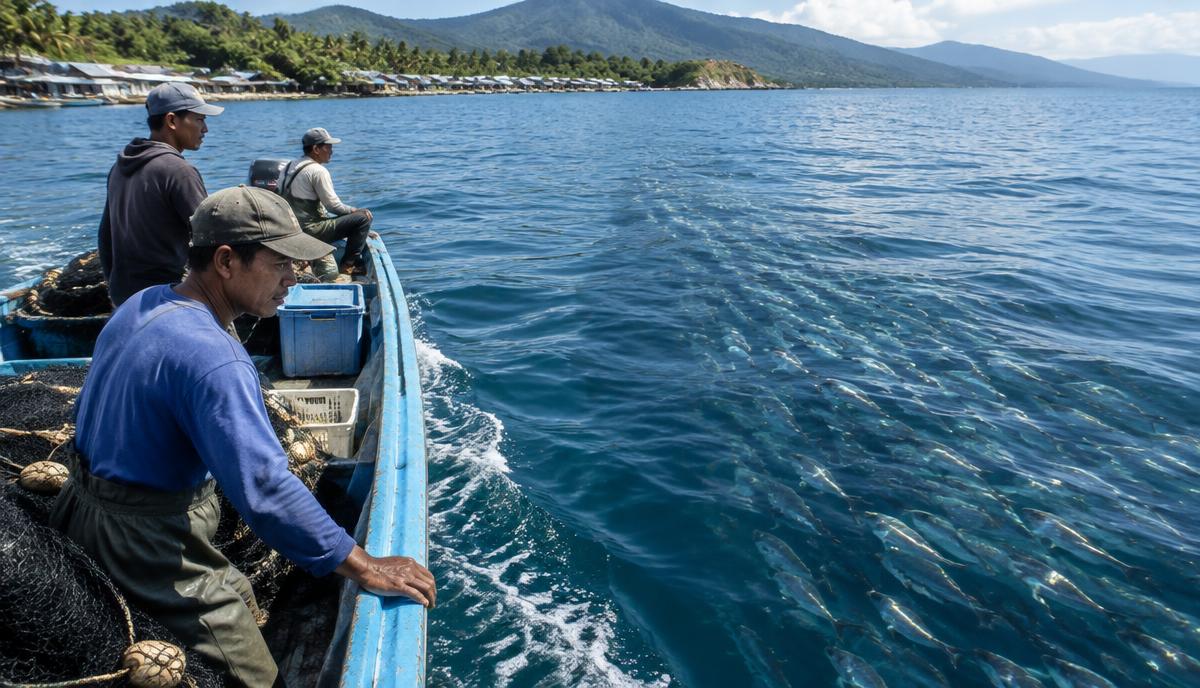
Warming Oceans Are Moving the World's Protein
Fish stocks are moving poleward and into deeper water as the oceans warm, while the countries that depend most on fish protein are often the least able to follow them. This piece argues that maritime boundaries, fisheries agreements and aquaculture investment have not caught up with moving fish.
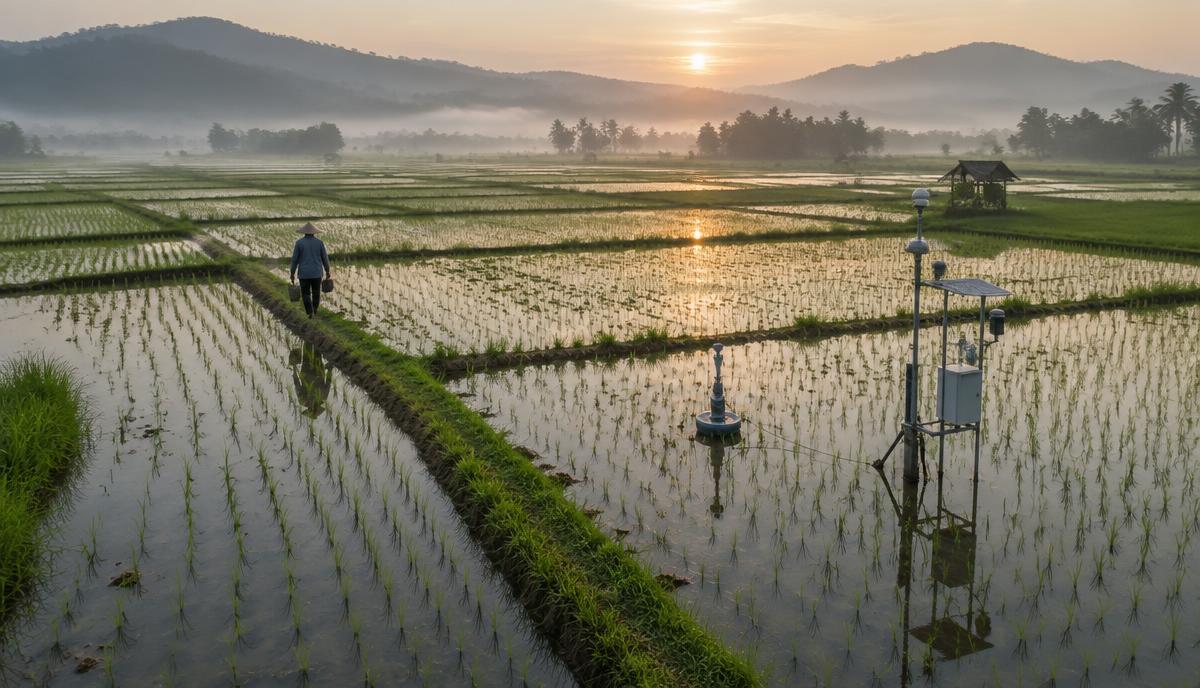
Rice Paddies and the Other Greenhouse Gas Problem
Flooded rice is a major source of human methane, and alternate wetting and drying or direct seeding can cut it while saving water. This piece uses the first payouts at Punjab Agricultural University to show why a known fix still struggles to scale, and what verification, contracts and policy would move adoption across South and Southeast Asia.